Whispered Secrets in Foggy Shoreline Engagement Photos
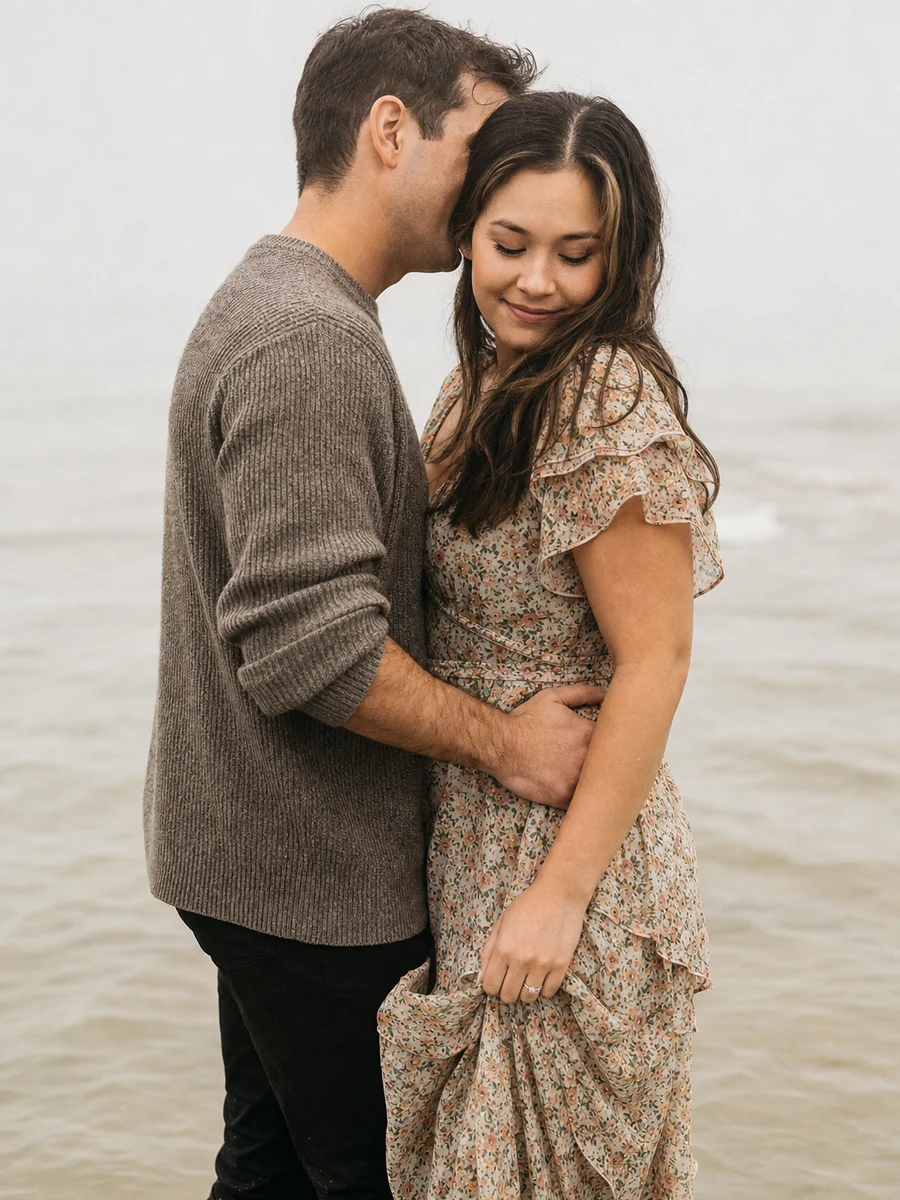
Draw close and let the fog isolate youâthis minimalist backdrop ensures your connection is the only focal point in every frame.
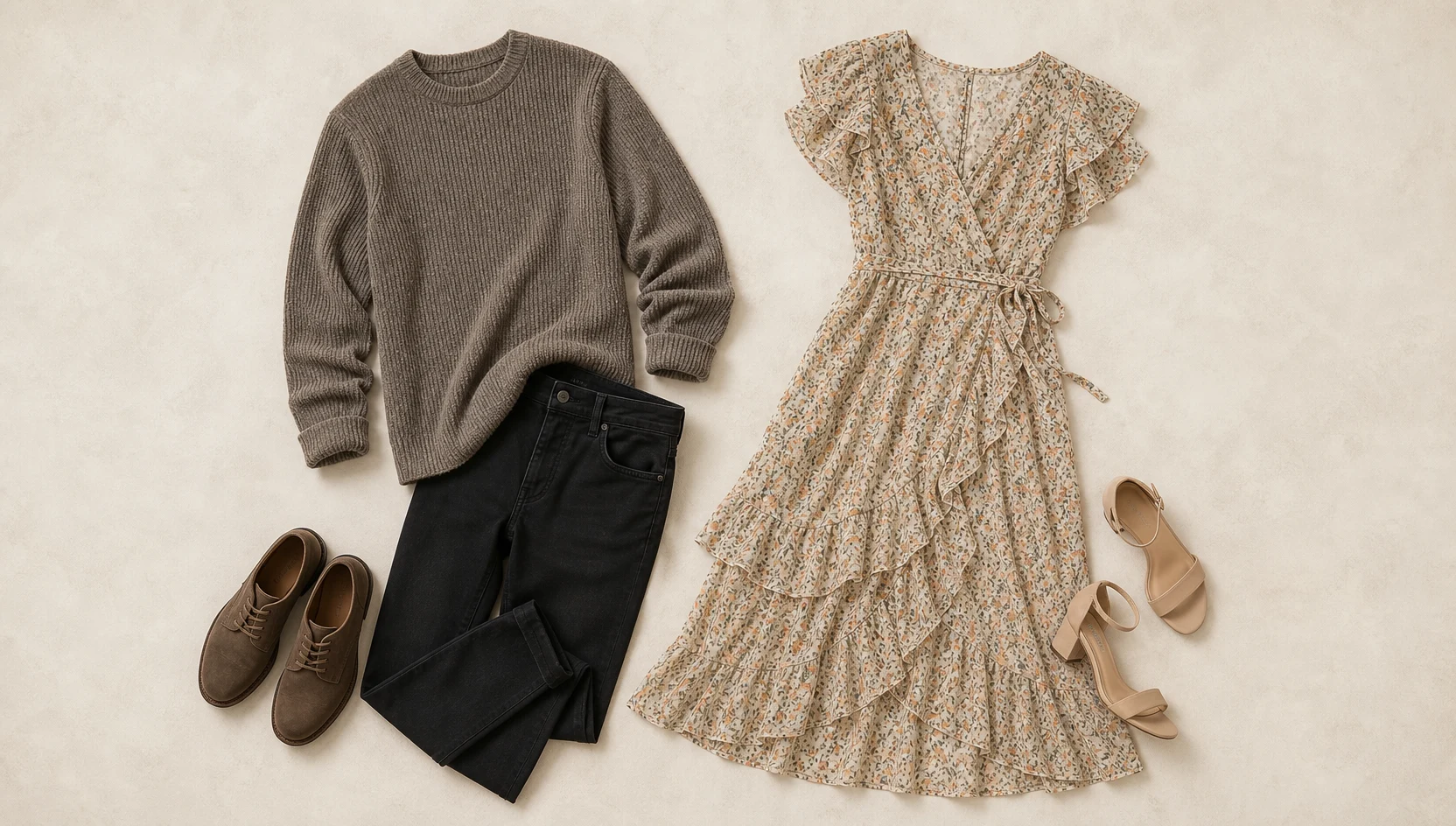
Outfit Ideas

He
ribbed sweater + dark pants
taupe / black
She

Draw close and let the fog isolate youâthis minimalist backdrop ensures your connection is the only focal point in every frame.

He
ribbed sweater + dark pants
taupe / black
She
floral midi dress
cream/beige with multi-color floral print
You step onto the cold, damp sand at precisely 6:45 a.m., the Pacific murmuring like a distant lullaby. The air is sharp with salt and the mineral scent of wet rocks, and your bare toes curl against the chill. Heâs beside you, his earthy knit sweater already smelling faintly of the sea, his rolled-up cuffs dark with moisture. The fog isnât a thick blanket; itâs a translucent curtain, just dense enough to mute the headlands to silhouettes and turn the sky into a soft silver dome. Iâm twenty feet back, swapping my 50mm for an 85mm f/1.4 to compress the landscape into a painterly blur. Youâre not just standing thereâyouâve gathered the hem of your floral midi dress in your left hand, the fabric cascading like a watercolor. He leans in, his lips almost brushing your ear, and you laughâa real, surprised laugh because heâs whispering something ridiculous. The fog carries the sound, muffles it. This is why we came at dawn: the marine layer is thickest before the sun burns it off, and the beach is ours alone.
I frame your profiles, the 85mm isolating you against the ghostly horizon. Then I ask you to walk toward the water, the surf just kissing your ankles. You gasp at the cold, and I drop to a crouch, shooting at f/2.8 with my 35mm to include the wide, empty shoreline. Your footprints vanish seconds after you make them, erased by the gentle tide. By 8:00, the fog begins to lift, revealing a pale blue sky, but weâve already captured the quiet, intense magic of your foggy beach engagement photos. Youâre wrapped in a blanket now, sipping lukewarm coffee, feet sandy and numb, already laughing about the cold.
đ Golden Hour â Shoot in the hour after sunrise or before sunset for warm, flattering light and long soft shadows.
Start with a strong foundation: use an anti-humidity primer and a long-lasting setting spray. Choose waterproof mascara and eyeliner, and skip heavy face products that can melt. For hair, salt spray can enhance texture, but bring a small brush and a travel hairspray to tame flyaways. Touch up right before we start shooting, and keep a powder compact in your bag for any midday shine. The humidity will soften your look naturally, so donât over-style.
Bring slip-on sandals or old canvas shoes you donât mind getting damp. For the walk from the parking lot, avoid heels that sink. Because the ocean is unpredictable, having a backup pair of shoes in the car ensures comfort for the drive home. Youâll likely kick them off once we reach the wet sand, so pack a towel and dry socks. In cooler months, neoprene booties can keep your feet warm if weâre wading, but theyâre not necessary.
No, fog creates a diffused, shadowless light thatâs incredibly flatteringâit softens skin, eliminates squinting, and adds a quiet, romantic mood. Colors donât wash out; they turn pastel and dreamy. We can use the fog to obscure distracting backgrounds and bring focus right to you. Some of the most iconic beach engagement photos are made in the fog. A moderate fog also keeps the beach empty, giving us privacy. The only real challenge is if itâs so thick you canât see ten feet; then weâd simply shift to tighter portraits. Iâll monitor the marine forecast and advise if we need to adjust.
Aim for 4 to 6 weeks, especially if you want a sunrise slot at a popular beach. This gives me time to study tide charts and fog patterns for your date, and it ensures availability during peak engagement season (May through November). If youâre traveling from out of town, reach out soonerâI often book three months out for coastal sessions. Last-minute is possible, but youâll have fewer options for the best light and tides. Booking early also gives us a chance to reschedule if weather turns truly unworkable, without stress.
Typically 90 minutes to two hours. This allows us to explore different pockets of the beach, work with the shifting light, and pause for outfit adjustments or a quick break. A shorter session can feel rushed, especially if we need to hike to a secluded spot or wait out a rogue wave. I budget extra time for the unexpectedâthe tide creeping up, a sudden downpour, or simply letting you two settle into a natural rhythm. By the end, youâll be surprised how quickly it passed, and youâll have a gallery full of varied, emotional moments.
It depends on the beach. Some state parks and protected coastlines require a photography permit, which is usually affordable ($25â$100) and can be obtained online. Iâll research the exact location weâre planning to use and, if a permit is needed, weâll secure it at least a week before the session. On public, unregulated beaches, typically no permit is required. Having the permit also reserves our spot if the area limits commercial activity. Weâll never risk your session being shut downâalways best to be legal.
Yes, in the wet sand and shallow water, bare feet look most natural and let you move freely. Feeling the sand between your toes or the cold water rushing around your ankles adds a tactile, genuine element to the photos. However, if weâre on dry, coarse sand or rocky terrain, sandals or water shoes are better for comfort and safety. I always suggest going barefoot for the key moments, then slipping into footwear between setups. Just be prepared for cold feetâliterally! A quick rubdown with a towel afterward makes all the difference.