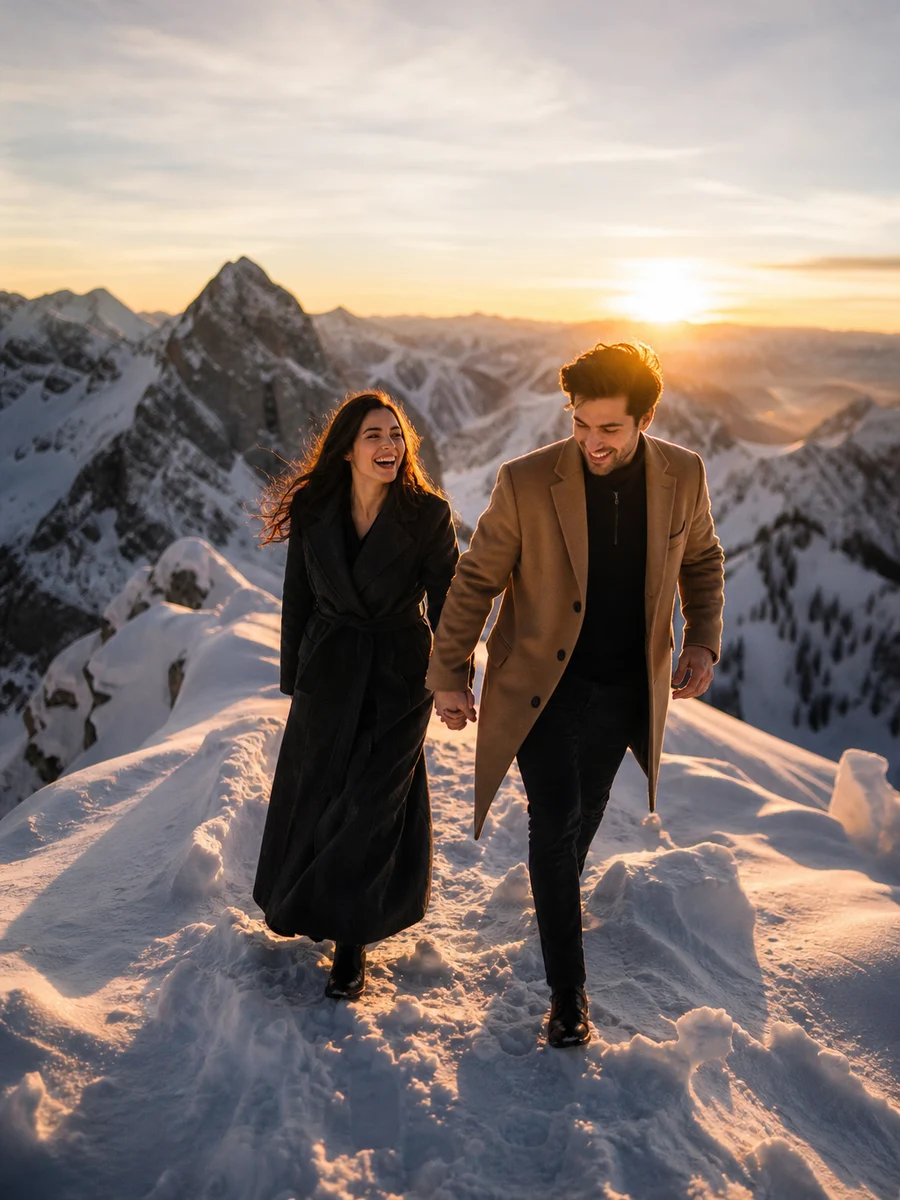
Walking and Laughing on a Snowy Ridge Engagement Photos
Golden hour on the ridge is pure gold. Keep moving, keep laughing—the candid in-between moments will be the ones you frame.
📍 mountain🍂 winter💑 walking-together
Outfit Ideas
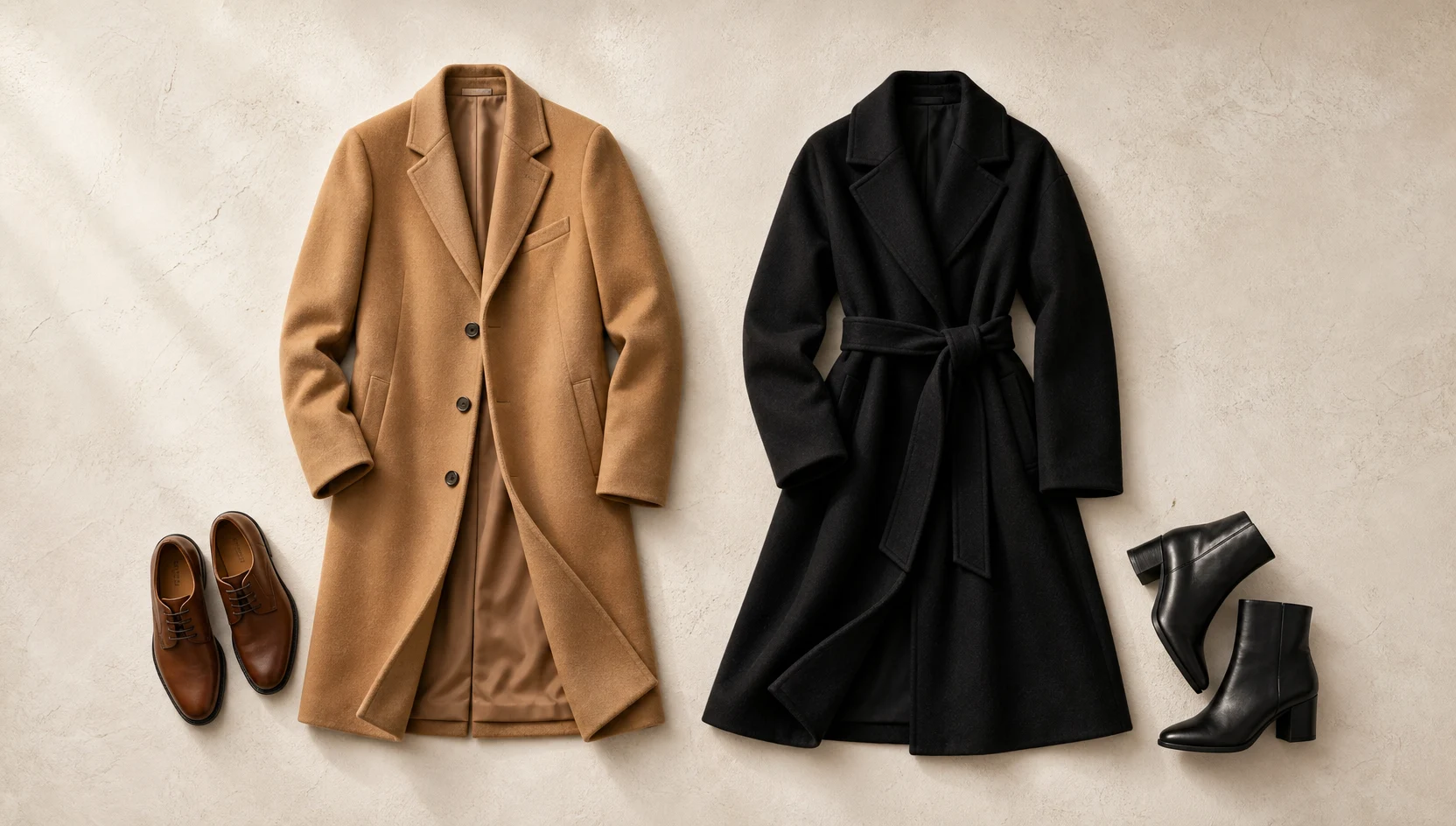
He
camel coat
camel
Golden hour on the ridge is pure gold. Keep moving, keep laughing—the candid in-between moments will be the ones you frame.
He
camel coat
camel
She
black wrap coat
black
Your crampons bite into the firm snow as you top out on the ridge. The world below is still shadowed, but the peaks ahead catch the first raspberry light. It’s dead quiet except for the crunch of your steps and the occasional gust that sends spindrift swirling into the void. You link hands with your partner—your fingers warm inside shearling mittens—and start walking along the broad crest. The charcoal wool coat moves with you; her camel one catches the low sun like a brushstroke. Hidden beneath, the thermal layers you wisely added keep your core cozy, so the cold stays on your cheeks and in the thrill of the moment.
Your photographer appears ahead, bundled in down, and you remember the cue: walk toward the camera, let a laugh bubble up, glance at each other as if you’ve just shared a secret. You do, and the laugh is real because you’re both slightly giddy from the altitude and the ridiculous beauty of it. The snow squeaks underfoot. A raven croaks somewhere below. The light shifts from pink to honey-gold, and you feel like the only two people on earth. This is exactly the feel you wanted from your engagement photos—not posed stiffness but movement and joy in a place that feels immense.
You hiked up in the pre-dawn dark, headlamps guiding you along the skin track. You’d scouted this spot the day before with your photographer, picking a wide, gentle ridge—no knife-edge drama, just a safe snowy path with 360-degree views. Now, with the sun fully up, you pause to warm your noses and steal a real kiss. The camera clicks. The moment is yours. For engagement photos that feel as big as your love, the key is simple: start early, dress smart, and don’t be afraid to laugh when your lips go numb.
🌄 Sunrise — Arrive at first light for soft color, calm surroundings, and far fewer crowds.
Layer smart thermals under your outfits. Use adhesive toe warmers and hand warmers. Choose wool coats and insulated boots. The key is hiding your warmth layers without bulk. Look for thin merino wool base layers and fleece-lined tights. Bring a down jacket to throw on between shots. Keep your hands in warm pockets until the moment. Your photographer can work in short bursts so you can move and generate heat. Laughing actually helps—it relaxes your face and keeps you feeling alive instead of frozen.
A professional photographer experienced in mountain engagement photos will monitor forecasts and have a backup plan. Sudden cloud, wind, or snow can happen. The key is flexibility. You might shift location to a lower, more sheltered spot. Overcast light can be beautifully soft for portraits. Wind adds drama. If conditions become unsafe, rescheduling is always an option. Trust your photographer to make the call. Always pack extra layers, hand warmers, and a headlamp. Sudden weather often makes for the most memorable images.
You don’t need to be a mountaineer, but you do need to be comfortable hiking on snow with light gear. The shoot location should be chosen to match your ability. A wide ridge reached via a moderate trail is ideal. You’ll be walking at a relaxed pace, with frequent stops for photos. The day before, you’ll likely do a short scouting hike with your photographer, which gives you a fitness check. Practice hiking in your boots with a light pack. If you can manage a couple of miles with a few hundred feet of elevation gain, you’ll be fine.
Sunrise is the best time, offering soft, directional light, calm winds, and far fewer people on the trail. Arriving at first light gives you the mountain almost to yourself. The alpenglow on snowy peaks creates a magical palette that disappears quickly. Afternoon light can be harsh, and wind often picks up. If sunrise isn’t possible, late afternoon before sunset can work, but shadows get long quickly. Plan to be at the trailhead 60–90 minutes before sunrise, so you’re in position as the color peaks.
Temperatures can range from 0°F to 20°F (-18°C to -7°C) before wind chill, depending on location and time of year. At elevation, it’s often colder than the valley, with wind making it feel even sharper. Fingers and cheeks take the brunt. Dressing in layers with windproof outer shells is critical. Chemical warmers in gloves and boots help immensely. Your photographer will plan for short shooting windows, allowing you to retreat into a warm jacket frequently. The cold is intense but manageable with preparation.
Opt for elegant wool coats in neutral tones like charcoal, camel, or cream, paired with insulated boots and hidden thermals. Avoid puffy jackets in shots; use them as between-shot layers. Women can wear fleece-lined tights under long dresses or pants. Men should layer a thin down vest under their coat. Gloves and hats that complement your outfit add style and function. Stick to solid colors or subtle patterns that won’t distract. Your photographer can advise on how the fabrics move and photograph. Bring extra socks in case yours get wet.
Plan for a 2-3 hour session from trailhead to finish, including the hike in and out. Actual shooting time is usually 1-1.5 hours, broken into short bursts because of the cold. You’ll need time to climb to the location, settle in, and then descend. Starting early maximizes good light and minimizes rushed feelings. If weather cooperates, you might extend to catch the full sunrise transition. The pace is relaxed with plenty of pauses for warmth. Afterwards, a hot drink in the car feels like a reward.