Burgundy Coats Wind Through Snow-Dusted Pines Engagement Photos
Donât just hold handsâtuck in close and let the cold push you together. The contrast of your coats against the snow will do the rest.
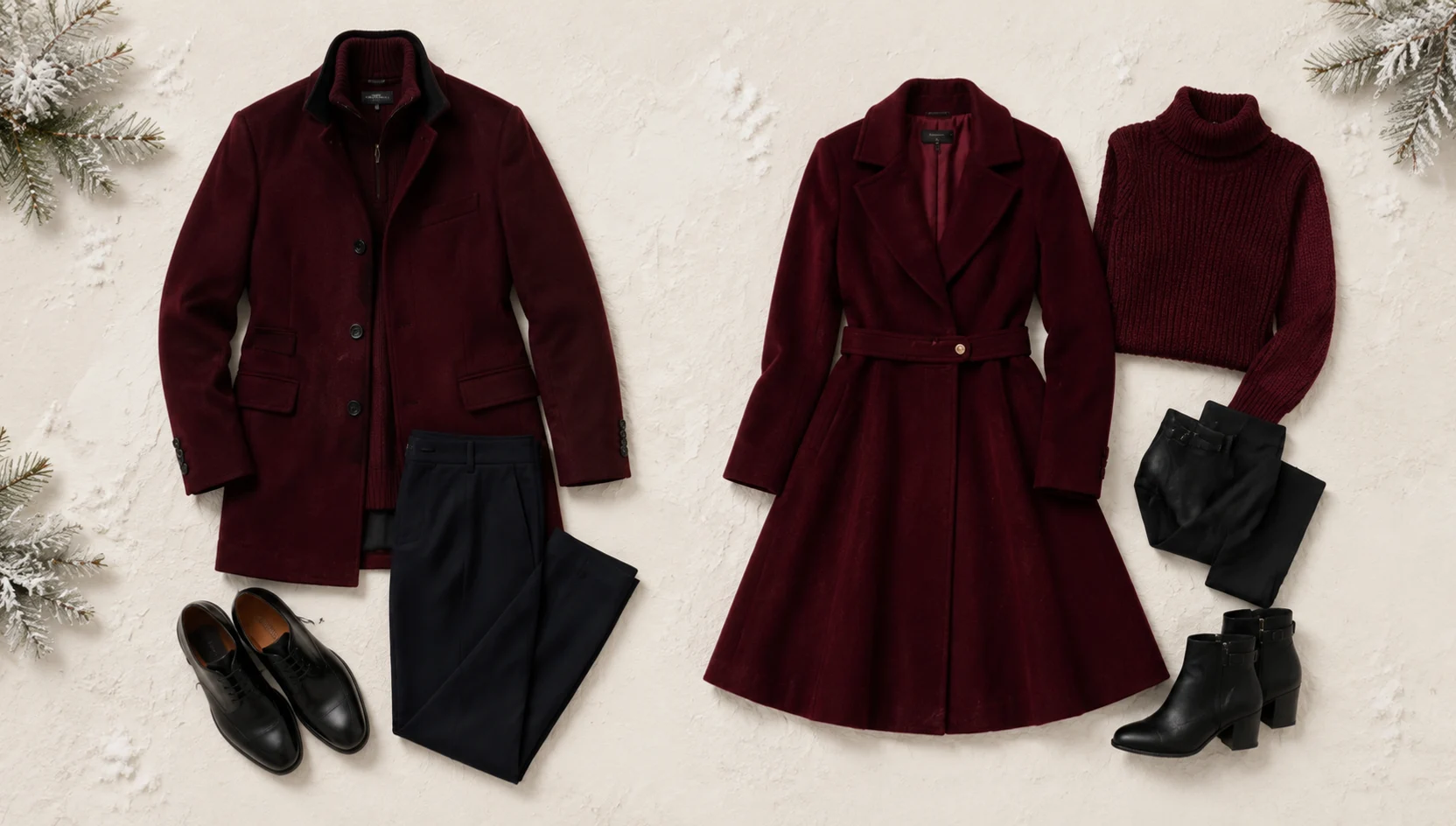
Outfit Ideas

He
long coat
burgundy

Donât just hold handsâtuck in close and let the cold push you together. The contrast of your coats against the snow will do the rest.

He
long coat
burgundy
She
A-line coat
burgundy
You step onto the packed snow trail, the crunch beneath your boots muffled by a fresh inch of powder. The overcast sky wraps the forest in flat, silvery lightâa giant softbox that smooths every shadow on your skin. Between the snow-dusted pines, the silence is so complete you can hear the whisper of your scarf against your collar. The burgundy of your coat glows like an ember against all this white; your partnerâs matching gloves pull the look together as you link hands.
Your photographer walks ahead, turning back every few strides to catch the in-between moments. You're not posingâyou're just walking, breathing. The cold nips at your cheeks, but the rhythm of steps keeps you warm. Then, mid-stride, she leans her head against his shoulder. It's a natural, unforced rest, the way you'd tuck into each other on a long winter walk. The camera shutter sounds like a distant twig snapping. You don't interrupt the motionâjust let it happen.
You'd scouted this trail last week, a path already packed by hikers so you wouldn't posthole into deep snow. Your boots are grippy, waterproof; you tested them. Around you, pines hold clumps of snow that might tumble at any breeze. The light is unchanging, forgivingâthese forest engagement photos will have that soft, storybook quality no harsh sun can fake.
Every so often, you pause to cup your hands and blow warm air into them, then squeeze fingers. Your photographer says something that makes you laugh, and your breath puffs out in a quick cloud. You realize you're not cold at allâjust present. By the time you loop back toward the car, you'll know you've captured something true: two people moving through winter together, the burgundy a bold thread against the monochrome woods. Pack an extra pair of socks in the car; your toes will thank you.
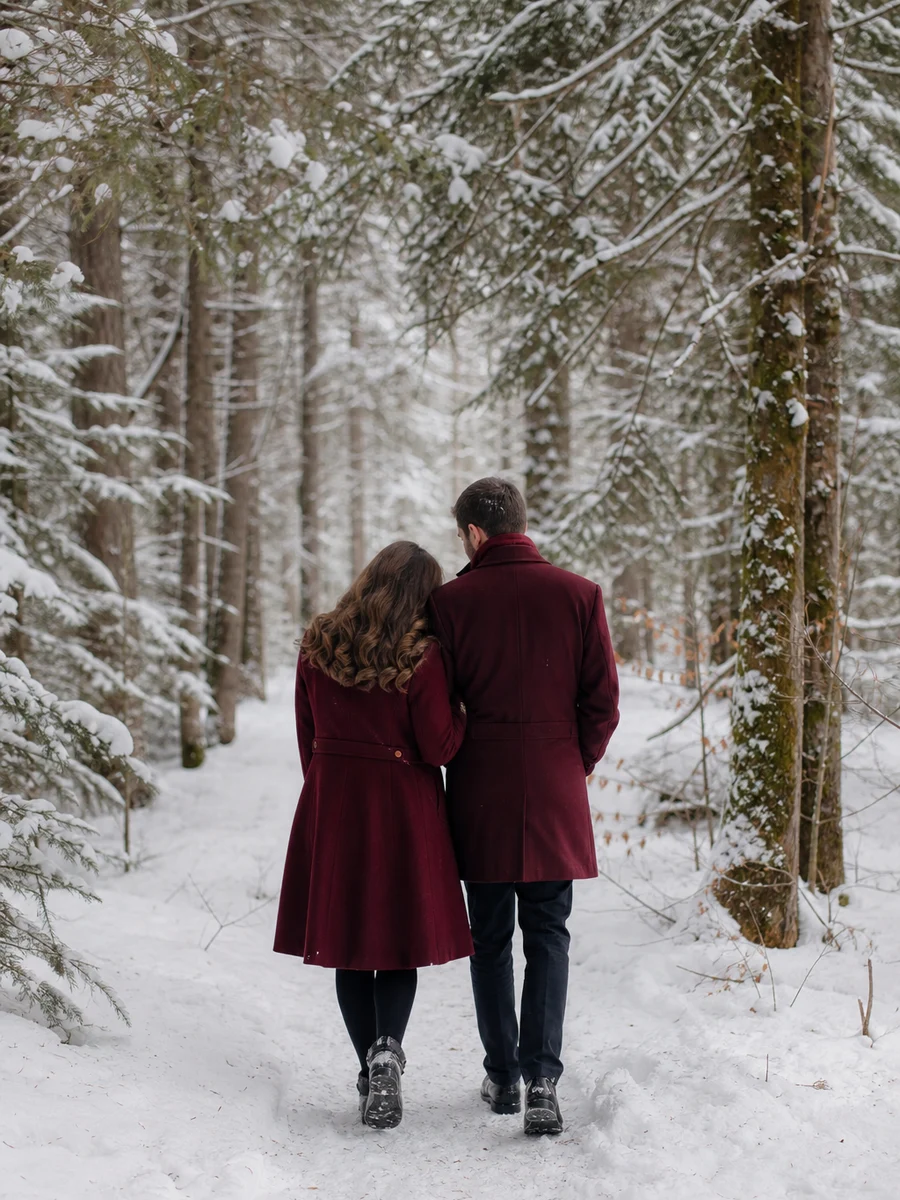
âď¸ Overcast â An overcast sky is a giant softbox â even, shadow-free light that flatters skin tones.
Layer up with thin thermal base layers you can't see under your coatâmerino wool traps heat without bulk. Your burgundy coat is the star, so choose a sleek, tailored fit that doesn't leave you swimming. Before the camera clicks, do a quick set of jumping jacks or hugs behind the scenes to flush warmth into your cheeks. Tuck hand warmers into coat pockets and pull them out right before the shot. Your photographer will work in short bursts, letting you shove hands back into pockets between takes. Don't clench your jaw against the coldâwiggle it loose. If you feel yourself shivering, breathe deep through your nose. Your body will relax, and the photos will show warmth, not tension.
A packed trail means you're safe from deep snow, but it also means you might share the space. Arrive earlyâsunrise shoots often give you an hour of quiet even on popular trails. If hikers appear, your photographer will simply pause and let them pass, or shift angles to keep them out of frame. Use the waiting moments to hold each other, share a whisper, or take a sip from a thermos. Those in-between seconds can yield genuine, cozy expressions. If a trail is truly crowded, your photographer likely knows a side path or a clearing just off the main route where you can still get that snowy pine backdrop without an audience.
Winter offers a clean, minimal backdropâsnow mutes distractions so you two become the clear focus. The bare branches and evergreens give structure, while an overcast sky wraps everything in soft, diffused light that's kind to skin and requires no squinting. But each season has its charm: spring brings wildflowers and new green, autumn bursts with color. However, if you want that crisp contrast where burgundy pops against white, winter is unmatched. The quiet of a snow-dusted forest also feels intimate and cinematic. Just plan for the coldâbring those hand warmers and embrace the rosy-cheeked look that only winter air can deliver.
Here, burgundy is your anchorâit reads as both bold and romantic against snow. Choose a wool coat or a styled jacket that moves well; stiff fabrics can look blocky. Add matching gloves or a scarf for cohesion, but avoid the same exact color head-to-toe so you don't blend into one shape. Underneath, wear neutral or cream layers that peek out at collars. Footwear is critical: waterproof, grippy boots in a dark tone will disappear in shots but keep you steady. If your boots are new, break them in first. Avoid shiny fabrics that catch glareâmatte textures photograph best in the soft winter light. Bring an extra dry top to change into after if you get sweaty from hiking.
In winter, bugs are a non-issueâthey're dormant, so you won't be swatting mosquitoes mid-embrace. The cold itself is the main consideration. Stick to trails you've scouted; packed snow reduces the risk of slipping. Watch for icy patches under thin snow, especially on slopes. Your photographer will remind you to position yourselves on flat, wide sections. If you go off-trail slightly for a specific backdrop, test the ground with a trekking pole or your boot. In warmer months, bugs can be a nuisance, but a light insect repellent and timing your shoot outside dawn/dusk hours helps. For winter shoots, layer up and know the signs of hypothermiaâshivering that won't stop means it's time to head back.
Start by searching for local state parks or national forests with accessible winter trails. Look for recent trail reviews on apps like AllTrails that mention packed snow or cleared paths. Photos from other hikers will show you current conditions. A classic pine stand with open understory offers the cleanest backdropsâyou want trees spaced enough to let light through but dense enough to frame you. Avoid spots with heavy deadfall or steep drop-offs. Visit the trail a day or two before your shoot, at the same time, to see how the light behaves. Confirm parking isn't a long, icy walk away. Share location pins and backup spots with your photographer so you can pivot if conditions change.
It depends on the land. Many public forests allow personal photography without a permit, especially for a small group without setups like tripods, lights, or props. However, if you're in a state park, a designated wilderness area, or using a professional photographer, some require a commercial permit or a special-use permit. Check the park's website or call the ranger station directlyâword your ask as 'an engagement shoot with just a photographer and the couple, no equipment.' Even if a permit isn't mandatory, a small fee might support trail maintenance. Do this at least two weeks out; processing can take time. For private land, always get written permission from the owner to avoid trespassing.