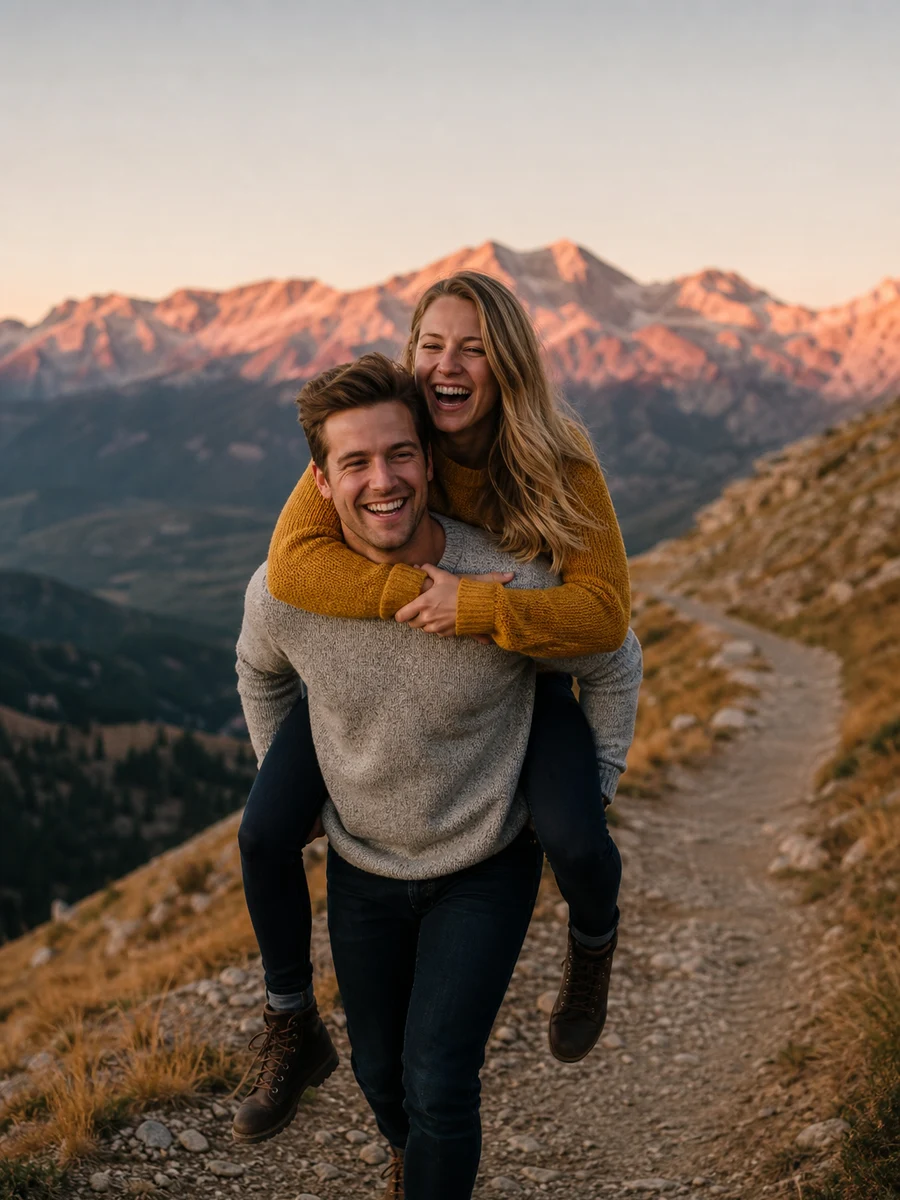
Sunrise Piggyback Ride with Alpine Glow Engagement Photos
For a carefree sunrise look, try a piggyback ride; the alpenglow backlights the laughter and creates a warm, glowing silhouette.
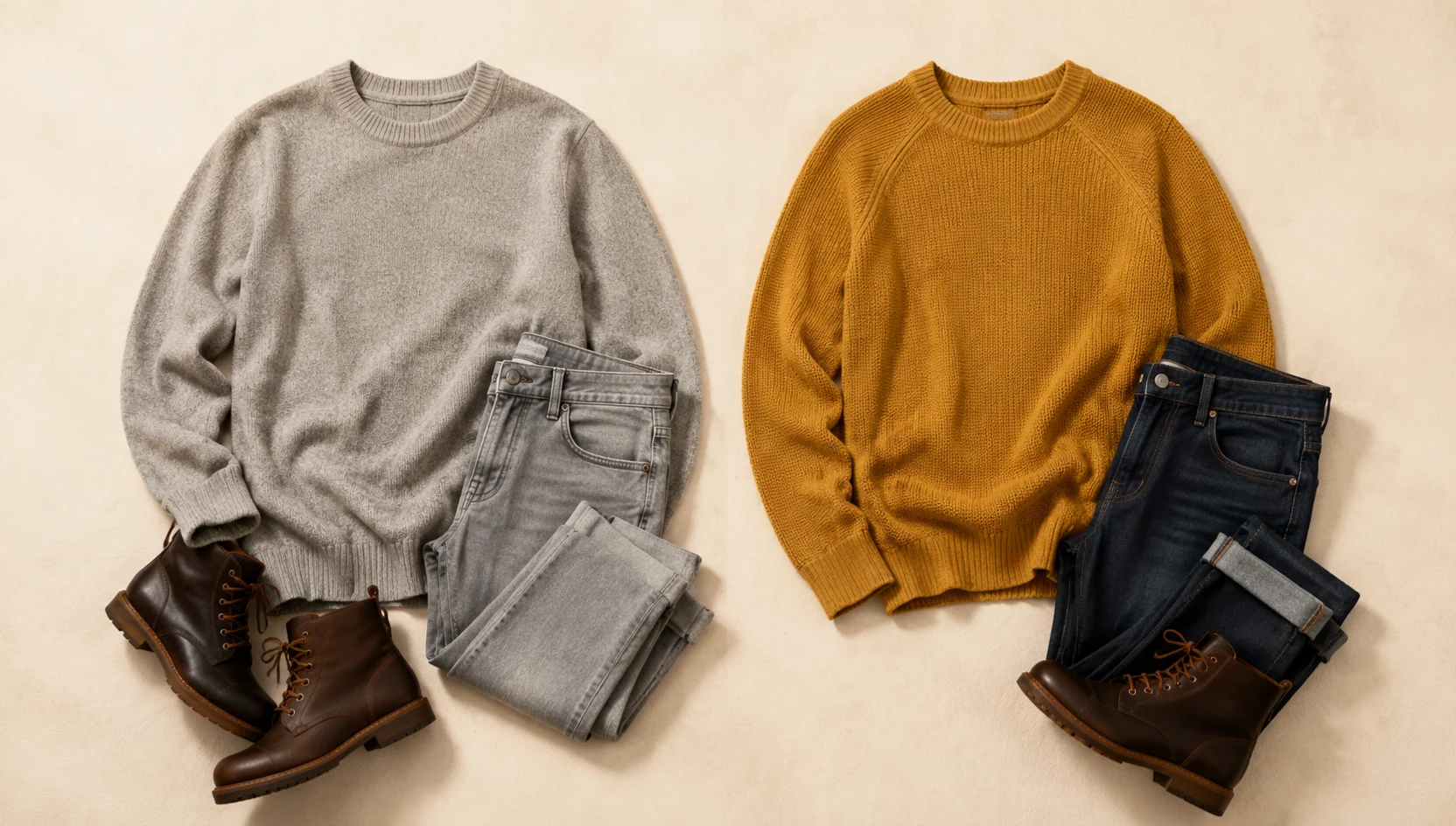
Outfit Ideas

He
sweater + jeans
light grey
She

For a carefree sunrise look, try a piggyback ride; the alpenglow backlights the laughter and creates a warm, glowing silhouette.

He
sweater + jeans
light grey
She
sweater + jeans
mustard yellow
Your boots crunch on the frozen trail, breath misting in the inky cold. Itâs 5:30 a.m., and the only sound is the wind threading through the pines. Youâve hiked to a stable ledge by headlamp, scouted the night before for solid groundâno loose rocks here. The sky is still a deep navy when you pull off your puffy jacket, revealing the warm mustard sweater that pops against the peaks. He wears oatmeal knit, no busy patterns to fight the landscape. Then, just after 6:15, the first light licks the summit, turning it a soft peach that deepens to rose. You climb onto his back for a piggyback ride, your cheek pressing to his temple. He takes a wobbly step, you both laugh, and the camera catches that real motionâhair swinging, smiles unguarded. The air is thin and crisp; you feel it in your lungs but it makes every breath feel alive. The alpine glow wraps around you, honey-gold now at 6:45, and you realize you have this entire ridgeline to yourselves. No crowds, just the two of you and the slow-building day. For mountain engagement photos, that early alarm is worth itâthe light doesnât wait, but it always rewards. Your photographer guides you through a few more easy steps and a twirl, but the piggyback shots, with the peaks blushing behind, hold all the joy. When you descend, the sun is up and the trail is suddenly busy; youâre already done, with images that feel like a secret morning shared with the mountains. One last tip: stuff hand warmers in your pockets and sip water before you startâit keeps your energy up when the altitude bites.
đ Sunrise â Arrive at first light for soft color, calm surroundings, and far fewer crowds.
Most sessions last 90 minutes to two hours. This gives enough time to hike to a scenic spot, catch the best light, and work through several poses without rushing. At sunrise, youâll start before dawn and wrap shortly after the direct light becomes harsh. Your photographer will typically meet you in the dark and use the first 30 minutes for setup and easy walking shots, then capture the golden window intensely for about 45 minutes. If youâve chosen multiple locations, add an extra half-hour. Pack a snack and waterâyouâll need the fuel more than you think.
Yes, proper hiking boots are a must. Trails at sunrise can be slick with frost or loose gravel, and youâll be moving over uneven terrainâoften in semi-darkness for the first part. Boots with good ankle support prevent twisted ankles while carrying each other for piggyback shots. You can change into cuter shoes for the actual photos once youâre on stable ground, but your photographer will likely suggest keeping the boots on for candids of the hike up. Bring a backpack to carry the second pair and any layers you shed.
Altitude can leave you breathless faster than expected, especially during active poses like piggyback rides. Even a moderate hike at 8,000 feet will feel harder if youâre coming from sea level. Youâll tire more quickly, so build in rest breaks and donât push through dizziness. Drink water constantly starting the night before. The thin air also dries your lips and skinâbring balm and moisturizer. Plan less strenuous poses right after the hike. If you feel a headache or nausea, tell your photographer; they know to slow down and adjust. Altitude sickness can hit anyone, even the fittest hikers.
The best range depends on the look you want. The Tetons in Wyoming offer dramatic jagged peaks and alpine lakes with easy access from Jackson Hole. Coloradoâs San Juan Mountains provide rugged wilderness and glowing aspen in fall. For a gentler backdrop, the Blue Ridge Mountains in the East have rolling layers of haze and accessible overlooks. Each range has a distinct character: the Tetons feel grand and iconic, the San Juans remote, the Blue Ridge soft and intimate. Consider travel, permit rules, and your fitness level. Many photographers specialize in a specific range and know the best sunrise spots.
Absolutely, winter brings magic with a quiet landscape and soft reflected light. Snow acts as a giant reflector, filling shadows and making skin glow. But youâll need serious preparation: insulated boots that grip ice, hand warmers in every pocket, and layers you can quickly remove for a few shots. Keep your base layers neutral and thinâbulk shows through knits. Choose a location you can access safely; some high trails close for the season or require snowshoes. A shorter session window is smart because the cold sets in fast. The alpenglow on snow is worth every shiver.
Sunrise wins for solitude and soft, cool-to-warm transitions. Youâll often have entire lookouts to yourself, while sunset draws crowds. The light at sunrise is cleaner, with less haze, and the alpenglow peaks right after dawnâperfect for piggyback shots. Sunset offers warmer tones and is easier logistically, but golden hour can be cut short by mountain shadows. If you choose sunrise, commit to a very early wake-up. The payoff is a peaceful, intimate session where the light feels just for you. Either way, check local sunset and sunrise times; they shift fast in the mountains.
Yes, hiking is usually part of it. Your photographer will guide you to a pre-scouted spot, often a mile or less from a trailhead. For this piggyback setting, you need a stable, open area with level groundânot a narrow ridge. Youâll carry your gear in a backpack and wear headlamps if itâs dark. Some locations require a 30-minute uphill walk. Ask your photographer for trail details: distance, elevation gain, and surface (dirt, rock, boardwalk). Start training a few weeks ahead with walks on similar terrain. If you or your partner arenât hikers, request an accessible overlook.