Sunrise Forehead Touch on Summit Engagement Photos
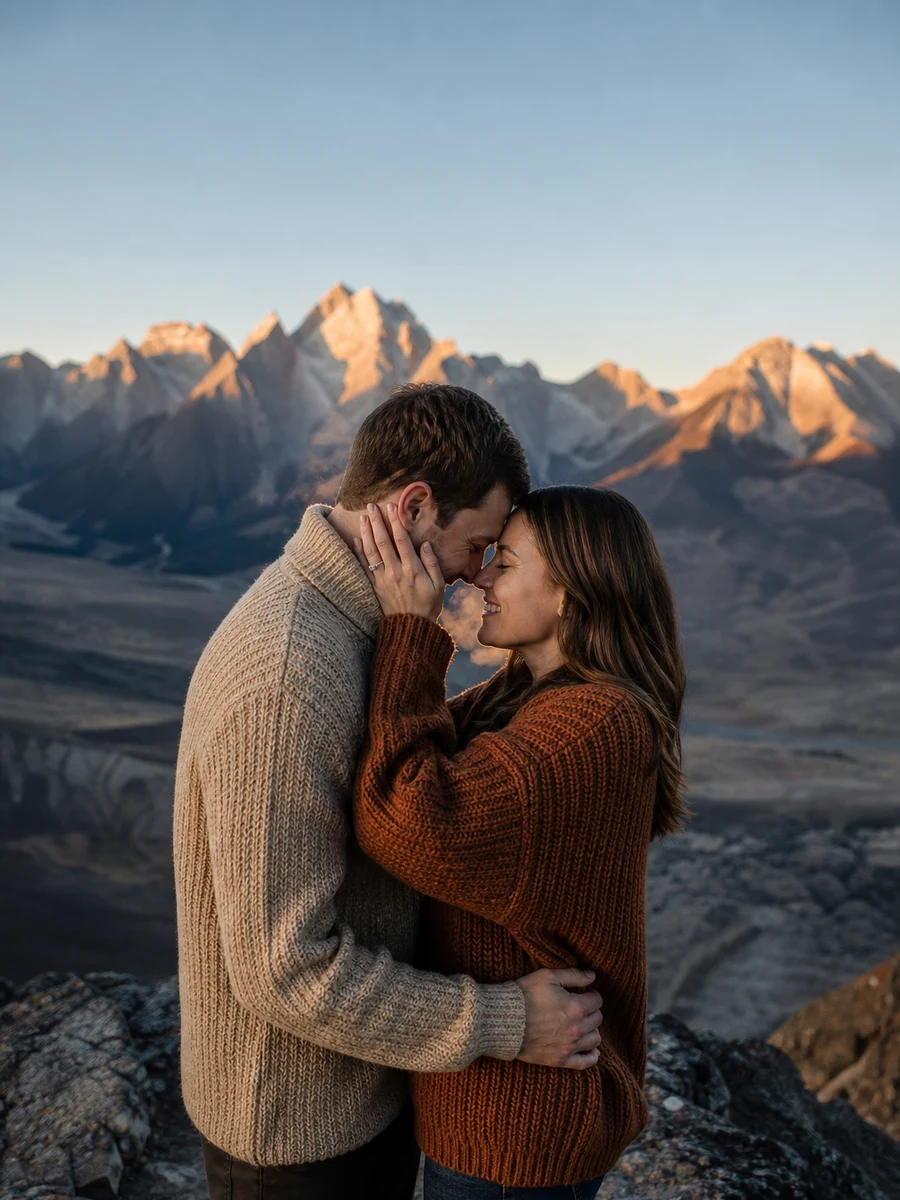
Let the quiet moments unfold. A forehead touch at sunrise, with the peaks glowing pink, feels like the start of your adventure together.
Outfit Ideas

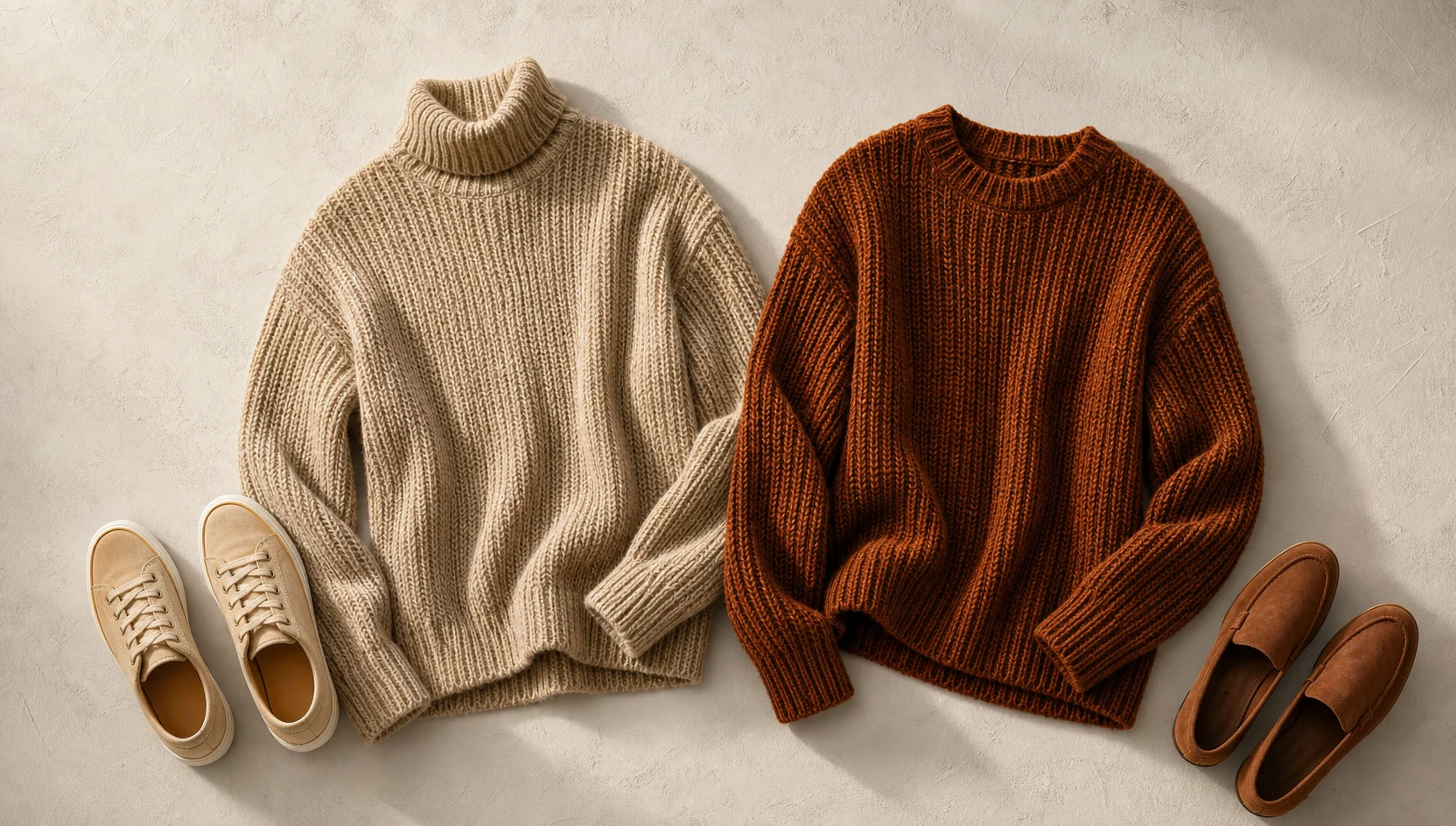
He
knitted sweater
light beige
She

Let the quiet moments unfold. A forehead touch at sunrise, with the peaks glowing pink, feels like the start of your adventure together.

He
knitted sweater
light beige
She
knitted sweater
burnt orange
Your headlamp cuts a narrow path through the dark, the beam bouncing off granite and scrub. The air is thin and cold, maybe 40 degrees, and every exhale turns to mist. Youâve been hiking for over an hour, legs burning, but as the sky shifts from black to deep blue, you forget the ache. At the summit, you click off your lights and just breathe. The world feels huge and silent, save for a distant wind. Then the sun begins to edge above the horizon, painting the peaks in honey and rustâthe same warm tones as the oatmeal and rust sweaters youâre both wearing. Your photographer guides you to a flat rock, the valley still in shadow below. You face each other, close enough to feel her warmth. You cup her jaw with one hand, fingers light on her skin, and she leans in until your foreheads touch. Eyes closed, you hear only your own breathing and the faint click of the shutter. The light is soft and fleetingâyou have maybe 20 minutes before the sun climbs too high and the magic fades. Thatâs why you started hiking at 4:30 a.m., headlamps packed and weather checked the night before. Mountain engagement photos like these donât happen by accident. The chill nips at your ears, your toes are numb, but the glow on your faces makes it all worth it. As the sun warms the rock beneath you, the photographer captures the quiet intimacy of two people who just climbed a mountain together. Before you head down, you steal one last look at the view. These engagement photos arenât just picturesâtheyâre the story of a morning you pushed past the expected and found something unforgettable.
đ Sunrise â Arrive at first light for soft color, calm surroundings, and far fewer crowds.
Sunrise wins for solitude and soft, predictable light. At dawn, youâll encounter far fewer hikers, and the sunâs low angle creates a gentle, golden glow without harsh shadows. Sunset can be equally beautiful but often draws crowds to summit spots, making intimate poses harder. If you choose sunrise, youâll need to hike in the darkâheadlamps are essentialâbut the payoff is a quiet summit and a sense of having the mountain to yourselves.
Almost always, yes. Mountain summits rarely have drive-up access. Expect a hike that could range from a moderate mile to several strenuous miles with significant elevation gain. Youâll likely start before dawn, so research the trail thoroughly: know the distance, elevation profile, and estimated time. Bring plenty of water, wear sturdy boots, and use trekking poles if it helps. The hike itself becomes part of the experience, so choose a trail that matches your fitness level.
Mountain conditions can shift in minutes. Before heading out, check multiple weather sources specific to the summit, not just the base. Look for wind speed, temperature, and chance of precipitation. If storms or high winds are predicted, reschedule. On the day, if you see darkening skies, hear thunder, or feel a temperature drop, prioritize safety over photos. A skilled photographer will adapt quickly, and you can always return. Never risk lightning exposure on exposed peaks.
You donât need to be an elite athlete, but basic cardiovascular fitness is a must. Even a short hike at altitude feels harder than a flat walk. If youâre coming from sea level, spend a day or two acclimating. Do practice hikes with your partner carrying the same pack youâll bring. Comfort matters more than speedâyouâll enjoy the experience if youâre not gasping for air. For tougher summits, consider an easier overlook with a similar view.
Late spring through early fall offers the most reliable conditions. Snow-free trails make access easier, and sunrise temperatures are bearableâoften between 40°F and 55°F at dawn. In many ranges, July and August provide the warmest mornings, but also the most hikers. September brings crisp air and fall colors. Avoid winter unless you have mountaineering experience and gear. Always aim for a weekday to further reduce trail traffic.
Even in summer, summit temperatures before sunrise can dip into the 30s or 40s Fahrenheit. Wind chill makes it feel much colder. Layering is critical: wear a moisture-wicking base layer, a warm mid-layer like a down jacket, and a windproof shell. You can shed layers as the sun warms the air. Bring beanies and glovesâtheyâll show in photos, but you can remove them for close-ups. Cold hands make tender touches uncomfortable, so slip warmers into your pockets.
Choose earthy, warm-toned knitsâoatmeal, rust, deep brown, or oliveâthat echo the landscape. Think cozy sweaters, wool layers, and durable pants. Avoid busy patterns; solids or subtle textures photograph best. Footwear matters: sturdy hiking boots will be in some frames, so clean them up if possible. Bring a backpack with your street clothes to change into at the summit if you want a polished look, but remember, youâll be hiking in these, so comfort and warmth come first.