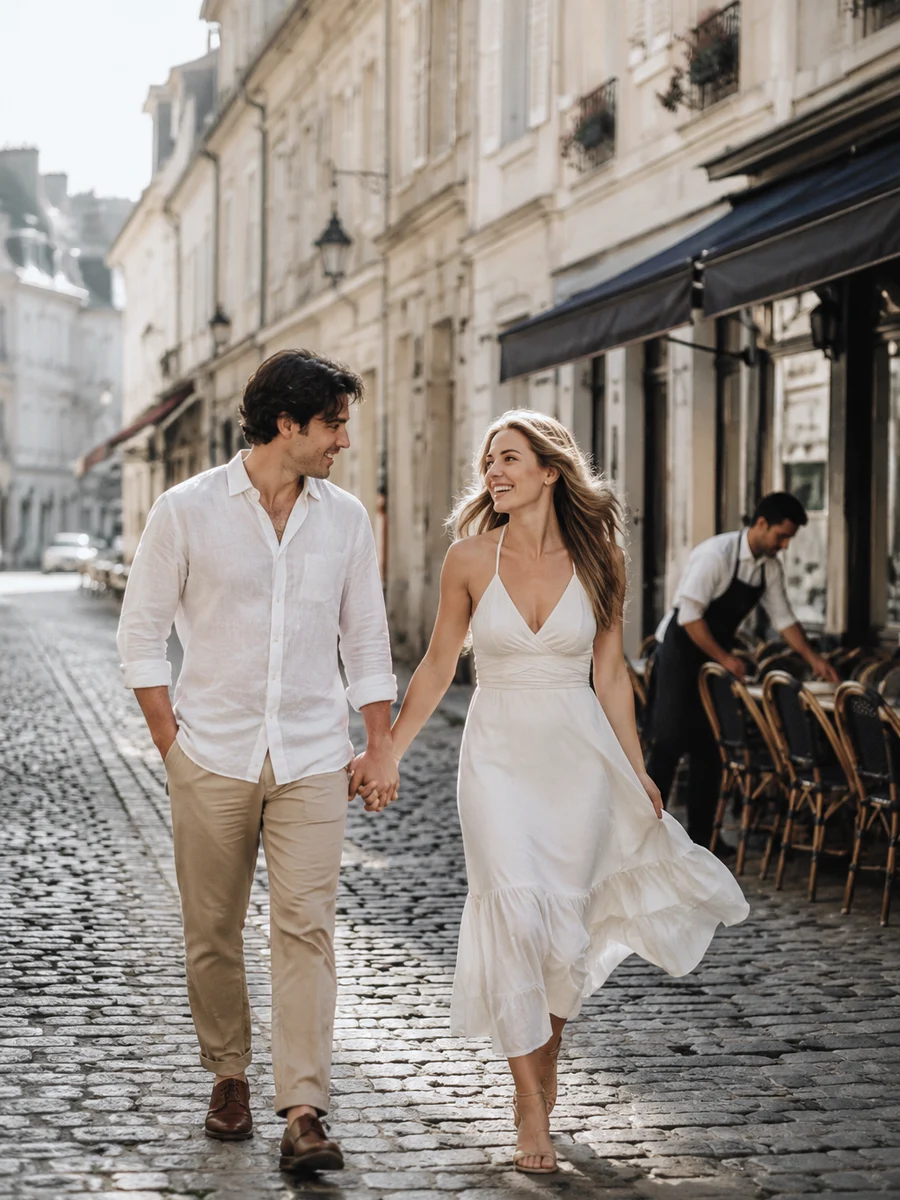
Morning Stroll in White Linen at a Quiet Street Cafe Engagement Photos
Early morning, before the city wakes up, is your own quiet runway.
📍 city🍂 summer💑 walking-together
Outfit Ideas
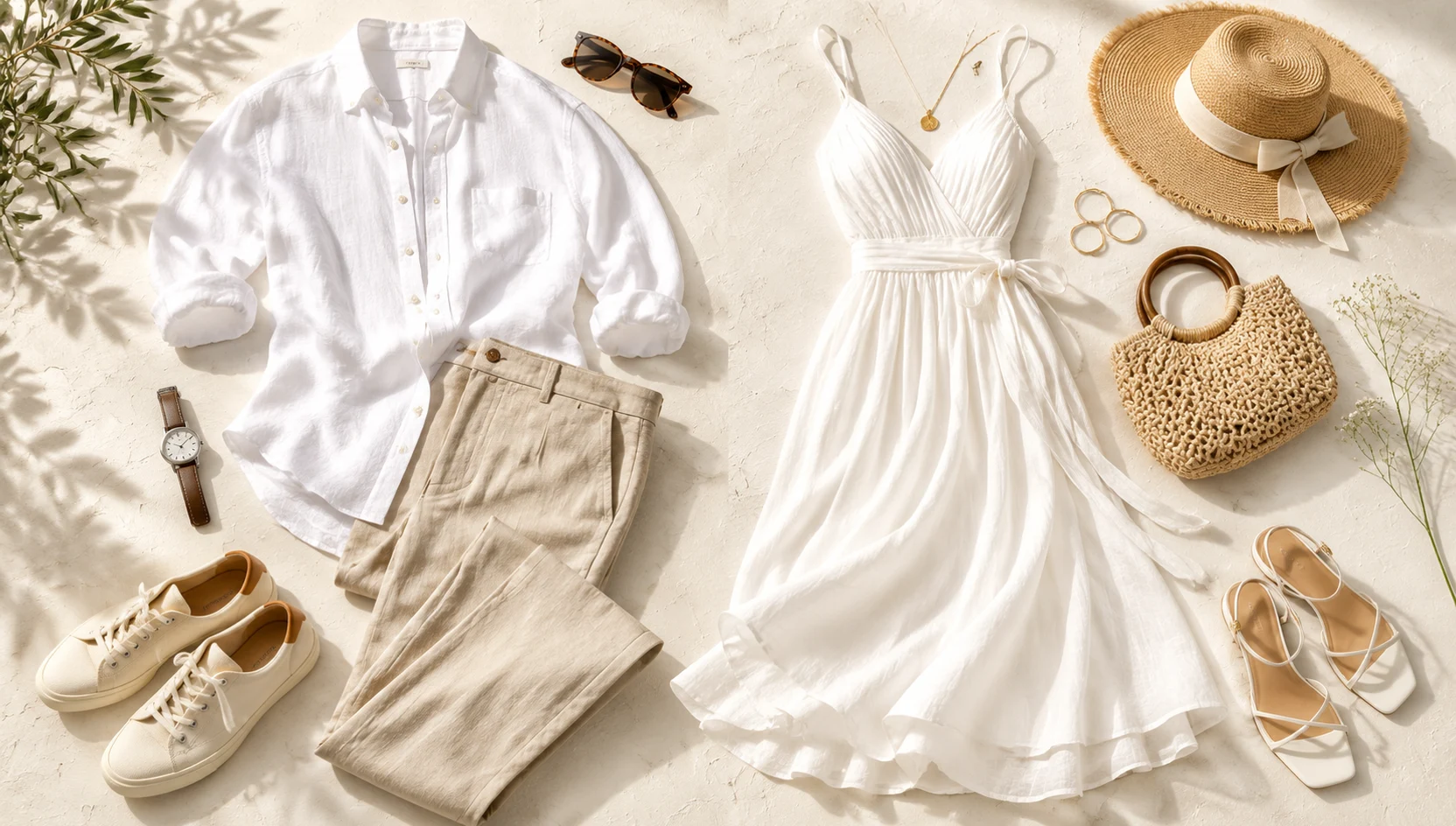
He
linen shirt + chinos
white and beige
Early morning, before the city wakes up, is your own quiet runway.
He
linen shirt + chinos
white and beige
She
flowy midi dress
white
The air holds that pre-dawn chill, the kind that makes you pull your white linen sleeves down over your hands as you step onto the cobblestones. Streetlamps still glow amber, their light pooling on the empty pavement. You’ve got twenty minutes, maybe less, before the deep blue sky shifts to morning gray. Your photographer walks a few paces ahead, already framing the way the cafe’s string lights shimmer against the indigo backdrop. You and your partner share a look—excitement, a little sleepy, but ready. Then you start walking. The pose sounds simple, but the key is forgetting the camera. You lean into a stride, say something only your partner would find funny, and mid-laugh, the shutter clicks. That laugh—real, unguarded—it’s the heartbeat of these city engagement photos.
You chose white linen for a reason. No logos, no patterns, just two crisp silhouettes moving through the quiet streets. The fabric catches the soft light, almost glowing against the dark stone. Keep a spare lint roller in your bag; summer humidity can leave tiny flecks visible up close. As you pass shuttered storefronts and an outdoor table set with a single coffee cup, the city feels like yours alone. The only sounds are your footsteps, the distant rumble of a delivery truck, and the occasional chirp of a waking bird. This is why you shoot early: no crowds, no gawkers, just the two of you and the fleeting blue hour.
About fifteen minutes in, the sky begins to warm. Your photographer might guide you to a narrow alley where the last of the streetlight spills like liquid gold, or to the cafe’s outdoor seats for a quick, intimate pause. By the time the first cyclist passes and a waiter starts wiping down tables, you’ve wrapped. You’ll walk away with engagement photos that don’t just show you together—they catch the feeling of a summer morning when the world was still asleep and you were the only ones awake in it.
🌆 Blue Hour — Shoot in the ~20 minutes after sunset when city lights glow against a deep blue sky.
Schedule for early morning or late afternoon to avoid peak intensity. If midday is unavoidable, seek open shade under trees, awnings, or tall buildings to soften harsh shadows. Stay hydrated and bring blotting papers or matte powder to control shine. Wear breathable fabrics like linen, but avoid thin whites that may become transparent when sweaty. A small portable fan can quickly cool you between shots. Listen to your body—if you feel faint, pause. Your photographer will likely work efficiently, grabbing shaded spots and quick poses to minimize discomfort.
Most rooftops require advance permission from building management or a confirmed reservation. Check for any fees, insurance requirements, or strict time windows. Access might involve service elevators or stairs, so wear comfortable shoes that match your outfit. Wind is a factor—long hair and flowy garments can add drama but also chaos, so bring hair ties or weights. Scope the safety rails and lighting in advance. Some rooftops have limited golden hour availability, so book early. Your photographer can help navigate the logistics, but confirm all permissions yourself to avoid last-minute denial.
This happens often. Before your shoot, check recent geotagged photos on social media and use Google Maps Street View for updated visuals. Look for seasonal changes like construction, foliage, or temporary fixtures. Have a backup location nearby in case the primary spot fails. When you arrive, take a quick walk with your photographer to find the best angles that match your vision. Often, small adjustments—shooting from a low angle, using a shallow depth of field—can still deliver the feel you wanted. Flexibility keeps the mood light and the images authentic.
It can be safe with planning. Stick to well-lit, populated areas and avoid empty parking lots or dark alleys. Have at least one extra person, like a friend or assistant, to watch gear. Let someone know your route and expected return time. Keep valuables out of sight and stay aware of your surroundings. If you feel uneasy in a spot, trust that instinct and move. Many city neighborhoods with nightlife offer vibrant backdrops that are safe and photogenic. Check local safety guides and talk to your photographer—experienced pros know which areas work best after dark.
Blue hour—the 20-minute window just after sunset or before sunrise—gives you soft, directional light and a deep sky that makes city lights pop. It also means fewer pedestrians. Golden hour, the hour before sunset, offers warm, flattering tones and long shadows that add depth. Avoid midday when harsh light creates unflattering shadows and squinting. For empty streets, early morning blue hour is unbeatable. Your photographer will time the session to maximize that perfect glow, so plan outfits and travel to be fully ready when the light peaks.
It depends on the city and specific location. Public sidewalks and streets generally don’t require permits for casual, non-obstructive photography, but if you use professional lighting, tripods, or block foot traffic, rules can change. Private property like plazas, courtyards, or outdoor cafe seating often needs permission from the owner. Check your city’s film office website or call ahead. Some popular photo spots have specific policies. When in doubt, work quickly with minimal gear and be respectful—if asked to move, do so politely to avoid fines or confrontation.
Shoot early on a weekday morning, especially before 8 AM, when streets and cafes are nearly empty. Choose secondary locations—that quiet side street or lesser-known square often looks as charming as the tourist hotspot. Plan your route to flow from less busy to busier areas as the day builds. If a crowd appears, use a long lens to compress the scene and blur passersby, or reposition for a tighter composition. Patience helps; sometimes waiting two minutes clears a stretch. Your photographer will know when to pivot to keep the shoot moving seamlessly.