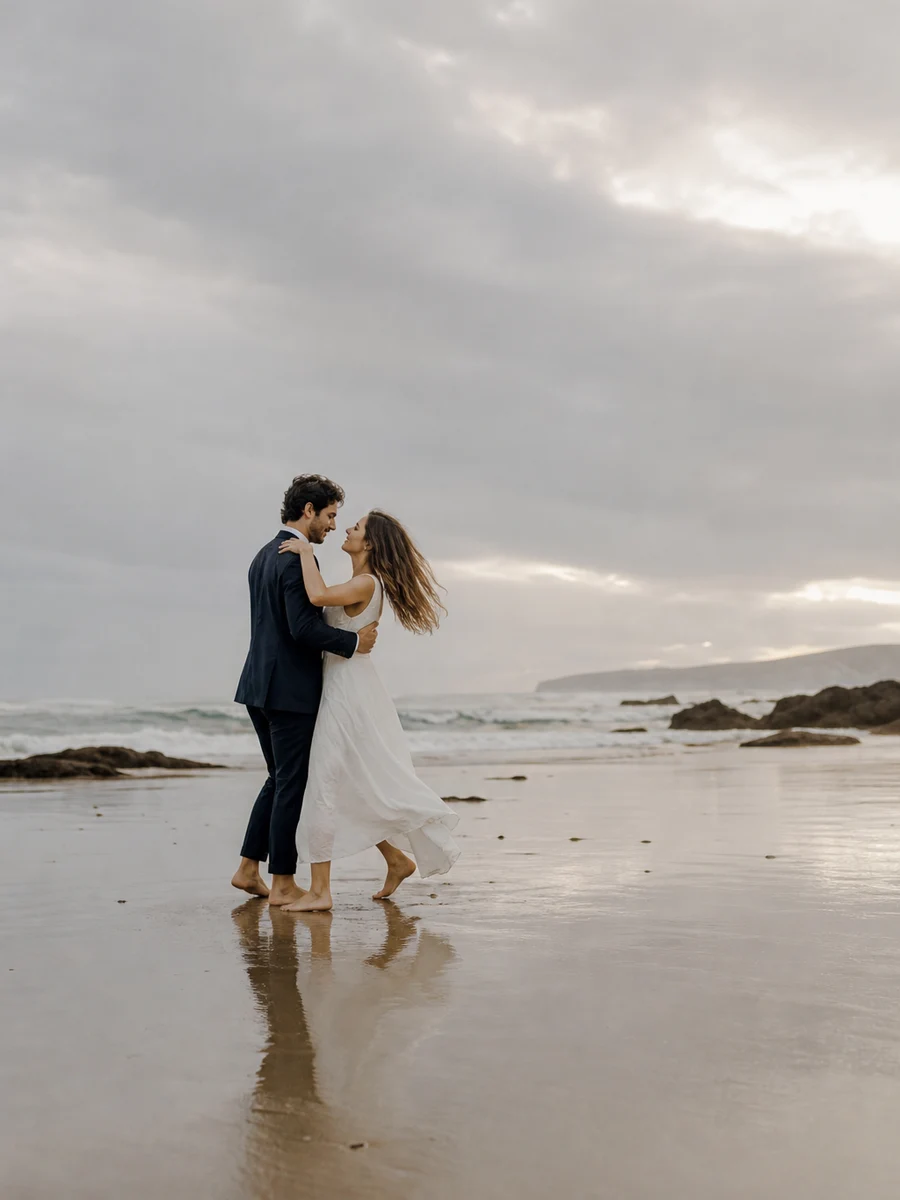
Slow Dance on the Overcast Shore Engagement Photos
On an overcast day, the soft light is perfect for movement — have them practice a simple dance step to capture elegant flow.
📍 beach🍂 spring💑 slow-dance
Outfit Ideas
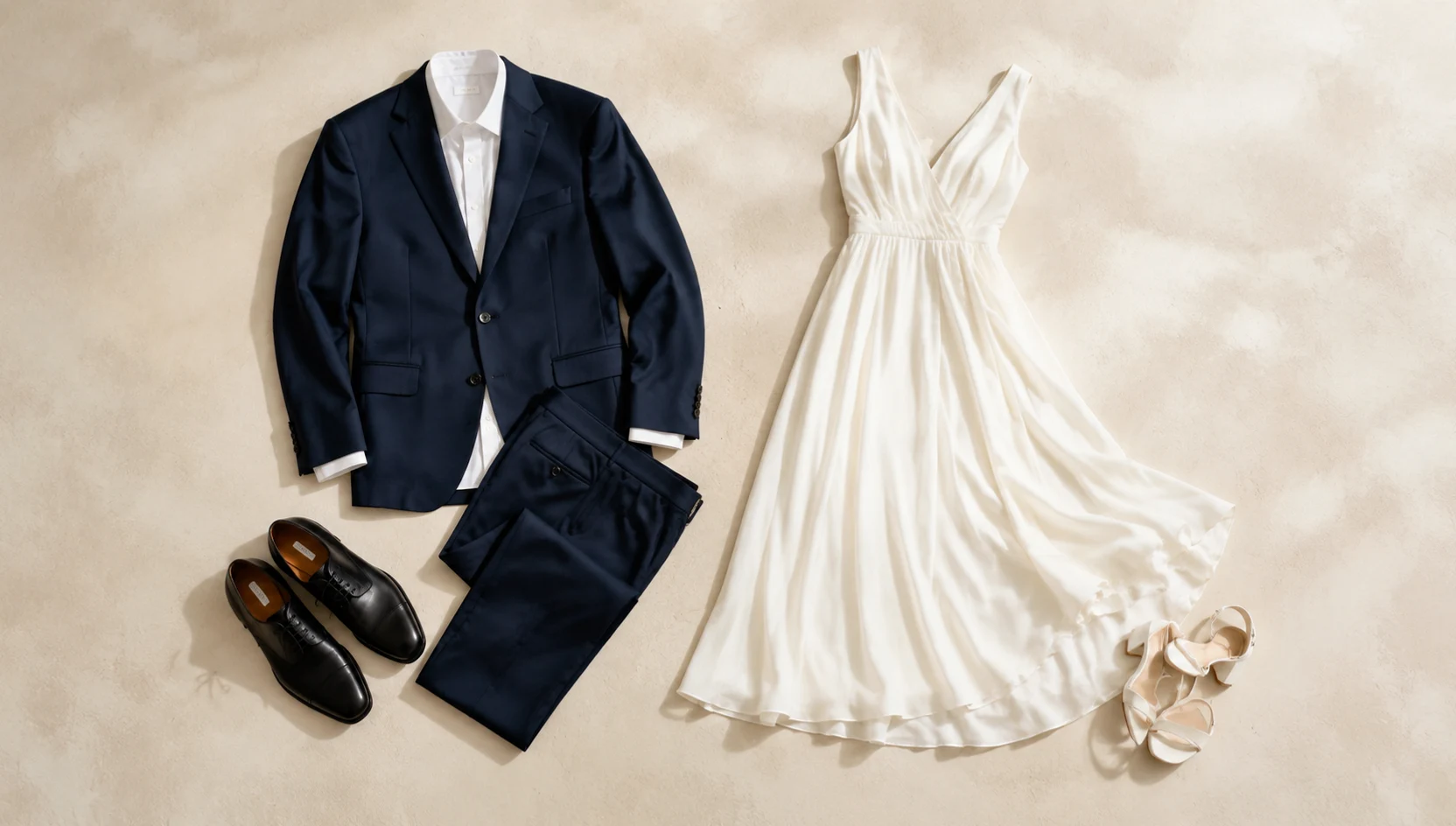
He
navy suit
navy blue
On an overcast day, the soft light is perfect for movement — have them practice a simple dance step to capture elegant flow.
He
navy suit
navy blue
She
white maxi dress
white
You're barefoot on the cool, packed sand as the last of the day's warmth clings to the air. The sky is a soft quilt of gray, but the sun punches through in streaks, turning the wet shoreline into a sheet of hammered gold. Each slow step you take flattens the sand with a quiet hiss, the sound blending with the rhythmic hush of waves folding over themselves. Your white dress shifts gently, the lightweight fabric catching the breeze just enough to add movement without chaos—perfect for your beach engagement photos. His hands find your waist; yours rest against his chest. You sway together—no choreography, just a slow dance that feels like a heartbeat.
The tide is low, revealing a mirror of shimmering wet sand that throws your reflection back at you. Arriving 20 minutes before golden hour gave you time to settle in, to shake off the car ride and let the beach work its calm. You remembered the towel in the bag for later, but for now, the damp sand cools your feet with each pivot. The light shifts from yellow to deep amber, and your photographer circles, capturing the way your foreheads drift together, eyes closed. You breathe in salt and the faint tang of spring blossoms carried in the air. These engagement photos aren't about stiff poses; they're about this: the weight of his palm on your hip, the way the ocean frames your silence. As the sun dips lower, the reflections stretch, and you realize the best prop is the moment itself. You'll leave with sand on your dress and a ring of salt on your ankles—proof of a dance that the tide can't wash away.
🌅 Golden Hour — Shoot in the hour after sunrise or before sunset for warm, flattering light and long soft shadows.
Soft, seasonal blooms like cherry blossoms, tulips, or wildflowers on dunes work beautifully. Spring beaches often have sea thrift or yellow oxalis dotting the sand—these add organic texture without overpowering. Look for flowering shrubs on the path down, or coastal trails with poppies. If you're near a botanical garden, consider starting there for variety. Your photographer can help you pick spots where the blooms frame you without stealing focus.
It depends on the beach and the size of your shoot. Always check with the local parks department or beach authority. Many public beaches allow casual photography without a permit, but if you're using professional gear or specific setups, a permit might be required. Some popular beaches have restrictions during peak seasons. Contact the management at least two weeks ahead to confirm. This small step prevents unexpected interruptions and keeps your session stress-free.
Yes, going barefoot lets you move naturally and feel the textures of wet sand and surf. It adds an intimate, unposed feel. If the sand is particularly hot (in direct sun) or rocky, have backup sandals nearby. For the slow dance pose, bare feet help you sway without tripping. After the shoot, rinse your feet with fresh water—the salt and sand can be abrasive. Bring a towel and a small jug of water from home to make cleanup easy.
Wind can be a friend, not a foe. Lightweight dresses catch the breeze beautifully, creating soft movement. Secure loose items: tie back long hair in a style that still looks romantic, and avoid heavy jewelry that might tangle. Your photographer can position you so the wind blows your dress and hair away from your face. If gusts pick up, you can move closer together for intimate frames. Embrace the wind; it often adds drama that you can't schedule, making your engagement photos feel alive and cinematic.
Yes, but keep them minimal and meaningful. A simple bouquet of dried flowers or a cozy blanket to sit on can enhance the scene without distracting. Avoid large, cumbersome items that might sink in sand or blow away. The ocean itself is a powerful prop—use footprints, shells, or driftwood you find. Props should add to your story, not dominate it. Coordinate with your photographer ahead of time so they can plan angles that incorporate them smoothly.
High tide limits the wet sand beach area, but you can still get beautiful shots. Back up to the dunes or use the rocky headlands. The waves crashing closer can be dramatic. If you specifically want reflection shots, check tide charts and schedule for low tide. If that's not possible, embrace the waves—maybe wade in up to your ankles. Communicate with your photographer; they can adjust poses to use the higher water line creatively, like standing where the foam washes over your feet.
Yes, sand will find its way into your clothes, hair, and even your gear—but that's part of the charm. Embrace it. Bring essentials: a towel to sit on or wipe off with, a change of clothes for after, and a plastic bag for sandy items. Your photographer will likely protect their camera, but your job is to relax. The sand-covered moments often make the most authentic images. Afterward, shaking out your dress and rinsing your feet becomes a shared memory of the day.