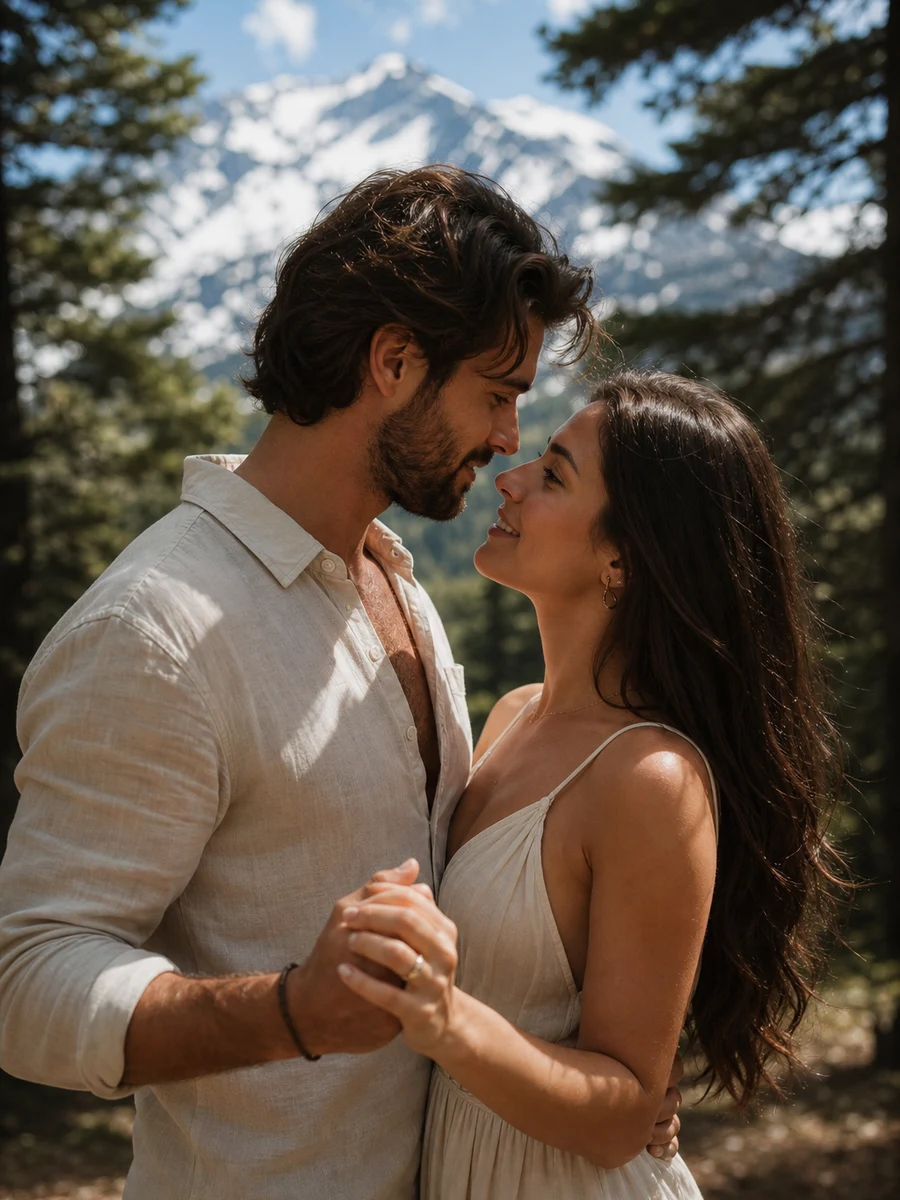
Intimate Slow Dance in Snowy Mountain Shade Engagement Photos
Find a patch of shade, hold each other, and let the quiet intimacy of the mountains surround you.
📍 mountain💑 slow-dance
Outfit Ideas
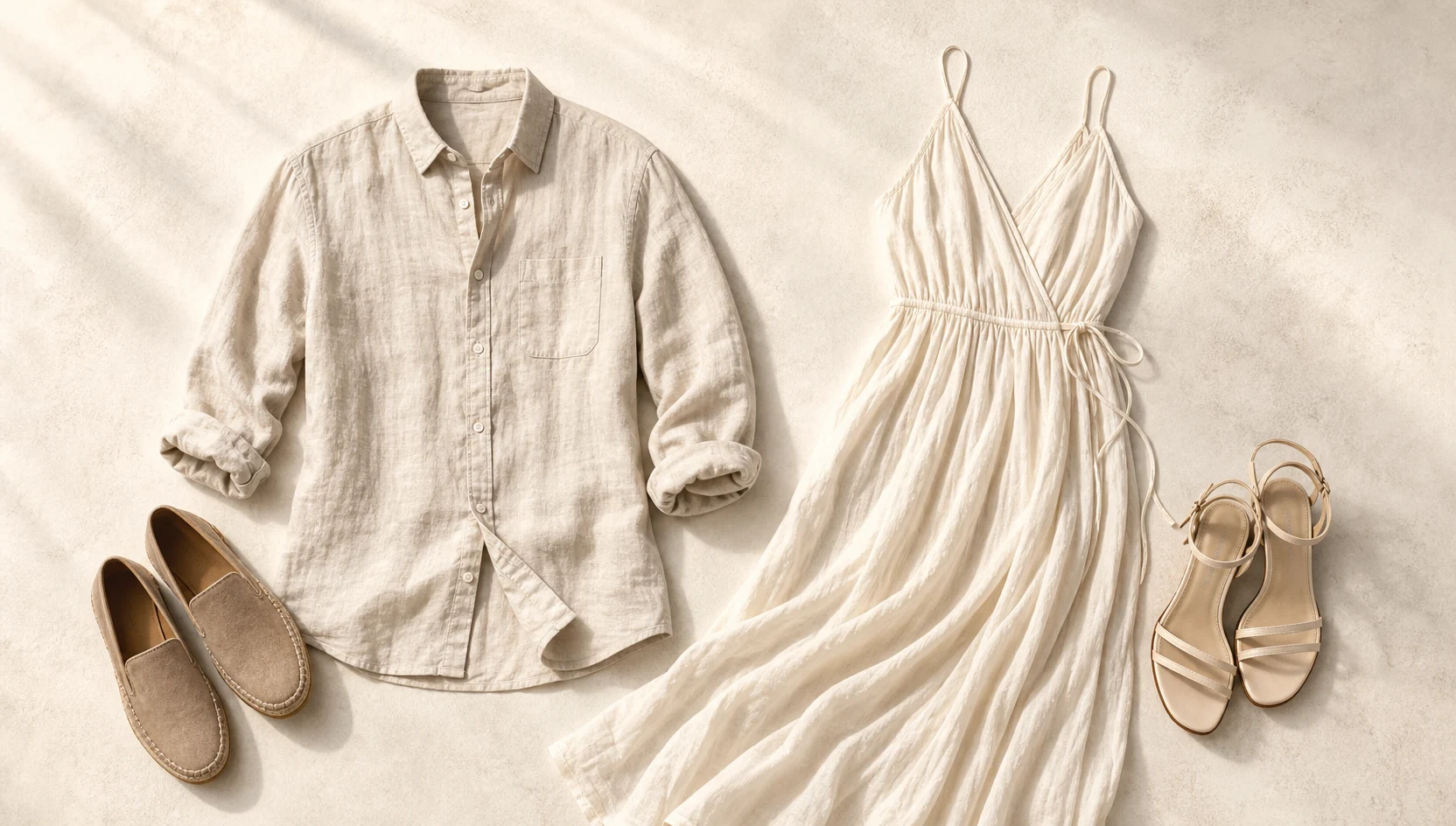
He
linen shirt
beige
She
Find a patch of shade, hold each other, and let the quiet intimacy of the mountains surround you.
He
linen shirt
beige
She
strappy maxi dress
ivory
The air bites your cheeks the moment you step out of the car, crisp and thin at this elevation. It's just past 6 a.m., and the first light spills over the jagged peaks, turning the snow from blue to a soft, peachy glow. You hear nothing but the crunch of your boots on frozen ground and the distant rustle of pine needles. No crowds, no traffic—just the two of you and the mountain's quiet breath.
You've chosen a small clearing where the trees break the sunlight into dappled patches on the snow. Your photographer guides you to clasp hands at chest height, and you naturally lean in until your foreheads nearly touch. The linen of your shirt—a warm oatmeal tone—feels light but insulates just enough. Your partner's beige sweater mirrors the earthy hues, avoiding any stark white that might blow out against the bright snow. As you sway gently, the cold fades, replaced by the warmth of shared breath and the soft rustle of fabric.
The dappled shade is key; it softens the harsh alpine sun, preventing squints and blown highlights. You arrived at first light to catch these moments while the world is still. The golden hour here is fleeting, but the mountains hold the color longer than you'd expect. Your photographer reminds you to relax your shoulders, and you let the quiet rhythm of the slow dance pull you deeper into the embrace. These mountain engagement photos capture not just the scenery, but the stillness you found in each other—above the world, with only the pines as witnesses.
🌄 Sunrise — Arrive at first light for soft color, calm surroundings, and far fewer crowds.
Layers in warm neutrals work best—think oatmeal, beige, or soft taupe linen or wool. Avoid stark white, which can blow out against bright snow or sunlit peaks. Bring a cozy scarf or beanie that complements the landscape, but skip bulky jackets unless it's frigid; you want your silhouettes to look natural. Earth tones harmonize with the evergreen and stone without competing. Sturdy, waterproof boots with good tread are a must, even if they’re not in every frame. Your comfort shows in your expressions, so wear fabrics that move easily and keep you warm enough to forget the cold.
Typically 90 minutes to two hours. This gives you time to hike a short distance if needed, change outfits if you planned one, and settle into the environment. In the mountains, light shifts fast, so a shorter session often works best around sunrise or sunset. You'll spend the first 20 minutes warming up—literally and metaphorically—as you get used to the camera and the terrain. The middle hour is when the intimacy shines, especially during slow, quiet moments like a gentle dance. Don’t rush; your photographer will pace it so you never feel hurried or too cold.
Yes, especially if snow or uneven terrain is involved. Even if you're staying on a packed trail, early morning frost can be slippery. Wear boots with good ankle support and insulation, and bring an extra pair of dry socks. You can change into more elegant footwear for close-up shots if the ground is safe, but keeping warm, dry feet is most important. Your photographer can frame shots to minimize the boots if you prefer, but many couples actually love the rugged look against the formal or boho outfits. Safety and comfort always come first.
Thin air can leave you feeling winded faster, even during gentle movement. Arrive a day early to acclimate if you're coming from sea level. Hydrate heavily the day before and morning of, and bring water with electrolytes. During the session, slow down your movements and take breaks when you need them. The less you rush, the more natural your poses will look. Your photographer will likely suggest quiet, intimate moments like slow dancing that don't require much exertion. Listen to your body—headaches or dizziness mean it's time to pause and breathe deeply.
The 'best' depends on your vibe, but a few stand out. Grand Teton National Park offers dramatic, jagged peaks and accessible trails—permits are straightforward. Colorado's San Juan Mountains deliver alpine meadows and golden aspen in fall. Mount Rainier’s Paradise area in Washington is stunning with wildflowers or snow, but weather can be unpredictable. The Great Smoky Mountains provide a softer, rolling backdrop with frequent mist. Research permit requirements, seasonality, and crowd levels for each. Pick a range that feels like you—whether rugged and remote or lush and rolling.
Absolutely. Snowy landscapes offer a quiet, monochromatic beauty that makes warm-toned outfits pop. Just plan carefully: check road closures and trail conditions. Snow reflects light beautifully, so soft, diffused light on an overcast day or during golden hour works wonders. Dress in real wool or layered insulation, and bring hand warmers to tuck into pockets between shots. The cold can add a sense of coziness—snuggle close, share your breath, and let the chill push you into each other. Your photographer will work quickly, but the results are intimate and rare.
Sunrise is often better for solitude. You'll share peaks with far fewer hikers, and the still morning air holds a meditative quiet. The light is cooler, softer, and can play beautifully with snow or mist. Sunset draws warmer tones and larger crowds, but the alpenglow on rock faces is unmistakable. Check the direction of light on your chosen location—some peaks are lit at sunrise, others at sunset. If you value intimacy and empty trails, set that early alarm. The extra effort pays off in genuine, uninterrupted moments.