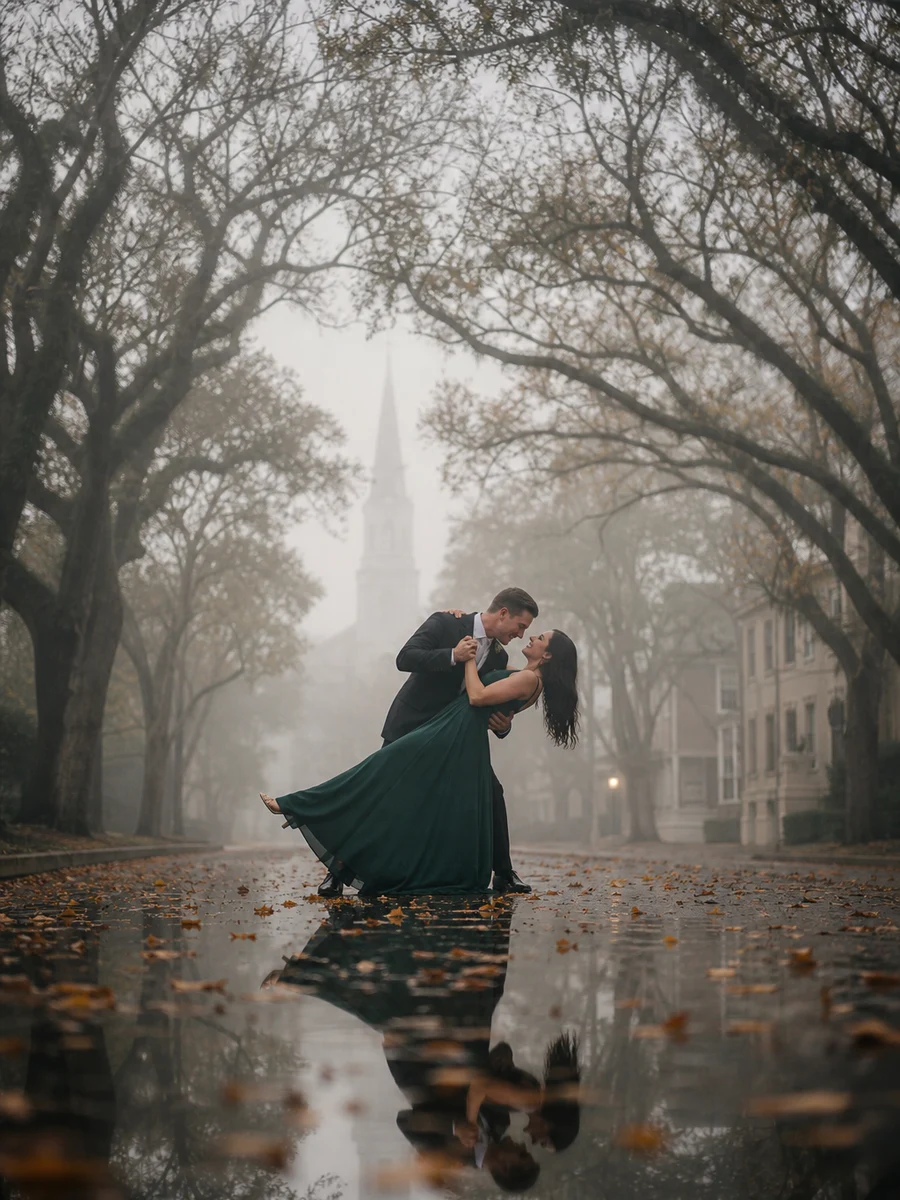
Misty Morning Slow Dance Amid Falling Leaves Engagement Photos
A little early morning fog and an empty street can turn a simple dance into something you’ll never forget.
📍 city🍂 fall💑 slow-dance
Outfit Ideas
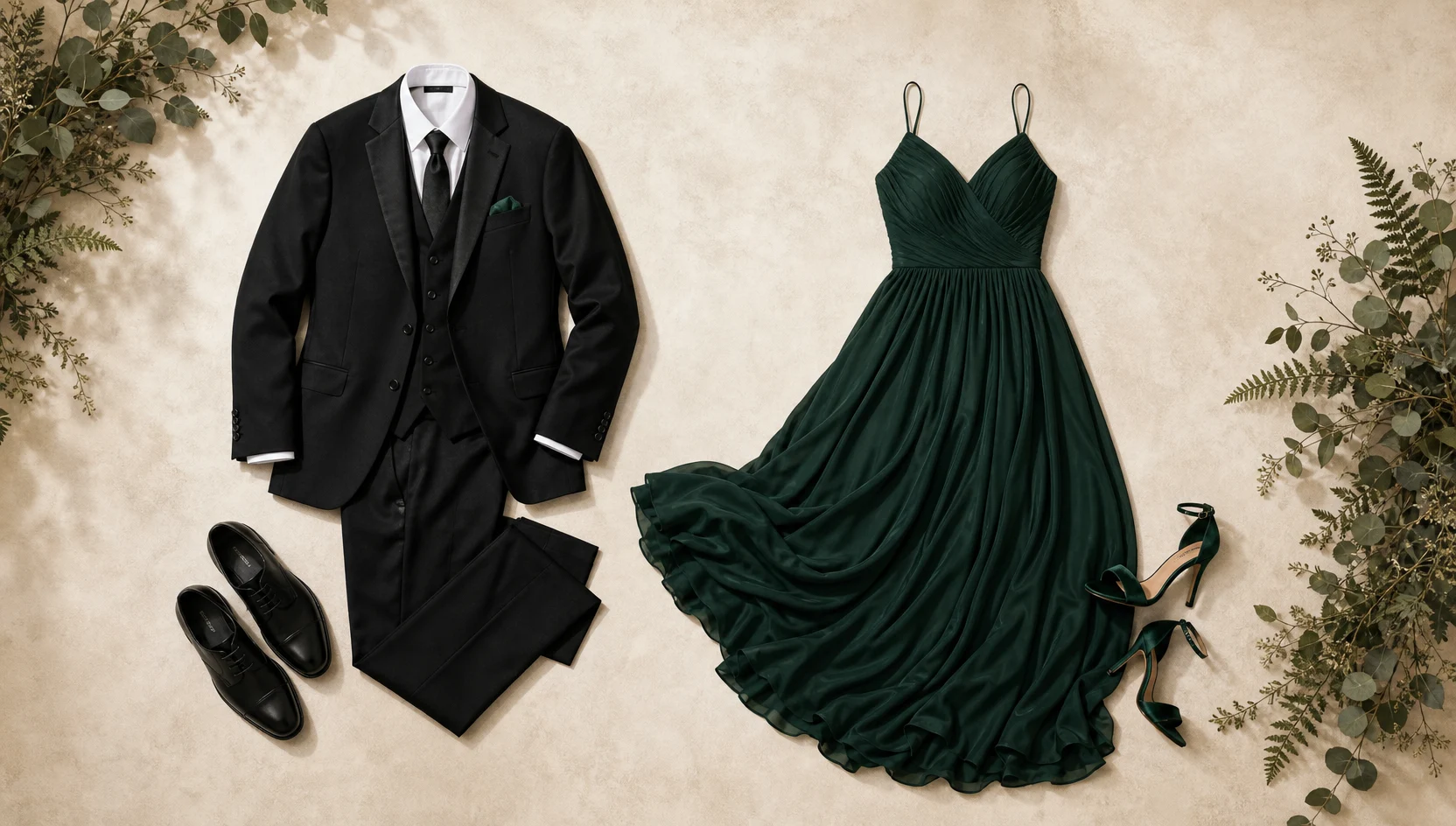
He
suit
black
A little early morning fog and an empty street can turn a simple dance into something you’ll never forget.
He
suit
black
She
gown
emerald green
Your heel clicks against the wet cobblestone, the last echo of an afternoon shower still shimmering in puddles. The air is cold and smells of damp leaves; a thin mist curls around the streetlamps as they flicker on, one by one, against a deep blue sky. This is the 20-minute window when the city holds its breath—the blue hour—and your engagement photos will soak up every bit of that moody magic.
You’re wearing a flowing forest-green dress that catches the breeze, and he’s in a dark suit, the two of you a sudden burst of color against the gray stones and fog. The photographer says, “Just start moving together,” so you do. A slow dance, right there on the empty square. No music, just the distant hum of traffic and the rustle of falling leaves. He pulls you in, and you feel the damp hem of your dress brush against his shoes. Then he dips you—your back arches, your eyes find his, and for a second the city dissolves. The puddle beneath you mirrors the scene: two figures wrapped in autumn.
Between shots, you blot your heels with the towel you wisely packed (wet ground is no joke), and the photographer shows you a test frame: the glow of a bistro sign bleeds into the haze behind you, exactly the kind of raw, cinematic feel you want from city engagement photos. You didn’t need a perfect lawn or a mountain backdrop; you just needed this moment after dusk, when the world turns to shadow and the two of you are the only sources of warmth. Blue hour doesn’t wait, though. As the sky deepens to black, you know you captured something fleeting—the exact minute when fall gave you permission to be dramatic, and the city became your private ballroom.
🌆 Blue Hour — Shoot in the ~20 minutes after sunset when city lights glow against a deep blue sky.
Fall delivers a short burst of crimson and gold foliage, plus that crisp, diffused light that makes skin glow. Temperatures are cooler, so you can layer formal outfits without sweating. The best time to book is about three to four months ahead, especially if you want peak autumn color. In popular city parks, weekends fill up fast. Late October through early November often gives the most vibrant leaves and that low-angle sun, but exact timing varies by region. Booking early also lets you plan for backup rain dates.
New York offers iconic backdrops like Central Park in fall or the Brooklyn Bridge at blue hour. Chicago combines lakefront skyline views with dramatic architecture. San Francisco’s fog and hills create moody, romantic scenes, while Savannah’s historic squares draped in Spanish moss feel timeless. For European charm, try Boston’s Beacon Hill or Charleston’s cobblestone streets. The key is choosing a cityscape that matches your personality—tall, glowing towers or intimate, leafy lanes. Each city’s unique light and texture will shape the mood of your photos.
Most rooftops require permission, so contact the venue or building management well in advance. Some charge a fee or have specific time slots, often aligning with sunset. Access is usually via a freight elevator; ask about load limits if your photographer brings gear. Wind is a real concern, so choose a hairstyle that won’t whip across your face, and avoid loose props. Arrive early to scout the light and any safety barriers. If the rooftop has reflective surfaces or lounge furniture, you’ll get varied compositions in a single spot.
It happens—seasonal changes, construction, or unexpected crowds can alter a place. Always scout the spot a day or two before your shoot, either in person or via recent social media tags. Bring a photo of the reference look so your photographer knows what drew you there. Have a backup spot within walking distance. If the light or foliage isn’t cooperating, lean into the mood you actually have; a sudden puddle or empty street might become your favorite shot. Flexibility turns surprises into unique details.
Yes, if you pick well-lit, populated areas and stay aware. Blue hour shooting typically ends 20–30 minutes after sunset, so you’re not out in the deep night. Stick to main streets, waterfronts, or plazas with security presence. Share your location with a friend, and leave valuables locked in the car. Hire a photographer who knows the area’s quieter spots and can work efficiently. If you’re in a more secluded urban spot, bring a small flashlight for footing and a charged phone.
The best time isn’t a single hour; it’s the transition between golden hour and blue hour. Golden hour—roughly an hour before sunset—gives that warm, flattering side light. Blue hour, the 20 minutes after the sun dips below the horizon, paints the sky a deep indigo and makes every streetlamp and neon sign pop. Schedule your shoot to start late in golden hour so you can capture both. In a city, this contrast between natural light and artificial glow creates the most dramatic, editorial-looking images.
It depends on the city and location. Public sidewalks and streets usually don’t require a permit for casual portraits, but commercial shoots or setups with tripods and lighting may. Some parks (like Washington Square Park in NYC) require a permit for professional photography. Check the city’s film office or parks department website; small fees often apply. If you’re staying in one spot for a while, you’re more likely to draw attention. Your photographer should know the local rules and handle any permits needed.