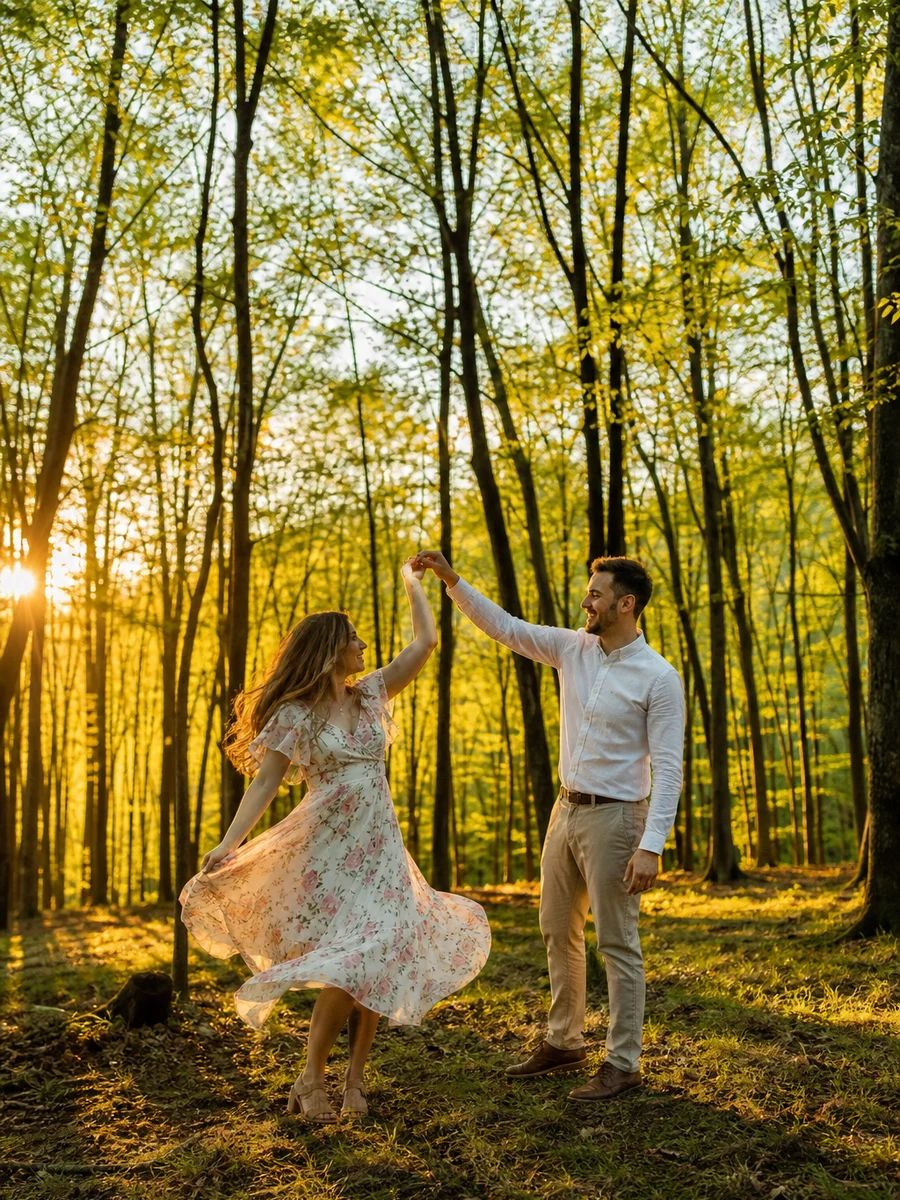
Slow Dance in Golden Forest Light Engagement Photos
Let the golden hour light wrap around you as you move together, letting the dress flare and the laughter spill out.
📍 forest🍂 spring💑 slow-dance
Outfit Ideas
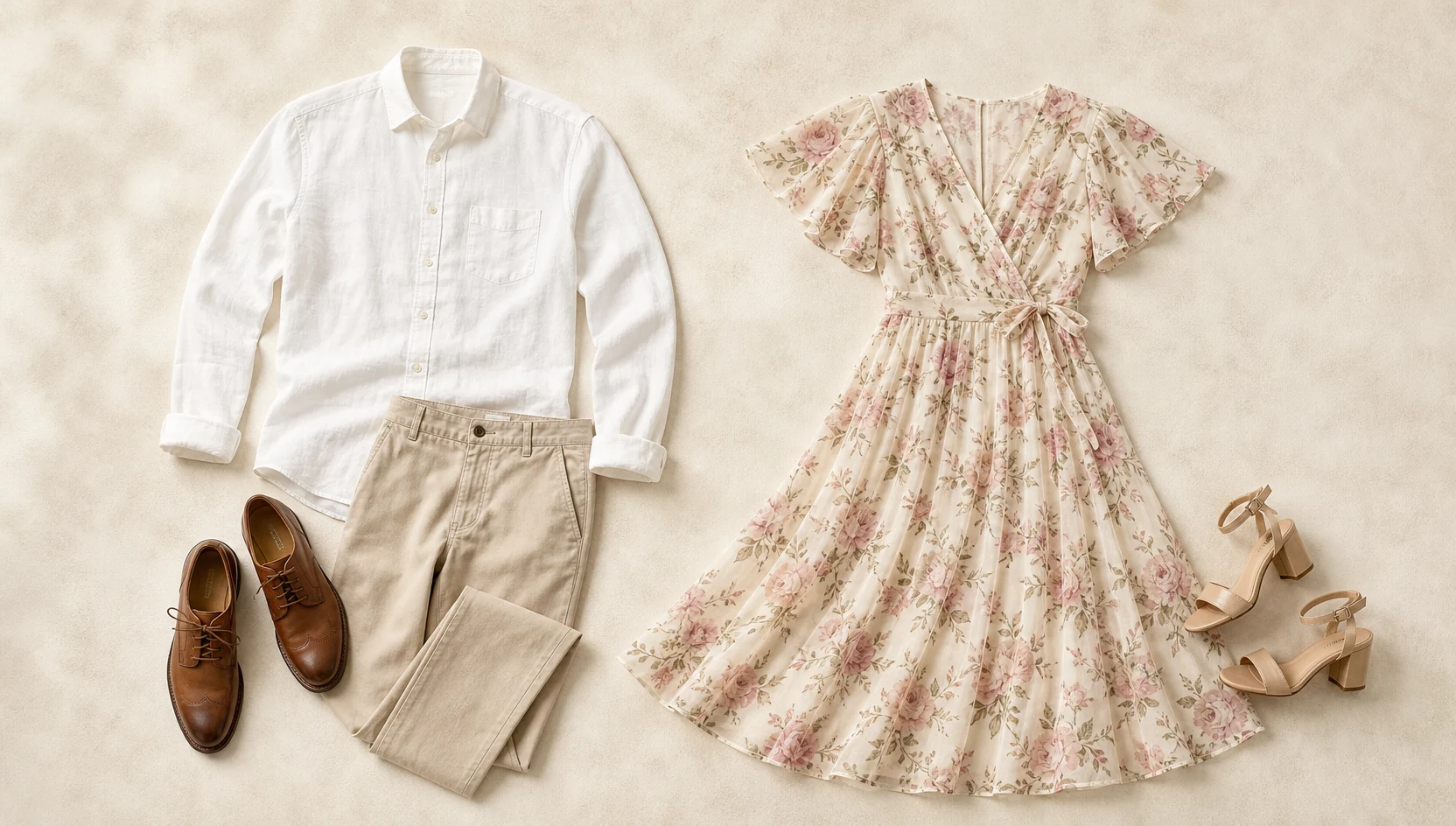
He
linen shirt + chinos
white + beige
Let the golden hour light wrap around you as you move together, letting the dress flare and the laughter spill out.
He
linen shirt + chinos
white + beige
She
floral midi dress
white with pink floral pattern
You step into the clearing and the world softens. The forest floor is a damp carpet of last year’s leaves, muffling your footsteps. Overhead, a high thin layer of cloud diffuses the late-afternoon sun into a wraparound glow—no harsh shadows, just an even, gentle light that makes everything look like a painting. There’s a faint scent of pine and wet earth. You hear the distant chatter of a woodpecker, the rustle of a squirrel in the underbrush.
Your photographer waves you into position. You’ve already scouted this spot together, making sure the ground is level and free of roots that could catch a heel. That little bit of homework pays off now—you can focus on each other instead of your footing. You face each other, close but not stiff. His hands settle on your waist; yours loop around his neck. For forest engagement photos, this kind of movement feels natural: a quiet conversation with your bodies. The light filters through new spring leaves, dappling your floral midi dress in soft patches. His tan pants and white shirt are a calm counterpoint, letting your outfit pop while blending with the natural palette.
After a few gentle sways, your photographer calls out, 'Raise your joined hands and give her a twirl!' You lift your arm, and she spins. Her dress flares out, catching the light and the breeze. It’s a split-second of motion that freezes into something joyful on camera. A little tip: if the dress isn’t flaring enough, try a faster spin or step slightly away as you twirl. You arrived about an hour before sunset, because even on an overcast day, the golden hour backlight adds a subtle rim glow that separates you from the background. The clouds act like a giant softbox, keeping your skin tones even and flattering. This is the kind of light that forgives everything—no squinting, no unflattering shadows under the eyes.
When you’re backlit, the camera sees the light through her hair and the edge of the dress, making them glow. For engagement photos that feel as soft as this moment, remember: scout your ground, trust the overcast, and let the movement happen.
☁️ Overcast — An overcast sky is a giant softbox — even, shadow-free light that flatters skin tones.
Look for forests with fresh, pale-green canopies and carpets of wildflowers like bluebells, trilliums, or wood anemones. Dappled light through beeches or maples creates a soft, romantic feel. Botanical gardens often have curated spring blooms and reliable paths, while riverbanks offer fern-covered banks and reflected light. Apple orchards with blossoms are another classic—petals falling like confetti add motion. Avoid pine plantations: they’re too dark. Scout a location that balances open glades with denser trees, so you get variety in backgrounds. Morning shoots catch dew and bird song; late afternoon brings warmer tones and longer, softer shadows.
Most forest engagement photo sessions involve a half-mile round-trip at most. Choose a location with easy trailhead access—state parks often have mapped loops that circle back to the lot. Wear sturdy, comfortable shoes for the walk, then switch into your photo shoes at the spot. Pack them in a tote with baby wipes to clean soles. If the ground is muddy, embrace it: barefoot shots on moss feel grounded and intimate. Let your photographer know your comfort level; they can adjust the route to minimize elevation gain and avoid loose scree. The walking itself becomes a warm-up, shaking off camera jitters.
Stay loose—a passing hiker is rarely a problem. Your photographer will time shots between groups, or use a wider aperture to blur them into bokeh. If someone stops to watch, a friendly wave often encourages them to move along. In busier spots, shoot in the opposite direction of traffic, or use your bodies to block unwanted views. Early mornings and weekdays see fewer people. The quiet of a less-traveled trail more than makes up for a little waiting. Some photographers bring a small sign or simply ask politely for a moment of privacy—most people are happy to oblige.
Spring and autumn are prime. In spring, you get translucent new leaves, blooming ephemerals, and that soft, high-overcast light that flatters skin. The air still carries a crisp edge, keeping you comfortable in layers. Fall offers a blaze of color—maples, oaks, beeches—and the low sun angle creates warm rim light all afternoon. Summer can be tricky: dense canopy blocks light, humidity wilts hair, and bugs are at their peak. Winter strips the forest to its bones; stark, skeletal branches have a moody beauty if you lean into it, but you’ll need to bundle up and move quickly to stay warm.
Choose soft, earthy tones that echo the woods. A floral midi dress in pastels or muted botanicals looks weightless and romantic; pair it with his tan chinos, a white linen shirt, and maybe a light sweater over the shoulders. Avoid heavy patterns that compete with the leaf texture. Layer: a denim jacket or a wool wrap can be added or shed for variety. Shoes matter—wear hiking boots for the trail, then swap into leather flats or clean sneakers for the shoot. Bring a lint roller for pollen, and skip jewelry that could snag on branches. Neutral nails and natural makeup photograph best against green backdrops.
With a few precautions, forest shoots are perfectly safe. Apply odorless insect repellent to ankles, wrists, and neck before you leave the car—permethrin-treated clothing adds extra protection against ticks. Stick to groomed trails; avoid brushing against tall grass where ticks lurk. Afterwards, do a thorough tick check in a well-lit room. Mosquitoes are worst at dawn and dusk, so a midday or early afternoon session dodges them. Bring a small first-aid kit with tweezers, antihistamine cream, and band-aids for scratches. Let your photographer know about any allergies, especially to bee stings.
Start with your state’s parks and forests website—many have online photo galleries and trail descriptions. Arboretums and nature preserves often permit photography without a fee but require a call ahead. Google Maps satellite view helps you spot clearings and open understory. Visit your top choices at the same time of day you plan to shoot: check how the light falls, note any deadfall or muddy patches, and listen for highway noise. Your photographer likely has a list of tried-and-tested spots; ask for their favorites. Private land can be gorgeous but always get written permission. Prioritize places that feel personally meaningful—where you picnicked early on, or took your first hike together.