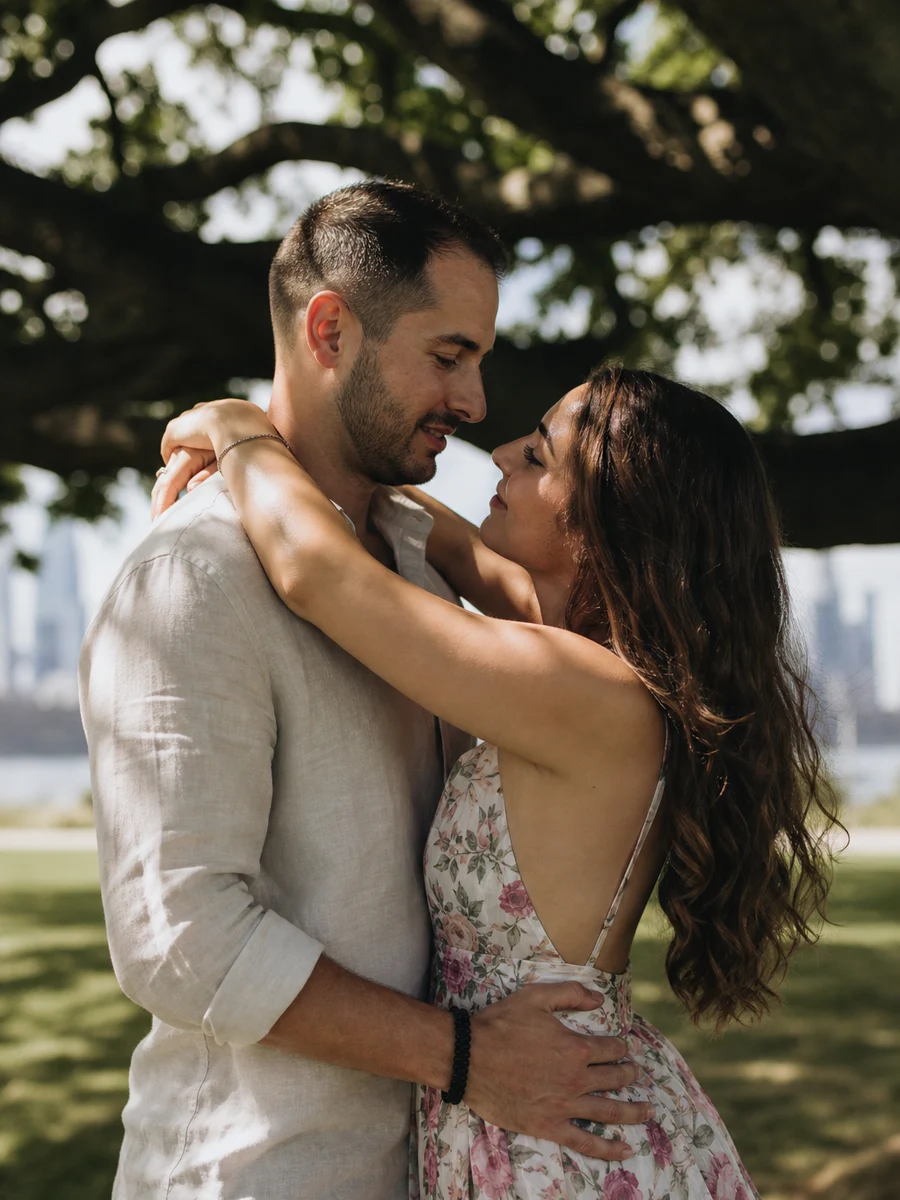
Slow Dance Under Dappled Shade Engagement Photos
Forget the skyline for a minute and just sway — the light dancing on your dress is its own kind of city sparkle.
📍 city💑 slow-dance
Outfit Ideas
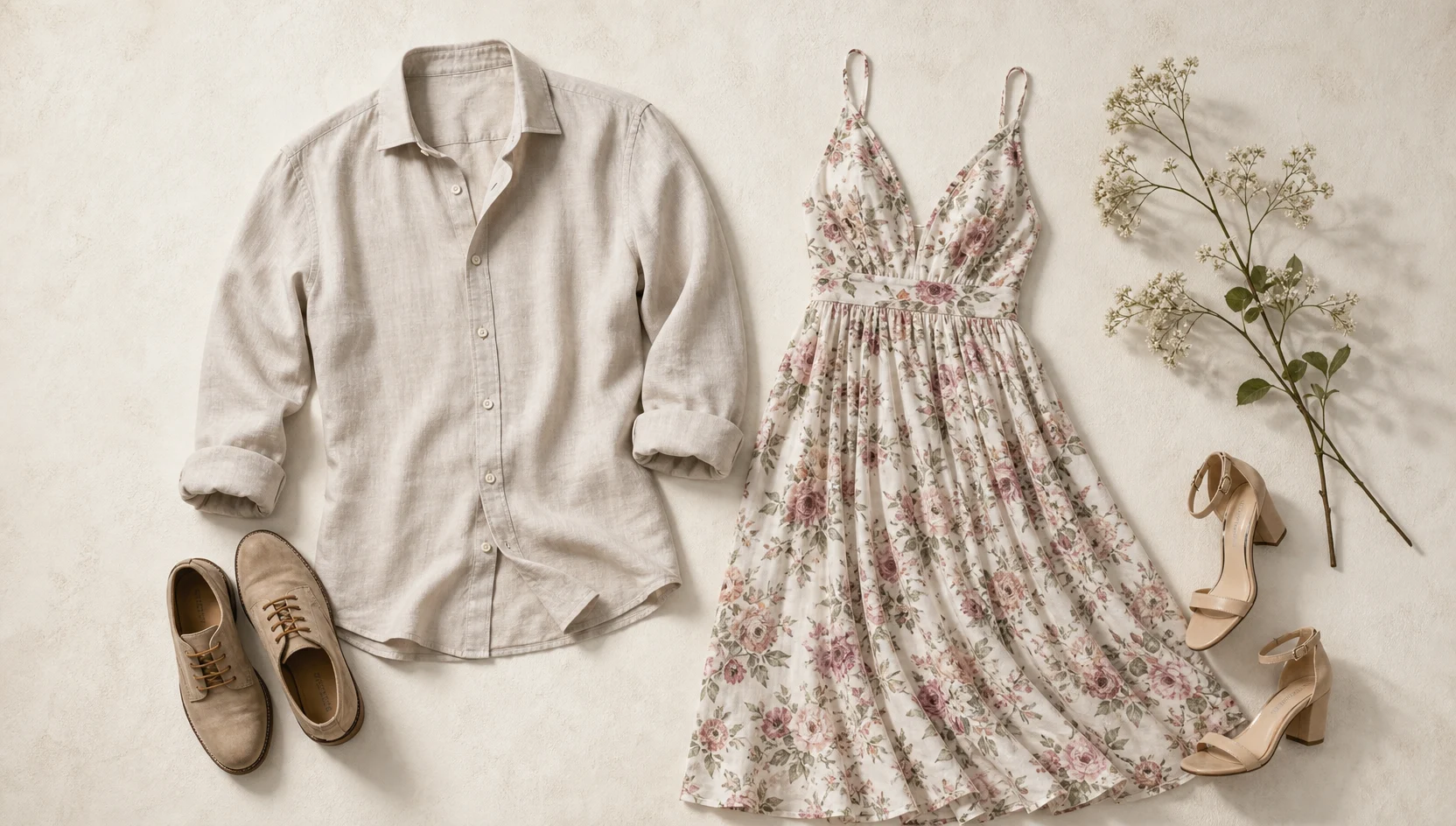
He
linen shirt
beige
She
floral midi dress
Forget the skyline for a minute and just sway — the light dancing on your dress is its own kind of city sparkle.
He
linen shirt
beige
She
floral midi dress
white floral
You’re here for engagement photos that feel like a quiet duet amid the noise. Stepping out of the car at noon, the sun is a white-hot coin overhead. The city buzzes—horns, distant sirens, the rustle of people. But you head into the park, where a massive oak stands, its canopy wide. Under it, the light shatters into a thousand moving pieces, dappled shade that dances on the grass. You’re in your light linen shirt; she’s in a floral dress that catches every breeze. The air is thick with summer, but under this tree, it’s cooler, quieter. Your photographer guides you into the first pose: she leans her back against the trunk, you lean in, and the leaves throw ever-changing patterns across your faces. It feels like a secret hideaway in the middle of the city.
Then, hours later, the light changes. You’ve rested, changed, and now you’re on a rooftop as the sun slips below the horizon. The sky deepens from pale blue to indigo. It’s that swift, fleeting window—blue hour. Around you, the city begins to sparkle, windows lighting up like lanterns. You pull her close for a slow dance, no music needed, just the distant rhythm of traffic. Her arms drape over your shoulders, your foreheads touch. The camera clicks, capturing the way the ambient city glow wraps around you. It’s quiet up here, just your breaths and the hum of a waking night.
These engagement photos hinge on timing. The midday tree cover shields you from harsh glare, while blue hour bathes your slow dance in a soft, cinematic light. You’ll leave with images that feel both intimate and electric—proof that the city holds pockets of softness, if you know when to look.
🌆 Blue Hour — Shoot in the ~20 minutes after sunset when city lights glow against a deep blue sky.
It depends on the location. Public streets and sidewalks generally don’t require permits for casual shoots, but many parks, rooftops, and iconic spots do. Before you go, check the city’s parks department website or call 311. Some places require a small fee and advance booking, especially for professional photography. If you’re shooting on private property—like a hotel rooftop or a trendy café—you’ll need permission from the owner. Ignoring this can lead to fines or being asked to leave mid-shoot. A quick search or a call can save you stress. Often, your photographer will know the local rules and can handle permits for you.
The best cities offer a mix of architecture, green spaces, and dynamic light. New York City is iconic for its skyline and Central Park. San Francisco gives you fog, hills, and the Golden Gate Bridge. Chicago blends lakefront beauty with stunning architecture. Nashville has murals and a vibrant downtown. Austin offers a laid-back, colorful vibe. Smaller gems like Savannah, with its moss-draped squares, or Portland with its bridges and gardens, also shine. Think about what backdrop matches your style: gritty industrial, sleek modern, or historic charm. Visit at the right season to avoid extreme weather and crowds. Research hashtags like #chicagoengagementphotos to see real shoots from that city.
Rooftop shoots require planning. First, find a location: some hotels and apartment buildings offer public access or rentable event spaces. You’ll likely need permission, and possibly a permit or a paid booking. If it’s a friend’s rooftop, still get written consent to avoid surprises. Timing is critical: blue hour is brief, so arrive early to scout the scene and set up. Wind can be strong up high, so secure loose hair and dresses. Elevators may be slow—budget extra time. Also, check weather: lightning or heavy wind can cancel a rooftop shoot quickly. Your photographer might bring portable lighting to balance the city glow with your faces.
It happens often—lighting, crowds, or seasonal changes alter the scene. Scout the spot in person a few days before, at the same time you’ll shoot, to see the real conditions. If that’s not possible, ask your photographer to do a walkthrough; they’ll know how to work with what’s there. Have a backup plan within walking distance. For example, if your mural is now obstructed by construction, pivot to a nearby textured brick wall. Online photos are often taken in ideal conditions, so lower your expectations slightly and embrace the authenticity. Sometimes a less-perfect location yields more genuine moments because you’re not chasing a carbon copy of someone else’s shot.
Yes, with precautions. Blue hour, just after sunset, is still early enough that most city neighborhoods are busy and well-lit. Stick to areas with foot traffic, like restaurant districts or public squares. Avoid truly late hours (past 10 p.m.) when streets empty out. Bring only what you need; leave valuables at home or with a trusted friend. Have your photographer keep gear close and not scattered. Use rideshares to move between spots rather than walking long distances in dim areas. If you feel uneasy, trust your gut and relocate. Many cities have safety apps; keep your phone charged. A little awareness lets you focus on the moment, not the worry.
Blue hour—the 20 minutes after sunset—is unbeatable. The sky turns a deep, luminous blue, while city lights flicker on, creating a balanced, cinematic glow. For daylight shoots, aim for golden hour just before sunset, but in a city, that warm light can be blocked by tall buildings. Midday is harsh, but you can use tree cover for dappled shade, as we did in this idea. Avoid noon without shade because overhead sun creates unflattering shadows. Sunrise can also work if you want empty streets, but you’ll need to be up early. Ultimately, blue hour gives you the most romantic, urban atmosphere with a soft, even light that flatters faces.
For public streets and sidewalks, usually no permit is required if you’re not blocking traffic or using heavy equipment. However, if you plan to set up lights, tripods, or props, or if you’re shooting in a way that impedes pedestrians, you might need one. Some cities have laws restricting commercial photography, and even if it’s just an engagement shoot, a professional photographer could be considered commercial. A good rule: act like tourists snapping a few photos. If you’re working with a photographer, they’ll know the local nuances. For peace of mind, always check the city’s film office website beforehand. When in doubt, a quick call to their office clears things up.