Sunset Curb Sitting in Monochrome Engagement Photos
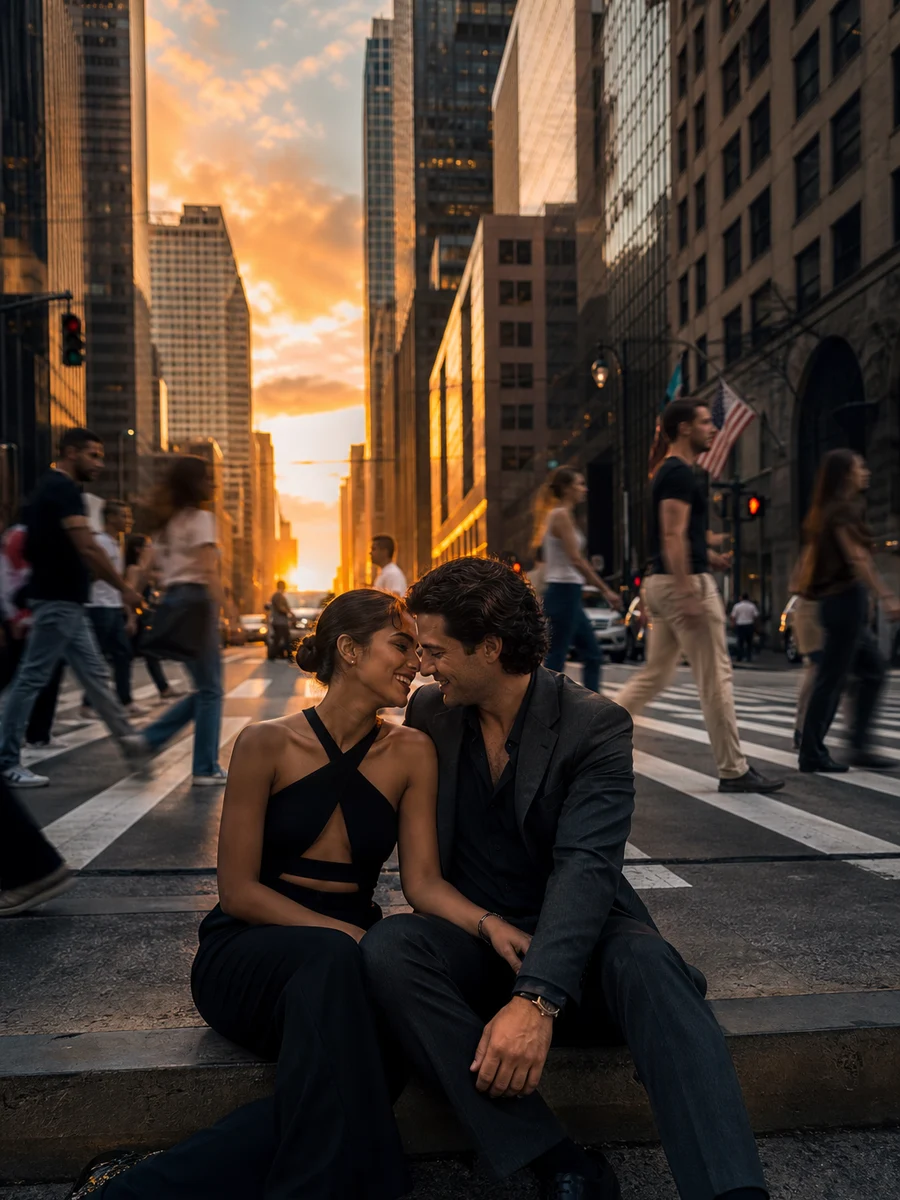
Sit on the curb like you own the city. That low angle will capture the sunset drama behind you while keeping the focus on your closeness.
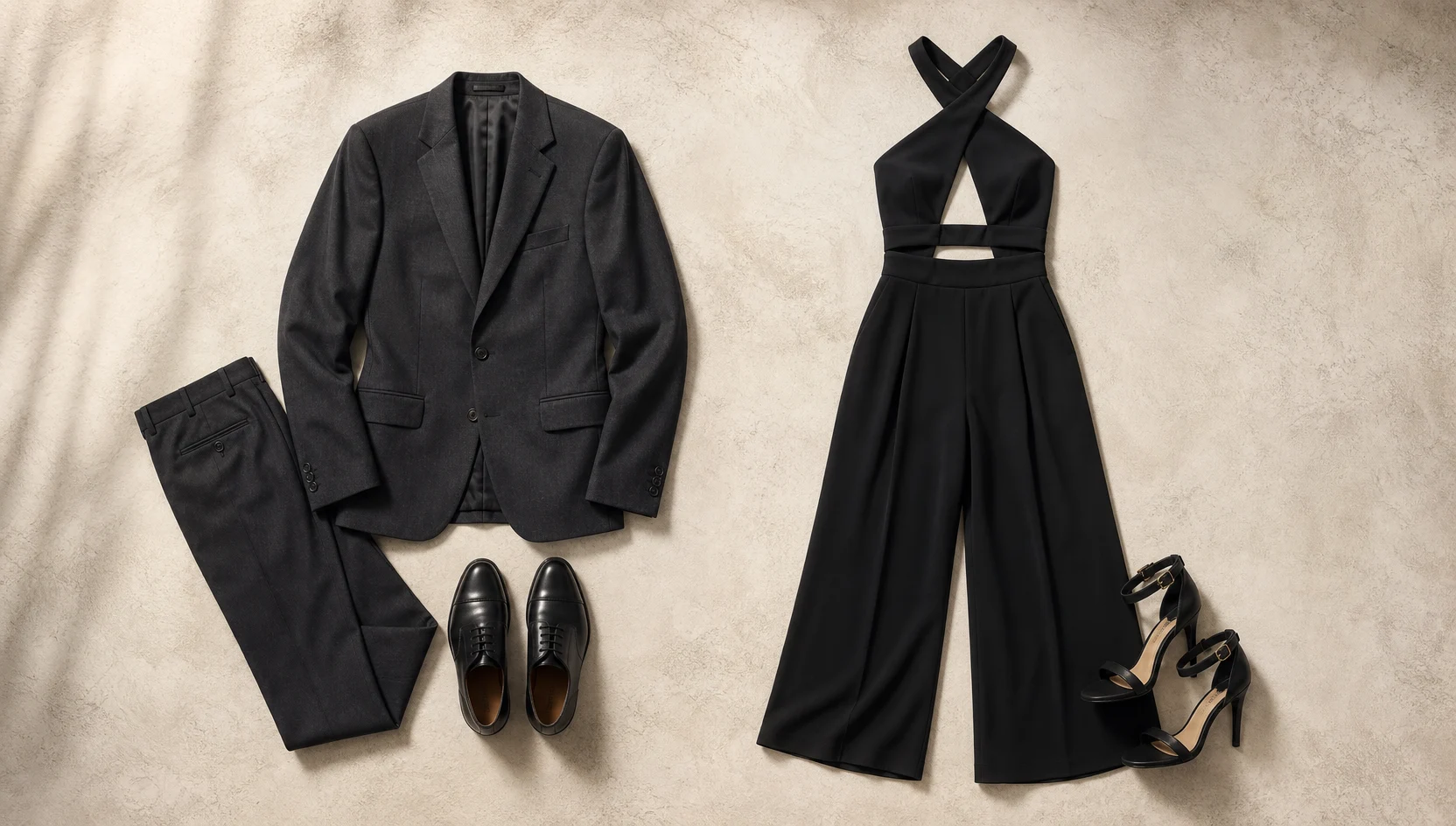
Outfit Ideas

He
suit
charcoal gray
She

Sit on the curb like you own the city. That low angle will capture the sunset drama behind you while keeping the focus on your closeness.

He
suit
charcoal gray
She
halter-neck jumpsuit with cutouts
black
Your sneakers scuff the curb as you settle in, the concrete still radiating the dayâs stored warmth through your jeans. The sky has shifted from orange-bleed to a deepening ultramarine, and the streetlamps just blinked onâa string of amber pearls receding down the avenue. Your partnerâs shoulder presses against yours, the black wool of his sweater coarser than your silky top. You notice that texture difference; the photographer told you it would keep you from blending into one dark shape. Behind you, the rush-hour crowd surges, a stream of blurred silhouettes. The cameraâs shutter clicks rapid-fire, freezing only the two of you in focus while the city smears past. You lean your forehead against his, feeling the tickle of his breath just before he smiles. Your hand rests on his thigh, the denim warm and rough, anchoring you both to this little concrete island. A taxi horn blares, distant laughter spills from a bar, and the scent of a food cartâs roasting nuts drifts overâthis is the specific, electric quiet of blue hour. You showed up twenty minutes before sunset to claim this exact spot, a pre-scouted stretch of sidewalk where the skyline stacks up just right behind you. Now, as the last light drains away, your city engagement photos are happening in the narrow window when the sky and the streetlights balance perfectly. You wonât need to fake a single expression; the city does the work for you. Just keep leaning into each other until the photographer calls itâand donât forget to wiggle your toes, because forty minutes on a curb can numb them faster than youâd think.
đ Blue Hour â Shoot in the ~20 minutes after sunset when city lights glow against a deep blue sky.
Shoot during blue hour on a weekday, when the after-work rush has passed but the sky still carries deep color. Avoid popular overlooks; instead, walk a few blocks into side streets with interesting architecture. A fast shutter speed (1/250s or higher) lets you freeze yourself sharply while the few remaining passersby blur into motion. Your photographer can also angle upward to use the skyline as a clean backdrop, and you can face each other to create an intimate bubble that feels private even on a busy block.
For a monochrome look, both of you should wear deep blackâmatte fabrics photograph best, so think knit sweaters, denim, or wool coats. Introduce texture contrast so you donât merge together: pair a smooth silk blouse with a nubby tweed jacket, or pebbled leather boots with cotton trousers. Avoid shiny synthetics that catch glare from streetlights. Keep accessories minimal and dark-toned. Arrive wearing your outfits; thereâs rarely a convenient place to change curbside, and you want to stay warm as the temperature drops after sunset.
Plan for about 90 minutes total. Youâll spend the first 15â20 minutes walking to your first spot and warming up, then the core shooting window falls during the 20-minute blue hour after sunset. Many photographers like to start during the last golden light, so you might shoot 30 minutes before sunset as well. Factor in time to move between 2â3 nearby locations; scouting them ahead of time keeps transitions quick. If youâre doing an outfit change, add another 15 minutesâbut for a curated curb-sitting series, one strong look is often enough.
Rain transforms city engagement photos into something cinematic. Puddles reflect neon and streetlights, doubling the visual impact. Bring a clear bubble umbrellaâit shields you while letting light throughâand wear leather or water-resistant boots. Dark clothing hides damp spots. Your photographer can shoot under awnings or elevated train tracks for cover, and the wet pavement will deepen the blue-hour tones. A light mist often reads as romantic haze rather than a downpour, so donât cancel unless thereâs lightning or heavy wind.
Blue hourâthe 20 minutes after sunsetâgives you a deep cobalt sky that no daytime shoot can replicate. City lights glow warmly against this cool backdrop, creating natural color contrast without filters. The lower light forces a wider aperture, which throws the background into creamy bokeh, making you the sharp focal point. Daytime shots can look flat and busy; blue hour adds an editorial, almost cinematic mood. Youâll also avoid harsh shadows and squinting, since the sun is fully below the horizon.
Walk your chosen neighborhood at the same time of day youâll be shooting. Note where the skyline opens up, where streetlights cluster, or where a mural adds texture. Side streets with one-way traffic tend to be quieter. Look for a clean, low curb with an uncluttered background; a simple asphalt stretch can look striking. Use Google Street View to check for construction or scaffolding. Share screenshots with your photographerâthey can confirm if the light direction and visual lines will work during blue hour.
Most public sidewalks and streets allow personal photography without a permit, but rules change the moment you set up a tripod or block pedestrian flow. If youâre on foot with a single handheld camera, youâre usually fine. Plazas, parks, and privately owned public spaces (like corporate courtyards) often require permits even for casual shoots. Check the cityâs film office website or call 311. Some photographers include permit research in their service; ask yours. A small, quick-moving crew draws far less attention than a big setup.