Cozy Benched Embrace in White Knits Engagement Photos
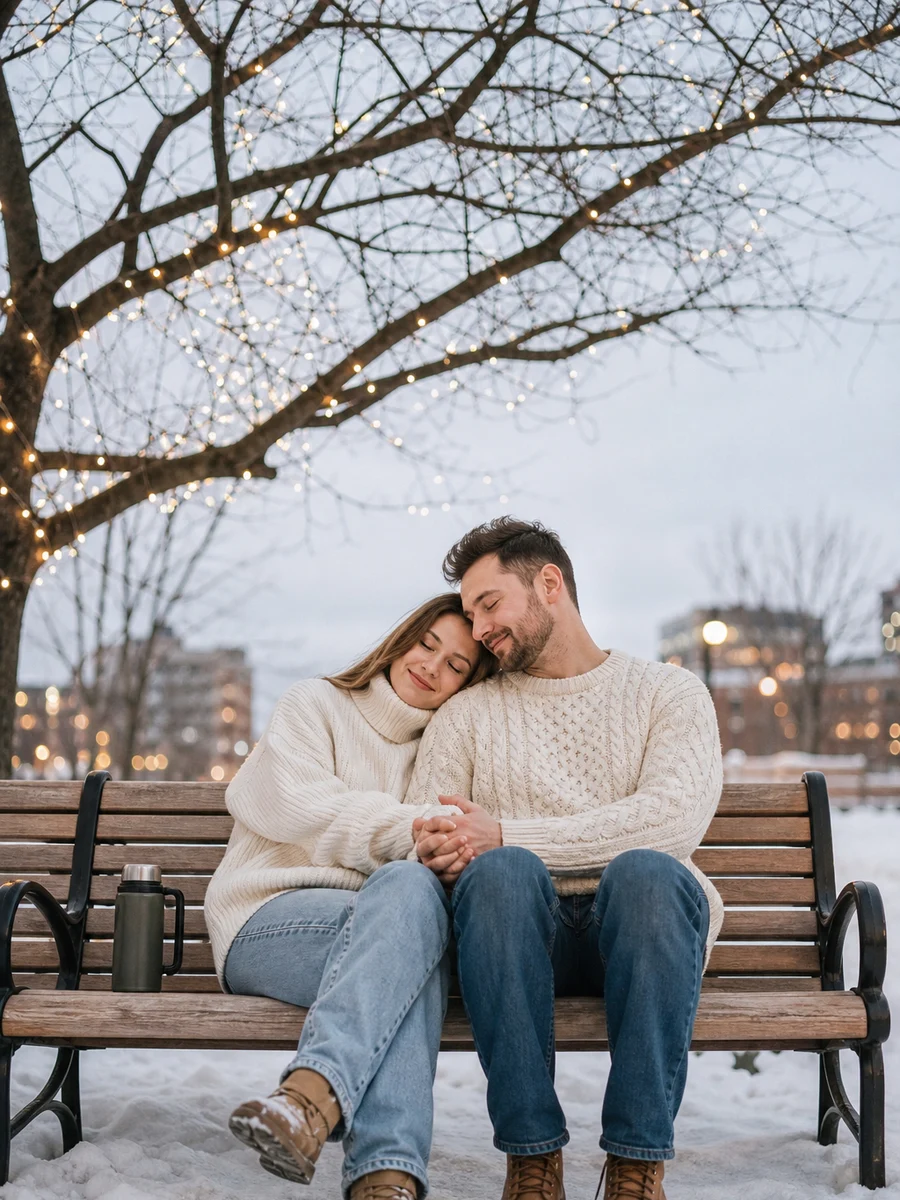
When the snow muffles the world, find a bench, pull on your coziest knits, and just lean into each other. The quiet romance is all you need.
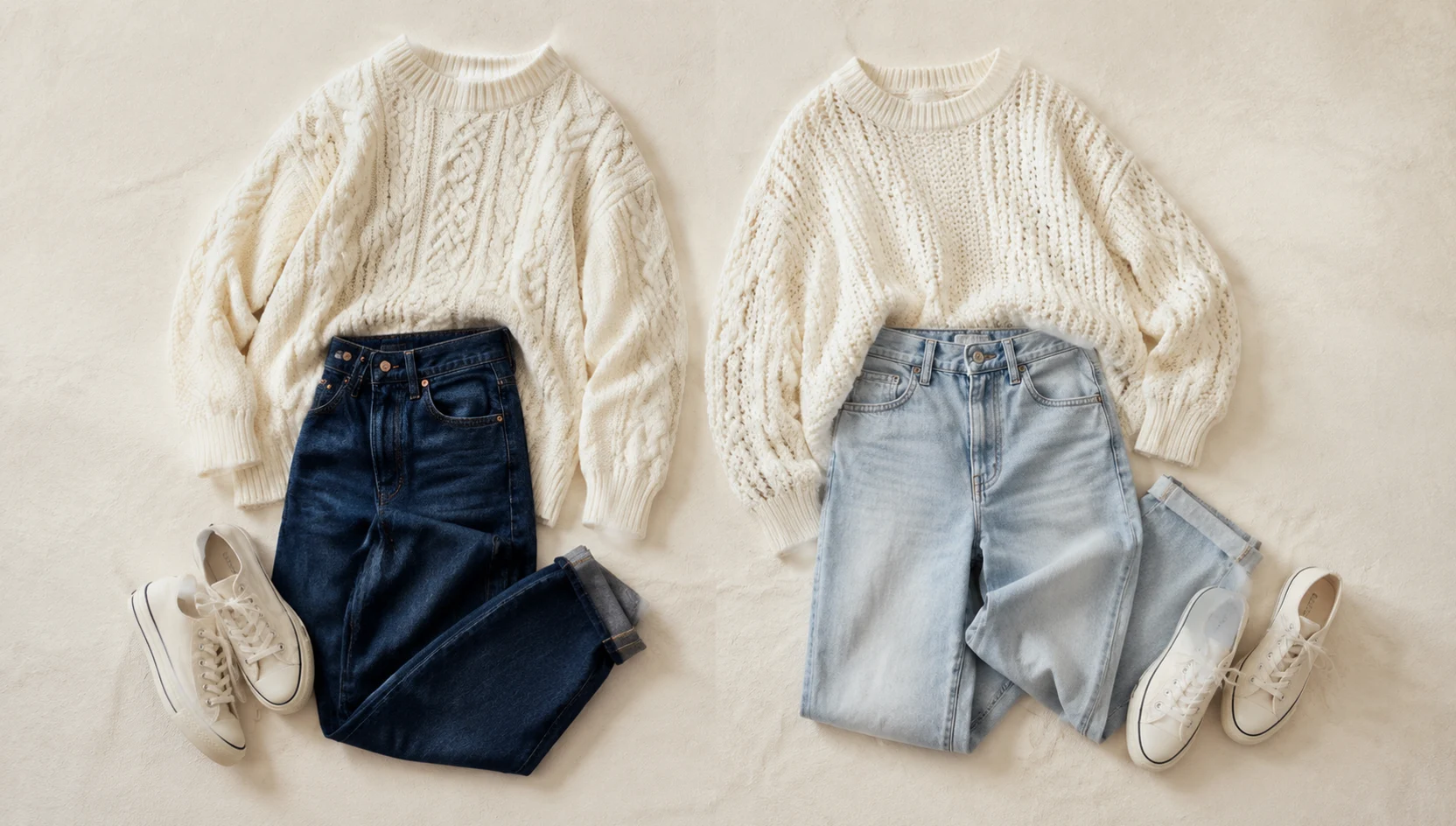
Outfit Ideas

He
knit sweater + jeans
cream / dark blue

When the snow muffles the world, find a bench, pull on your coziest knits, and just lean into each other. The quiet romance is all you need.

He
knit sweater + jeans
cream / dark blue
She
knit sweater + jeans
cream / light blue
You sink onto the cold wooden bench as the last orange sliver of sun disappears behind the skyline. The air bitesâyou can see your breath, and the wool of your matching cream knits traps what warmth you have. Around you, the city doesnât quiet; it shifts into a low hum of taxis and distant sirens, while the streetlights start to bloom amber against the deepening blue sky. Youâre in that sweet twenty-minute pocket after sunset when the world feels suspended.
He wraps an arm around you, and you lean your head onto the soft bulk of his shoulder. Your hands find each other on his kneeâfingers laced, holding a thermos cap filled with steaming tea. A single pop of color, a burnt-orange scarf draped around your neck, catches the glow of a shop window. Your photographer moves quietly, framing the way the cityâs lights blur into bokeh behind you.
The bench is freezing, but youâve tucked hand warmers into your pockets and under your seat. Between clicks, you laugh about numb toes and sip from the thermos, letting the steam rise in front of your faces. These are engagement photos that donât feel stagedâthey feel like a slow, stolen moment in a winter evening. When you finally stand, youâre shivering but full, knowing those frames hold the deep indigo sky, the cityâs twinkle, and the honest snugness of two people who chose each other.
đ Blue Hour â Shoot in the ~20 minutes after sunset when city lights glow against a deep blue sky.
Layer without looking bulky by choosing thermal underwear under chunky knits. Hand warmers tucked into pockets, gloves you can slip off quickly, and insulated boots hidden under pant legs all help. Take frequent warm-up breaksâa thermos of hot tea or coffee works as a prop and a comfort. Move between shots: a quick stroll generates heat and loosens frozen faces. Your photographer can prioritize action poses over static ones during the coldest stretches. Once you feel the shivers start, wrap up tight and shoot five more frames. The goal is to keep your core warm enough that relaxed expressions come naturally, not through chattering teeth.
Rooftop shoots require advance permissionâmost buildings need a booking or a location fee. You'll typically coordinate access through management or hire a venue specifically for the session. Arrive early to scout light and wind conditions; rooftop wind can be biting in winter, so bring extra layers. Check for safety rails and secure footing. Power sources aren't always available, so your photographer will rely on portable lights for the blue hour. Some rooftops have strict time limits, so plan your poses and timelines in advance. With the right prep, a rooftop shoot delivers sweeping skyline views that frame you against the city's glow.
Locations change with season, time of day, and even nearby construction. Trees may be bare, fountains might be off, and a picturesque bench could be covered in snow or missing entirely. That's okay. A good photographer adaptsâthey'll use the unexpected elements to your advantage. Fresh snow becomes reflective foreground texture; bare branches create interesting skyline silhouettes. If the spot is truly unworkable, have a backup location within walking distance. Don't freeze up. Instead, lean into the uniqueness: these engagement photos will be yours, not a postcard replica, and the quirks often make the most memorable images.
Yes, if you stay in well-lit areas and keep aware of your surroundings. Blue hour shoots happen just after sunset, so there's still ambient light and plenty of streetlights. Avoid isolated parks or alleys. Keep valuables out of sight, and consider bringing a small bag for personal items. Tell someone your location and expected wrap time. In busier areas, crowds dissipate later at night, so you'll have more space, but stay in zones where there's foot traffic. Working with a photographer who knows the neighborhood helpsâthey'll know safe pockets with the best light. Trust your instincts, and if a spot feels off, move.
Blue hourâroughly the twenty minutes after sunsetâis ideal. The sky turns a deep, luminous blue while city lights ignite, creating a moody, romantic backdrop. This narrow window forces you to work efficiently, but the payoff is immense: even skin tones, soft artificial light, and no harsh shadows. Arrive about thirty minutes before sunset to shoot some golden-hour frames and scout your spots. As the natural light fades, the city's own illumination takes over, giving your engagement photos a cinematic feel. Check sunset times for your date and plan backward from there; punctuality is everything for nailing that fleeting sky.
It depends on the city and the specifics. Public sidewalks generally don't require permits for casual photography without sets or lighting rigs. If you're using a tripod, light stands, or blocking foot traffic, you might need one. Some parks, plazas, or landmark-adjacent areas require photography permits, especially for commercial use. Check the city's official website or call the parks department. Even if a permit isn't legally required, being discreet and respectful helps: don't cordon off areas, and be ready to move if asked. For rooftop venues or private properties, you'll definitely need advance permission from the management.
Shoot on a weekday, during blue hour when most tourists and workers have gone. Avoid peak commuter times and major event days. Scout less iconic but equally beautiful side streets, courtyards, or elevated walkways that offer skyline views without the foot traffic. If a popular backdrop is your heart's desire, arrive early and be patient; small gaps appear. Use a longer lens to compress the scene and blur moving pedestrians into a soft stream of light. Communicate with your photographer about a 'spot and dash' approachâset up, shoot, and relocate quickly. Crowds thin as the temperature drops, so winter works to your advantage.