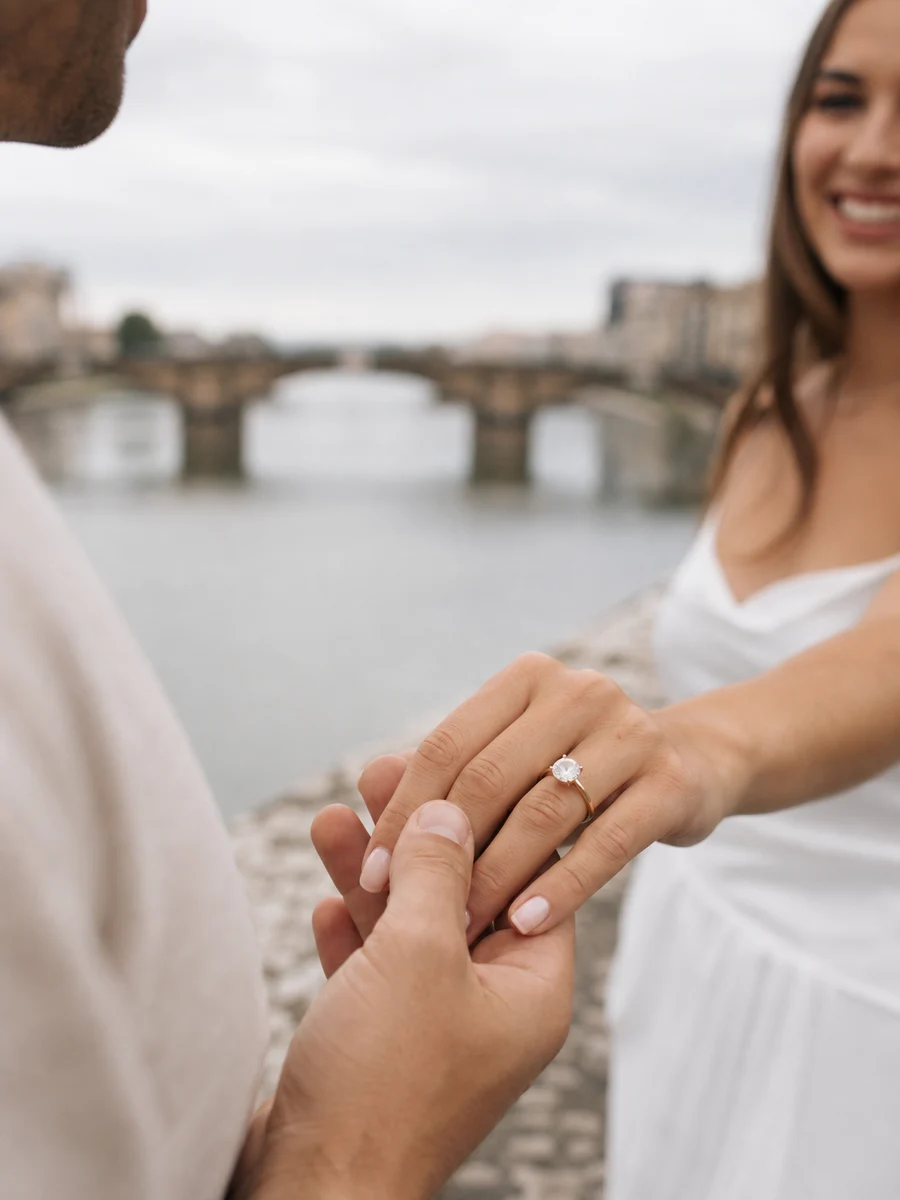
Engagement Ring Reveal on Overcast Bridge Day
Hold your hand out over the bridge railing so the soft daylight catches the ring; the simple backdrop keeps attention on this special detail.
📍 city💑 ring-reveal
Outfit Ideas
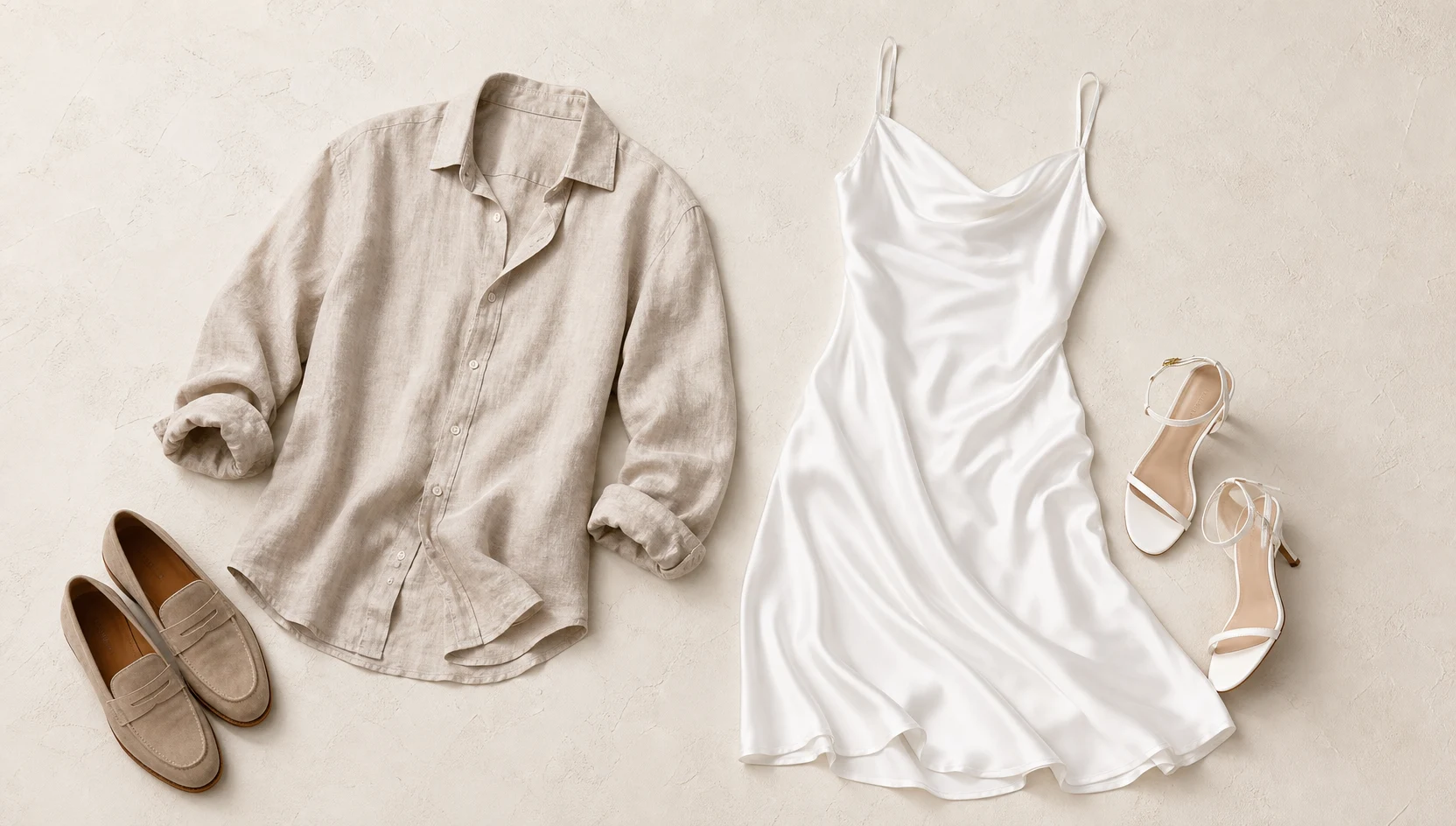
He
linen shirt
beige
She
Hold your hand out over the bridge railing so the soft daylight catches the ring; the simple backdrop keeps attention on this special detail.
He
linen shirt
beige
She
satin dress
white
You step onto the bridge just as the overcast afternoon begins its quiet shift to evening. The sky is a soft gray blanket, muting the world into gentle tones. It’s that in-between time when the city hums softly, car lights still off but buildings starting to flicker. The air is cool, carrying a faint dampness from the river below—nothing biting, just enough to make you pull your jacket a little tighter over your white dress. You’ve had your nails painted a sheer nude, no bold colors, so nothing distracts from what’s about to happen.
Your photographer arrives as planned, about 20 minutes before sunset. You’ve scouted this bridge a few days prior; it arches over a wide avenue, with the downtown skyline stretching behind. You cleaned the ring that morning, and in this soft overcast light, it catches the eye without harsh glare. The photographer frames you two against the railing, the city slowly lighting up behind you. The pose is simple: you extend your left hand forward, palm down, fingers relaxed. He slides his palms beneath yours, lifting your hand gently, turning the ring to face the lens. The diamond flickers with a cool, crisp light—exactly the effect you hoped for in these city engagement photos.
Then, as the last light drains, the sky deepens to a cobalt blue, and the city lights bloom: office towers glow gold, streetlights streak below, bridge cables become silhouettes. The air grows stiller. The photographer keeps shooting, and in these moments—around 7:15 p.m.—the city transforms into a backdrop of electric jewels. The softened reflections on the river, the distant honks and sirens, they all fade into a backdrop for the two of you. You forget you’re even in a busy city; it’s just the blue hour, the ring, and his hands holding yours. These blue-hour engagement photos feel cinematic, intimate.
Remember: blue hour is fleeting—only about twenty minutes—so your photographer will work efficiently. The pose will be guided, and you’ll hear, “Now shift your hand just a tiny bit lower,” or “Look at the ring, not the camera.” Embrace it. Bring a compact to check your hair if the wind picks up, and wear comfortable shoes for the walk from the car. By the time it’s truly dark, you’ll have a set of images that capture the city’s cool elegance and the warmth of your promise.
🌆 Blue Hour — Shoot in the ~20 minutes after sunset when city lights glow against a deep blue sky.
Blue hour provides a cool, deep blue sky that contrasts beautifully with warm artificial light from buildings, streetlights, and signs. Daytime shots lack this dramatic color contrast and often have harsh shadows or blown highlights. In blue hour, the ambient light is soft and directional, making skin tones even, while the city glows. You get reflections on wet or glass surfaces, and the atmosphere feels intimate and cinematic. It’s a short window after sunset, so you’ll work quickly to get that unique blend of twilight sky and urban sparkle.
Start by exploring your city on foot at the time of day you plan to shoot. Look for bridges, overlooks, alleyways with string lights, or architectural details like staircases and arches. Use Google Maps’ satellite view and street view to preview backgrounds. Check local photography forums or Instagram geotags for inspiration, but be mindful of trendy spots that might be crowded. Consider places with depth: a foreground element like a railing or a blurred traffic light adds visual interest. If you’re traveling, ask your photographer for their go-to spots—they often know hidden gems.
It depends on the city and specific location. Public streets, sidewalks, and parks usually don’t require a permit for small, non-commercial shoots. However, many popular landmarks, botanical gardens, and government-owned spaces do require a permit—even for personal photos. Some venues charge a fee and enforce it strictly. Always check the official website of the location or call ahead. If you’re on public property and keep your setup minimal (no tripods, large lighting), you’re generally fine. But ignoring permit rules can lead to fines or being asked to leave, so it’s best to inquire.
The best city is one with personal meaning to you, but for dramatic backdrops, New York City offers iconic bridges and skyline views. Chicago has stunning architecture and a lakeside skyline. San Francisco provides the Golden Gate Bridge and hilly streets. Washington D.C. has monuments and cherry blossoms. Austin boasts colorful murals and bridges. Seattle’s overcast skies and waterfront work beautifully for moody shots. Each city has its charm: consider the style you want—romantic, urban, historic—and pick a place that tells your story, not just a pretty background.
Rooftop shoots require permission from the building owner or management. Some hotels and venues allow private bookings for a fee; others might let you shoot in exchange for patronizing their bar or restaurant. Always secure access in advance to avoid disappointment. Plan for wind—bring a jacket and hair ties. You might need to navigate elevators or stairs, so wear comfortable shoes until you’re at the location. The view is often worth the effort, but be mindful of safety: stay away from unprotected edges and don’t overpower the scene with flash—the city lights will be the star.
It happens more often than you think. A spot might be under construction, more crowded, or have different lighting than expected. Have a backup location nearby. Before the shoot day, visit if possible at the same time to check conditions. If not, scout via recent Instagram posts or Google Maps updates. On the day, trust your photographer—they can often find a new angle or nearby alternative that works. Stay flexible; sometimes the unexpected spot turns into your favorite image. Remember, the emotion you bring matters more than the exact backdrop.
Safety depends on the city, neighborhood, and time. Blue hour isn’t truly late night—it’s just after sunset, so many areas still have foot traffic and businesses open. Avoid desolate areas, dark alleys, or places known for crime after dark. Go with your photographer and maybe a friend as assistant. Keep valuables minimal and stay aware of your surroundings. Public places near restaurants or lit landmarks are generally fine. If you’re uncomfortable, schedule the shoot earlier in the blue hour or choose a rooftop/private venue. Always trust your gut; no photo is worth feeling unsafe.