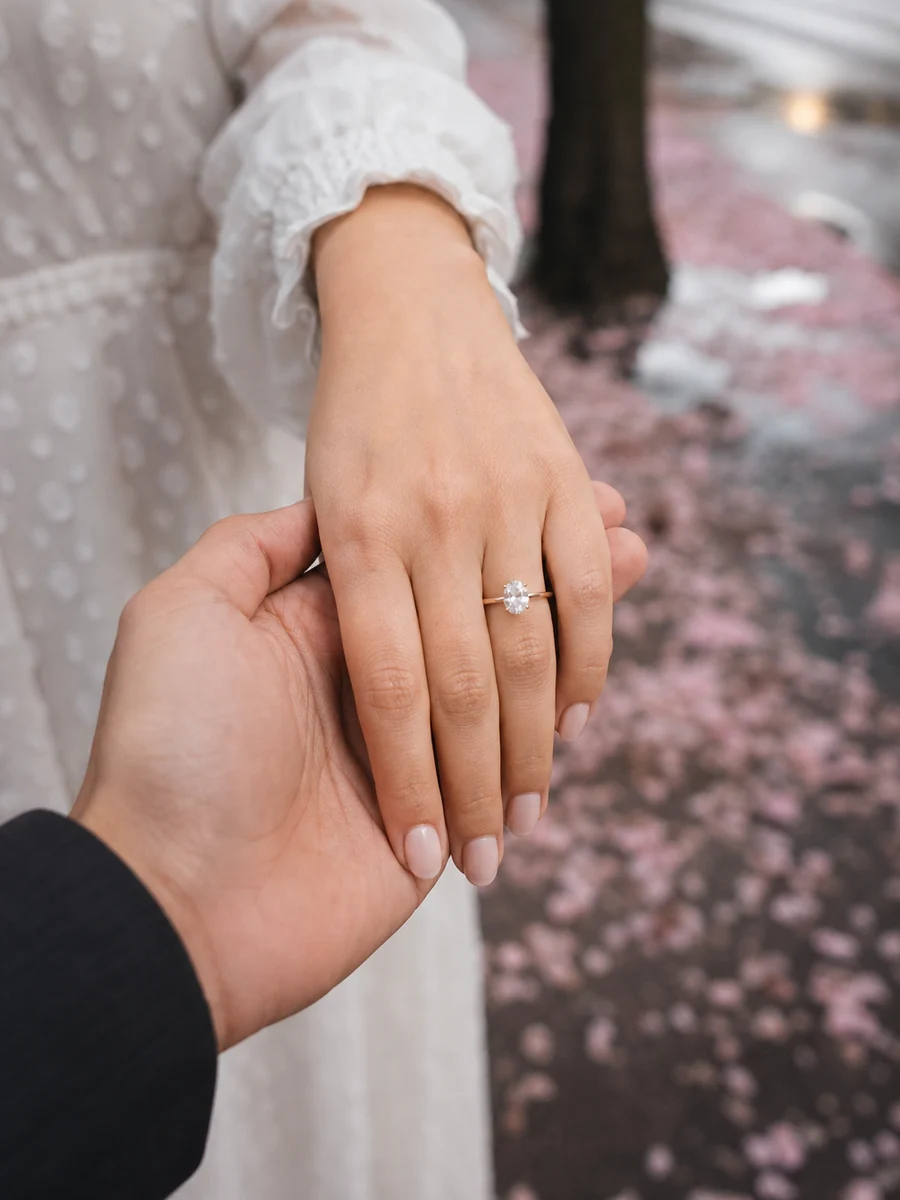
Ring Detail in Overcast Blossom Light Engagement Photos
Overcast days let you highlight the details—a ring against fallen blossoms becomes a sharp, editorial statement.
📍 city🍂 spring💑 ring-reveal
Outfit Ideas
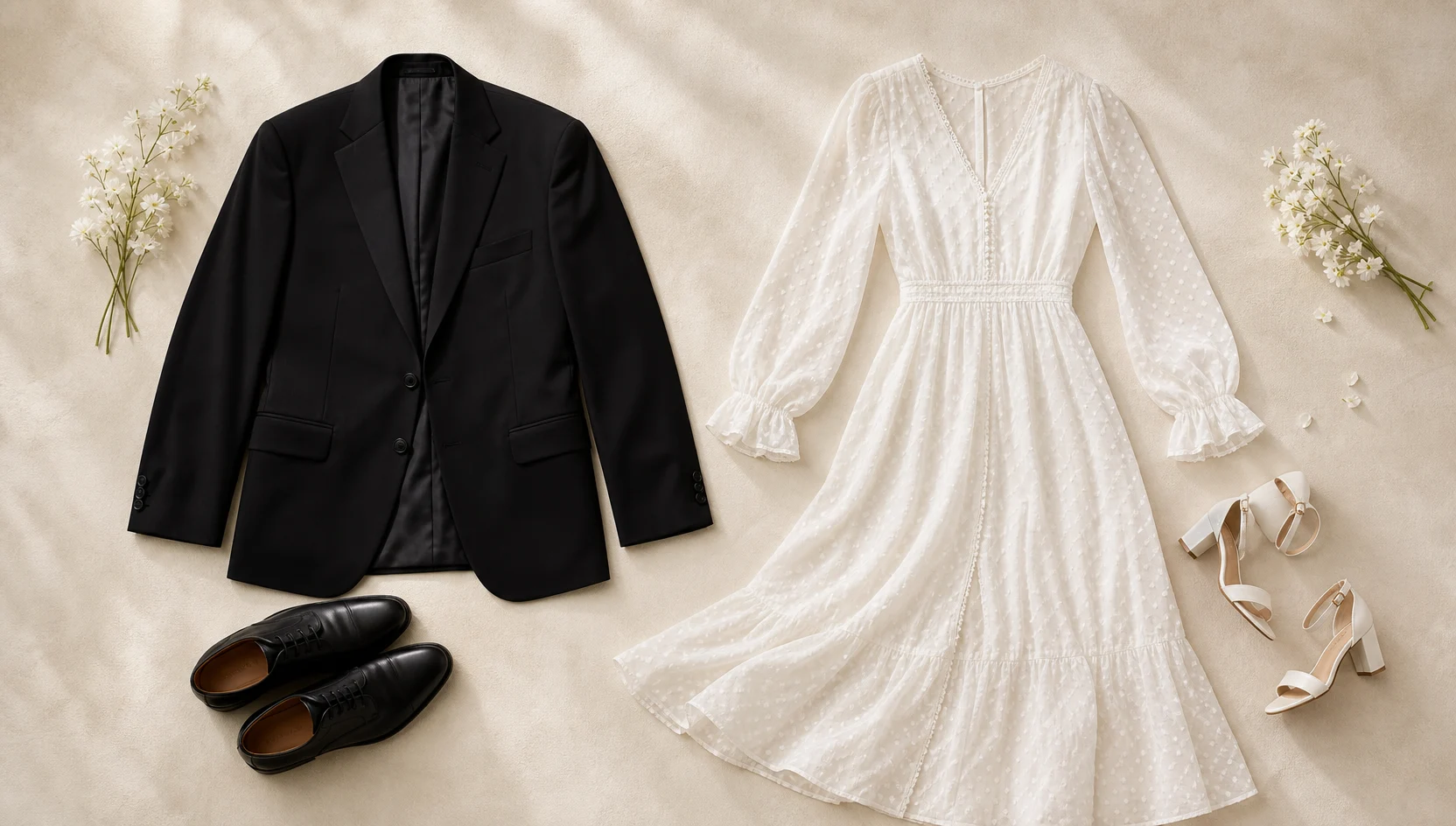
He
suit jacket
black
Overcast days let you highlight the details—a ring against fallen blossoms becomes a sharp, editorial statement.
He
suit jacket
black
She
white maxi dress
white
The last glow of sunset has melted away, leaving the sky a deep, moody blue. Street lamps flicker on, and the city hums with distant sirens and laughter from a nearby café. You're standing under a canopy of cherry blossoms, their pink petals almost luminous in the fading light. The air is cool and damp—a spring evening after an overcast day. She wears a simple white dress that catches the blue hour glow, her hands cradled in his. His fingers wrap gently beneath hers, knuckles relaxed, the diamond tilted just so. You spent the afternoon following the weather, hoping for the soft, glare-free light that overcast skies promise for ring shots. Before leaving the apartment, you wiped the ring until it sparkled and smoothed lotion over your knuckles. Your manicure is clean, barely pink—nothing to compete with the stone. Now, as the photographer murmurs guidance, you both go quiet. It's not a pose; it's a pause. A private moment in the middle of a city of millions. The ring catches a glint from a passing taxi's headlights, and in that second, you understand: these are the details that matter. For city engagement photos like this, the blue hour doesn't just light the scene—it transforms it. And you learn that the best engagement photos often come not from grand gestures, but from the smallest, stillest moments you didn't think to plan.
🌆 Blue Hour — Shoot in the ~20 minutes after sunset when city lights glow against a deep blue sky.
Cherry blossoms, magnolias, and tulips are top spring choices. In cities, look for tree-lined streets, public gardens, or park pathways with blooming branches overhead. Cherry blossoms peak briefly—track local bloom calendars and scout a week before. Even a single flowering tree near a brick wall can create a romantic backdrop. For softer light, shoot on an overcast morning or during blue hour when crowds thin and petals catch the glow.
Many rooftop bars, hotels, or event spaces allow photoshoots if you ask in advance. Some charge a fee or require a reservation. Public observation decks (like Rockefeller Center) often permit non-commercial photography but prohibit tripods and flashes. Check their website, and confirm hours and any restrictions. Wind can be strong, so secure loose hair and avoid flowy props. Arrive early to claim a spot, and plan your shoot around sunset or blue hour for the best sky.
Online photos might be from a different season, heavily edited, or shot with a creative lens. Visit the spot at the same time of day you'll be shooting—light and crowds change everything. Use Google Street View’s recent imagery. If blooms are past peak or construction has appeared, pivot quickly. Always have a backup location nearby. Your photographer can scout ahead or recommend alternatives that match the same aesthetic.
Generally yes, if you stick to well-lit, populated areas like main streets, park entrances, or landmarks. Blue hour ends about 30 minutes after sunset, so you'll still have ambient light and pedestrian activity. Bring a small bag of essentials and leave valuables at home. Stay aware of your surroundings, and if a spot feels sketchy, move on. Some photographers bring a friend as an assistant for peace of mind. Always trust your gut.
Blue hour—the 20-30 minutes after sunset—gives you a deep blue sky and glowing city lights without harsh shadows. For ring details, that soft, directionless light is ideal. Overcast mornings or evenings also produce even, glare-free illumination. Avoid midday sun, which creates unflattering shadows and makes squinting a problem. If you must shoot during the day, find open shade under buildings or trees.
Many cities require a permit for commercial photography, even if it's just a couple and a photographer. If you're using a tripod, blocking a sidewalk, or shooting in a high-traffic area like NYC's High Line or a popular plaza, you likely need one. Check the city’s film office website; fees are often modest. For quick, handheld shots on a quiet side street, you’re usually fine, but having a permit prevents interruptions and keeps things relaxed.
Shoot early in the morning or during blue hour on a weekday. Colder, drizzly weather also thins crowds. Stay away from iconic landmarks and explore side streets, residential neighborhoods with blooming trees, or lesser-known gardens. A longer lens can compress the scene and blur strangers into a soft bokeh. Your photographer will know how to frame you so you’re the focus, even if a few people wander through the background.