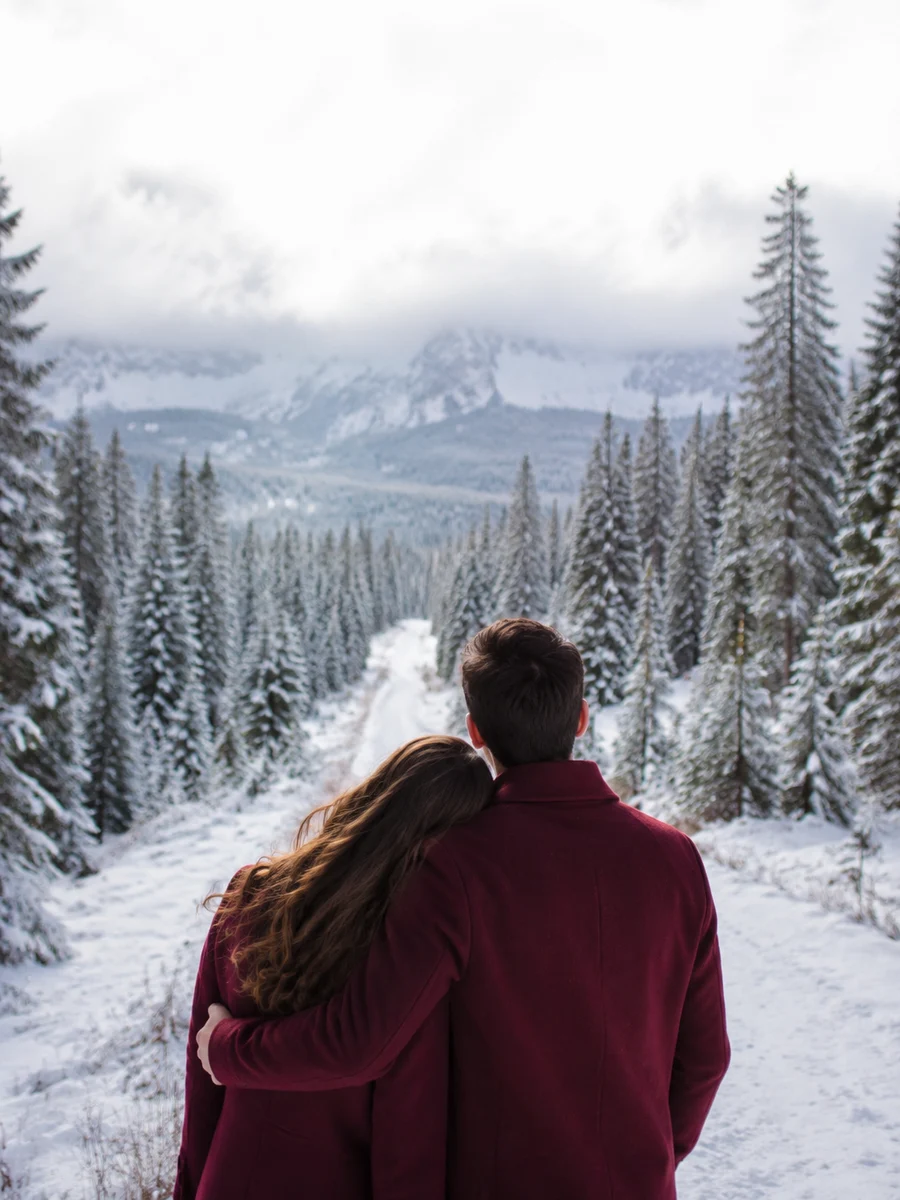
Gazing at the Winter Forest Horizon Engagement Photos
Take a moment to look ahead together—the trail stretching out symbolizes your journey, with burgundy adding warmth.
📍 forest🍂 winter💑 looking-at-horizon
Outfit Ideas
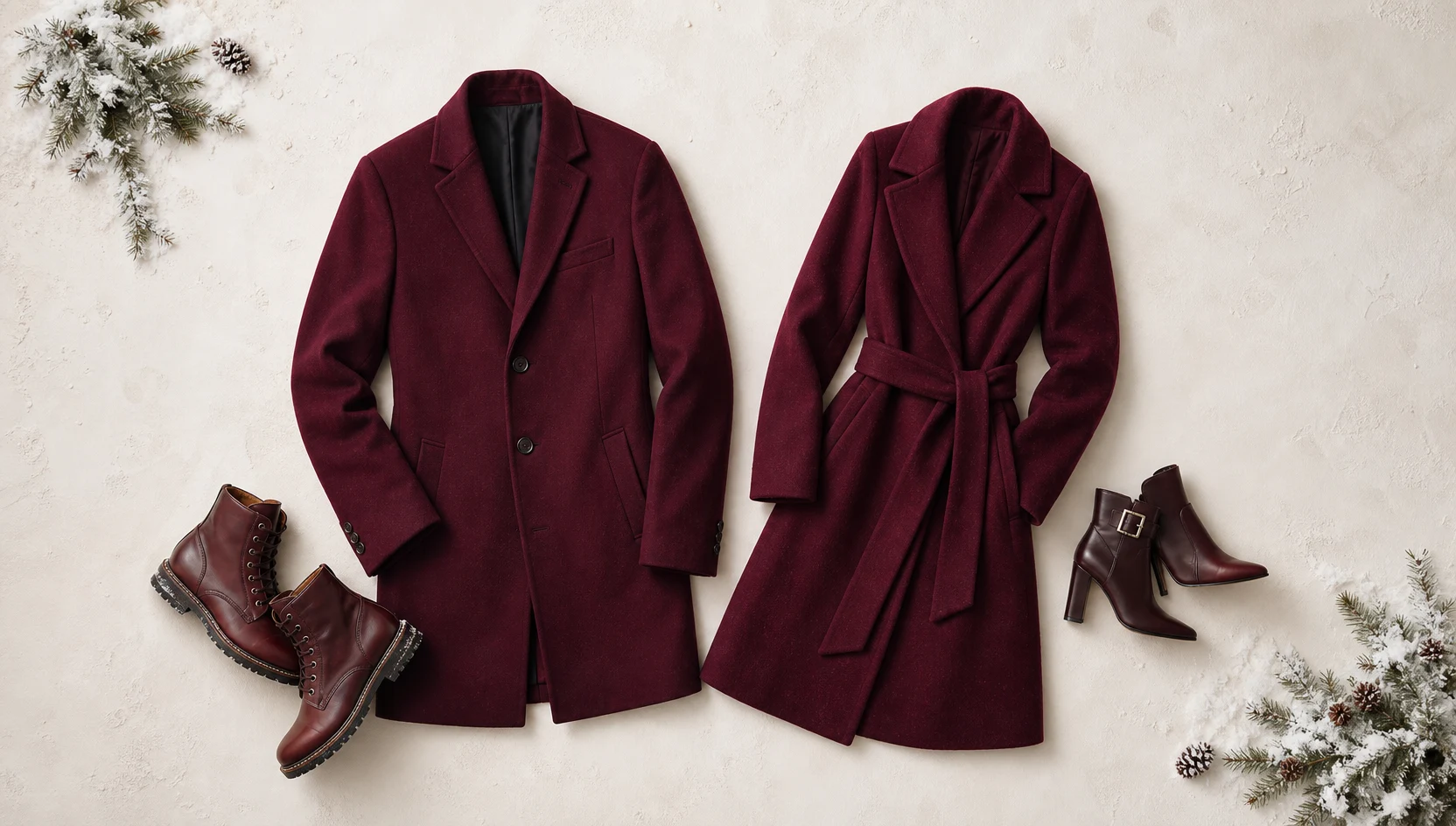
He
winter coat
burgundy
Take a moment to look ahead together—the trail stretching out symbolizes your journey, with burgundy adding warmth.
He
winter coat
burgundy
She
winter coat
burgundy
The snow crunches beneath your waterproof boots as you step onto the trail, the forest muffled and still. The air is crisp, your breath forming quick clouds, but inside your burgundy coat you're warm. His hand finds yours, and you walk together toward a clearing framed by snow-laden pines. The overcast sky above is like a vast softbox, wrapping everything in soft, even light—there are no harsh shadows, just a gentle glow that feels calm and intimate.
Your photographer guides you to a spot where the trees open up to a distant horizon of white fields and dark evergreens. 'Rest your head on his shoulder,' they say, 'and wrap your arm around her waist.' You lean in, feeling the thick wool of his coat against your cheek. His arm encircles you, pulling you close, and you both gaze out at the winter expanse. The world goes quiet. The only sounds are the occasional drip of melting snow from a branch and the whisper of your photographer's shutter. You're not posing; you're just being together, and the camera catches that.
Midday light filters through the clouds, bright but shadowless. It's the best time for these forest engagement photos because the sun is high enough to illuminate without creating dark patches. Your burgundy coat pops against the white snow just as the photographer promised, a rich splash of color in the monochrome landscape. You'd chosen waterproof boots and thick socks—essential for standing in snow without numb toes—and you're grateful for that now as you shift your weight.
Between shots, you stomp your feet to keep circulation going, and he rubs your shoulders. The photographer might ask you to walk hand-in-hand along the trail, and those candid moments become your favorite engagement photos: the way the snow clings to the hem of your coat, the way his smile reaches his eyes even when you're both freezing.
After an hour, your cheeks are rosy and your fingers tingle, but the images are already in your mind: two figures against an endless white horizon, wrapped in warmth and each other. As you head back, you realize the secret isn't just the light or the location—it's that you stopped looking at the camera and started looking at your future together.
☁️ Overcast — An overcast sky is a giant softbox — even, shadow-free light that flatters skin tones.
Wear thermal base layers under your outfits—silk or merino wool wick moisture without bulk. Choose a coat with some shape, like a fitted burgundy wool coat, so you look polished. Hand warmers in pockets or a thermos of hot tea between shots help reset your comfort. Avoid stiff, puffy jackets; they make you look bundled, not cozy. Move frequently: wiggle toes, shimmy shoulders. When you're genuinely warm, your smile relaxes, and your body language softens. The chill can even add a rosy, loving glow to your cheeks.
Look for public forests or nature preserves with established trails and open areas—these provide variety without heavy hiking. Scout after a snowfall to see how light filters through bare branches and how snow blankets the ground. Contact local photographers; they often have secret spots with mountain views or quiet meadows. Check online forums for winter-specific location tips, and always verify parking availability and trail conditions. A location with a slight rise or clearing lets you capture the horizon, which is essential for this pose.
It depends on the land. National forests and many state parks require a special-use permit for professional photography, especially if it's a commercial shoot. However, a simple engagement session with just a photographer and the couple is often exempt. Always call the ranger station or check the forest's website beforehand. Private nature preserves may charge a location fee. If you're unsure, ask your photographer—they likely know the rules for popular local spots and can handle the paperwork.
If your photographer is shooting on an overcast day or under dense evergreens, they'll likely use a wider aperture (like f/2.8) to let in more light and a faster shutter speed to avoid blur. They may raise the ISO, but modern cameras handle that well. As the subject, you can help by holding still during posed moments—lean into each other for support. If the light is truly dim, your photographer might add a subtle flash or reflector, but a skilled one can work with available light to keep the natural feel.
For overcast winter days, midday is ideal. The cloud cover acts as a giant softbox, eliminating harsh shadows, and the sun is high enough to brighten the forest evenly. If the sky is clear, aim for golden hour just before sunset for warm, angled light—but be aware the forest may be darker earlier due to hills and trees. Early morning can also work, but shadows may be long. Check the specific forest's orientation; some valleys lose light earlier. Your photographer will time it so you get the best light for your chosen spot.
Not at all. Overcast light is perfect for winter portraits—it's soft, diffused, and wraps around you without casting harsh shadows on your faces. The white sky can create a clean, minimal backdrop that makes your burgundy coats stand out starkly. It also lets you shoot any time of day without worrying about squinting. The only caveat: if the sky is a flat, dark gray, it might not reflect much light down, but a good photographer can adjust exposure. Embrace it—it adds a quiet, romantic mood that matches the season.
Waterproof, insulated boots are non-negotiable. You'll be standing in snow, possibly breaking through a crust, and cold, wet feet end shoots fast. Choose a sleek style—like leather winter boots with a wool lining—that coordinates with your outfit; avoid chunky snowboard boots. Pack an extra pair of thick wool socks. If the trail is icy, consider traction spikes. Heels are a disaster on snow and mud. Your photographer might frame from the waist up for many shots, so your shoes won't always show, but comfort allows you to relax and enjoy the session.