Forehead Touch Among Snow-Covered Pines at Blue Hour Engagement Photos
Blue hour brings a serene, quiet mood. Close your eyes and just breathe together for an image that feels still and strong.
Outfit Ideas

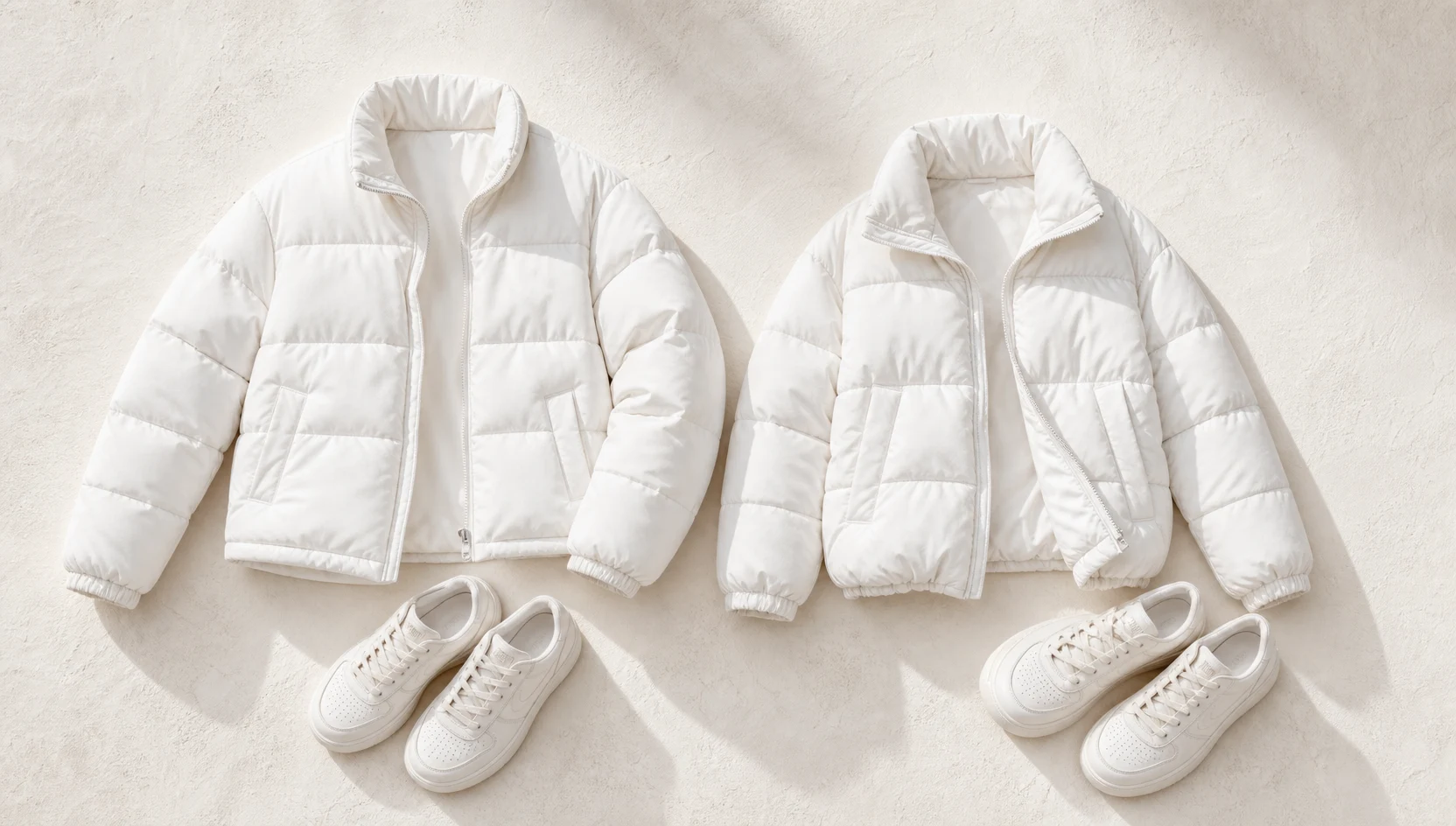
He
puffer jacket
white

Blue hour brings a serene, quiet mood. Close your eyes and just breathe together for an image that feels still and strong.

He
puffer jacket
white
She
puffer jacket
white
Your boots sink into fresh powder with a muted crunch. The pines around you are heavy with snow, their branches bowing low, as if leaning in to listen. It’s blue hour – that fleeting window after sunset when the sky deepens to indigo and the snow takes on an ethereal glow. The air is so still you can hear your own heartbeat, and distant sounds, like a bird’s call, seem muffled as if wrapped in velvet. Your partner’s breath makes small clouds that mingle with yours. You’ve both dressed in cream puffer coats, intentionally layered to pop against the blue-white landscape, with no busy patterns to distract. Hand warmers tucked into your gloves keep your fingers nimble between shots.
Your photographer guides you into a small clearing. “Rest your foreheads together,” she says softly. You close your eyes, feeling the warmth of your partner’s skin against your own, your hands clasped at chest level. The overcast sky acts like a giant softbox, erasing harsh shadows and making every detail of your faces soft and luminous. You stand there, in the quiet, breathing together. The photographer circles, capturing the intimacy from different angles. After a few minutes, she hands you another hand warmer. You tuck it into your coat, share a small laugh, and reset.
These forest engagement photos aren’t just about the final image; they’re about this moment – the crisp air, the scent of pine, and the quiet connection that only winter can hold. By shooting at blue hour, you get a dreamy palette that turns your engagement photos into something truly cinematic. Just remember: arrive a bit early to acclimate, and let the cold be part of the story.
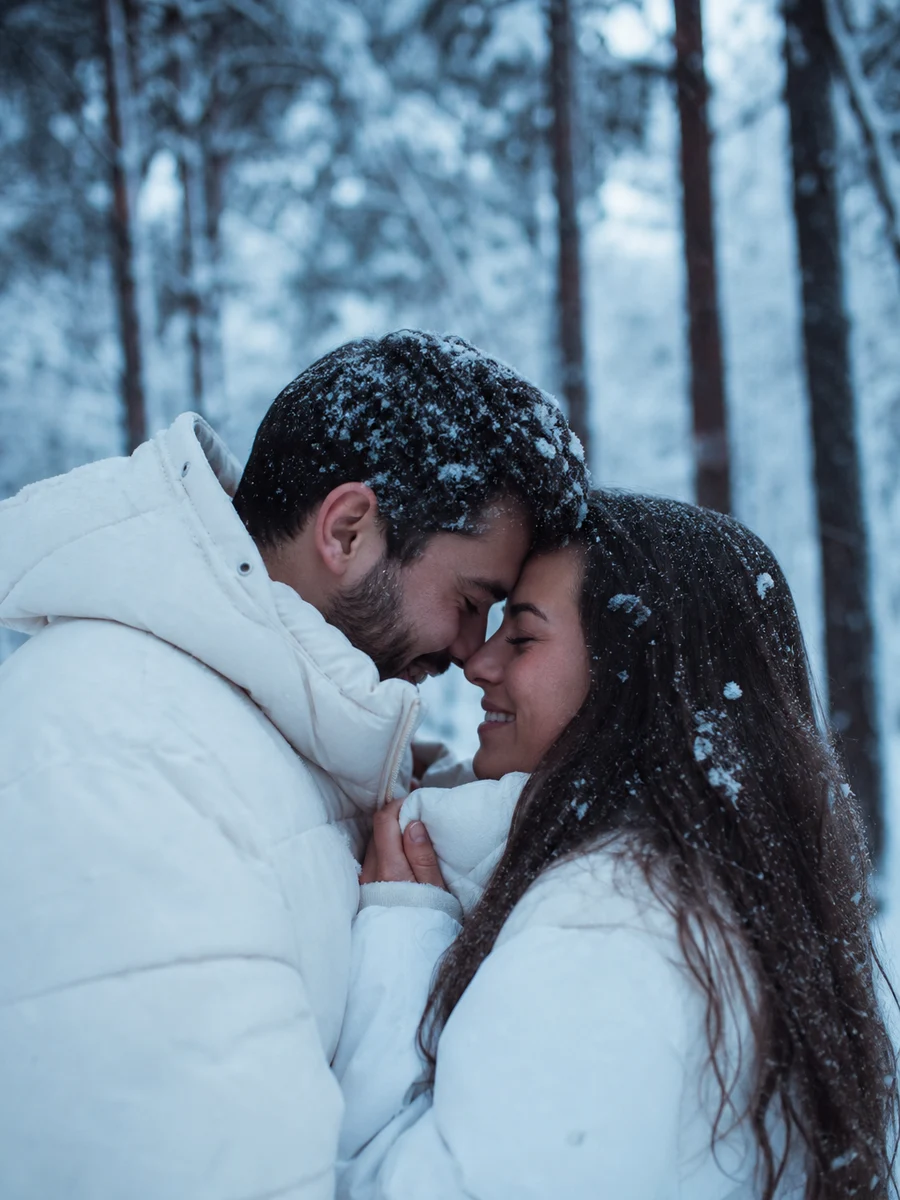
☁️ Overcast — An overcast sky is a giant softbox — even, shadow-free light that flatters skin tones.
Dress in thermal layers beneath your outfits, use hand warmers, and take breaks indoors if possible. Avoid looking stiff by staying relaxed – focus on your partner, not the camera. Choose fabrics that don’t show shivering, like wool or thick knits. Bring a warm coat to wear between setups, and keep your core warm with hot drinks. If your nose or cheeks get red, a little translucent powder can help, but a flushed look often adds to the wintery charm. Remember, genuine smiles often come from shared warmth and a little laughter.
Opt for solid, neutral colors that contrast with the greenery or snow – creams, soft blues, deep greens, or earthy tones. Avoid busy patterns that distract. For winter, layer textures like chunky knits, faux fur, and puffer coats. Cream puffer coats over an all-white base pop against blue snow. Waterproof boots are a must; they won’t show beneath long dresses or pants. Coordinate with your partner in complementary shades rather than matching exactly. Bring a change of shoes for walking to the spot. Your outfit should feel like you, just a bit elevated.
In winter, insects are dormant, so bugs aren’t an issue. During warmer months, use insect repellent, wear light-colored clothing, and check for ticks afterward. In any season, be mindful of terrain: watch for slippery rocks, roots, or uneven ground. Let someone know your location and estimated return time. Stick to marked trails when possible, and be aware of any wildlife warnings. Your photographer should know the area and guide you to safe, scenic spots. Overall, forest shoots are very safe with a little preparation.
Start by searching for local nature preserves, state parks, or national forests that allow photography. Look for areas with diverse backdrops: tall trees, open clearings, streams, or interesting rock formations. Use Instagram or location-scouting sites like ShotHotspot to see real shoot examples. Consider the accessibility: you’ll want a spot not too far from parking if you’re in formalwear. Visit the location beforehand at the same time of day to check light and crowds. Ask your photographer – they often have a list of go-to hidden gems.
It depends on the location. Public forests managed by the U.S. Forest Service generally don’t require a permit for small, non-commercial shoots, but state parks and nature preserves often do. If you’re hiring a professional photographer, many parks classify it as commercial work, so a permit may be necessary. Check the specific park’s website or call their office. Costs are usually minimal ($25–$100). Secure the permit at least a few weeks in advance. Some areas have restrictions on tripods or flash, so verify those details.
Use a fast lens (f/2.8 or wider) to let in more light, and raise your ISO, but modern cameras handle noise well. A tripod is essential for exposures longer than your handheld limit, but for engagement photos, you’ll want to keep shutter speeds above 1/125s if there’s any movement. If you’re the subject, hold as still as possible during the shot. Your photographer will likely use back-button focus or single-point AF to nail focus on your eyes. In very dim light, they might add a small LED panel to create a subtle catchlight without ruining the mood.
The golden hour just after sunrise or before sunset offers warm, directional light that filters beautifully through trees. However, in dense forest, light can be patchy and harsh midday. For winter settings, blue hour – the 20–30 minutes after sunset – gives a stunning, surreal blue cast on snow and creates a intimate mood. Overcast days act like nature’s softbox, perfect for even, shadowless light throughout the day. Avoid direct overhead sun, which creates unflattering shadows. Plan your shoot time based on the season and tree cover.