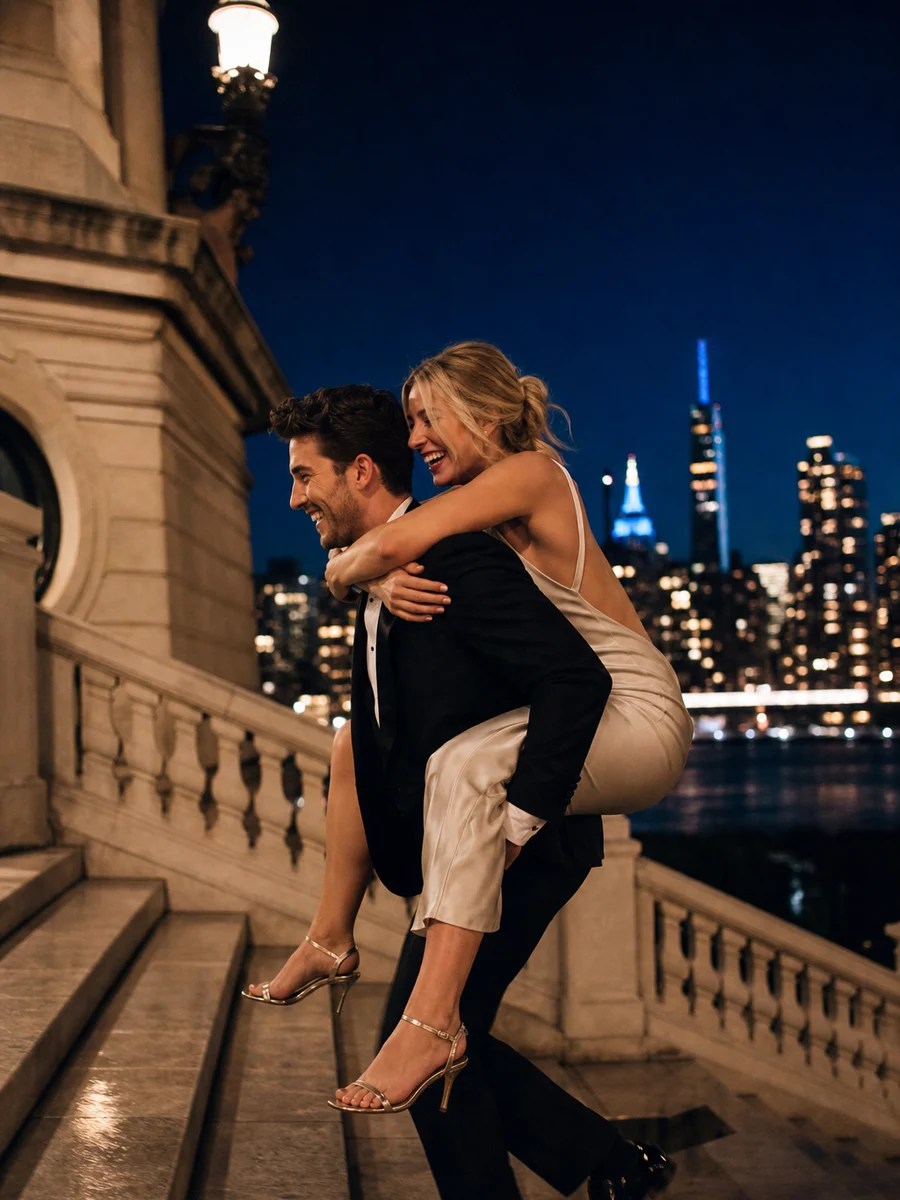
Piggyback Ride Up the Stairs at Twilight Engagement Photos
For a playful editorial moment like a piggyback ride in formal wear, use a wider lens and shoot from below to exaggerate the staircaseâs scale.
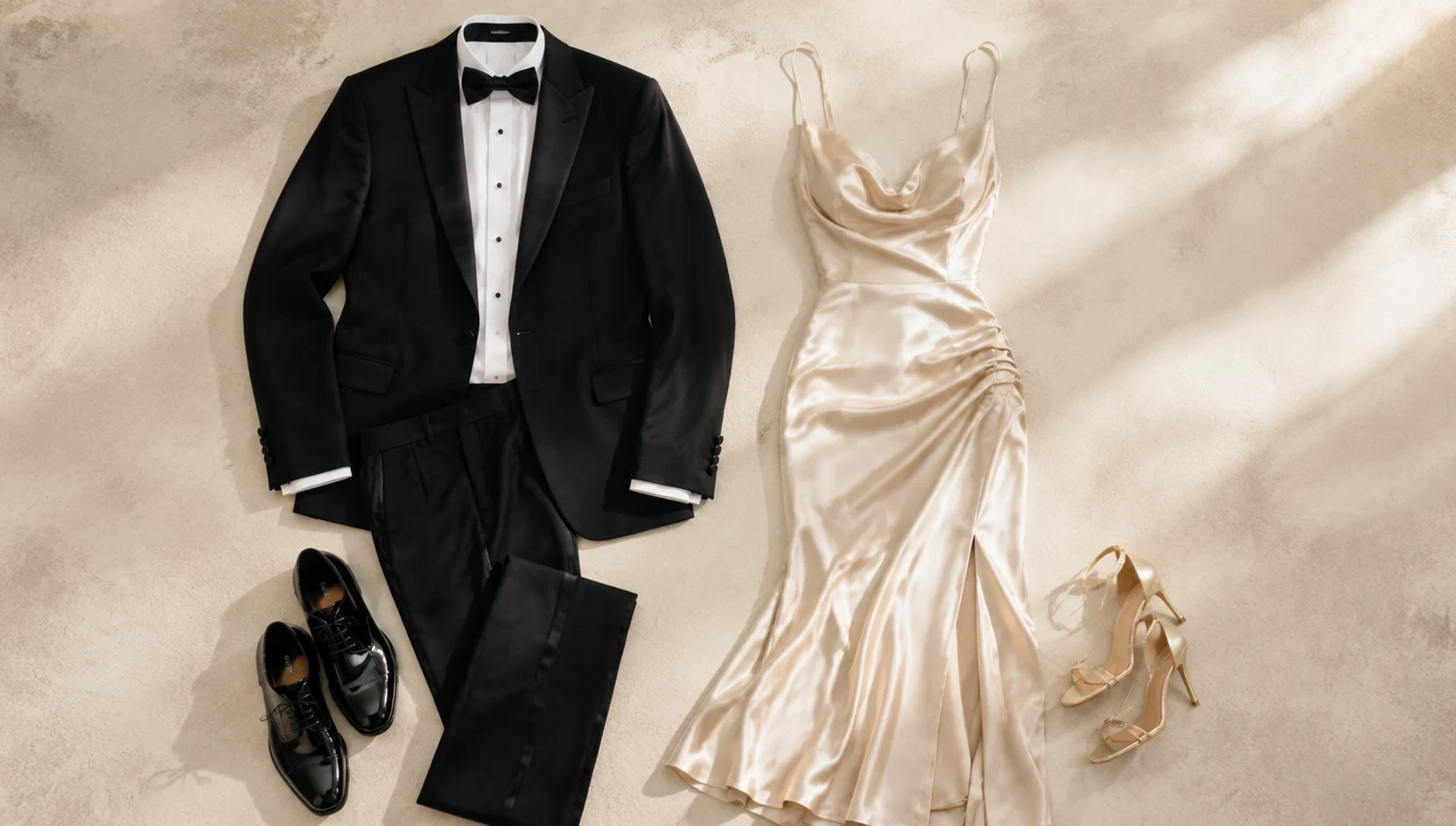
Outfit Ideas

He
tuxedo
black
She

For a playful editorial moment like a piggyback ride in formal wear, use a wider lens and shoot from below to exaggerate the staircaseâs scale.

He
tuxedo
black
She
satin gown
ivory
The air cools as the last sliver of sun drops behind the skyline. Youâre at the base of a grand staircase, its stone steps still holding the dayâs warmth. Street lamps flicker on, casting a soft glow against the deepening blue sky. Sheâs in your arms, strappy heels dangling as you adjust your grip. Her updo is secure, but a few loose strands frame her face, catching the golden light from a nearby window. You start climbing, her cheek pressed against your temple, and you hear her laugh â a bright, genuine sound that echoes up the marble. The weight shifts with each step, and you focus ahead, feeling the rhythm of the ascent. The city hums below: distant traffic, a car horn, the faint murmur of people leaving nearby restaurants. This is the magic window for city engagement photos â about 20 minutes after sunset when the sky turns electric blue and every lit facade becomes a backdrop. Your photographer guides you to pause midway, and she leans closer, laughing again. The moment feels cinematic, intimate, impossibly lucky. You realize these arenât just poses; theyâre the thrill of being carried into your future. Earlier, you arrived a bit early to walk the stairs, noting the best angles. The formal suit feels right now, not stiff but sharp against the twilight. For your engagement photos, the blue hour rewards planning: a scouted staircase, a timed arrival, and a willing partner. As you near the top, her laugh fades into a contented sigh, and you know youâve captured something real.
đ Blue Hour â Shoot in the ~20 minutes after sunset when city lights glow against a deep blue sky.
New York, San Francisco, Chicago, and New Orleans top the list. Each offers iconic backdrops: brownstone steps in Brooklyn, the Golden Gate Bridge at dusk, the Chicago Theatre marquee, or gaslit French Quarter balconies. Smaller cities like Charleston and Savannah deliver historic charm with fewer crowds. Your choice depends on your storyâurban canyons or waterfront skylines. For blue hour piggyback shots, look for lit staircases near landmarks. Arrive early to claim a spot, because popular spots fill fast at twilight.
Most rooftops require permission or a booked venue. Restaurants and bars with terraces often allow photos during off-peak hours if you ask in advance. For public rooftops (like those in parks), just show up, but bring minimal gear to avoid attention. Some photographers arrange access to private rooftops through contacts. Always check wind conditionsâstrong gusts can ruin hair and flowy dresses. For blue hour, youâll need about 20 minutes of usable light, so time your elevator ride carefully.
Photos can mislead. Visit the spot a day prior at the same hour. Look for construction, seasonal changes, or new lighting. If a staircase appears narrower in real life, you might need a wider lens or a different angle. Always have a backup spot within walking distance. For city engagement photos, Iâve seen scaffolding ruin iconic views. A scout trip saves stressâyou can test how light hits at blue hour and see if street lamps actually work.
Blue hour ends around 30â45 minutes after sunset, which is still early evening in most seasons. Stick to well-trafficked, lit areas. Downtown business districts often clear out after work but remain safe with steady street activity. Avoid isolated alleys or parks after dark. Bring only essential gearâa small bag, no flashy equipment. If youâre in a sketchy area, hire a local photographer who knows the neighborhood. In popular cities, thereâs usually safety in numbers with other photographers around.
Blue hourâthe 20â30 minutes after sunset when the sky goes deep blue and city lights balance perfectly. Itâs a tight window, so you must arrive early to set up. Golden hour before sunset is also gorgeous, but for staircase scenes with artificial light, blue hour creates that dramatic, cinematic feel. Check sunset times and plan backward: arrive 30 minutes before to prep. In winter, blue hour might be earlier (4:30 p.m.), so plan dinner after.
It depends on the city and location. Open public spaces like sidewalks and parks usually donât require permits for casual shooting without tripods or props. But if youâre on private property (like a hotel staircase) or using large equipment, you may need permission. Some popular landmarks (e.g., in NYC or SF) enforce permit rules if you look professional. Your photographer should know local laws. For a simple staircase, youâll likely be fine, but never block pedestrian flow.
Shoot on a weekday, ideally Tuesday or Wednesday. Avoid rush hours and popular holiday weekends. Blue hour on a quieter block of a business district can be nearly empty as workers head home. Scout spots away from tourist hubsâa residential staircase with interesting architecture works better than a famous one. If people appear, use angles that frame them out or wait a few minutes. Crowds ebb. The key is picking a less iconic spot that still looks unique.