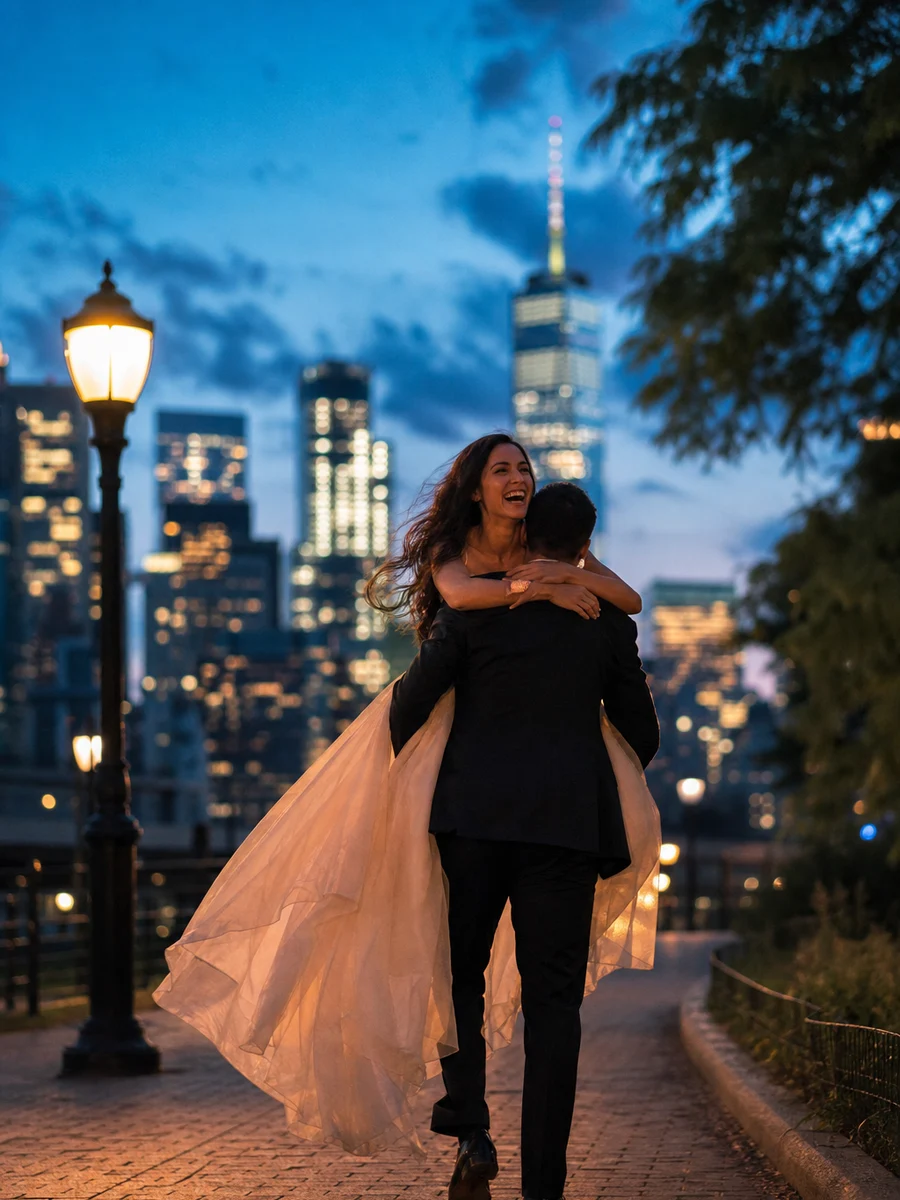
Playful Piggyback Under City Lights Engagement Photos
Let loose and have a little fun — these playful moments with the city lights as your audience will be the ones you frame.
📍 city💑 piggyback
Outfit Ideas
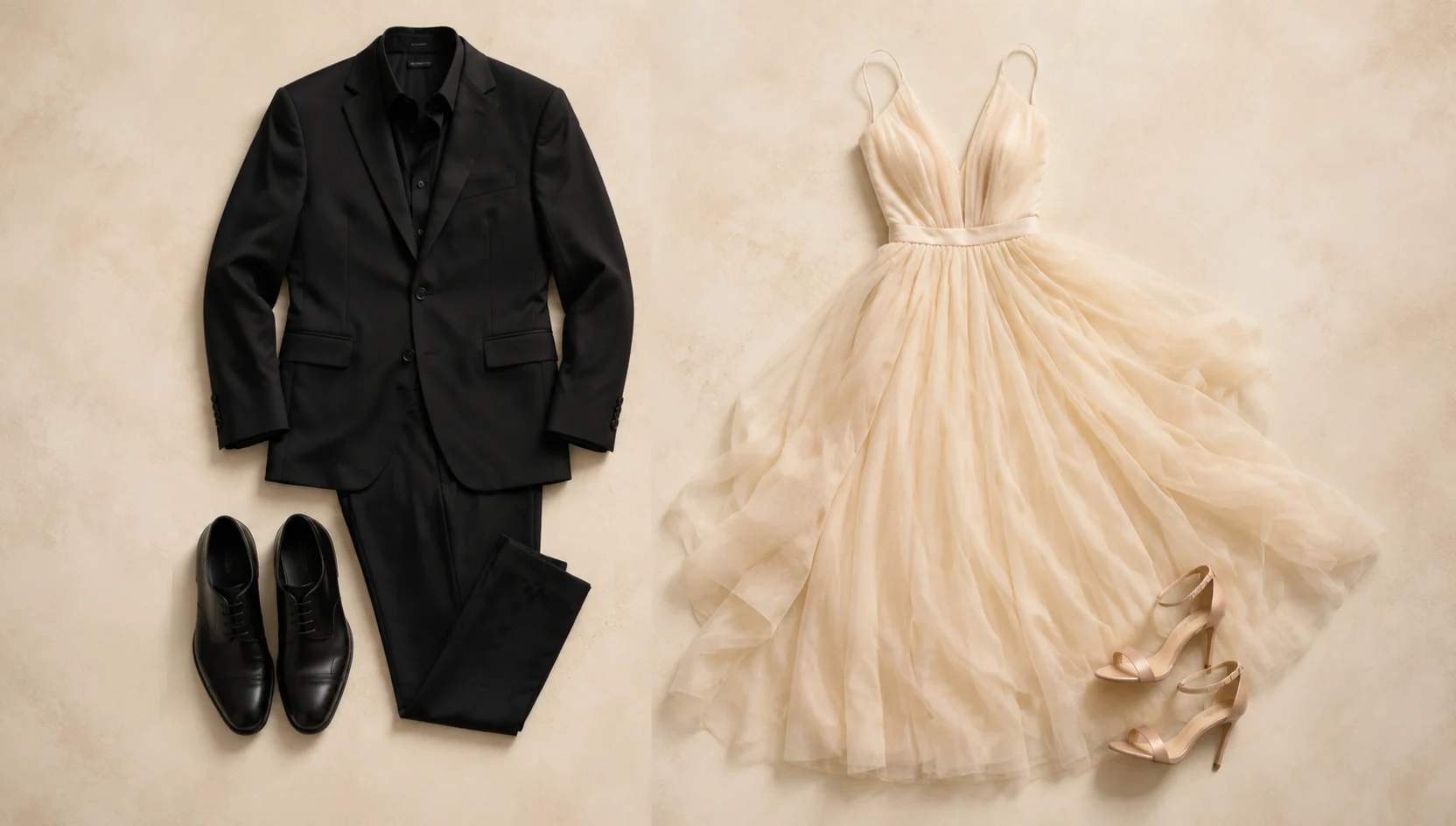
He
suit
black
She
gown
Let loose and have a little fun — these playful moments with the city lights as your audience will be the ones you frame.
He
suit
black
She
gown
ivory
The air still holds the day’s warmth as the last sliver of sun vanishes, and the sky turns that impossible deep blue. City lights flicker on one by one—glowing windows, streetlamps, neon signs reflecting in puddles on the pavement. You’re standing on a quiet downtown street, your suit jacket hugging your shoulders, her gown pooling softly at her feet. The fabric catches the breeze, her smile catching the last of the blue-hour glow.
Your photographer guides you to the middle of the crosswalk after the walk sign fades. “Hop on,” she laughs, and you crouch just enough. Her arms loop around your neck, the flowy chiffon trailing behind you both like a veil. You start walking, picking up a steady stride, and she leans into your shoulder, her laugh tumbling out as you bounce her slightly. That mid-stride moment—her hair airborne, your faces lit by a marquee, the sky still holding color—is the shot. The shutter clicks fast, capturing motion and joy.
You had arrived twenty minutes before sunset to scout the light. The lightweight gown was a perfect choice; as she lifts her legs around you, the fabric cascades and dances, adding drama without tangling. If it catches on your heel, just pause and reset—no one minds. The piggyback pose works best when you’re moving, not posing. Walk, laugh, talk. The city engagement photos feel less staged and more like a stolen adventure.
Keep water and a comb nearby; the humidity can flatten hair, and a quick touch-up keeps everything polished. When the sky deepens to navy and the buildings become silhouettes, that’s your signal. Those final frames, when the city truly glitters, are the ones you’ll frame. City engagement photos stretch that fleeting blue hour into a memory of lights and laughter.
🌆 Blue Hour — Shoot in the ~20 minutes after sunset when city lights glow against a deep blue sky.
Often yes, if you’re on public sidewalks, streets, or in parks and not blocking traffic or using large equipment. Many common areas allow casual photography without paperwork. However, some popular spots—like certain plazas, bridges, or landmark steps—require a permit, even for small shoots. Check the city’s film office or park department website beforehand. Your photographer likely knows the local rules. If a permit is needed, they usually cost under $100 and take a few days to process. Private property, like a hotel lobby or rooftop bar, always requires permission from management.
The best city depends on your aesthetic. New York offers iconic skylines, Central Park, and gritty Brooklyn brick. Chicago pairs lakefront views with stunning architecture. San Francisco gives you the Golden Gate, fog, and colorful Victorians. For Southern charm, Charleston’s cobblestone streets and pastel homes shine. Austin delivers neon signs and live music energy. Each city has distinct character and light. Consider what feels true to you as a couple—urban density, waterfronts, or historic details. Scout the city’s photo-friendly districts and think about the season, as weather and crowds vary widely.
Rooftop venues—hotel bars, restaurants, or event spaces—usually require advance booking. Some allow photography during normal hours if you’re a guest or customer; others need a private rental and a fee. Reach out directly, explain it’s a small engagement shoot (no large crew), and ask about their photography policy. Timing is critical: you want to align your slot with sunset or blue hour. Have a backup plan for rain, since rooftops are exposed. Also, confirm elevator access, any decor restrictions, and whether you can bring a change of clothes. Your photographer can help coordinate.
Online photos can be edited, taken from flattering angles, or simply out of date. Construction, seasonal changes, or crowds can transform a spot. If possible, visit the location a day or two before the shoot to check lighting and recent conditions. Have your photographer do a quick scout if they’re local. Arrive early on shoot day to see the real scene. Embrace the differences—they can lead to unique, unplanned shots. A professional knows how to work with unexpected backgrounds. Flexibility keeps the mood light, so the engagement photos still feel authentic, not staged.
Safety depends heavily on the neighborhood, time, and your awareness. Stick to well-lit, populated areas—near restaurants, bars, or tourist landmarks that stay active after dark. Your photographer will likely have experience with safe nighttime spots. Avoid alleys, deserted streets, and carrying flashy jewelry or expensive bags. Keep your phone and wallet secure. Go as a group (couple + photographer) and stay aware of your surroundings. If a location feels off, trust your gut and move. Many city engagement photos happen at blue hour right after sunset, so you’re often done before it gets truly late.
Blue hour—the 20 to 30 minutes after sunset—is ideal. The sky turns a deep, electric blue while city lights glow warmly, creating a high-contrast, cinematic look. Arrive about 20 minutes before sunset to catch the last golden light, then transition into blue hour. Times vary by season and location; check a sunset calculator for your date. Avoid midday, when overhead sun casts harsh shadows and washes out colors. Overcast days can also work for even, soft light. Your photographer will know exactly when to start based on the sky’s progression.
For simple street photography with just you and a photographer on public sidewalks, permits are rarely required. However, if you plan to block a sidewalk, set up lights or tripods, or shoot in a high-traffic tourist area, a permit might be needed. Some iconic streets or pedestrian bridges have specific rules—New York’s Brooklyn Bridge, for example, restricts commercial photography. Check the city’s film or public works website. When in doubt, ask your photographer; they often know the local permitting landscape and can secure any necessary paperwork in advance.