Editorial Piggyback in All-White City Blue Hour Engagement Photos
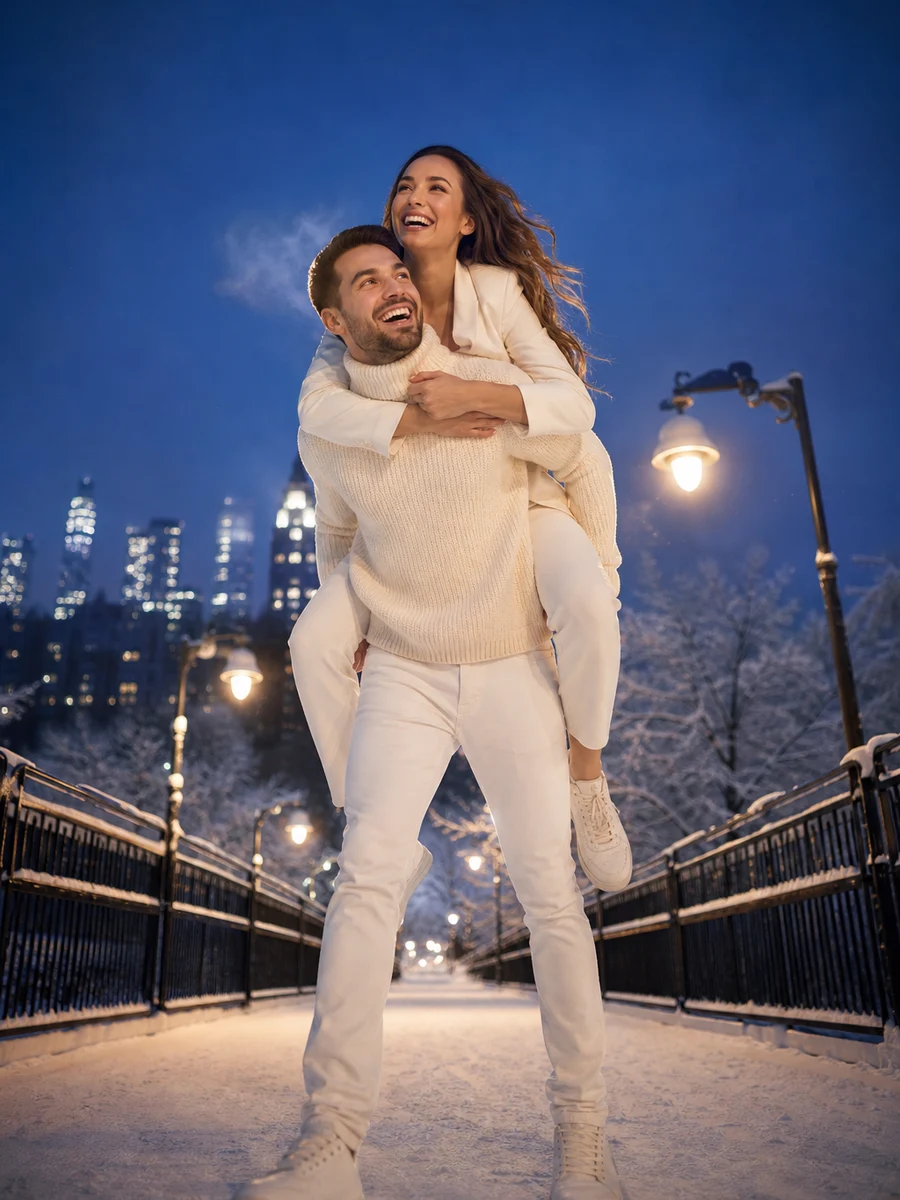
When the blue hour hits and the city lights shimmer, toss the rulebook and have some fun. A piggyback ride makes an editorial statement.
Outfit Ideas

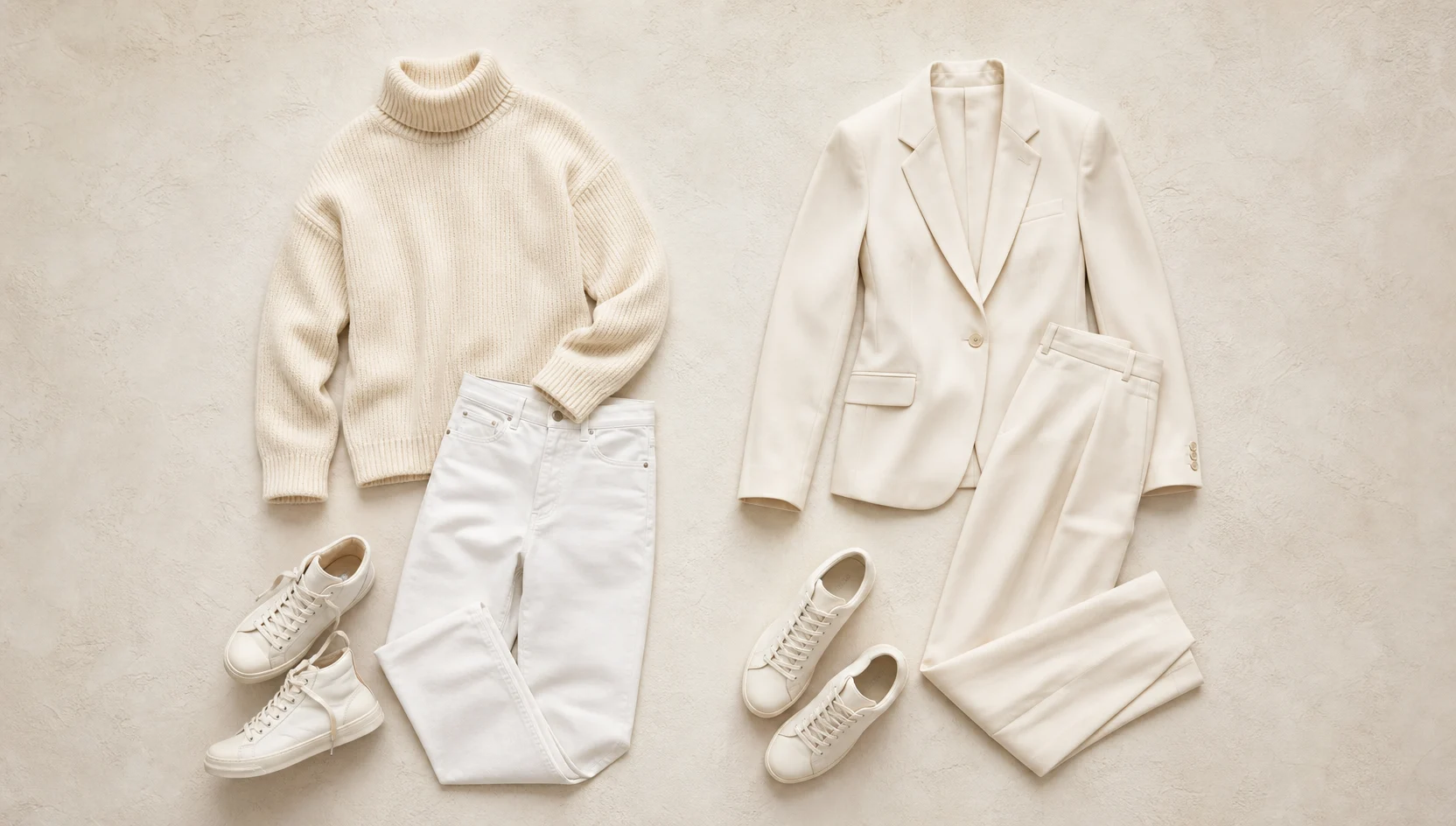
He
knit sweater + jeans
white

When the blue hour hits and the city lights shimmer, toss the rulebook and have some fun. A piggyback ride makes an editorial statement.

He
knit sweater + jeans
white
She
blazer + pants set
white
You step out of the warm cafĂ© into the winter dusk, the air so sharp it feels like it could crack. The sky is sliding from pale gray to deep indigo. City lights flicker onâgolden streetlamps, the neon hum of a corner bodega. You tug your cream scarf tighter, the only texture against your all-white knit sweater and pants. Your photographer nods toward the crosswalk: itâs 5:52 p.m., the blue hour is here. A bus whooshes past, spraying gutter slush. You ignore it. The next twenty minutes will give you that rare mix: the sky a rich, velvety blue behind you, and every city light glowing like a pearl.
You pull your partner close as the light changes. He crouches and you hop onto his back, your arms looping around his shoulders. Your cheek presses into his ear, and you both look off toward the taxi lights blurring down the avenue. He starts laughingâsomething about your freezing hands on his neckâand you laugh too, breath puffing white. Your photographer walks backward, framing you against the string lights of a closed flower shop. You shift your weight, lean closer, and let the laugh goâreal, not forced. Shooting city engagement photos at blue hour means exposing for your skin, not the sky. The streetlights bloom into soft orbs, and your all-white outfits pop without a flash.
Before you know it, the sky deepens to navy and the moment passes. You dismount, grab the hand warmers from your bag, and realize: those fifty strides of piggyback, in that light, are what youâll remember most. Itâs not just a poseâitâs the heart of why you booked these engagement photos: motion and joy caught in a single frame. Winter engagement photos arenât about staying perfectly warm; theyâre about leaning into the cold together, and trusting that the biting air only makes the glow feel that much sweeter.
đ Blue Hour â Shoot in the ~20 minutes after sunset when city lights glow against a deep blue sky.
Wear thin heat-tech layers under your all-white knitsâthey trap warmth without bulk. Wool and cashmere breathe and insulate, and a cream scarf adds texture while protecting your neck. Bring hand warmers to clutch between shots, and pop into a cafĂ© right before you start to raise your body temperature. Keep moving: switching poses every minute stops the cold from settling in. Skip heavy coats that hide your outfit; instead, take brief cover between setups. If your hands are visible, subtle motionâlike a gentle touchâkeeps them from looking stiff. Comfort comes from preparation, not from forcing a smile through chattering teeth.
Yes, when you plan carefully. Blue hour in winter ends by 6:30 p.m., so youâre not out very late. Choose well-lit, populated streets your photographer knows. Stay near crosswalks, cafĂ©s, or landmarks with natural foot traffic. Keep valuables to a minimumâjust your phone and a slim card holder. Your photographer will act as a guide, keeping an eye on gear and surroundings. Avoid deserted alleys or construction zones after dark. Let someone know your route and expected wrap time. Most urban areas feel safe during early evening, especially with a professional who shoots there regularly.
Blue hourâthe 20 minutes right after sunsetâwhen the sky turns a deep, luminous blue and all the city lights begin to glow. In winter, sunset happens around 4:30â5:30 p.m., so you get that magical light early without staying out too late. The contrast is stark: warm streetlamps against cool sky. Arrive 30 minutes before sunset to settle in and test angles. Golden hour just before sunset offers a softer, warmer look, but blue hour delivers that editorial, high-fashion feel. For all-white outfits, this cold light makes the whites pop without washing out, so the timing is perfectly aligned.
Usually not for a simple handheld camera on public sidewalks. Most cities allow personal photography without a permit as long as you donât block pedestrian traffic or use tripods, lights, or large reflectors. Private propertyâlike outdoor plazas, rooftop bars, or curated alleywaysâmay require permission. Always check with your photographer; they know local rules and can scout locations where no one will hassle you. For peace of mind, call the cityâs film office or the property manager ahead of time. In practical terms, a quick-moving couple with one camera rarely raises any flags.
Shoot on a weekday during blue hour, when the after-work rush has passed and sidewalks empty out. Pick secondary streets or quiet alleys just off main avenuesâthey often have better light and fewer people. Your photographer can use a longer lens to compress the background and blur any distant pedestrians. Position yourselves so your bodies block the stragglers. In winter, cold temperatures naturally thin crowds. Timing is everything: arrive right as the streetlamps turn on, and youâll find stretches of sidewalk that feel almost private. A little patience and a flexible route let you pivot away from the few people who do wander by.
Clean, monochrome looks work best against busy city textures. For this all-white concept, choose a soft ivory or true white knit sweater and matching trousers. Add a cream scarf for visual depth without pattern. Avoid logos, stripes, or anything that fights the clean lines. Because youâre in the city, youâll walk between spots, so wear comfortable boots that can handle ice or gritâyou can change shoes on location. Keep accessories minimal: a simple watch or stud earrings. White reflects that gorgeous blue hour light, so the outfit glows naturally, creating a striking contrast with dark winter streets.
Plan for 1.5 to 2 hours total. Youâll spend the first 20â30 minutes meeting up, walking to your starting point, and warming up your smiles. The critical shooting windowâblue hourâlasts about 20 minutes, so your photographer will time the best locations for that peak light. Afterward, you might grab a few dusk shots with the deeper sky. If youâre only after that blue hour look and youâve scouted the spot in advance, a focused 1-hour session can work. Factor in time to move between streets and any quick outfit tweaks. It never feels rushed, but it moves quickly because the light fades fast.