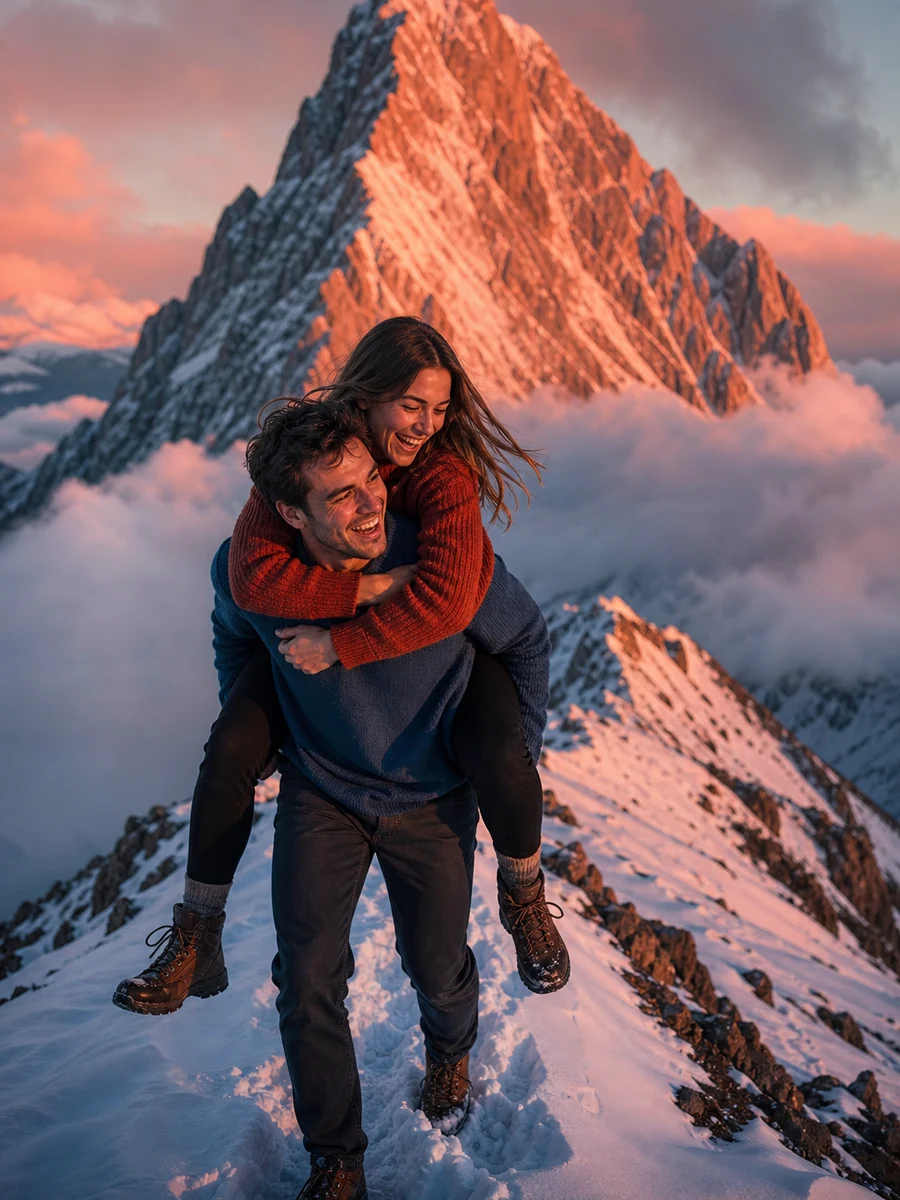
Alpenglow Piggyback Ride on a Snowy Ridge Engagement Photos
Get a little playful as the sun risesâpiggyback rides feel even more joyful at this altitude.
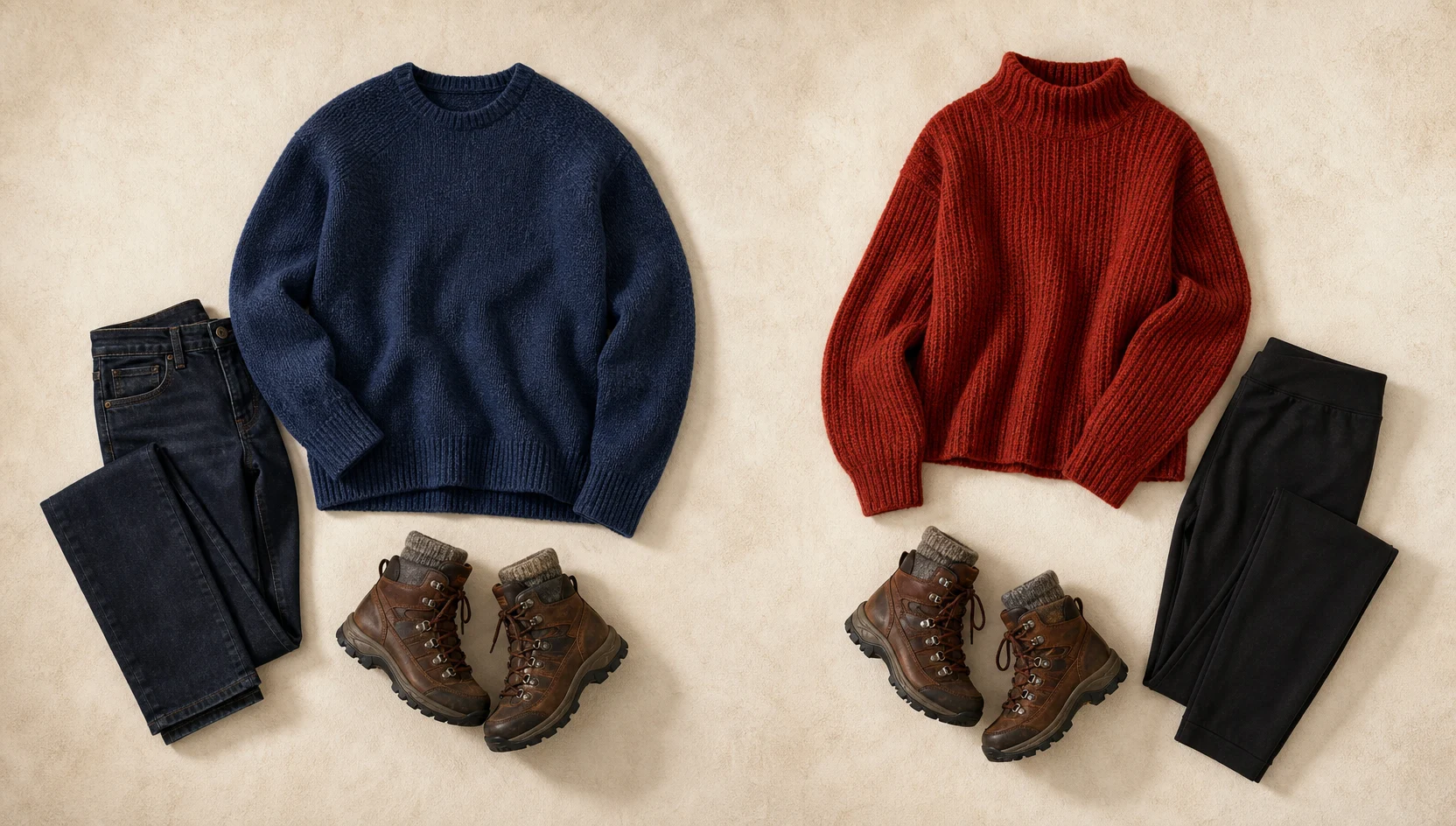
Outfit Ideas

He
knitted sweater + pants
dark blue
She
knitted sweater + pants

Get a little playful as the sun risesâpiggyback rides feel even more joyful at this altitude.

He
knitted sweater + pants
dark blue
She
knitted sweater + pants
rust red
Your headlamp cuts a narrow tunnel through the pre-dawn dark, illuminating each boot print in the crusted snow. The air is thin and biting, sharp in your lungs. Your guide moves with quiet confidence, setting a steady pace up the frozen ridgeline. By the time you reach the spine of the mountain, your legs burn but the sky is beginning to bruise with color.
Then it happensâthe alpenglow. The peaks around you ignite in shades of peach and rose, the snow blushing as if on fire from within. Your photographer gestures you together. He squats, you hop on, your thick-knit sweaters (rust and navy, just as planned) bunching into a warm hug. You loop your arms around his neck, feeling the scratch of wool against your chin. He takes a few careful steps along the ridge, the snow crunching rhythmically. You lean your cheek next to his, and a genuine laugh escapes as you glimpse the absurd, beautiful view over his shoulder. The camera clicks.
For those twenty minutes, the whole world is just the two of you and that impossible light. Then, as suddenly as it arrived, the pink fades to day. Youâve got your shot. The guide leads you down a safer route, and youâre already giddy with the secret of what you just created. Mountain engagement photos like this demand a pre-dawn wake-up, a hired expert, and boots that can grip iceâbut the payoff is something that lives beyond the frame.
đ Sunrise â Arrive at first light for soft color, calm surroundings, and far fewer crowds.
Thin air means less oxygen with every breath, so youâll tire faster than normal and might feel dizzy or headachy. Even fit couples notice a drop in stamina above 8,000 feet. Arrive a day or two early to let your bodies adjust. Drink double your usual water, skip alcohol, and nibble on high-carb snacks. During the hike, your guide will set a pace that keeps your heart rate manageable. If you feel faint, stop and breathe deeplyâpushing through can lead to altitude sickness, which ends the shoot. Accept that youâll move slower, and thatâs completely fine.
Thereâs no single best, but three ranges stand out for snowy ridge alpenglow. The Tetons in Wyoming offer jagged peaks and accessible backcountry with reliable winter snow. Coloradoâs San Juans boast dramatic, remote terrain perfect for that âon top of the worldâ feel, though many areas require a 4x4 approach and a guide. Washingtonâs Cascades deliver dreamy powder and forested approaches, but weather changes fast. Your choice depends on travel ease, permit logistics, and how much youâre willing to hike. No matter the range, book a local guide who knows the safe routes and sunrise timing.
Absolutely. Snow transforms familiar ridges into something otherworldly and softens the alpenglow into pure pastel. Youâll need full winter kit: insulated, waterproof boots; layered merino wool; thick socks; and hand warmers. Your guide will pick a route with manageable avalanche risk and stable snowpack. The cold is realâexpect frozen eyelashes and numb fingers between shotsâbut the light at sunrise as it hits fresh powder is worth every shiver. Plan for quick posing intervals; your photographer will work fast. Just be clear with each other: if the cold turns painful, speak up. Safety and comfort come first.
For that iconic alpenglow on snowy peaks, sunrise is usually superior. East-facing slopes catch the first light and glow magenta before the sun crests the horizon. Youâll also find calmer winds and absolute solitudeâvery few hikers start in the dark. Sunset can work if your ridge faces west, but winter afternoons often bring gusty winds and softening snow that makes hiking tougher. The trade-off is the pre-dawn start: alarms at 3:00 a.m., a cold ascent by headlamp. Yet the gradual reveal of the mountains around you is an intimacy youâll never forget.
Almost certainly yes. Snowy ridges arenât reachable by car. Expect a dark, pre-dawn hike on snow-covered trails, often using snowshoes or microspikes. The distance can vary widelyâfrom a 20-minute climb to a multi-hour trek. Your guide will choose a route that matches your fitness and the desired backdrop. Youâll carry your own water, layers, and maybe a headlamp; the photographer carries gear. The hike itself becomes part of the adventure, and your guide will point out safe spots to pause and shoot. Ask about elevation gain and estimated time so you know exactly what youâre signing up for.
You trust your guide and turn around. Mountain weather is notoriously fickle: a clear sky can turn to whiteout in minutes. Your guide will have checked the forecast, but they also watch the clouds, wind, and snow stability in real time. You might get only 15 minutes of perfect alpenglow before clouds roll in. Have a backup plan, like a lower protected bowl or a tree-line shot thatâs still gorgeous. Mentally, accept that flexibility defines mountain engagement photosâyouâre part of a bigger landscape, and that humility can actually deepen the experience.
You donât need to be an elite athlete, but you should be comfortable with sustained hiking at altitude while carrying a small pack. A good baseline: you can hike 3-5 miles with 1,000 feet of elevation gain without feeling wrecked. For a few months before your shoot, add stair climbs or hill repeats to your routine, and practice hiking in the boots youâll wear. Core and leg strength matter for balance on uneven snow. The piggyback pose also requires his ability to carry you for a few steps without wobbling. Communicate honestly with your guide about your limitsâtheyâll tailor the route.