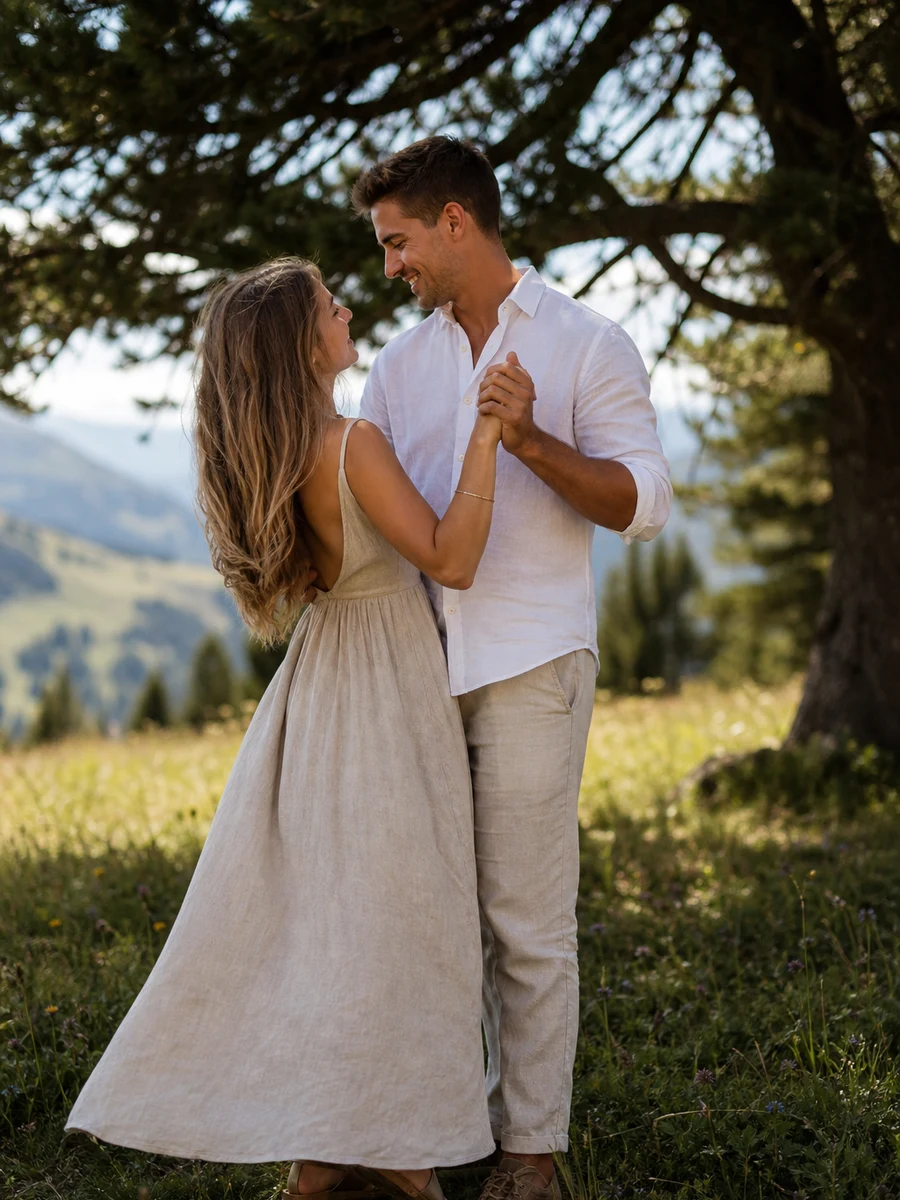
Midday Meadow Slow Dance in Linen Engagement Photos
Find a bit of shade to capture soft, even light. Let your dance be slow and unscripted.
📍 mountain💑 slow-dance
Outfit Ideas
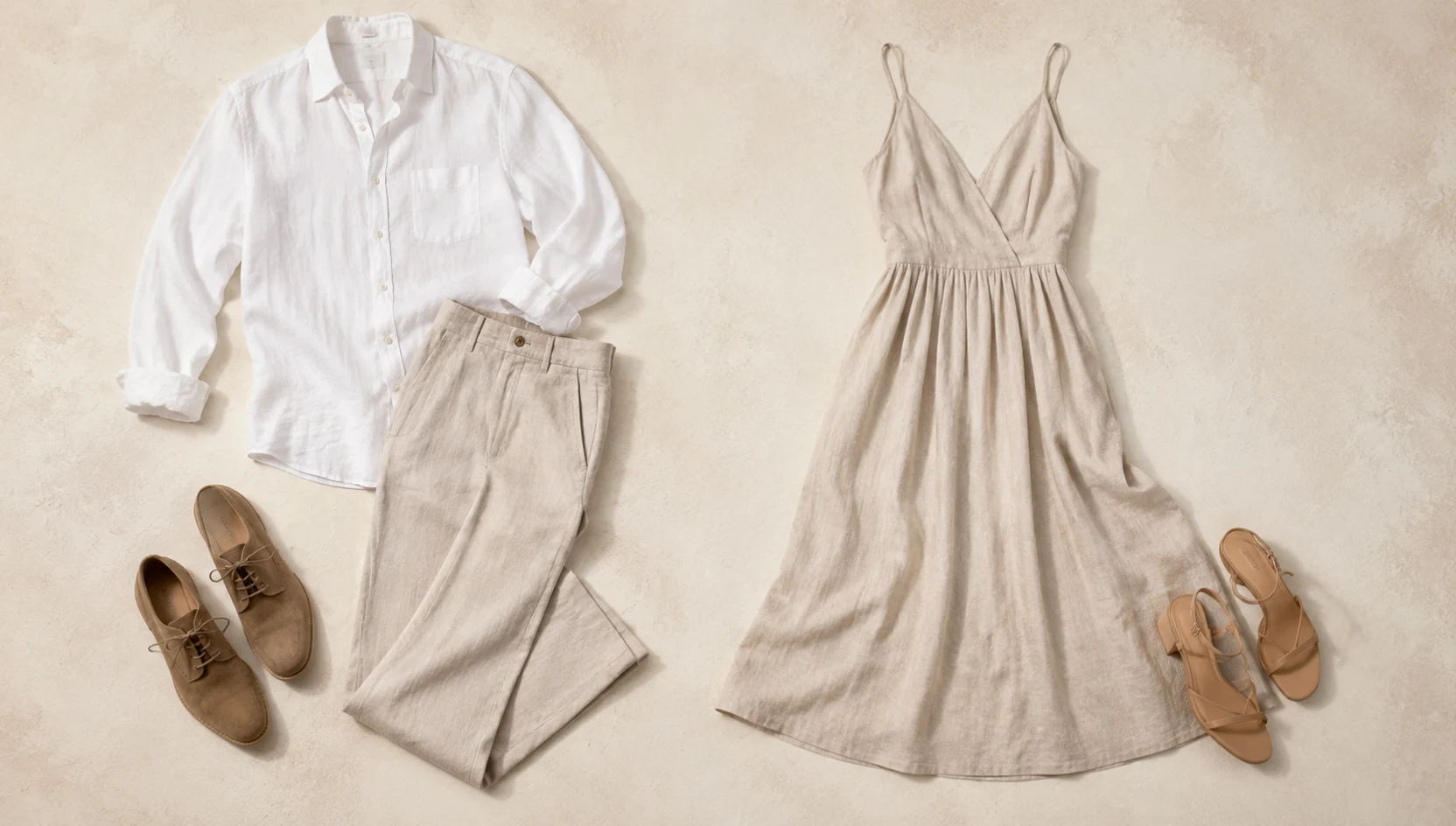
He
linen shirt + chinos
white + beige
She
linen maxi dress
Find a bit of shade to capture soft, even light. Let your dance be slow and unscripted.
He
linen shirt + chinos
white + beige
She
linen maxi dress
light beige
You arrive before the sun clears the ridge, the meadow still holding the night’s chill. The air smells of pine and damp earth, and the only sound is your own footsteps pressing into dewy grass. The first rays spill over the peaks as you and your partner clasp hands and begin a slow dance, bodies swaying to a rhythm only you feel.
Your photographer asks you to raise your joined hands and lean foreheads close, creating an intimate frame with the mountains behind you. The light is soft and golden, wrapping around your linen sleeves. The fabric’s texture catches the glow—those subtle weaves keep the look from falling flat, even as the sun climbs higher.
By late morning, the light turns harsh, so you move into a grove of aspen. Dappled shade softens the mountain sun, and the leaves flicker overhead like a natural disco ball. Here, you slow-dance again, the hem of your neutral-toned dress sweeping through patches of light. You’ll feel the heat ease, your photographer working quickly to capture the effortless connection before you overheat.
Midday mountain engagement photos can be tricky, but with a tree canopy and light linen outfits, you stay cool and look timeless. Bring water, a small towel to blot shine, and a change of shoes—the meadow might look soft but the ground can be uneven. You’ll learn that the best shots often happen when you stop posing and just hold each other close, breathing in the wildflower-scented air.
🌄 Sunrise — Arrive at first light for soft color, calm surroundings, and far fewer crowds.
Sunrise delivers the most flattering light—soft, diffused, and cool in tone—without the harsh shadows or squinting that midday brings. Arrive at first light to catch the alpenglow on peaks and have meadows to yourself. If you must shoot later, use tree shade or open forest canopies to filter the sun. Avoid midafternoon in exposed areas; the direct overhead light flattens textures and creates unflattering contrasts on faces. Golden hour before sunset is a strong second choice, but mountain weather can shift fast, so mornings often offer more predictable calm.
Even in summer, morning temperatures at elevation can dip into the 40s, especially before the sun fully rises. Wind chill on open ridges makes it feel sharper. Dress in layers you can shed—a wool wrap or light jacket over your linen pieces keeps you warm during setup, then disappears once you’re moving. Hand warmers in pockets help between takes. By 10 a.m., you might peel down to your main outfit, but always check the elevation and forecast: for every thousand feet you gain, the temperature drops roughly 3–5°F.
Stick to soft neutrals like cream, beige, sage, and dusty blue—they complement alpine settings without competing. Linen is ideal for texture; its natural weave adds depth and keeps you cool under sun. Avoid busy patterns or neon accents. Closed-toed shoes (boots or sturdy sandals) are essential for uneven terrain. Bring a change of footwear for hiking in. For him, a linen button-down and light trousers; for her, a flowing midi dress with movement. Coordinate tones, not matches, and let the fabric drape naturally.
Plan for 90 minutes to two hours. This allows time to hike to your spot, catch changing light, and work through multiple backdrops without rushing. At high altitude, you’ll move slower—pauses for water and breath are built in. If you’re shooting at both sunrise and a shaded midday slot, budget three hours total to account for the break in between. Most photographers offer packages that cover this comfortably; a shorter session risks feeling cramped, especially if you need to walk between locations.
Yes, even for a meadow. Paths often have loose rock, hidden roots, or uneven ground. Wear comfortable, broken-in hiking boots to reach your location, then switch into your photo footwear once set. Keep the boots nearby for any walking between scenes. In sloped terrain, they prevent twisted ankles and let you focus on each other rather than your footing. If your dress is long, boots won’t show; for tighter shots, just slip them off. Pack a pair of thin no-show socks that work with your linens.
Above 8,000 feet, thinner air means you’ll tire faster and may feel lightheaded. Hydrate heavily the day before and bring water. Take slow, deliberate movements—no sudden sprints between poses. Your photographer will pace the session with breaks, and holding still in a dance pose actually conserves energy. Avoid alcohol and heavy meals the night prior. If you’re coming from sea level, arrive a day early to acclimate. Summit meadows above treeline will tax you more, so choose shaded, lower-elevation sites if you’re concerned.
The San Juan Mountains in Colorado offer dramatic ridgelines, alpine lakes, and meadows blanketed with wildflowers in midsummer. The Tetons in Wyoming deliver iconic, jagged backdrops with accessible aspen groves. For softer, rolling peaks with moody mist, the Blue Ridge Mountains in North Carolina and Virginia shine in fall. Each range has a distinct character: choose based on the landscape that matches your aesthetic. Research permit requirements—some wilderness areas restrict professional photography. Consider travel logistics and elevation to match your comfort level.