Looking Out from the Meadow at Dusk Engagement Photos
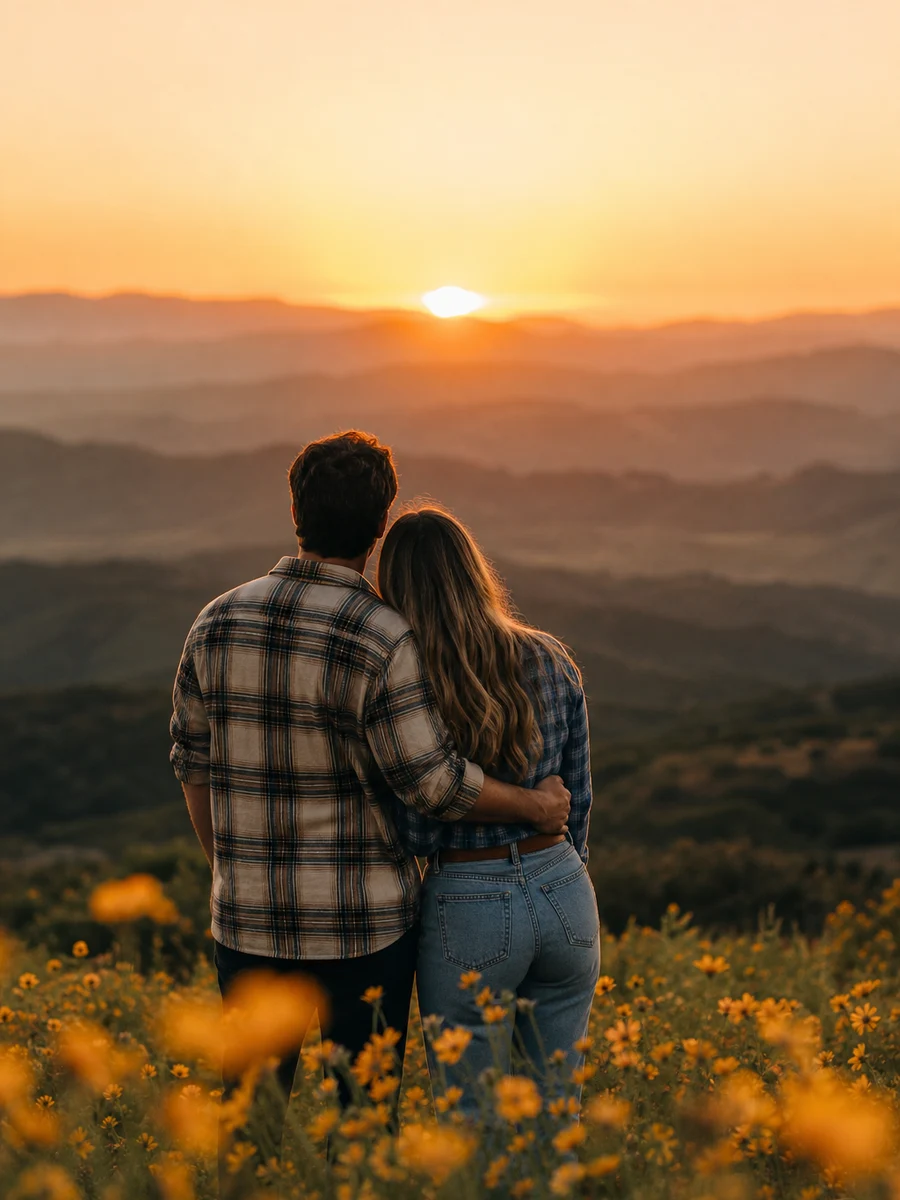
Stand shoulder to shoulder and gaze at the view. The backlight will illuminate your silhouettes and make the meadow glow.
Outfit Ideas

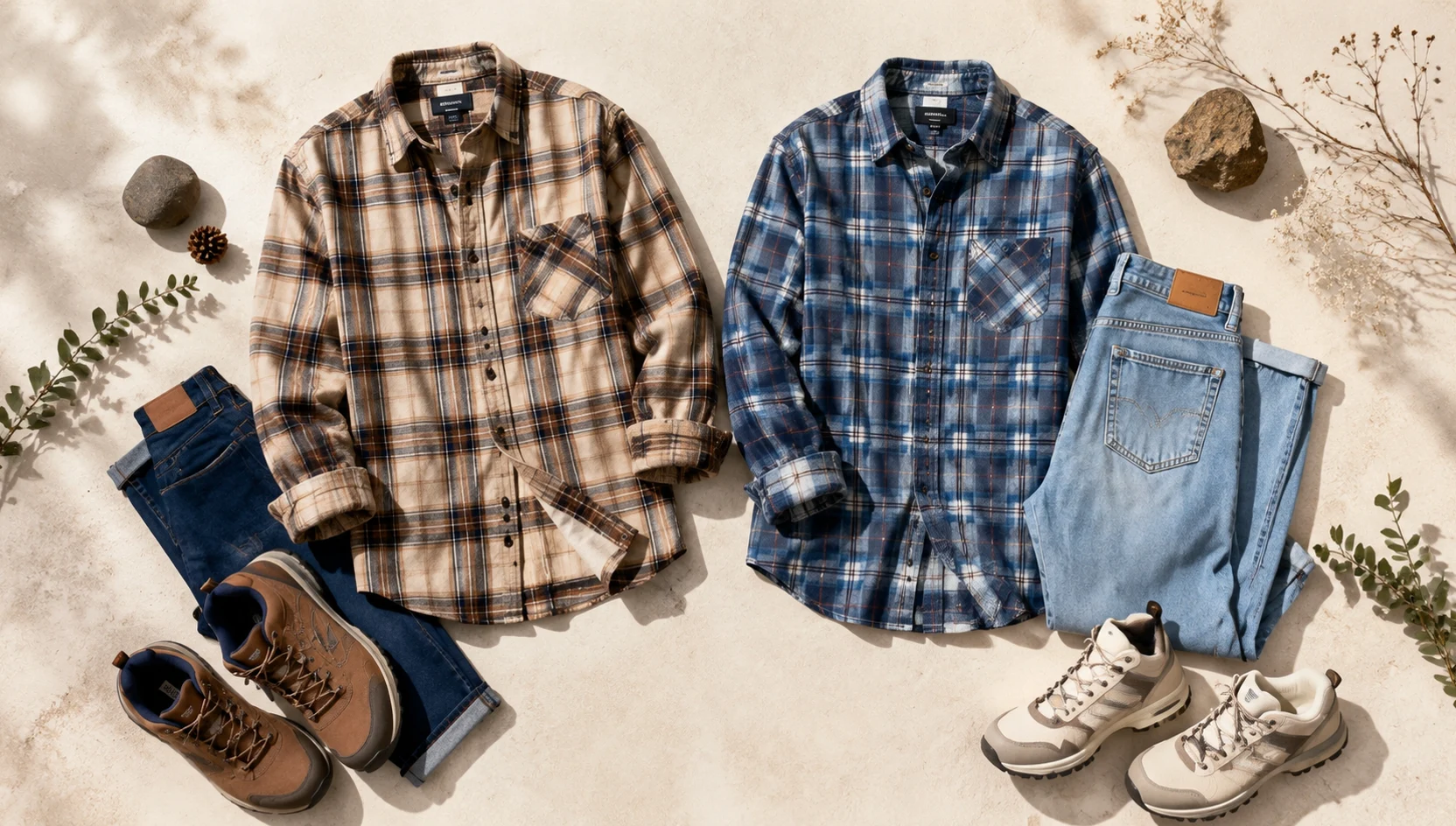
He
plaid shirt + jeans
beige and brown plaid
She

Stand shoulder to shoulder and gaze at the view. The backlight will illuminate your silhouettes and make the meadow glow.

He
plaid shirt + jeans
beige and brown plaid
She
plaid shirt + jeans
blue plaid + light wash denim
You step onto the overlook's edge, the meadow grass releasing its earthy evening scent with every footfall. The air is cooling quickly, carrying the faint chill of high altitude and a whisper of pine. To the west, the sun is a molten coin sinking behind serrated peaks, painting the sky in bands of rose and tangerine. You arrived thirty minutes ago, just as the light began its alchemy, after scouting this exact spot the day before—a west-facing ledge tucked away from the trail.
You wrap your arm around her waist, pulling her close against the sudden breeze. She fits her head into the hollow of your shoulder, and together you stare out where the valley dissolves into purple shadows. Your flannel shirts, earthy rust and deep green, blend perfectly with the warm, dying light. The photographer's shutter clicks softly, but you barely notice. For these mountain engagement photos, the moment is everything—the shared silence, the distant call of a hawk, the way the horizon line seems to hold all your plans.
The light turns honey-gold at 6:45 p.m., softening every edge. You hold the pose, breathing in sync. When the sun finally slips away, the temperature drops sharply. You pull on a fleece you packed just in case, and she laughs at how rapidly the world changed. As you hike back down by flashlight, her hand in yours, you realize these engagement photos captured more than a sunset; they bottled a feeling only the mountains can give.
🌄 Sunrise — Arrive at first light for soft color, calm surroundings, and far fewer crowds.
Yes, winter mountain engagement photos are possible and stunning. You'll need to prepare for cold temperatures, deep snow, and potentially icy trails. Wear insulated boots with good traction and pack layers: thermal base layers, fleece, and a windproof outer shell. Your photographer must be experienced with snow conditions and bring weather-sealed gear. Light is often softer and diffused, offering a dreamy quality, but you'll have a shorter shooting window before dusk. Plan for a midday shoot to use the warmest hours, and bring hand warmers to tuck into pockets between shots.
Sunset is usually better for west-facing overlooks like this meadow. You get the golden hour glow casting long, flattering shadows and the sky erupting in color as the sun drops. Sunrise works beautifully for east-facing views, with calm air and often fewer people, but you'll need to hike in the dark and contend with pre-dawn cold. For the look in this story, sunset provides warmer, more dramatic light on mountain ridges. Whichever you choose, arrive at least 45 minutes early to settle in and capture the full light transition. Your photographer can advise based on exact location.
Most mountain engagement photo spots require some hiking. Trails can range from a short, flat walk to a steep scramble. You should scout the location together with your photographer beforehand, ideally during the same time of day, so you know exactly what to expect. Wear sturdy hiking shoes and carry your dress or formal outfit in a backpack. Change on site if privacy allows. Bring water and a snack. The hike back in low light means headlamps are essential—your hands will be free for navigating uneven ground. The effort is part of the adventure and shows in your relaxed, authentic photos.
Mountain weather can flip in minutes: blue sky to fog, wind, or rain. Have a flexible mindset and trust your photographer to work with the conditions. Always check the forecast the morning of, and pack extra layers and waterproof jackets for both of you. Sudden cloud cover can actually create moody, dramatic engagement photos, with mist and soft light. If lightning or heavy rain threatens, have a safe backup plan like a nearby forest canopy or an overhang. Your photographer may suggest rescheduling if conditions are unsafe, so build a buffer day into your plans.
You need a basic level of fitness to hike to most overlooks, but the difficulty varies widely. For a meadow like this, you might walk half a mile on a maintained trail with moderate elevation gain. If you're not regular hikers, start with short walks on local trails a few weeks beforehand to build comfort. High altitude can make breathing harder, so go slowly and hydrate well. Choose a location that matches your ability; your photographer can recommend spots with easy access and big views. The goal is to arrive comfortable, not exhausted, so you can enjoy the experience fully.
The best time is summer through early fall, when trails are clear and weather is mild. Wildflowers peak in July and August, adding bursts of color to meadows. Fall brings golden aspen leaves from mid-September to early October, a spectacular backdrop. The golden hour occurs around 6:30–7:30 p.m. in summer, shifting earlier into fall. Spring can be muddy and winter snowy, so access may be limited. Weekdays see fewer hikers than weekends. Always check if the area requires permits for photography, and avoid peak tourist seasons if you want solitude.
Temperatures can drop sharply after sunset, even in summer. At altitude, a 70°F afternoon can become 45°F by dusk. Breezes add wind chill. Dress in layers you can add or remove: start with a moisture-wicking base, add a flannel, and top with a packable down jacket or fleece. Bring a beanie and gloves for your partner if she gets cold quickly. Hand warmers in pockets help between shots. Once the sun is gone, you'll be glad for every extra layer during the hike out. The chill is fleeting, but the photos last a lifetime.