Golden Hour Gaze at Snow-Dusted Horizon Engagement Photos
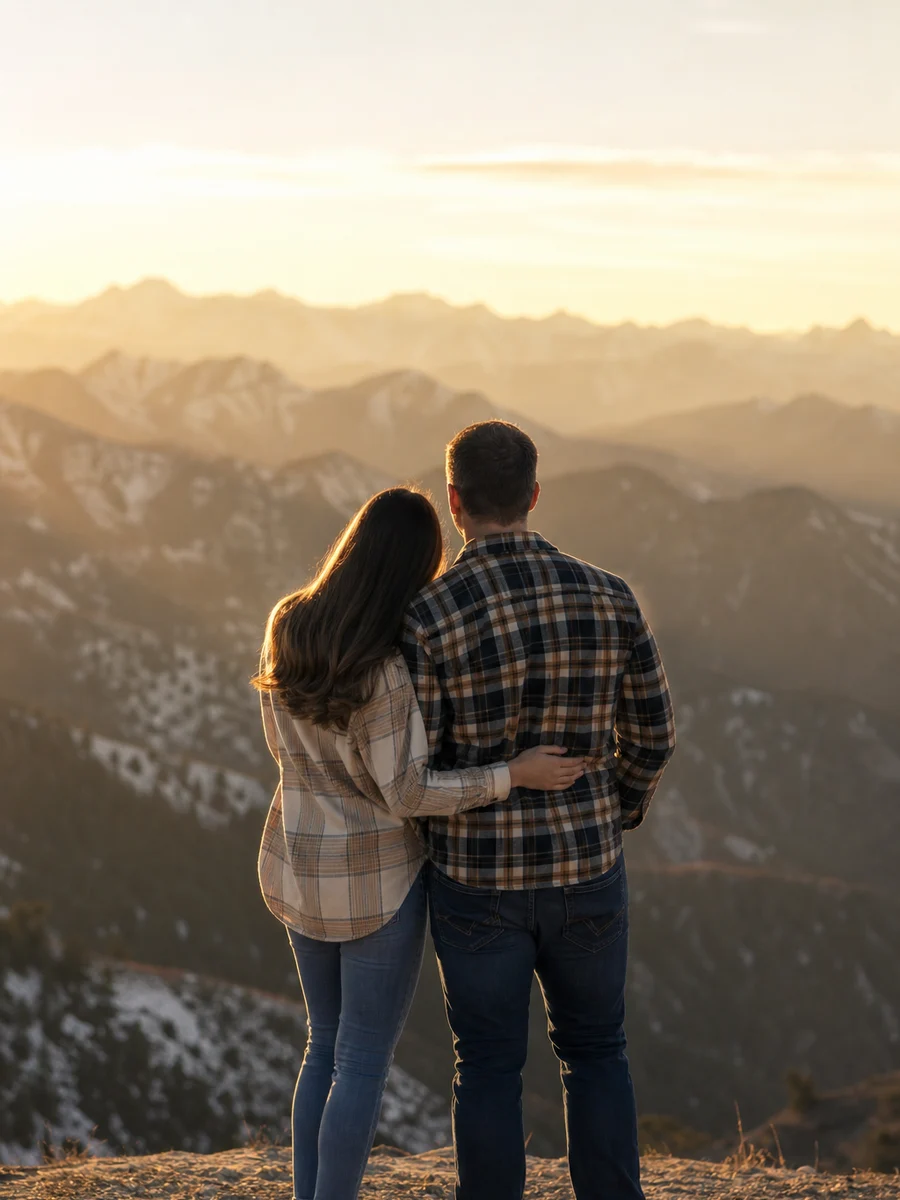
Stand together, look out at that endless horizon, and let the golden hour do the rest.
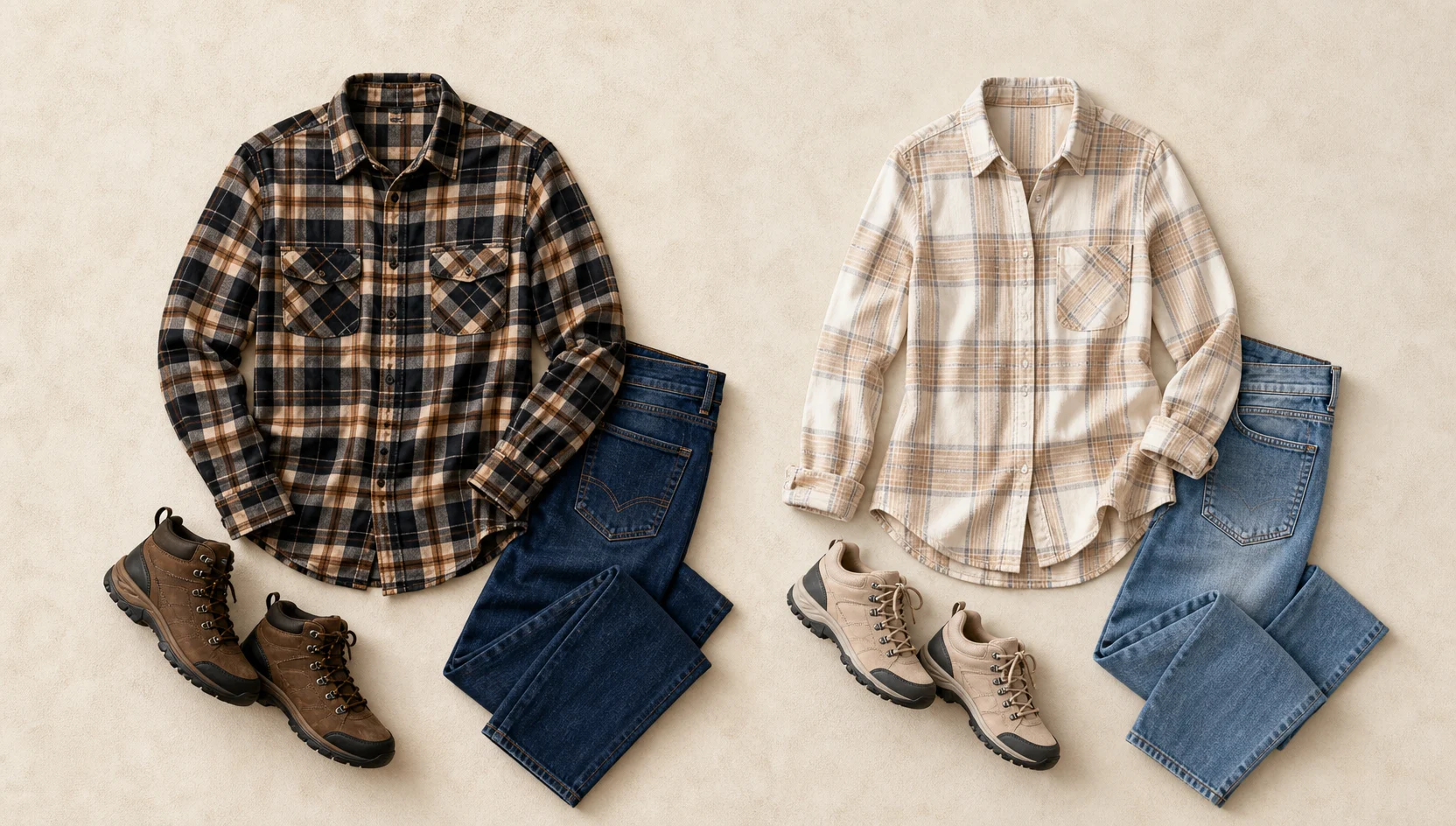
Outfit Ideas

He
flannel shirt + jeans
brown and black plaid / dark blue
She

Stand together, look out at that endless horizon, and let the golden hour do the rest.

He
flannel shirt + jeans
brown and black plaid / dark blue
She
flannel shirt + jeans
beige and white plaid / light blue
The trail is dark save for the cone of your headlamp, snow crunching underfoot with each step. You and your partner hike in silence, the cold air biting at your cheeks, your breath a steady cloud. You arrived 30 minutes before sunrise, just as planned, to claim this safe cliff edge with a clear view of the snow-dusted peaks. The world is hushed, holding its breath. You're both layered in warm neutralsâcomplementary plaids that don't match exactly, a swirl of rust and cream against the white terrain. As the sky begins to shift, you wrap your arms around each other's waists and gaze out at the horizon. The first light is soft, a pale apricot that deepens to honey-gold. The snow glitters, and the distant mountains slowly burnish pink. Your photographer moves quietly, framing the two of you against the awakening sky. The shutter clicks are the only sound besides the wind. It's chillyâyour fingers tingle even inside glovesâbut you've tucked hand warmers in your pockets, and the shared warmth between you keeps the cold at bay. You take a moment to just be, not posing, simply seeing the day begin together. These mountain engagement photos capture that stillness, that wordless promise. After 40 minutes, the sun fully crests, flooding the valley with light. You share a thermos of coffee, the heat seeping into your palms, and watch the shadows retreat. Before you hike down, you look back at the spotânow just a ridge in full daylight, but in your mountain engagement photos, it holds the secret of dawn, forever yours.
đ Sunrise â Arrive at first light for soft color, calm surroundings, and far fewer crowds.
Sunrise offers soft, directional light and empty trails. Aim for first lightâabout 30 minutes before the sun crests the peaks. The alpenglow paints snow in warm pinks and golds, flattering both skin and landscape. Crowds are almost non-existent, giving you intimate privacy. In summer, shoot around 5:30-6:30 a.m.; in winter, 7:00-8:00 a.m. The light shifts fast, so work quickly. Sunset also works, but morning light is cleaner and the air often calmer.
Temperatures can drop well below freezing, especially at high altitudes and before sunrise. In winter, expect 10-25°F (-12 to -4°C) with wind chill making it feel colder. Spring and fall might hover around 30-45°F (-1 to 7°C). Dress in layers: thermal base, fleece, flannel, and a windproof jacket. Bring hand warmers and a hat you can easily remove. Your fingers and toes chill fastest, so insulated boots and gloves are essential. Move around between shots to stay warm.
Choose coordinated flannels in complementary tonesâwarm neutrals like rust, olive, cream, or burgundyâbut avoid identical patterns. Layering is key: start with moisture-wicking base layers, add a flannel, and finish with a puffy vest or jacket you can shed. Stick to earth tones that blend with the landscape rather than bright colors. For bottoms, dark jeans or hiking pants work. Sturdy, non-slip boots anchor the look and keep you safe on snowy or rocky terrain.
Plan for 90 minutes to two hours. This includes hiking to the location, setting up, and shooting through the sunrise phases. The actual photography windowâwhen light is at its peakâis only 30-40 minutes. Arriving 30 minutes early allows time to scout, warm up, and relax before the camera comes out. If you're hiking to a remote spot, factor in trail time. Short sessions near parking can wrap in an hour. Your photographer will guide the pacing to capture variety without rushing.
Absolutely. Snow, ice, and uneven terrain demand sturdy, waterproof hiking boots with good tread. Ankle support prevents twists on rocky paths. Cold, wet feet ruin the experience fast. Choose insulated boots for winter, and break them in beforehand to avoid blisters. Your boots will show in some wide shots, so pick a style that complements your outfitâleather or suede in earthy tones. Pack a clean pair of shoes for the drive home; your boots will likely be muddy or snowy.
At high elevations, thin air leads to quicker fatigue and breathlessness. If you're not acclimated, start hydrating days in advance. The shoot morning, move slowly and take breaks. Avoid heavy foods and alcohol the night before. Altitude can also heighten the feeling of cold, so layer up. Even mild altitude sicknessâheadache, dizzinessâcan dampen your mood. Keep snacks handy, like trail mix, and tell your photographer if you feel off. They'll adjust the pace and choose less strenuous angles.
The best range depends on the backdrop you envision. The Rocky Mountains in Colorado deliver jagged peaks and alpine lakes; spots like Rocky Mountain National Park offer accessible sunrise vistas. For dramatic granite faces, California's Sierra Nevada or Yosemite shine. The North Cascades in Washington provide rugged, less-crowded glaciers. The Tetons in Wyoming feature iconic, sharp summits with easy access. Consider your location, season, and hiking ability. Each has unique permits and restrictions, so research rules early.