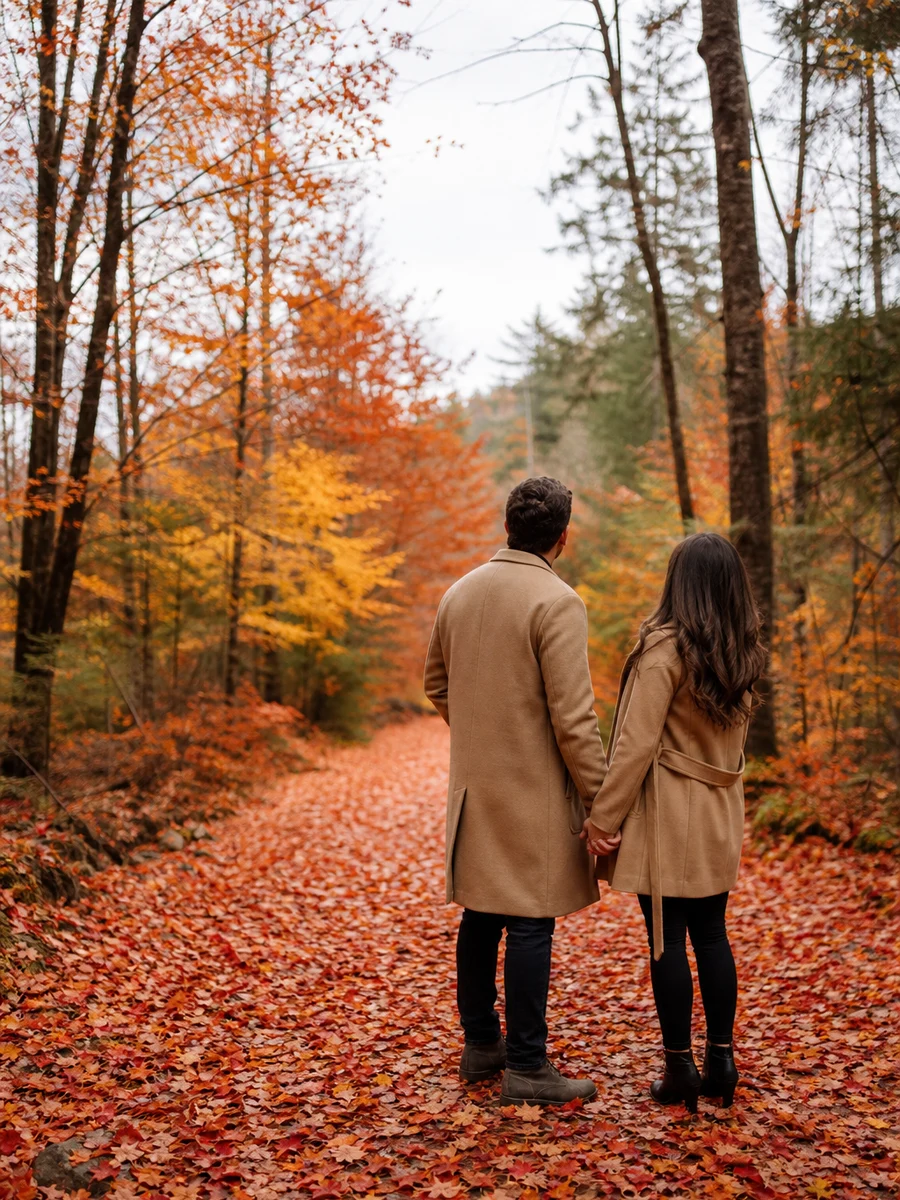
Looking Ahead Together on an Overcast Leafy Trail Engagement Photos
Sometimes looking away together is more powerful than looking at each other—the overcast light keeps the focus on the shared moment.
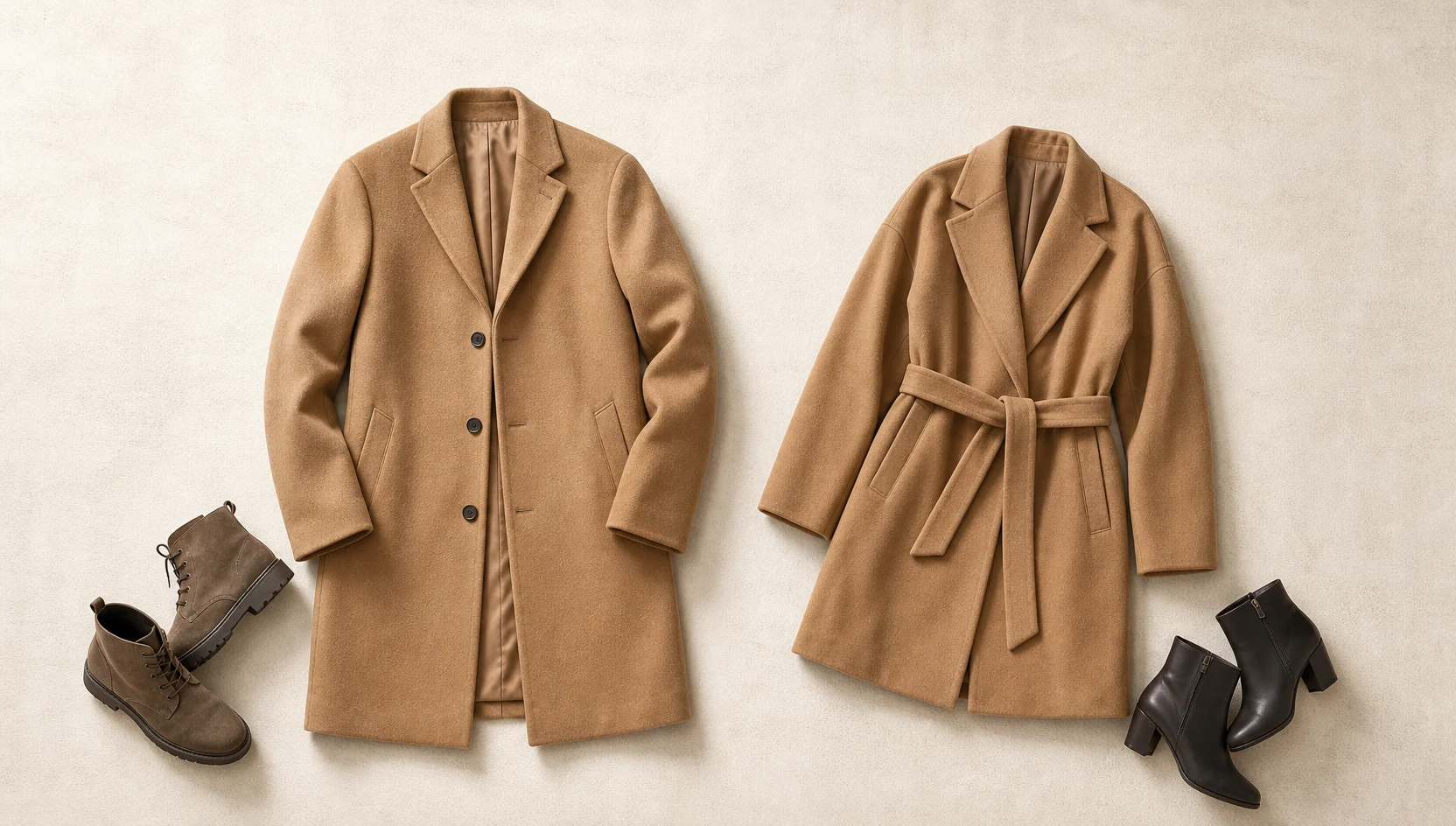
Outfit Ideas

He
long coat

Sometimes looking away together is more powerful than looking at each other—the overcast light keeps the focus on the shared moment.

He
long coat
camel
She
belted coat
camel
You step onto the trail, the damp earth softening your footsteps. The air carries that crisp, slightly metallic scent of fallen leaves — a reminder that autumn is peaking. Overhead, a blanket of clouds diffuses the light into a soft, even glow. There are no harsh shadows across your faces, just a clean, flattering illumination that makes the red and orange maple leaves pop against the gray sky. Your camel coat feels warm, but not bulky, and your partner’s charcoal jacket creates a subtle contrast that adds depth without making you look identical.
You both walk until the trees open up to a curve in the path. Your photographer asks you to stand close, shoulders leaning in just a touch. As you look toward the distant bend where the trail disappears, you’re instructed to take one small step forward together — a gentle, natural motion that feels less like posing and more like a shared intention. The sound of your boots on the leaves is rhythmically satisfying, like a heartbeat.
You’ll want to arrive mid-morning. The overcast light is most consistent then, and the forest won’t be too dark yet. Bring a small toweling cloth to dab away any dampness on seats or knees, and consider portable hand warmers; the chill sneaks up when you’re still for too long. Your forest engagement photos will have an earthy, intimate feel precisely because the weather isn’t screaming for attention. Instead, the focus stays on the quiet connection you share, framed by the muted browns and vivid auburns. By the end, you’ll realize these engagement photos aren’t just about how you look — they’re about how you felt, walking side by side into the next chapter.
☁️ Overcast — An overcast sky is a giant softbox — even, shadow-free light that flatters skin tones.
Fall engagement photos feature the seasonal color change, which peaks briefly. Booking 4-6 weeks before the expected peak foliage in your area ensures you get the vibrant reds and oranges before leaves drop. The overcast light typical of autumn days acts as a natural softbox, eliminating harsh shadows and giving skin a smooth texture. You'll also benefit from cooler temperatures — no sweating through outfits. Schedule your session when the leaves are turning but still clinging to branches; a local park service can often provide foliage reports to help you time it precisely.
Forests are generally safe for engagement photography if you stay on marked trails. Most biting insects are dormant by fall, but it's wise to apply a light insect repellent on exposed ankles and wrists beforehand. Check for poison ivy or oak along path edges — recognizable by three-leaf clusters — and avoid brushing against them. Ticks can still be active in leaf litter, so tuck pants into socks if you're walking through deep brush. Your photographer will scout the area for hazards like unstable rocks or widowmakers (dead overhead branches). With basic precautions, the forest is a calm, low-risk environment.
Start by exploring local nature preserves, state parks, or even botanical gardens that allow photography. Use hiking apps like AllTrails to filter for trails with “fall color” and look for recent photo reviews. Aim for a spot with varied elements: a mix of open clearings and dense tree cover, plus a path that curves gently. Visit the location a few days before your shoot to see leaf conditions and note the light at different times. Your photographer may have go-to spots, but your own scouting ensures the backdrop feels personal and not overused for your engagement photos.
Many public forests, county parks, or nature reserves require a photography permit, especially for professional shoots. Fees range from $25 to $150, and some limit group size or tripod use. Call the managing office directly and ask about "commercial photography permits for a portrait session." Private forests or arboretums may have stricter rules or require booking a time slot. Applying at least two weeks in advance avoids last-minute stress. Even if a location seems lax, having a permit ensures you won’t be asked to leave mid-session, protecting your investment in engagement photos.
Forest light on an overcast day can be dim, but modern cameras handle it well. Your photographer will use a wide aperture (like f/1.4 or f/2.8) to let in more light while keeping your faces sharp. They might also raise the ISO, but noise is manageable in full-frame cameras. To help, stay relatively still during posed shots — small movements can blur at slower shutter speeds. If light drops too low, they can introduce a portable LED panel for a subtle fill, but good lenses make the most of available light. Trust their technique; blurry engagement photos are rarely a problem for prepared pros.
On an overcast day, the soft light is consistent, so you aren’t tied to golden hour. Aim for mid-morning, around 9 a.m. to 11 a.m., when the ambient light is bright enough to illuminate the canopy floor without the harsh dappling that occurs on sunny days. Early afternoon works too, but avoid late afternoon if the sun sets early in fall — forests get dark quickly once light fades. Check the sunset time for your date and plan to finish an hour before. This gives you a relaxed buffer and ensures your engagement photos avoid the murky, underexposed look.
No — overcast skies are ideal for forest engagement photography. The cloud layer acts as a giant diffuser, spreading light evenly so there are no blown-out highlights or deep shadows on faces. Colors, especially autumn foliage, appear richer and more saturated. The gray sky can fade into a pleasant, soft backdrop, keeping attention on you rather than the weather. If a bit of sky peeks through the trees, it won’t look washed out; in fact, it adds a moody, romantic quality. Embrace the overcast — it’s one of nature’s best tools for flattering, intimate portraits.