Casual Stroll Through Loft in Overcast Light Engagement Photos
For editorial-style walking shots, keep your pace slow and let your gaze shift between your partner and the space around you.
Outfit Ideas

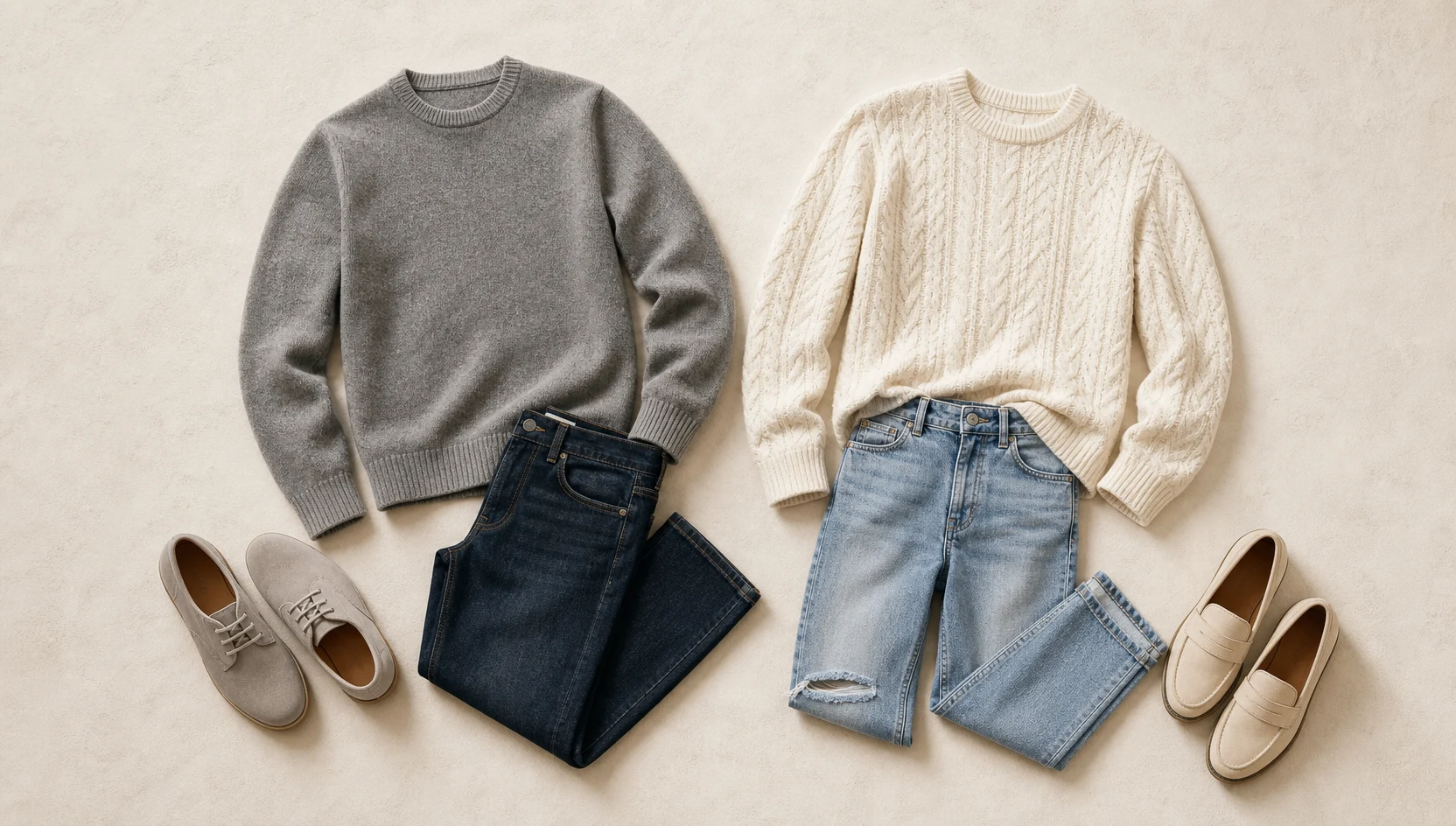
He
sweater + jeans
grey + dark blue
She

For editorial-style walking shots, keep your pace slow and let your gaze shift between your partner and the space around you.

He
sweater + jeans
grey + dark blue
She
sweater + jeans
cream + light blue
You step inside the loft and feel the quiet hush of an overcast afternoon. The big windows filter a soft, even light that wraps around you like a cozy blanket. Thereâs no harsh sun to squint atâjust a gentle glow that makes the brick walls and wood floors feel warm. You kick off your shoes; the floor is cool under your socks, and you hear the faint creak of old timber as you take a few steps. Your partnerâs denim-clad shoulder brushes yours, and you both crack a smile because this feels more like a lazy Sunday than a planned photo session.
You start to walk, hand in hand, past the window. The light falls across your faces in a painterly way, highlighting the texture of your neutral knit sweater. Your photographer says, âDonât look at meâlook at each other.â So you do. Mid-stride, you lock eyes and canât help but laugh at the silliness of being barefoot in a loft while someone captures it. That laughâreal and unguardedâis exactly what these engagement photos need. The overcast sky acts like a giant softbox, keeping the light consistent and flattering. Itâs the kind of light many photographers dream of for indoor engagement photos because there are no harsh shadows, just smooth transitions.
As you stroll, the rhythm of your steps together becomes natural. You pause by the window frame, and the cool glass contrasts with the warmth of your breath. You didnât have to worry about loud logosâyour simple sweaters let your expressions do the talking. Between frames, you notice the wood floor has a honey tone that complements the brick, and youâre glad you swept it first; no splinters, just smooth boards underfoot. The session feels intimate, just the two of you in your own little world, despite the camera clicking softly. These arenât stiff, posed portraits. Theyâre moments of your everyday comfort translated into art. You leave with a new memory: a quiet afternoon where the weather gave you exactly what you needed for beautiful, authentic engagement photos.
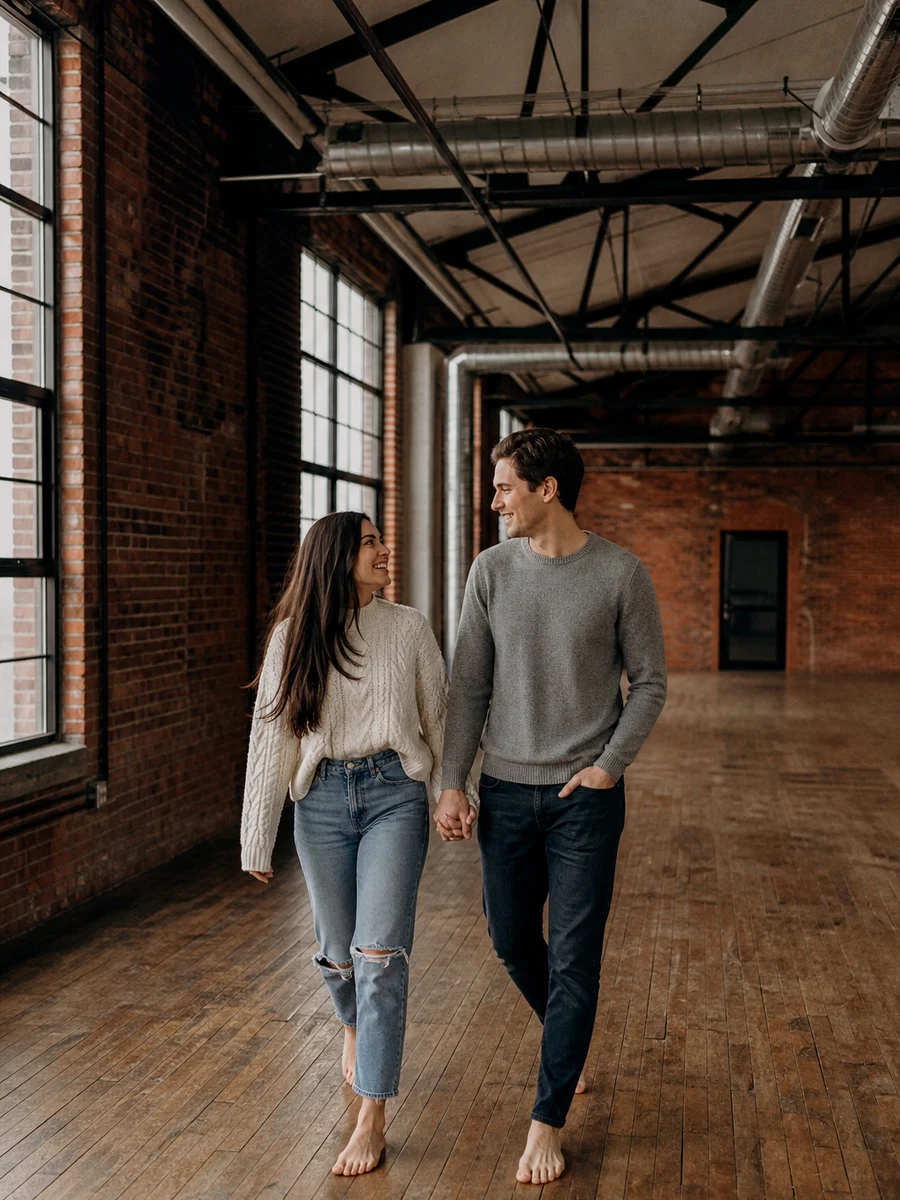
đȘ Window Light â Position the couple beside a large window for soft, directional natural light indoors.
Typically, youâll receive between 50 and 100 edited images from a one-hour session. This number can vary based on the photographerâs style and whether you have multiple locations or outfit changes. A photographer who focuses on candid, storytelling moments might deliver fewer but more impactful images, while someone who shoots more posed setups may provide a larger gallery. Always ask to see a full gallery beforehand so you know what to expect. Quality matters more than quantityâyouâll likely find that the images you truly love are a select batch of about 20-30 images that feel genuinely you.
Most outdoor engagement sessions last between 60 and 90 minutes. This timeframe allows for walking between spots, adjusting to different light, and letting you relax into the shoot. If youâre only using one location, an hour is usually plenty. For multiple locations across town, you might need up to two hours to account for travel. Keep in mind that the best light often fades quickly during golden hour, so your photographer will work efficiently to capture those soft, warm tones before sunset. Trust their pacingâthey want the best light as much as you do.
Aim to book your engagement photographer 3 to 6 months before your desired shoot date. Popular photographers often fill their calendars early, especially for weekends and peak seasons like fall and spring. If you need the photos for save-the-dates, plan backward from when youâll send those outâtypically 6 to 8 months before the wedding. Booking early also gives you flexibility to reschedule if weather turns bad. If youâre in a rush, some photographers have weekday availability on shorter notice, but donât wait until the last minute if you have your heart set on someone.
Pack a small bag with essentials: comfortable shoes for walking between spots, a touch-up kit with lip balm, powder to reduce shine, and a hairbrush. If youâre doing multiple outfits, bring garments that donât wrinkle easily. For outdoor shoots, consider bug spray and a water bottle. Leave bulky bags in the car or with a friend. Keep valuables at home. Some couples bring a meaningful prop like a blanket or a pet, but only if it reflects your style. The lighter you pack, the easier it is to move freely and stay in the moment.
One or two outfits is the sweet spot for a standard one-hour session. Changing clothes eats into shooting time, so three is often too many unless you have a longer session. Choose an outfit you feel confident and comfortable inâsomething that represents your everyday style. For a second look, consider a dressier option for variety. Make sure both outfits are coordinated in color palette, not matching exactly. If youâre near a restroom or car, quick changes are feasible. But remember, itâs more about enjoying your time together than a fashion show.
Feeling awkward is completely normal. Your photographerâs job is to guide you with prompts that create genuine interactions, not stiff poses. Start by focusing on your partnerâwhisper a silly joke, recall a funny memory, or just hold each other. Touch, whether holding hands or a gentle hip pull, dissolves tension. Breathe and slow down. Avoid staring at the camera; look at each other instead. Within ten minutes, youâll forget the lens is there. Trust that your laughter and subtle glances will translate into beautiful, candid engagement photos that feel like you.
The best time is during âgolden hourââthe hour after sunrise or before sunset when the light is soft, warm, and directional. This light flatters skin tones and creates a romantic glow without harsh shadows. For most seasons, that means shooting roughly 60 minutes before the scheduled sunset time. Check a sunset calculator for your location and date. Overcast days offer more flexibility because clouds diffuse light gently all day, but even then, late afternoon provides longer shadows. Avoid midday when the sun is directly overhead, casting unflattering shadows on faces.