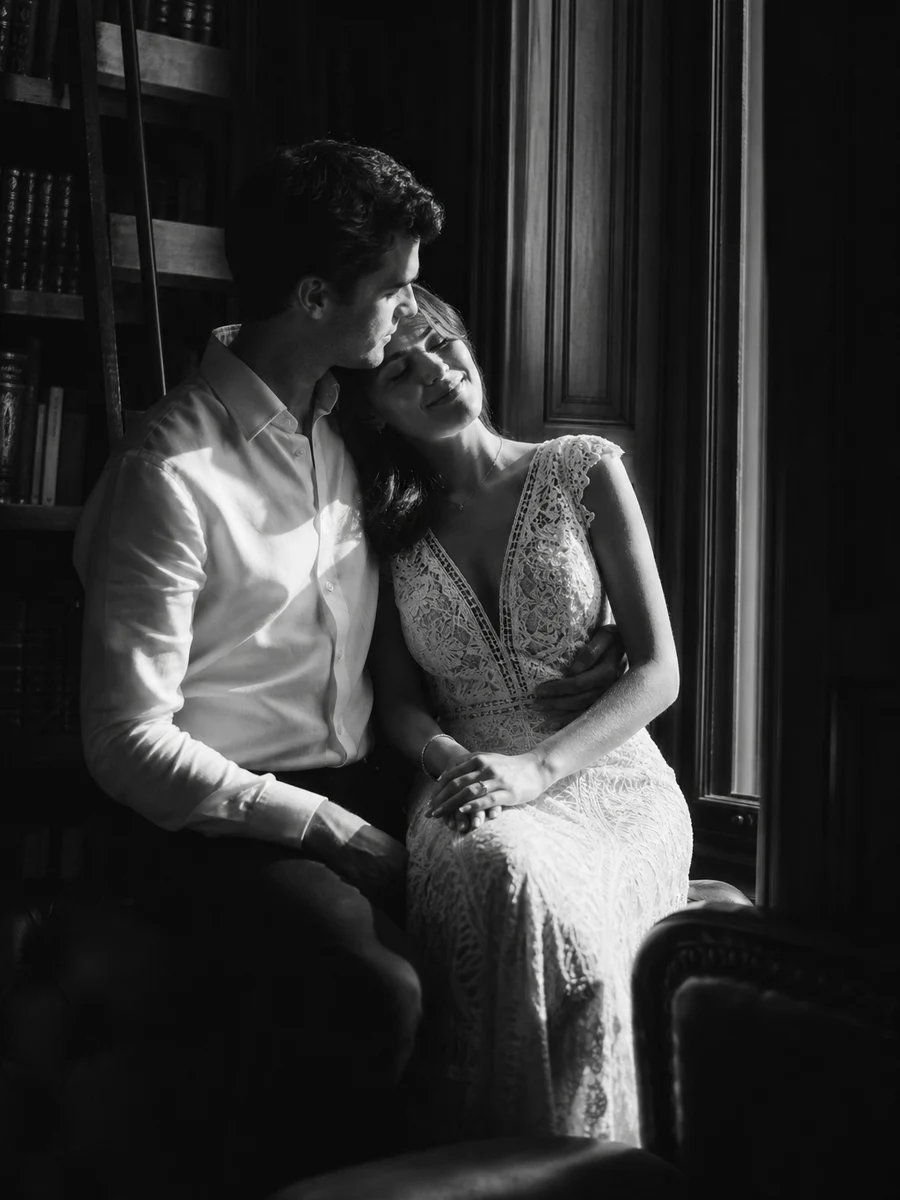
Close Seated Embrace in Dramatic Beam of Light Engagement Photos
Find a shaft of natural light and settle into itâthe shadows add depth and intimacy, even in a vast space.
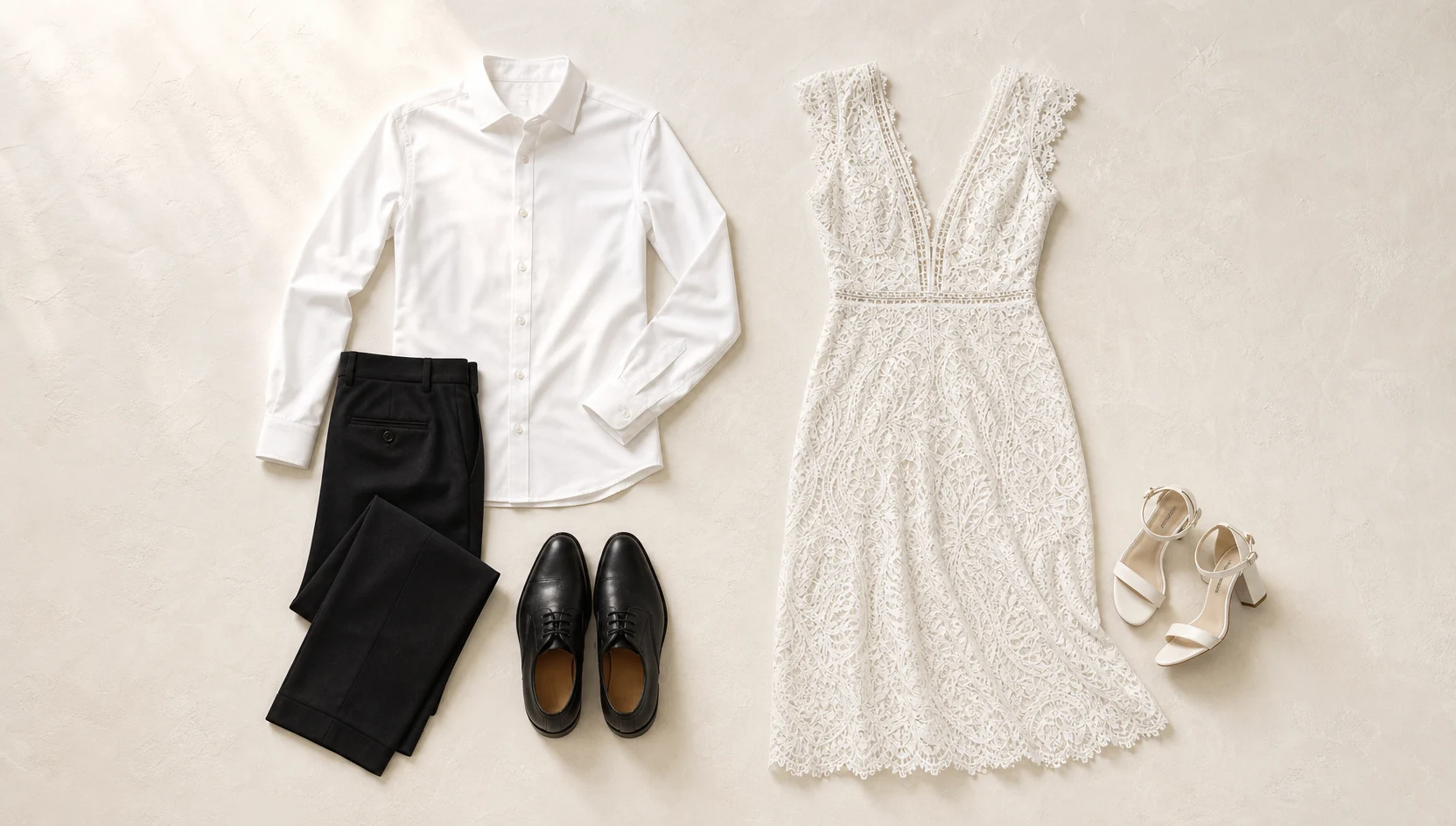
Outfit Ideas

He
long-sleeve button-down shirt
white
She

Find a shaft of natural light and settle into itâthe shadows add depth and intimacy, even in a vast space.

He
long-sleeve button-down shirt
white
She
lace maxi dress
ivory
The air in the studio is still and cool, carrying the faint scent of old wood and plaster. You and your fiancĂ© settle onto a low backless bench, your white dress pooling softly around your knees. The photographer has killed every light in the room except for one: a tall, hard window to your left, its panes casting a thick shaft of daylight. The beam falls like a spotlightânot harsh, but rich and directional, carving your silhouettes out of the surrounding dim.
You rest your hand on top of his, feeling the gentle weight of his fingers. "Tilt your foreheads together," the photographer says. "Now turn just slightly into the light." You tilt, and suddenly the warmth hits your cheek, a golden glow that makes your skin hum. The world contracts to this small circle of radiance. No music, no chatterâonly the muffled click of the shutter and your own breath mixing with his.
This is the heart of indoor engagement photos with window light: a single source, controlled and intimate. The contrast is dramaticâbright edges and deep shadowsâso those white outfits matter. No busy patterns break the line; the eye goes straight to your connection. You squeeze his hand, and the camera captures that tiny tension.
Before the session, you'd hung your dress carefully so it wouldn't crease, packed a neutral lint roller, and arrived early to settle in. Now, sitting here, you're glad you trusted the simple setup. The pose feels natural because it's just about closeness. As the shoot winds down, you realize these engagement photos don't need elaborate scenes. Sometimes the most striking image is two people, one beam of light, and the quiet moments between them.
đȘ Window Light â Position the couple beside a large window for soft, directional natural light indoors.
Typical outdoor engagement photo sessions run 60 to 90 minutes. This gives time to walk to a few locations, let you warm up, and catch changing light. If you've booked a mini-session, it might be 30 minutes, covering one spot and a limited gallery. Full sessions offer more variety: two to three outfits, multiple backdrops, and relaxed pacing. Plan for travel time between spots too. Your photographer will guide the flow, but expect to be on your feet and interacting the whole time. The biggest variable? Your comfortâonce you settle into the rhythm, the minutes fly by.
Aim to book your photographer at least 6 to 12 months ahead, especially for popular seasons like fall or spring. Great photographers fill weekends quickly, and you'll want time to schedule an engagement session well before the wedding. If you need last-minute availability, be flexible on dates and timesâweekday mornings or off-peak months often have openings. Once you've found a style you love, reach out promptly. A quick video call can confirm their personality fits yours. Booking early also secures your engagement photos for save-the-dates without a rush.
Pack a few essentials: comfortable shoes for walking between spots, a lint roller for pet hair or dust, blotting papers or translucent powder for shine, and a small brush or comb. Bring water and a light snack if it's hot. For outfit changes, carry garments on hangers to avoid wrinkles. If you're outdoors, insect repellent and sunscreen are smart. Leave bulky bags in the car and just take a small crossbody with your phone and touch-up items. Your photographer will likely have bug spray and a blanket to sit on, but it never hurts to ask ahead.
Most 60- to 90-minute sessions fit two outfits comfortablyâone dressy and one casual. This gives variety without eating into shoot time with wardrobe changes. If you book a longer session, you can often do three. Coordinate colors but avoid identical matching; think complementary tones. For indoor engagement photos like a dramatic beam of light, one carefully chosen outfit in white or light tones often works best, letting the form and shadow take center stage. Always check with your photographer about changing facilities at the location.
Almost every couple does at firstâthat's completely normal. Start with simple prompts from your photographer: walk hand in hand, whisper a joke, or just breathe together. Focus on your partner, not the lens. A good photographer won't expect you to model; they'll direct you gently and catch real reactions. Movement helps tooâsway slightly, spin, or play with a prop. Within 15 minutes, you'll likely forget the camera is there. The resulting engagement photos will capture authentic connection rather than stiff posing.
The best light for outdoor engagement photos happens around 'golden hour'âthe hour after sunrise or before sunset. This gives you warm, diffused light and long, flattering shadows. In between, harsh noon sun creates unflattering under-eye shadows and squinting. For beach or open field shoots, golden hour is essential; in shaded forests or urban areas, you might have more flexibility. Your photographer will suggest a start time based on the location and season. If you're shooting indoors with window light, midday can actually be perfect because the sun is higher and streams in strongly.
If rain, high wind, or extreme temperatures threaten, your photographer will almost always offer a reschedule at no extra charge. They watch forecasts closely and usually decide 24 hours in advance. Embrace overcast skies, thoughâthey create soft, even light that's gorgeous for portraits. Only heavy rain or lightning is a dealbreaker. Have a backup indoor location in mind, like your home with a large window or a rented studio, to keep your engagement photos on track. Flexibility and a sense of humor turn weather surprises into memorable stories.