Ring Reveal in Warm Golden Lamp Light Engagement Photos
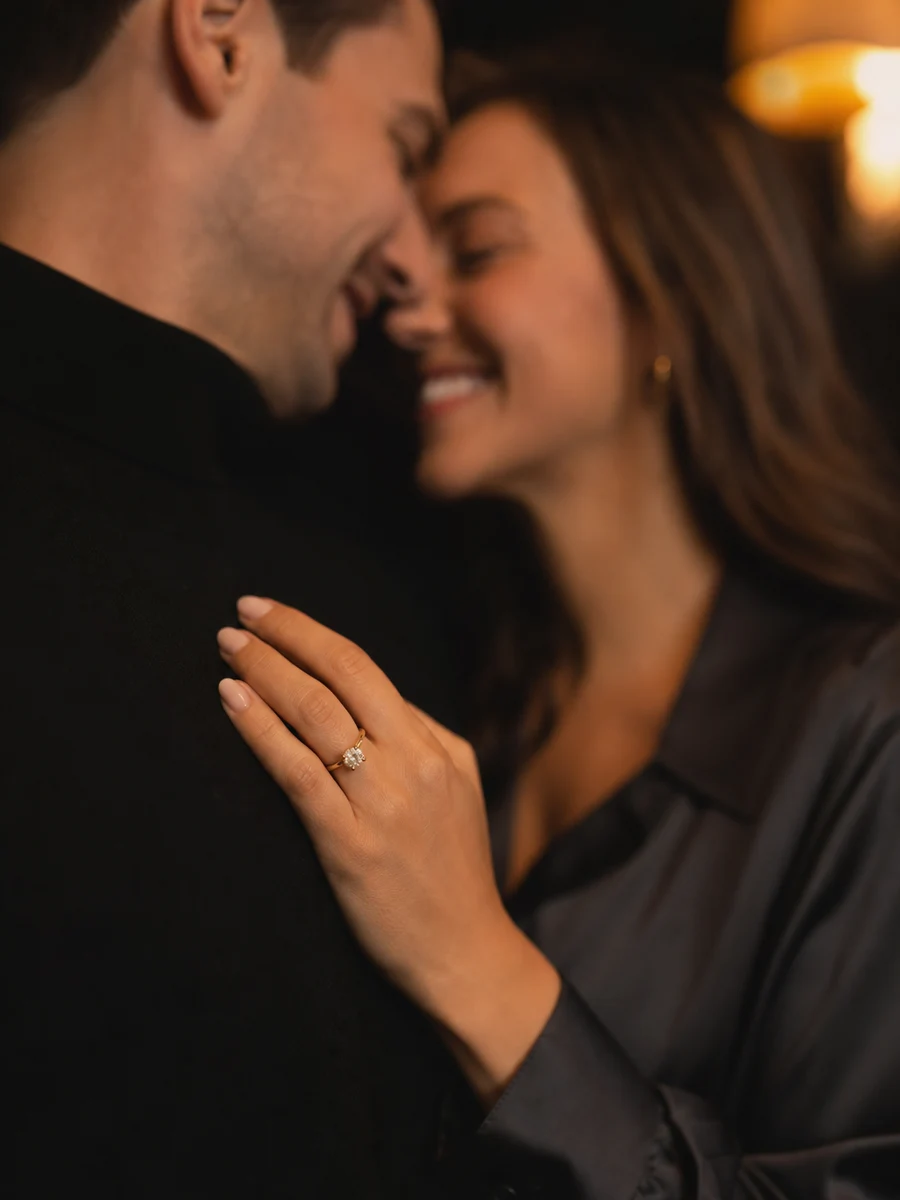
Place a table lamp nearby to create a golden spotlight on the ring. Keep the background dark to let the ring's sparkle stand out.
Outfit Ideas

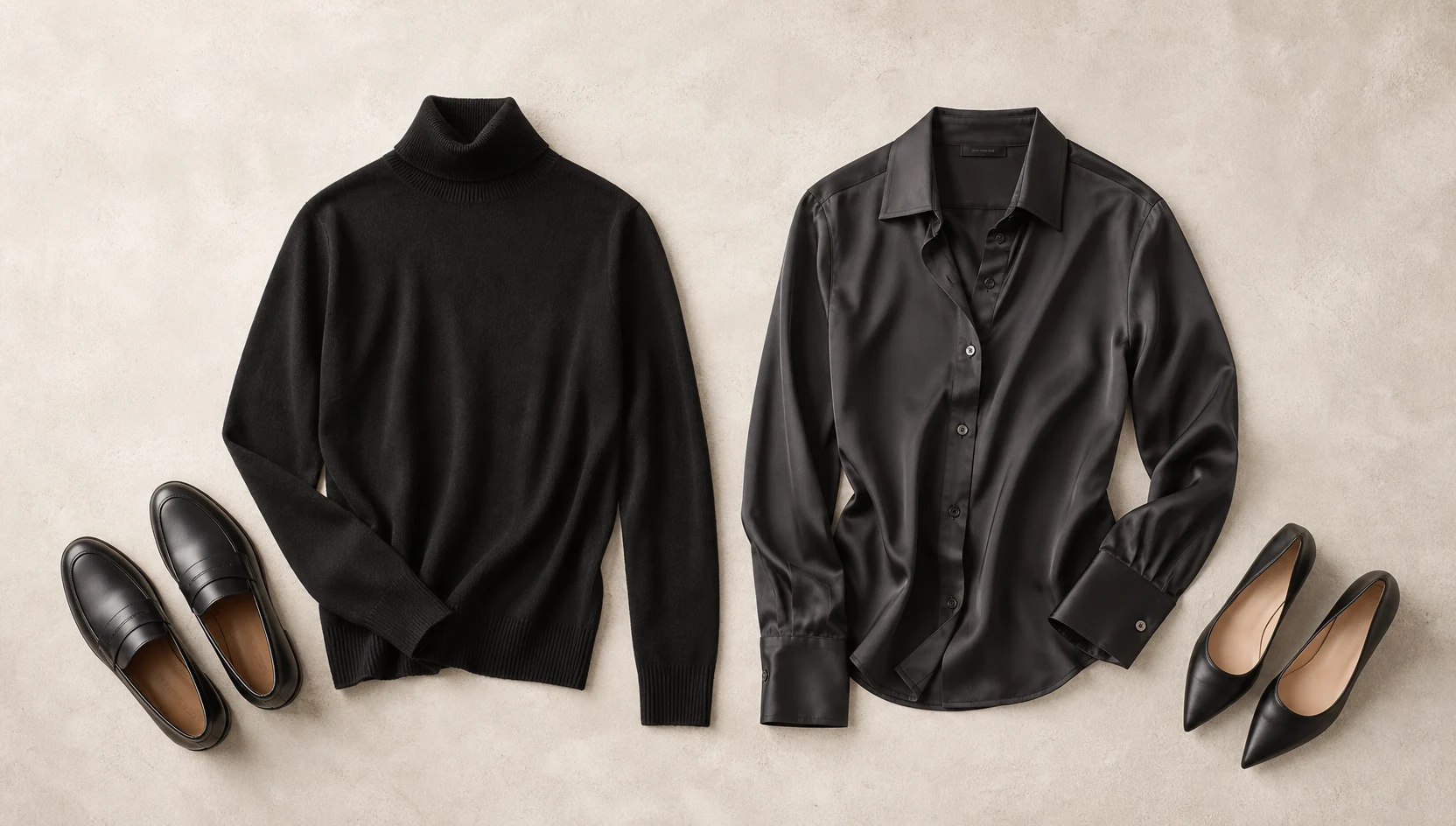
He
turtleneck sweater
black
She

Place a table lamp nearby to create a golden spotlight on the ring. Keep the background dark to let the ring's sparkle stand out.

He
turtleneck sweater
black
She
satin collared shirt
charcoal
You step into the quiet room as the last outdoor light fades to a deep blue outside the window. The air is still, warm from the lamp on the side table. Its golden glow spills across the wall and catches the silk of your charcoal blouse. You feel the fabric move with your breathing, a soft shimmer in the half-light.
Your photographer positions you beside the large window. Sheer curtains diffuse the last of the outdoor light, blending it with the lampâs honey tone. Itâs not bright; itâs intimate. You hear the faint click of the camera as she adjusts settings for the dim indoor engagement photos.
He stands facing you, dressed in black monochromeâa textured sweater that absorbs the shadows. You rest your hand flat on his chest, the ring just visible, catching a tiny spark from the lamp. His heartbeat is steady under your palm. You lean in until your foreheads touch. Your eyes close. The only sound is your shared breath.
Shooting indoor engagement photos like this relies on the wide aperture. Your photographer is working with an f/1.8 lens to create that soft, creamy background where the lamp light dissolves into a bokeh blur. She whispers for you to hold still, not stiff, just present.
You feel the warmth of his skin, the cool metal of the ring. The silk rustles as you shift slightly. Thereâs no rush. These engagement photos are about the quiet connection. The lamp casts a halo around you both, carving your silhouettes from the dark. When you finally open your eyes, the room feels suspended in that golden hour inside.
đȘ Window Light â Position the couple beside a large window for soft, directional natural light indoors.
Yes, you can absolutely include your pets. Plan ahead so they stay calm and safe. Bring a trusted friend or family member to handle your pet when they arenât in frame. Choose a location they know or one thatâs quiet and free of triggers. Keep the session short for their attention spanâincorporate them for 15â20 minutes then let them relax. Have high-value treats on hand and a favorite toy. Let your photographer know in advance so they can prepare for quick, spontaneous moments. Avoid crowded parks during peak hours to minimize distractions.
Start with a place that holds meaning for you bothâwhere you first met, a favorite hiking trail, or a neighborhood street you love. Consider the practical side: easy parking, privacy, and whether you need a permit. Visit the spot at the same time of day as your shoot to observe the light. Open shade from trees or buildings gives flattering, even illumination. Avoid busy landmarks unless you embrace the energy. Tell your photographer your vision; theyâll know which backdrops translate beautifully on camera. Trust their experience if they suggest an alternative that works better for light and composition.
Wear shoes you can comfortably walk and stand in for over an hour. If you love heels, bring a backup pair of flats for moving between spots. Neutral tones or colors that complement your outfit keep the focus on you. Avoid brand-new shoes that might cause blistersâbreak them in first. For rugged terrain like dirt paths or rocky overlooks, choose sturdy boots or sneakers, then change into your stylish shoes once you arrive. Let your photographer know if you plan to hike; they can help time outfit changes. The right shoes let you relax and enjoy the session without distraction.
A first look is a private moment before the camera starts clicking where you see each other for the first time. It can ease pre-shoot jitters and give you a few quiet minutes together. Many couples find it helps them settle into genuine interaction faster. Keeping it traditional means youâll see each other only when the session begins, which can heighten the excitement and capture raw surprise. Neither choice is wrong. Consider your comfort, whether you value calm intimacy or unscripted reaction. Talk it over with your photographer; they can guide you based on your personalities and timeline.
For a typical one-hour session, expect 50 to 100 edited, high-resolution images. This varies by photographer and package. Some deliver a larger gallery with a mix of candid and posed shots; others curate a tighter selection of the strongest frames. Ask upfront about their editing style and how they cull duplicates. Youâll receive JPEGs optimized for print and sharing, not raw files. The number isnât everythingâone powerful image can carry more weight than fifty average ones. Focus on finding a photographer whose portfolio speaks to you, and the quantity will feel secondary.
Most sessions run between 60 and 90 minutes. This gives enough time to work through a few outfit changes and locations without feeling rushed. If you plan to travel between spots, add 15â20 minutes of buffer. Golden hour shoots are tighter because the best light fades fastâyour photographer will pace those efficiently. Longer sessions of two hours or more are possible if you want epic variety, but fatigue can set in. Communicate your priorities early. A relaxed pace often yields more natural expressions, so build in a few moments to simply be together.
For popular seasons like fall or late spring, aim for 6 to 12 months ahead. Photographers fill weekends first, and the best ones book out early. For off-peak times or weekdays, 3 to 6 months is often enough. Booking early locks in your date and their current pricing. It also gives you plenty of time to plan outfits and scout locations together without last-minute stress. If your wedding date is set, reach out right after you have a venue. Even if youâre flexible, donât wait more than a few weeks once you find a photographer whose style you love.