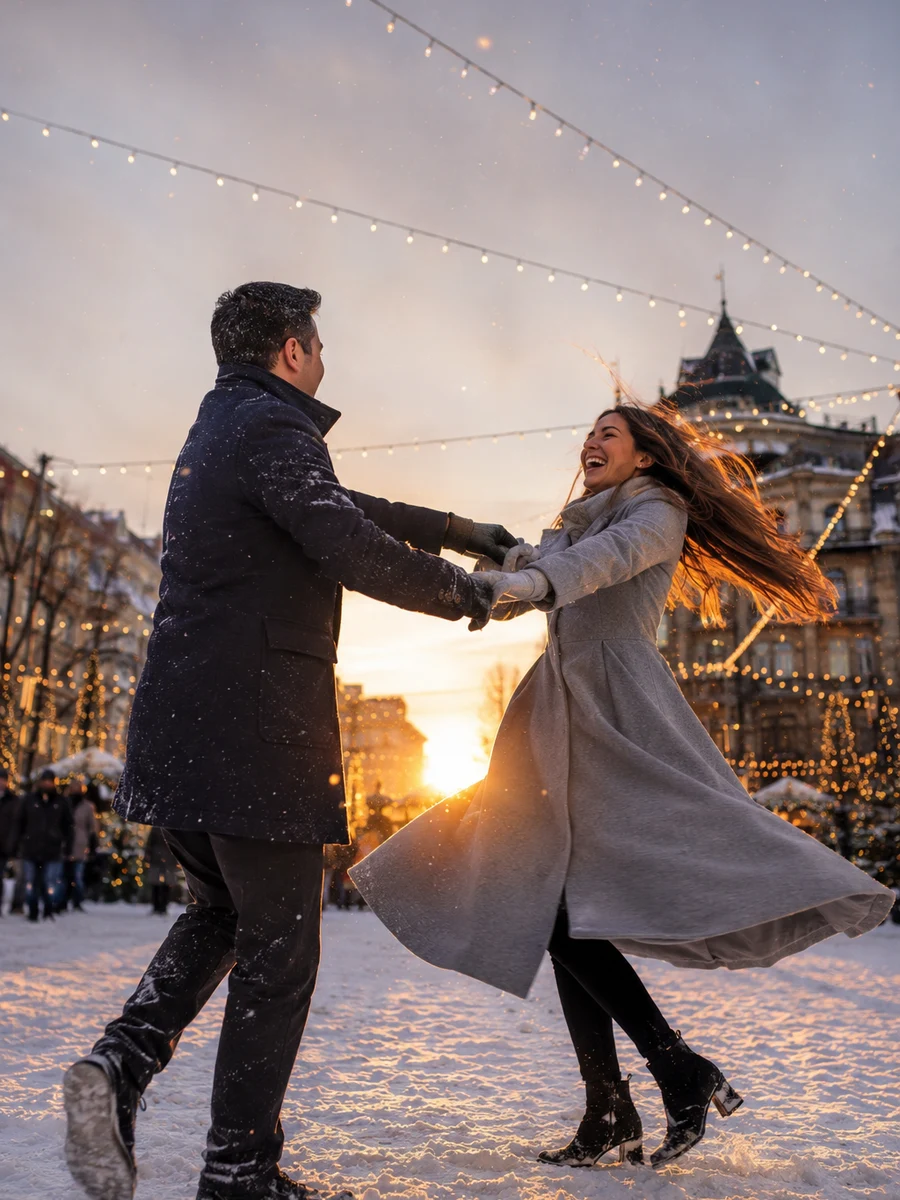
Golden Hour Slow Dance in Snowy Square Engagement Photos
Put on a playlist and dance like no one's watching; those spontaneous spins and laughs translate into the most joyful engagement images.
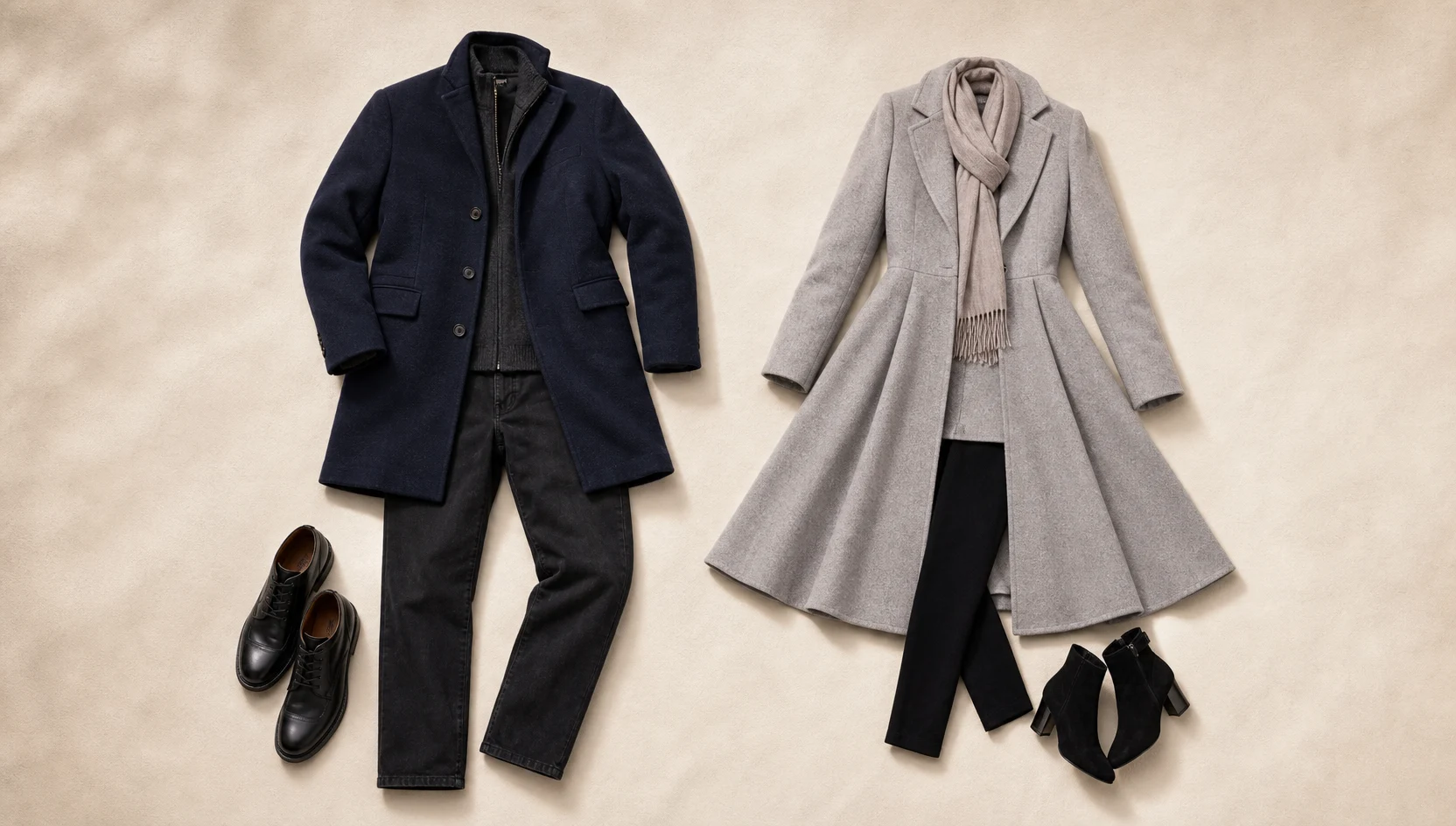
Outfit Ideas

He
winter coat
dark blue

Put on a playlist and dance like no one's watching; those spontaneous spins and laughs translate into the most joyful engagement images.

He
winter coat
dark blue
She
winter coat
light grey
You step into the square just as the last sliver of sun slips below the roofline. The snow crunches beneath your boots, a dry, cold powder that glows faintly under the streetlamps flickering on. Thereâs a hushâtraffic muffled, your breath making small clouds in the air. The sky shifts from slate to deep indigo, and suddenly the city lights blaze amber and white against it. Your photographer checks the time: 5:12 p.m., right at the start of blue hour. You unbutton your gray wool coat to let it swing, black jeans dark against the snow. She wears a soft-gray coat too, a knitted scarf wrapped loose around her neck.
You take her gloved hands, the leather cool but your palms warm inside. The photographer says, âSpin her slowly.â You pull one hand up and out, and she twirls, coat hem lifting just enough to catch the breeze. Snow crystals scatter. You both laugh, the sound bouncing off the stone buildings. Then you draw her close, one hand at the small of her back, the other clasped in hers. Her face is lit from behind by a streetlamp, hair catching golden halos. You start to swayâno music, just the rhythm of your own steps crunching in the snow.
The photographer crouches low, shooting into the fading light to get that backlit warmth on your silhouettes. Every few frames, they pause to wipe the lens with a soft clothâcondensation from the cold forms quickly. You hardly notice; youâre focused on the way her eyes crinkle above the scarf. A few passersby smile and give you space. The chill nips at your cheeks, but the movement keeps you warm. These are the engagement photos that feel like a stolen moment in a quiet city pocket, not a forced pose.
When the sky turns fully navy, you pull your coats tighter and head toward a café door glowing with yellow light, leaving a trail of footprints behind.
đ Blue Hour â Shoot in the ~20 minutes after sunset when city lights glow against a deep blue sky.
Layer smartly with thin heat-tech base layers under your outfitâthey trap warmth without adding bulk. Choose wool coats rather than puffy parkas for a sleek silhouette. Wear waterproof boots with warm socks; you canât see them in wide shots. Bring hand warmers you can slip into pockets between takes. Choose a location near a warm cafĂ© or car so you can duck inside for quick breaks. Movement helps a lot: dancing, walking, and spinning keep your blood flowing, so youâll feel genuinely warm and your expressions will stay relaxed and natural.
New York offers iconic backdrops like Central Park and Brooklyn Bridge, especially magical in snow. Chicagoâs skyline and snowy Lincoln Park create dramatic winter scenes. San Franciscoâs steep streets and foggy Golden Gate Bridge are stunning in softer light. For a cozy, historic feel, try Bostonâs Beacon Hill or Savannahâs oak-lined squares. Denver and Salt Lake City give you easy access to snow-dusted cityscapes and mountain views. The best city is one that feels personal to youâwhere you had a first date or love the architecture. Your familiarity will shine through in the photos.
Rooftop shoots usually require permission from the building management or a booked venue. Many hotels, restaurants, and apartment buildings have accessible rooftops that allow photography, often for a fee or with a reservation. Contact them weeks ahead to confirm rules and availability. Some photographers have go-to spots with easy access. Consider wind chillâbring coats and hand warmers. Plan for golden or blue hour when city lights start twinkling. Keep movements careful near edges, and let the skyline do the heavy lifting: simple poses like leaning on a railing or slow dancing work beautifully.
Scout it in person a few days before, at the same time of day as your shoot, to see current conditions. For city spots, seasonal changes matterâa leafy square in fall might be bare and gray in winter. Construction, pop-up events, or snow piles can alter the scene. Have a backup plan: two or three nearby alternatives that offer similar vibes, like a quiet alley, a covered bridge, or a grand building entrance. Share these with your photographer so you can pivot quickly. A good photographer adapts and finds beauty in the unexpected, keeping the mood light and fun.
Yes, with precautions. Stick to well-lit, populated areas like squares, riverwalks, or landmark plazas. Avoid isolated alleys or parks after dark. Your photographer likely knows safe spots and may bring a small light source not just for photos but for visibility. Go on a weeknight when crowds are thinner but thereâs still foot traffic. Keep valuables hidden or leave them in a locked car. Have a meet-up plan if youâre separated. Digital cameras make it easy to shoot quickly, so you wonât linger in one place too long. The cityâs glow at night creates a romantic, cinematic feel.
Blue hourâthe 20 minutes after sunsetâis unbeatable for city scenes. The sky turns a deep blue while streetlights, office windows, and traffic glow warmly, creating a rich contrast. Just before that, golden hour offers soft, directional light that flatters faces and backlights silhouettes. In winter, sunset comes early, often around 4:30 to 5:30 p.m., so you can shoot before dinner and still have evening plans. Avoid midday when harsh overhead light casts unflattering shadows. Overcast days can work too, acting like a giant softbox, but blue hour adds that extra sparkle.
It depends on the city and scale. Public sidewalks and streets usually donât require permits for casual, small-group photography without equipment like tripods or lighting stands. But if youâre using professional gear that blocks pathways or youâre shooting in a park, historic district, or near landmarks, a permit may be needed. Check the cityâs film office website or ask your photographer; experienced local pros often handle permits for you. Private property like shopping centers or plazas always requires permission. When in doubt, a quick phone call to the locationâs management saves stress.