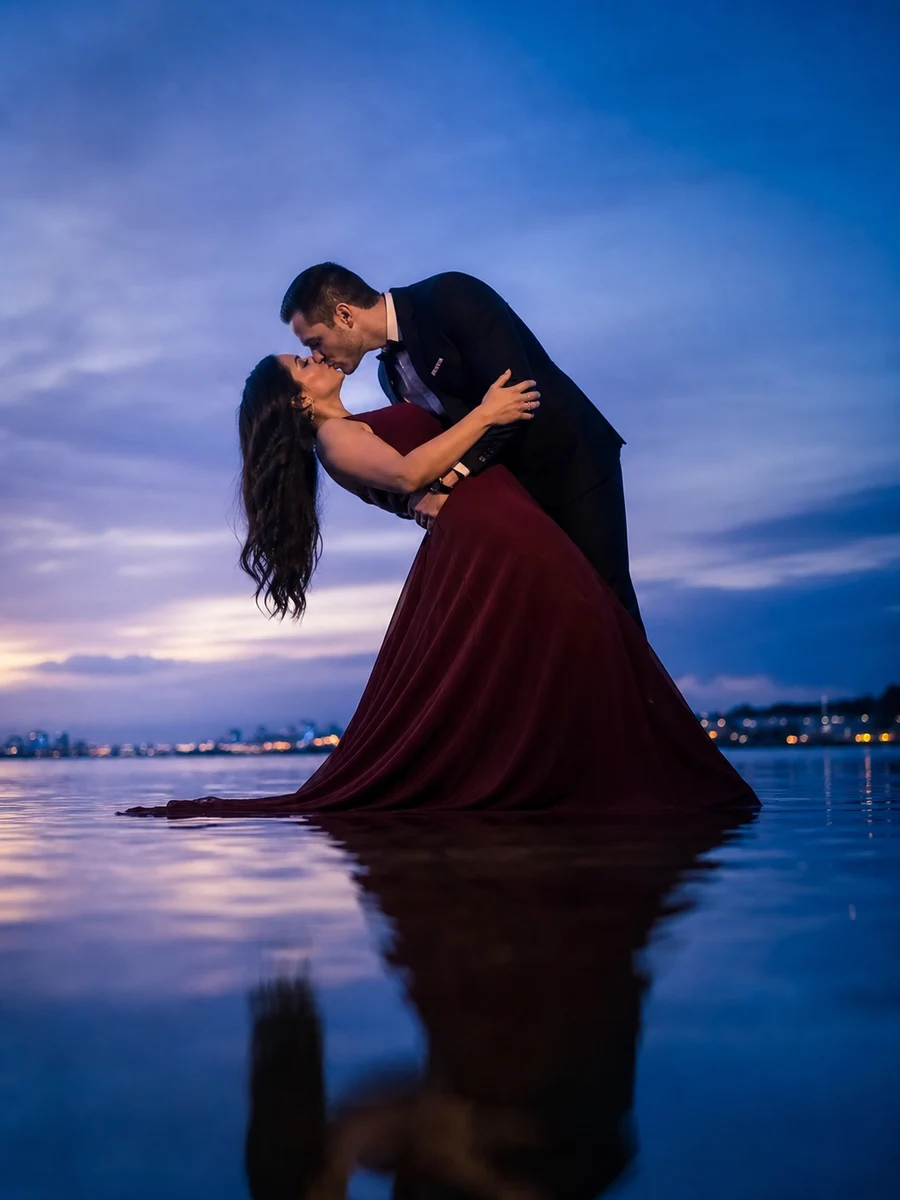
Gentle Dip Kiss in Twilight Refraction Engagement Photos
For a dramatic editorial look, schedule your shoot during the brief window when the sky turns deep blueâthe water will act as a natural mirror.
Outfit Ideas

He
tuxedo
black
She

For a dramatic editorial look, schedule your shoot during the brief window when the sky turns deep blueâthe water will act as a natural mirror.

He
tuxedo
black
She
gown
burgundy
You step onto the firm, damp sand about 45 minutes before sunset. The air feels cooler near the water, carrying a tang of salt and the hush of evening waves. A few gulls call overhead, but the beach is mostly yours. Your photographer leads you to a stretch where the receding tide has left a glassy film of waterâankle-deep, mirror-still, reflecting the sky.
Youâre in a deep burgundy gown, and the fabric catches the fading warmth of the golden hour. The light shifts from amber to a softer peach, then slowly cools into twilight. The photographer has you wade into the shallows. The water is calm, almost invisible, and the sky behind you turns a gradient of tangerine and indigo. This is when the refraction happensâthe mirror-like surface doubles every gesture.
For the dip kiss, your partnerâs hand supports your lower back firmly. You lean back, letting your shoulders relax, as your lips meet. The water reflects the arc of your pose, creating a symmetrical, surreal composition. You hear the click of the shutter, and you know these twilight refraction shots will be unlike most engagement photos.
Youâll want to bring a towel for your feet afterward, and a pair of slip-on shoes for walking back across the dry sand. The entire session wraps as the first stars appear. These unhurried, blue-hour beach engagement photos become the kind youâll look back onânot for perfection, but for the real stillness of that moment.
đ Golden Hour â Shoot in the hour after sunrise or before sunset for warm, flattering light and long soft shadows.
High tide can limit open sand and that mirror-like shallow water. Check local tide charts weeks ahead and aim for an hour or two after high tide, when the water begins to recede. If scheduling forces a high-tide window, choose a beach with a wide, flat upper shore where dry sand still gives room to pose. Slightly higher water can create dramatic edge-of-the-ocean frames if youâre okay with getting a bit wet. Discuss backup spots with your photographerârocky coves or dunes above the tide line can still deliver beautiful beach engagement photos.
Yes, sand will find its way onto skin, fabric, and gear, but you can keep it manageable. Stick to the wet, packed sand near the waterâs edge; itâs cleaner and easier to walk on than dry, loose sand. Bring a small towel or brush to dust off bare feet before putting shoes back on. Choose a gown with a hem that just skims the groundâit wonât drag as much grit. For sitting poses, the photographer will often use a jacket or blanket underneath. Embrace a little texture as part of the beachâs real, unfiltered feel.
Look for a beach with shallow, gentle slopes and minimal wave action if you want reflective waters. Check for public access hours, parking, and any permit requirements. Weekday evenings often mean fewer people in the background. A beach with natural featuresâsea stacks, wind-swept dunes, or a rocky pointâadds variety to your gallery. Visit the spot at the same time of day you plan to shoot; note where the sun sets or rises and how the light hits the water. Prioritize a location that feels meaningful or private to you, not just scenic on Instagram.
Deep jewel tones work beautifully against beach backdrops. Burgundy, emerald, navy, and plum stand out against pale sand and blue-grey water without competing with the sky. Avoid solid white or creamâthey can blend into the sand and overexpose in bright light. Soft pastels are fine in controlled light but often wash out. If you want a formal-elegant look, think of colors that hold their depth at twilight; a moody wine tone or charcoal suit photographs richly against the cool, post-sunset sky. Let one or two accent colors show in accessories rather than a full pattern.
Absolutely. Winter beaches offer empty shorelines, dramatic storm-lit skies, and a moody, cinematic quality. Youâll need to dress for the cold: layer thermal undergarments beneath your formal outfits, and bring a stylish coat or wrap to wear between shots. Wind can be stronger, so hairstyles that stay putâlike a low bunâhelp. The low winter sun stays golden longer, giving you extended âgolden hourâ light. Just watch the weather for heavy rain or high winds that could make posing uncomfortable. Fog or light mist can add a soft, romantic layer to your engagement photos.
Use an anti-humidity spray on your hair before the session; a light mist of hairspray after styling helps too. Opt for a sleek low bun, braid, or half-up style that wonât stick to your face in the damp breeze. For makeup, start with a mattifying primer, and choose waterproof mascara and long-wear lip color. Blotting papers are essential for a quick shine fix between shots. Avoid heavy powders that can cake in humidity. Bring the lip color to reapply after kissing. Tiny travel-size hair spray and a discreet setting mist can refresh your look mid-session.
Plan to go barefoot for most of the sessionâit feels natural on sand and avoids awkward sinking. Wear slip-on sandals or easy-to-remove flats for walking from the car. For the formal-elegant look, bring your dress shoes for a few poses on solid ground, like a boardwalk or rock, then switch out. Heels are tricky on sand; block heels fare slightly better than stilettos, but they still sink. Pack a second pair of comfortable shoes for after the shoot, along with a towel to clean sandy feet. Bare feet ground the photos in the relaxed beach reality.