Hand-in-Hand Walk Through Golden Forest Light Engagement Photos
The best walking shots happen when you focus on each other, not the cameraâlet the light do the rest.
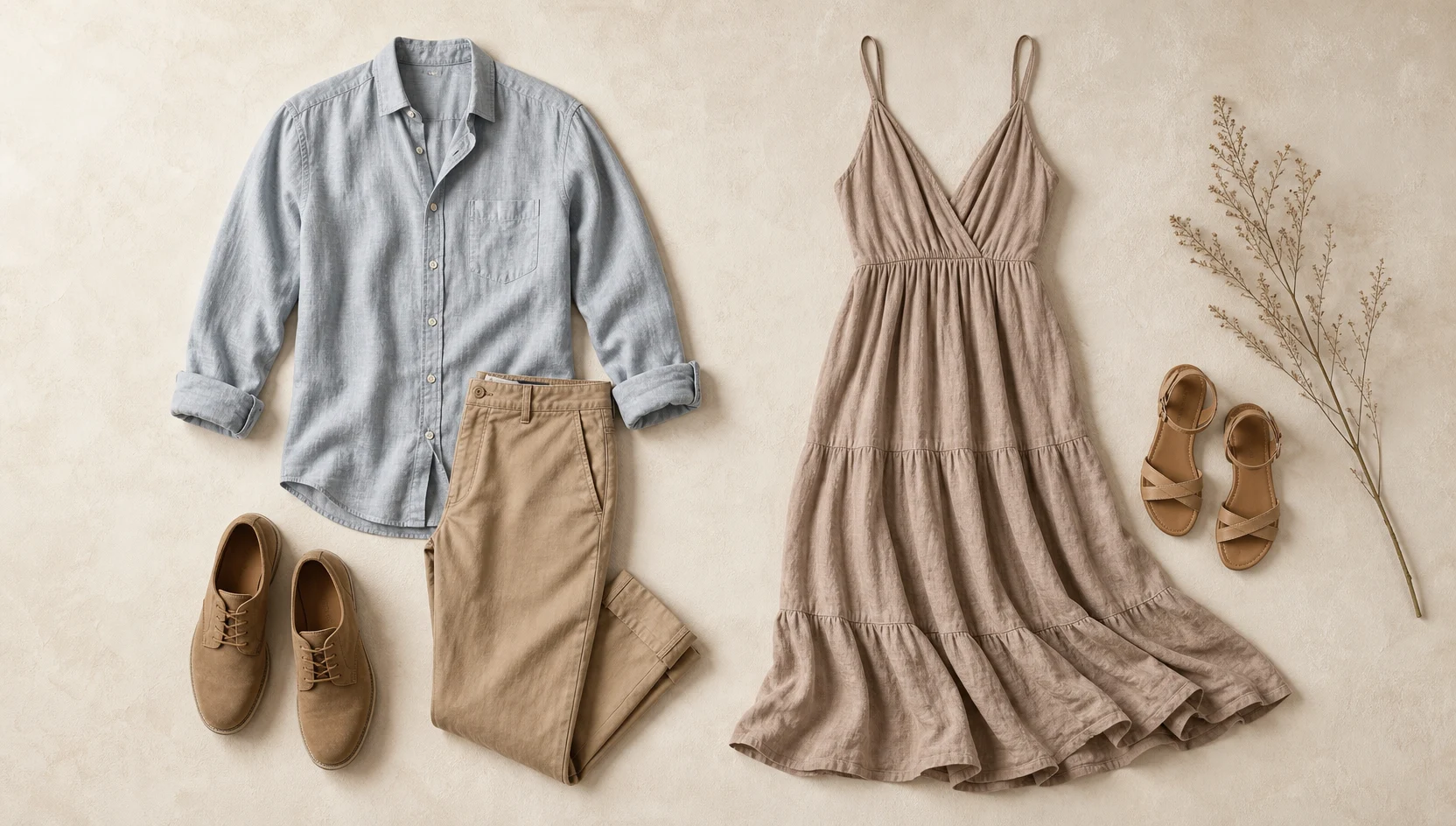
Outfit Ideas

He
linen shirt + chinos
light blue / beige
She

The best walking shots happen when you focus on each other, not the cameraâlet the light do the rest.

He
linen shirt + chinos
light blue / beige
She
flowy maxi dress
taupe / light brown
Your boots sink slightly into the soft, damp earth, each step sending up the sweet, loamy scent of decay and pine. Itâs the perfect day for forest engagement photos: a high, thin overcast sky acting like a giant softbox, washing the woods in even, shadowless light. Itâs 5:15 p.m., about an hour before sunset, and the air is cool but stillâperfect for a slow wander. Youâre wearing a cream linen shirt and worn denim, your partner in a muted olive sweater and brown trousers. Your photographer, just a few paces ahead, asks you to take her hand and walk forward naturally. You do. The path ahead is barely a path at all, just a ribbon of packed leaves between towering oaks. You hear the crunch-crunch of your footsteps, a distant woodpecker, and then nothing but your own breathing. As you walk, she calls out softly: âNow, just glance over at each otherâdonât stop walking.â You turn your head; your partner does the same. For a second, you catch a genuine smirk, and the camera clicks.
You keep walking, sometimes pausing to lean against a tree trunk, the bark rough through your shirt. The photographer encourages you to forget sheâs there, to talk about something silly. You do, and soon youâre laughing, the sound muffled by the forest. She moves you into a patch where the trees open just enough to let the soft, directionless light kiss your faces. No shadows under your eyes, just clean, flattering tones. This is the kind of light that flatters everyone, and you start to see why overcast days are a gift for forest engagement photos.
After about twenty minutes, youâve meandered maybe a quarter mile. You stop where the woods thin out, and the sky shows a hint of silver through the canopy. Itâs effortless. You realize youâve been so present you forgot to be nervous. Thatâs the secret of forest engagement photos done right: theyâre not really about posing. Theyâre about an hour where you simply walk together, hand in hand, as your story unfolds in the quiet light. As you hike back to the car, your partner brushes a leaf from your hair, and you know that imageâthe real oneâis already yours. Later, looking at the images, youâll see the way the soft light caught the flecks of gold in your partnerâs eyes, a reminder that the best engagement photos happen when you forget the camera is there.
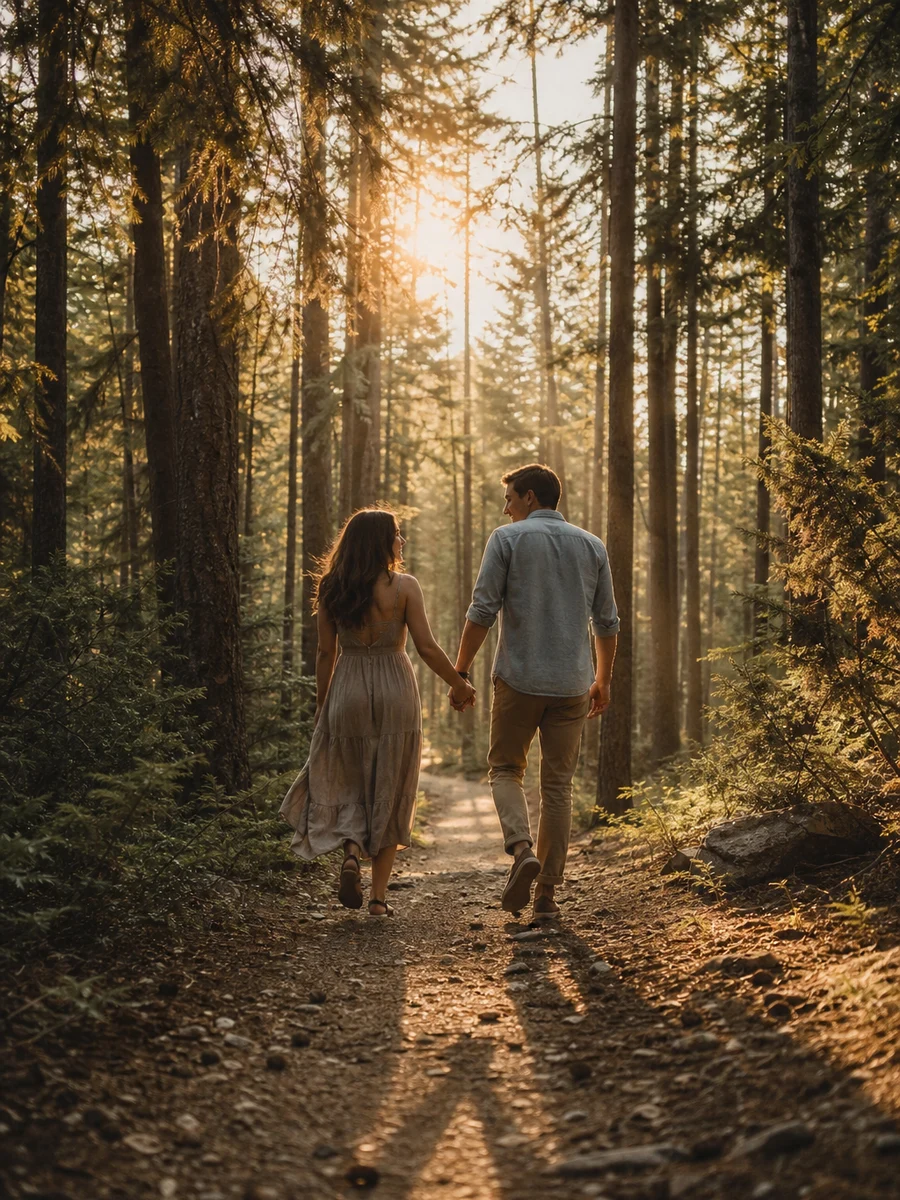
âď¸ Overcast â An overcast sky is a giant softbox â even, shadow-free light that flatters skin tones.
Usually less than half a mile. Often photographers choose a short loop or even a single scenic spot within a few minutes' walk of the parking area, so you'll cover very little distance. The emphasis is on atmosphere and light, not hiking. You'll stop frequently to interact with the surroundings. Wear comfortable shoes though, as terrain may be uneven, and you might be standing for over an hour.
Don't worryâit's common, and a good photographer works around them seamlessly. They'll wait for people to pass, use a longer lens to blur the background, or angle shots so the path looks empty. You might need to pause a minute or two, but it rarely disrupts the flow. If the spot is popular, arriving early or on a weekday helps. Just relax and stay in the moment; your photographer will handle it.
Each season offers something beautiful, but early fall and late spring are favorites. Fall brings vibrant foliage and crisp air, while late spring gives fresh greenery and blooming dogwoods. Summer can be lush, but watch for harsh midday light and insects. Winter forests are stark and quietâbare branches act like lace against an overcast sky. Pick a season that feels like you, and always plan around the softest light.
Stick to earthy tones that harmonize with the woods: cream, olive, rust, warm brown, soft denim. These colors reflect warm light onto your skin and don't clash with the green and brown surroundings. Avoid neon, busy patterns, or pure white (it can blow out). Bring a lint rollerâleaves and bits of bark cling to fabric. Layers add texture and let you adjust if the temperature changes. Footwear should be practical but not bulky.
Yes, they're very safe. The main annoyance is bugs, especially at dawn or dusk in warmer months. A quick spritz of DEET-free bug spray (to avoid oily residue on skin and clothes) before you step out helps. Opt for unscented if you canâfragrances can attract bees. Ticks are rare on widely used trails, but a quick check after the session never hurts. Let your photographer know if you're uncomfortable, and they'll choose spots with fewer insects.
Ask your photographer for recommendationsâthey know hidden gems with good light, easy access, and fewer crowds. If you're scouting yourself, look for a spot with mixed forest types: a path bordered by tall trees, a small clearing, maybe a creek. Check it at the same time of day as your shoot to see how the light falls. Public parks, nature preserves, and national forest land often have little-used corners perfect for intimate shots.
It depends on the location. Many public parks and national forests require a photography permit, especially if you're using a professional camera or tripod. The fee is often modest (around $25â$100). Your photographer usually handles this, but confirm during planning. For informal state or local lands, permits might not be needed, but always check the website or call ahead. Being asked to leave mid-session is no fun, so it's worth double-checking well in advance.