Forehead Touch Amid Wildflowers and Soft Light Engagement Photos
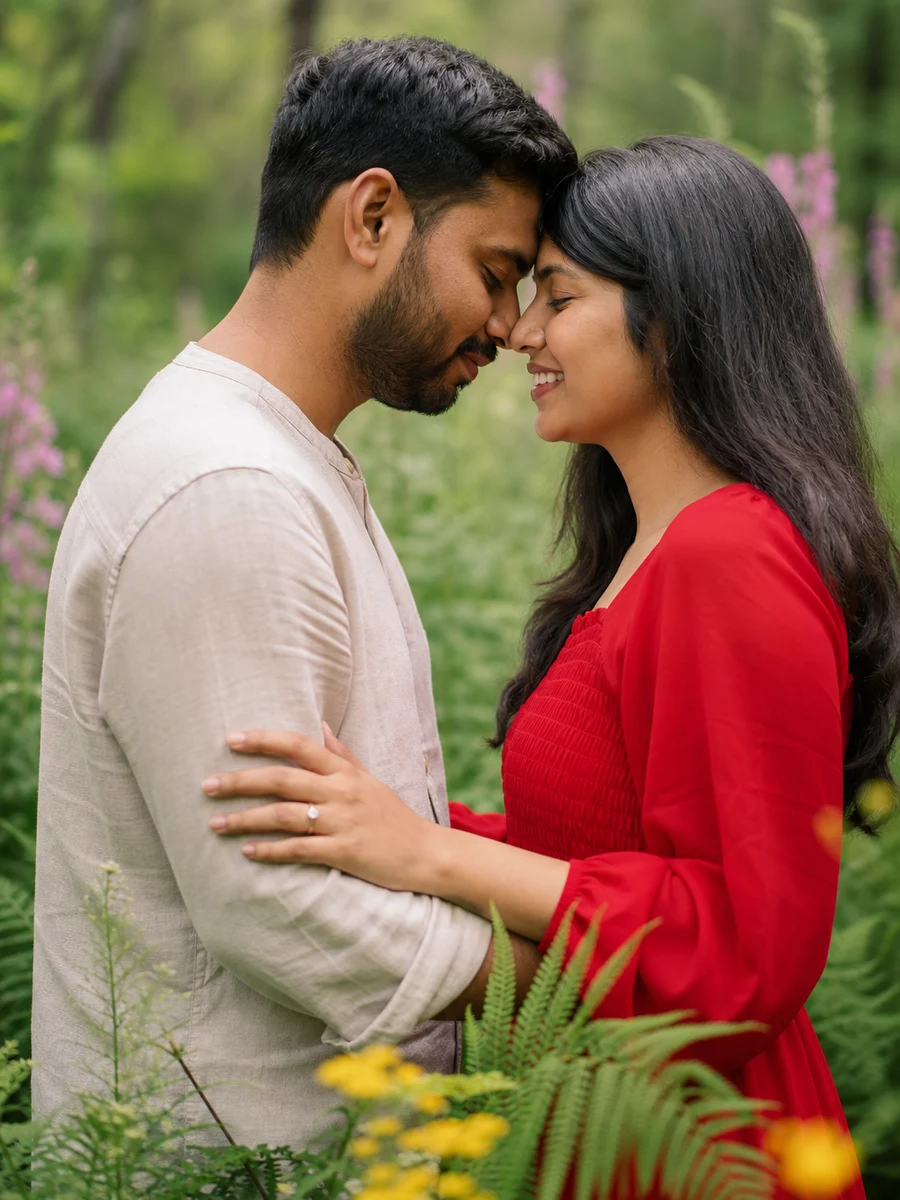
On a cloudy day, find a patch of wildflowers. The soft light eliminates hard lines, letting your connection be the only focus of the frame.
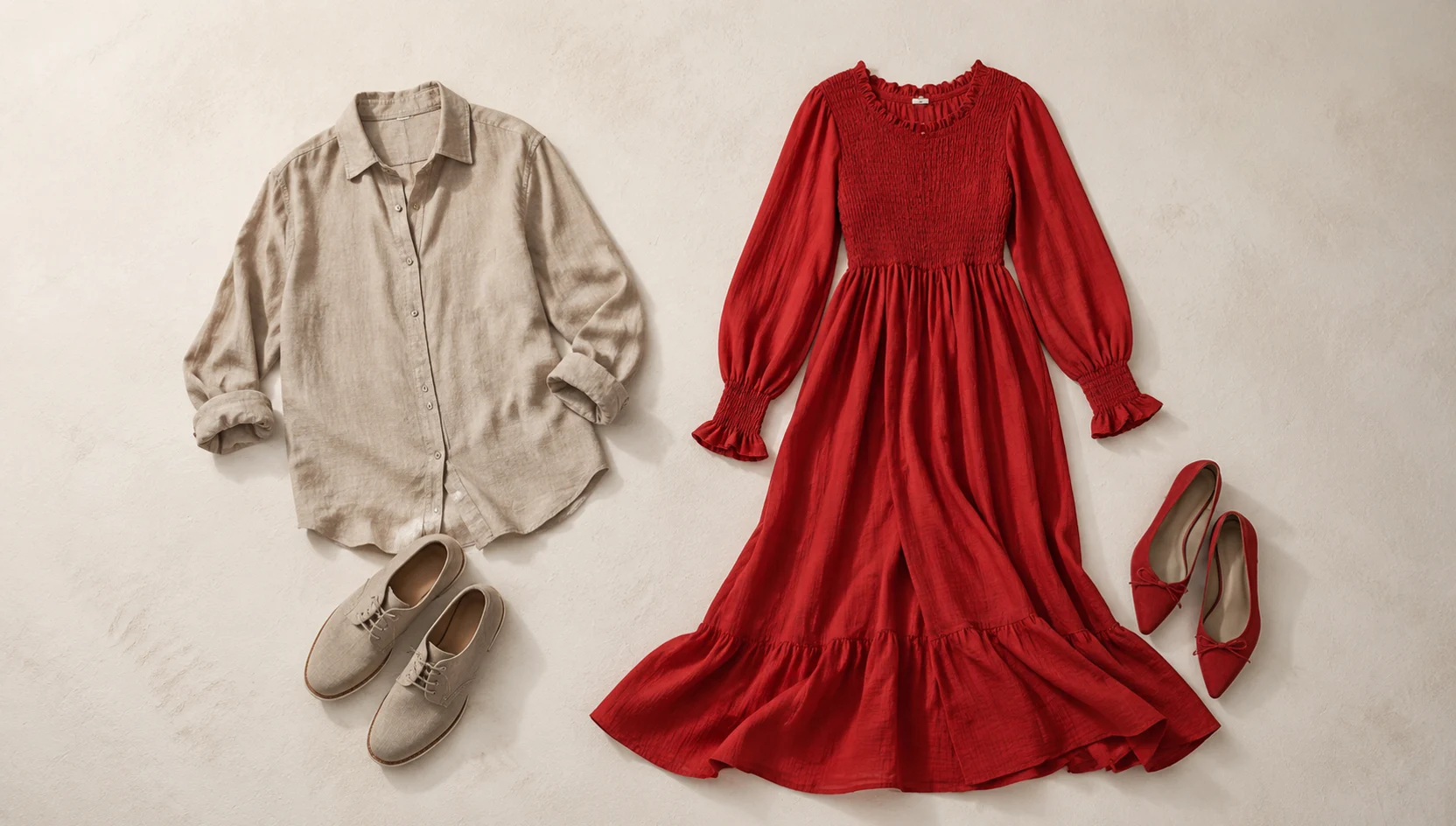
Outfit Ideas

He
linen shirt
beige

On a cloudy day, find a patch of wildflowers. The soft light eliminates hard lines, letting your connection be the only focus of the frame.

He
linen shirt
beige
She
smocked long-sleeved dress
red
The air is thick with the scent of damp earth and wild mint, a summer afternoon holding its breath under a blanket of diffused cloud. You step off the trail in a crimson dress that catches the muted light, while your partnerâs neutral linen shirt keeps the focus on your faces. The forest humsâa woodpeckerâs distant drum, the rustle of ferns as you find a clearing dotted with Queen Anneâs lace and purple vetch. Your photographer guides you to the edge of the meadow, where the canopy opens just enough for soft, even light to wrap around you both.
âRest your hands on his forearms, close your eyes,â she says. You feel the warmth of his skin through his rolled sleeves, your foreheads meeting like a quiet conversation. The world shrinks to the sound of his breath and the tickle of a stray wildflower against your ankle. You breathe together, sinking into the intimacy of the pose. That overcast sky works like a giant softbox, smoothing away any harsh shadowsâideal for forest engagement photos that feel tender, not stark.
You arrived at 4 p.m., knowing the late afternoon light filters through the leaves without creating those mid-summer hotspots. Bug spray applied earlier keeps the mosquitos at bay, and you wore flats that can handle mossy stones. As your photographer gently directs you to tilt your chin, you realize this is the real gift of engagement photos: permission to pause and simply be present with each other, surrounded by waist-high wildflowers and the quiet magic of the woods. Pack a small towel to blot any sheenâthe humidity is real, but a quick dab keeps your skin matte for the lens.
âď¸ Overcast â An overcast sky is a giant softbox â even, shadow-free light that flatters skin tones.
Schedule your session for early morning or late afternoon when the sun is lower and temperatures drop slightly. If you must shoot midday under an overcast sky, the cloud cover acts as a natural diffuser, reducing harshness. Wear breathable fabrics like cotton or linen and bring a cooling spray. Take breaks in the shade, and stay hydratedâcoconut water works fast. Your photographer will likely avoid open meadows at noon and seek dappled forest edges where the light is softer and heat less intense.
Choose one bold accent color against neutral tones to pop against all that green. A bright dressâcoral, mustard, or true redâworks beautifully, while your partner can wear cream, beige, or light gray. Avoid busy patterns that blend into the woods. Closed-toe shoes or sturdy sandals let you move over roots and damp leaves comfortably. Bring a light layer for cooler patches under dense canopy, and leave the statement jewelry at home so nature stays the focal point.
Yes, with a little prep. Apply insect repellent with 20% DEET or a natural alternative like lemon eucalyptus oil before you arrive, and tuck pants into socks if youâre walking through tall grass. Stay on marked trails when possible and check for ticks after the shoot. Most forest bugs are more nuisance than dangerâsongbirds and dragonflies often help. Your photographer will know spots with fewer standing water sources to keep mosquito clouds at bay, so ask for location advice.
Start with state parks or national forests in your areaâlook for ones with open understory, wildflower meadows, and established trails. Apps like AllTrails let you filter by difficulty and see recent photos. Visit the spot at your shoot time a few days before to check light, parking, and crowds. A local photographer can be invaluable here; theyâll know hidden groves where oak trees create natural frames and where the light falls just right. Avoid areas with heavy poison ivy or tick warnings.
It depends on the location. Many public state parks require a photography permit, especially if youâre bringing gear like lighting or reflectors. Fees range from $25 to $100 and often must be secured weeks in advance. City or county forests may have no rules, while national forests typically allow casual portrait shoots without a permit as long as you donât block trails or use props. Always check the forestâs official website or call the ranger station. Your photographer might already hold an annual permit for certain areas.
Under an overcast sky, light is soft but low, so your photographer will use a wider aperture (like f/2.8 or wider) to let in more light and create that dreamy background blur. Theyâll keep shutter speeds above 1/125 to freeze subtle movement and might boost ISOâmodern cameras handle higher ISOs well with minimal noise. Steady yourself by planting your feet firmly and breathing into the forehead touch; a slight lean into each other adds stability. If the forest is particularly dark, your photographer may bring a subtle off-camera light, but the soft window of overcast is often enough.
Late afternoon, around two hours before sunset, works best. The sun has dropped below the treeline, so you avoid harsh shafts of light cutting through the canopy. Instead, you get soft, consistent illuminationâovercast days amplify this effect beautifully. Morning is the next best option, especially in summer when itâs cooler and the woods hold a bit of dew for a fresh feel. Avoid noon, when even thick forests get pockets of bright sun that create distracting hot spots on skin and clothing.