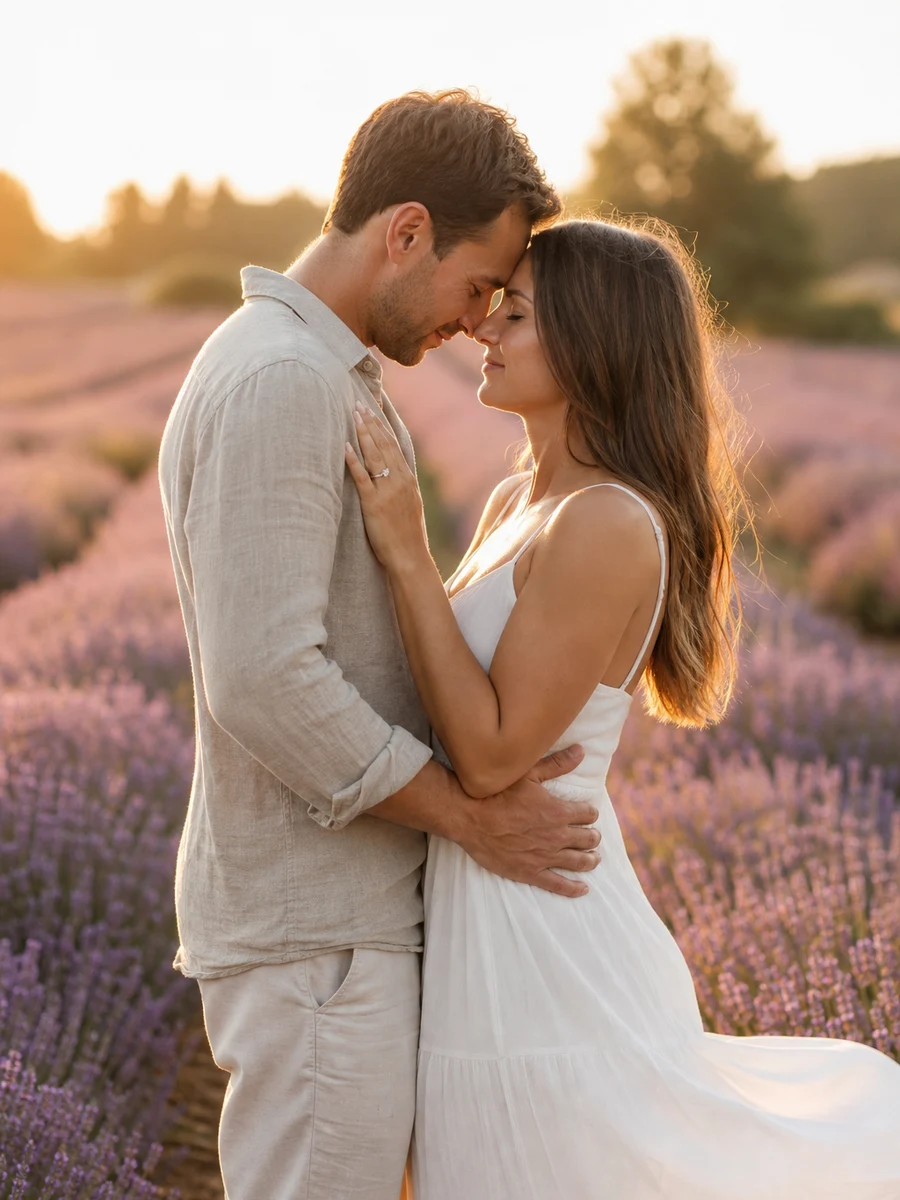
Forehead Touch in Golden Lavender Light Engagement Photos
On your shoot day, let the golden light fall behind you and lean in until your foreheads meet—the rest fades away.
📍 outdoor💑 forehead-touch
Outfit Ideas
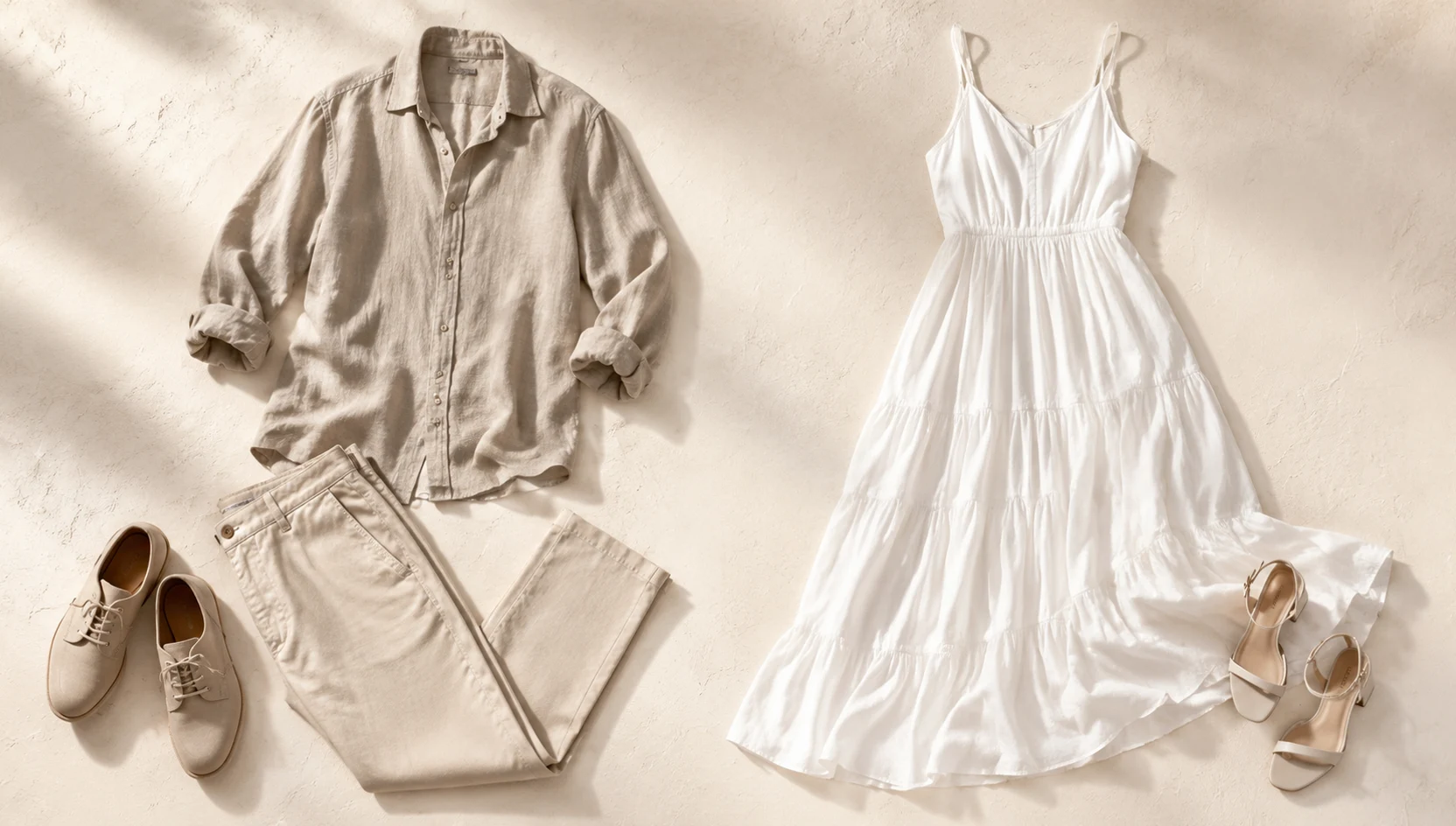
He
linen shirt + chinos
beige
She
On your shoot day, let the golden light fall behind you and lean in until your foreheads meet—the rest fades away.
He
linen shirt + chinos
beige
She
white maxi dress
white
The air is thick with the scent of lavender and warm, sun-baked soil. You step between the rows, the linen of your dress brushing your shins, and the low hum of bees fills the silence. It’s 6:45 p.m., and the light has just turned honey-gold, stretching your shadows long and soft across the purple blooms. You’ve timed these engagement photos perfectly.
Your photographer points to a spot where two rows curve together, the lavender catching the last direct rays. You turn toward your partner, and his hand finds the small of your back. It’s a gentle, steady pressure — not stiff, just present. You rest your palm flat against his chest, feeling the rhythm of his breath. Then you both lean in, foreheads touching. The sun warms one side of your face. You hear the click of the shutter, but it fades behind the sound of his exhale. This is the kind of quiet intimacy that makes outdoor engagement photos feel less like a posed session and more like a stolen moment.
Between shots, you’ll laugh when a stray bee investigates your bouquet, and you’ll probably wipe a smudge of pollen from his collar. You might feel a little silly at first — most people do — but the repetition of this simple pose will settle you into a natural rhythm. Hold eye contact a beat longer than feels normal. Let your shoulders drop. The camera reads tension, so wiggle your fingers, shake out your hands, then return to the forehead touch.
As the light dips lower, the lavender seems to glow from within. Your photographer will ask you to walk ahead, arms around each other’s waists, moving slowly through the rows. That’s when you’ll forget the camera exists. These are the frames that feel most like you — a quiet walk, a shared whisper, the hem of your dress trailing behind. By the end, you’ll realize that the best engagement photos aren’t just about the light or the location, but about the way you naturally lean into each other when no one is asking you to.
🌅 Golden Hour — Shoot in the hour after sunrise or before sunset for warm, flattering light and long soft shadows.
You can expect to receive between 50 and 100 edited, high-resolution images from a standard one-hour engagement session. Photographers typically shoot hundreds of frames but curate only the strongest — those with the best expressions, light, and composition. Some include a few black-and-white duplicates. Ask your photographer for a specific number before booking, as it varies by package and editing style. Many will also send a sneak peek of 5-10 images within a few days so you don’t have to wait weeks.
Most sessions last 60 to 90 minutes. That gives you time for multiple locations within the venue, an outfit change if you wish, and enough breathing room to settle into natural expressions. Longer than 90 minutes, and you risk losing the best light or simply getting tired. Plan for at least an hour; if you want a relaxed pace with two outfits, book 90 minutes. The golden hour window is roughly an hour long, so this length keeps you within that flattering light without feeling rushed.
For peak seasons — late spring through early fall — book 6 to 12 months ahead, especially if you want a sought-after photographer or a weekend date. If your schedule is flexible or you’re shooting in an off-peak month, 3 to 4 months may be enough. Early booking secures your ideal date and gives you time for planning, location scouting, and even an extra session before the wedding. If you’re set on a specific bloom window like lavender in June or July, start reaching out in winter.
Pack a small bag with essentials: water, a lint roller, blotting papers for shine, and comfortable shoes for walking between spots. Bring any meaningful props — a blanket for sitting, a handwritten letter, or a small keepsake. If you’re changing outfits, a portable steamer can rescue wrinkled linen. Don’t forget bug spray if you’ll be in a field at dusk, and a touch-up kit with lip color and powder. Leave large bags in the car so you’re not carrying them through the rows.
Most couples fit one to two outfits into a 90-minute session without feeling rushed. If you change, keep the first outfit simple and easy to swap out. A white linen dress photographs beautifully and pairs easily with a second look, like casual denim and a softer top. Avoid more than two outfits unless you have a longer session, because changing takes time away from shooting and can break the comfortable flow you’ve built with the camera.
Nearly every couple feels awkward at first. Your photographer will use cues — hold hands, walk, whisper a joke — to draw out natural reactions rather than stiff poses. The forehead touch pose works especially well because closing your eyes or focusing on your partner’s breath shuts out self-consciousness. Trust that the first 15 minutes might feel stilted, but as you move and interact, you’ll forget the lens. A good photographer also shows you a few early frames to boost your confidence.
The hour after sunrise and the hour before sunset — golden hour — offer the warmest, most flattering light. At these times, the sun is low, casting soft shadows and a golden glow that makes skin look radiant. For a lavender session, aim for the last two hours before sunset to catch the light turning honey-colored across the blooms. Avoid midday, when overhead sun creates harsh shadows and makes you squint. If you must shoot earlier, find open shade to soften the light.