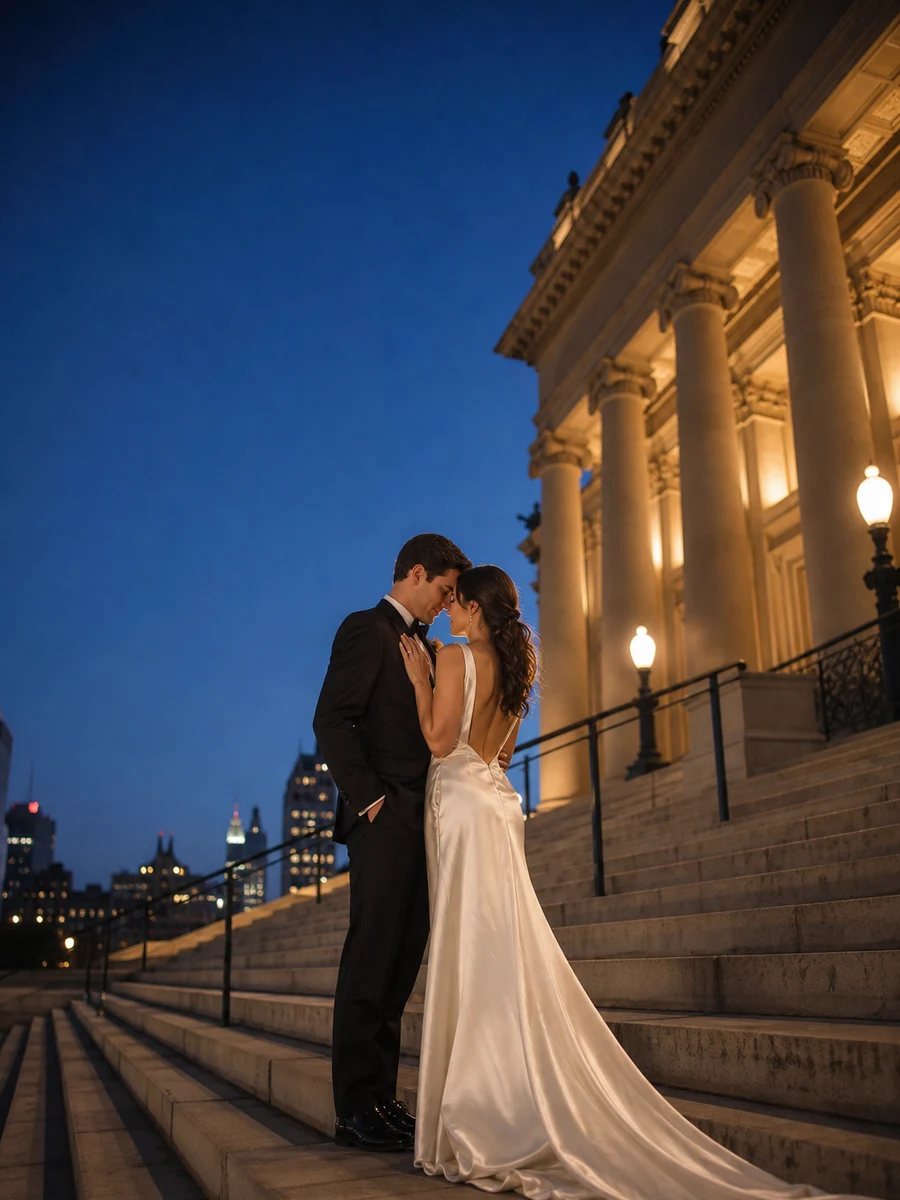
Grand Staircase Forehead Touch Under City Lights Engagement Photos
On the grand staircase, close your eyes and feel each other’s presence. The city lights will do the rest.
📍 city💑 forehead-touch
Outfit Ideas
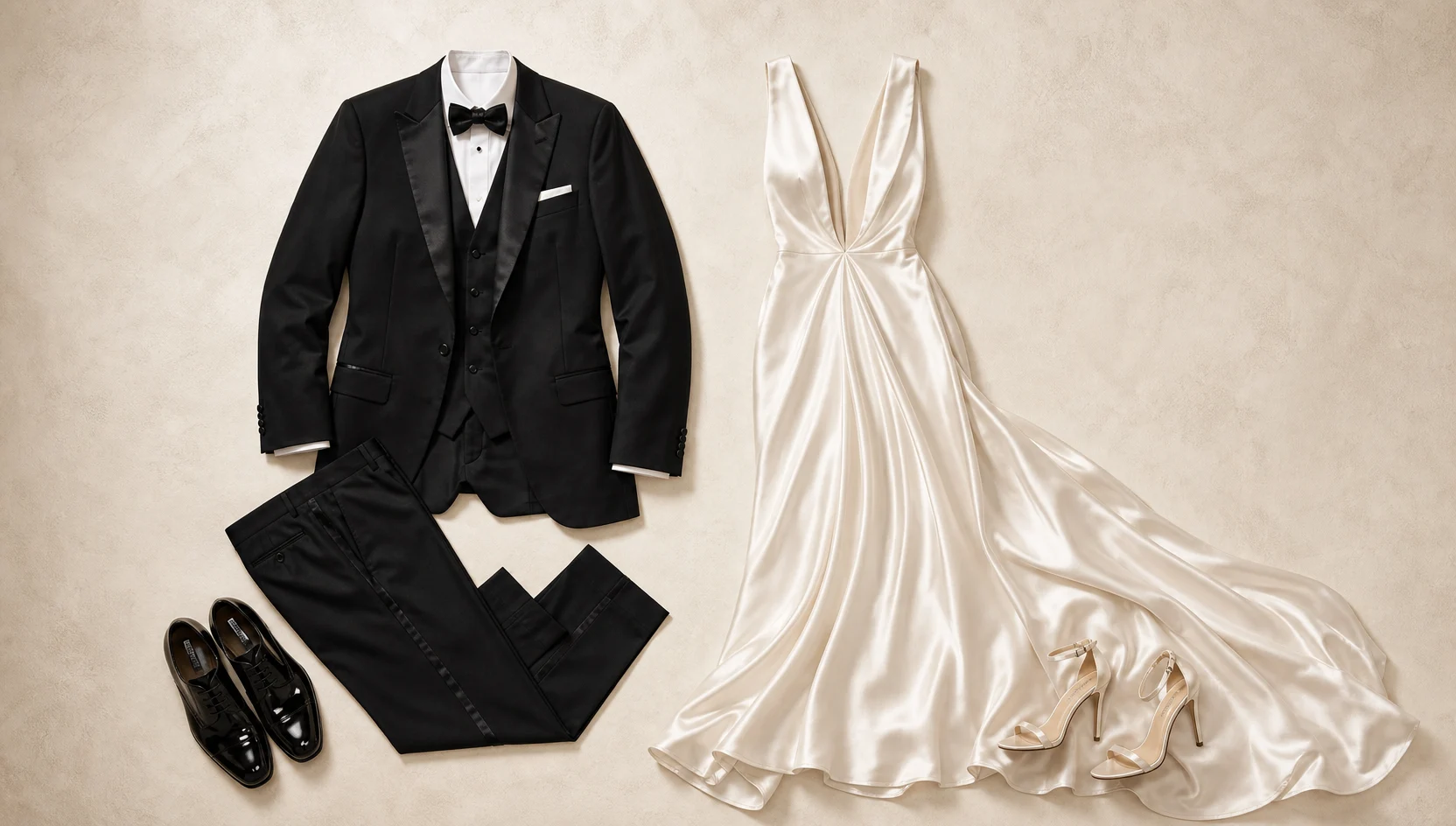
He
tuxedo
black
She
On the grand staircase, close your eyes and feel each other’s presence. The city lights will do the rest.
He
tuxedo
black
She
satin gown
ivory
You stand at the top of the grand staircase, the marble cool under your heels. The sky is deepening into that electric blue you only get for twenty minutes after sunset. Below, the city’s lights are just waking up—golden windows, neon signs, the distant red streaks of taillights. Your satin gown catches the last warmth from a nearby sconce, and you feel the slight tug as you adjust the train. He’s already there, in a crisp suit, one hand resting at your waist, drawing you close.
You press your forehead to his, close your eyes. The world shrinks to the sound of your breathing and the faint city hum. His other hand finds yours. The photographer guides you softly: tilt your head just a little, let your shoulders relax. You stay like that, not moving, feeling the cool air and the warmth of him. The light is perfect—soft, even, no harsh shadows. The building’s details glow without blowing out. These city engagement photos will capture the intimacy that only this kind of quiet moment can bring.
You arrived early, walking the staircase to find the cleanest angle and avoid any clutter—a stray cup, a security sign. The low back of your gown catches the warm architectural light, and you’re glad you chose that detail. You also brought a tiny touch-up kit: lipstick, blotting papers. Even a dewy forehead can look overly shiny on camera. The blue hour fades fast, so you work quickly but without rush. You take a few variations: from a low angle to frame the city behind you, then just a close-up of your profiles with the lights blurred out. The photographer knows the best engagement photos come from unscripted moments, so he gives you space. Every second counts, but you’re not counting seconds. You’re just here, in this pocket of time, trusting that these photos will feel as true as this moment does.
🌆 Blue Hour — Shoot in the ~20 minutes after sunset when city lights glow against a deep blue sky.
It depends on the location. Public streets and sidewalks generally don't require a permit unless you're blocking traffic or using large equipment. However, some iconic spots—like certain bridges, parks, or privately owned plazas—do require permits, especially for professional shoots. Always check with the city’s film office or property management. For example, in New York, you need a permit for photos in Central Park with a tripod, but not necessarily on a public street. Even without a permit, be respectful: keep the crew small, avoid peak hours, and stay nimble.
Cities with dramatic architecture and varied backdrops work best. New York offers rooftops and Central Park; Chicago has the skyline from the Lakefront Trail and the “L” tracks; San Francisco provides the Golden Gate Bridge and rolling hills; Los Angeles mixes urban and coastal vibes; and Washington D.C. has monuments and cherry blossoms. Each city has its own character—choose one that reflects your story. For blue hour shoots, look for elevated viewpoints, staircases, or light-lined streets where the city lights become a glowing backdrop.
You’ll typically need to book a rooftop venue or get permission from a building manager. Many hotels and restaurants with rooftop bars allow photography during off-hours if you coordinate ahead. Some public rooftops are accessible but may have restrictions. Arrive early to check the light and wind—strong gusts can make poses difficult. Bring a small strobe or reflector if the rooftop is dimly lit. Safety is paramount: never lean over railings, and avoid loose items that could blow away. Your photographer should scout the location beforehand.
This happens often—lighting, crowds, or seasonal changes can alter a space. Always do a recent virtual walkthrough via Google Street View or Instagram geotags. Arrive with a backup plan: a nearby street, a different staircase, or an architectural detail you spotted on the way. Flexibility is key; some of the best engagement photos come from spontaneous discoveries. Communicate with your photographer about the look you want, so they can adapt quickly. If the original spot doesn’t work, a skilled photographer will find a similar vibe nearby.
Generally yes, especially in well-lit areas and popular destinations. Stick to locations you’ve scouted during daylight and avoid dimly lit or deserted spots. Bring a charged phone, use a flashlight, and keep valuables hidden. Shooting during blue hour—right after sunset—offers the safety of twilight while still getting the night glow. Avoid full-late-night hours unless you’re in a controlled venue. Stay aware of your surroundings, and if you’re near traffic, wear reflective elements or keep a safe distance from the road.
Blue hour, the 20–30 minutes after sunset, is ideal. The sky turns a deep, saturated blue, and city lights glow warmly without harsh contrasts. For many cities, this falls between 5:30 and 7:30 p.m. depending on the season. Golden hour just before sunset is also beautiful, but blue hour uniquely blends natural and artificial light. Arrive early to set up, because the window is short. If you want a brighter, sunlit look, opt for early morning when streets are quieter and the light is soft.
Often no, but it depends on the city and the scale of your shoot. For a couple and a photographer without tripods or crowd control, you can usually shoot on public sidewalks freely. However, if you’re closing off areas or using professional gear like boom mics or generators, permits are required. Some tourist-heavy spots, like the Hollywood Walk of Fame or Lincoln Center, have stricter rules. Call the local film office to confirm. Private property (including some staircases and plazas) always requires permission from the owner.