Side by Side Facing the Horizon Engagement Photos
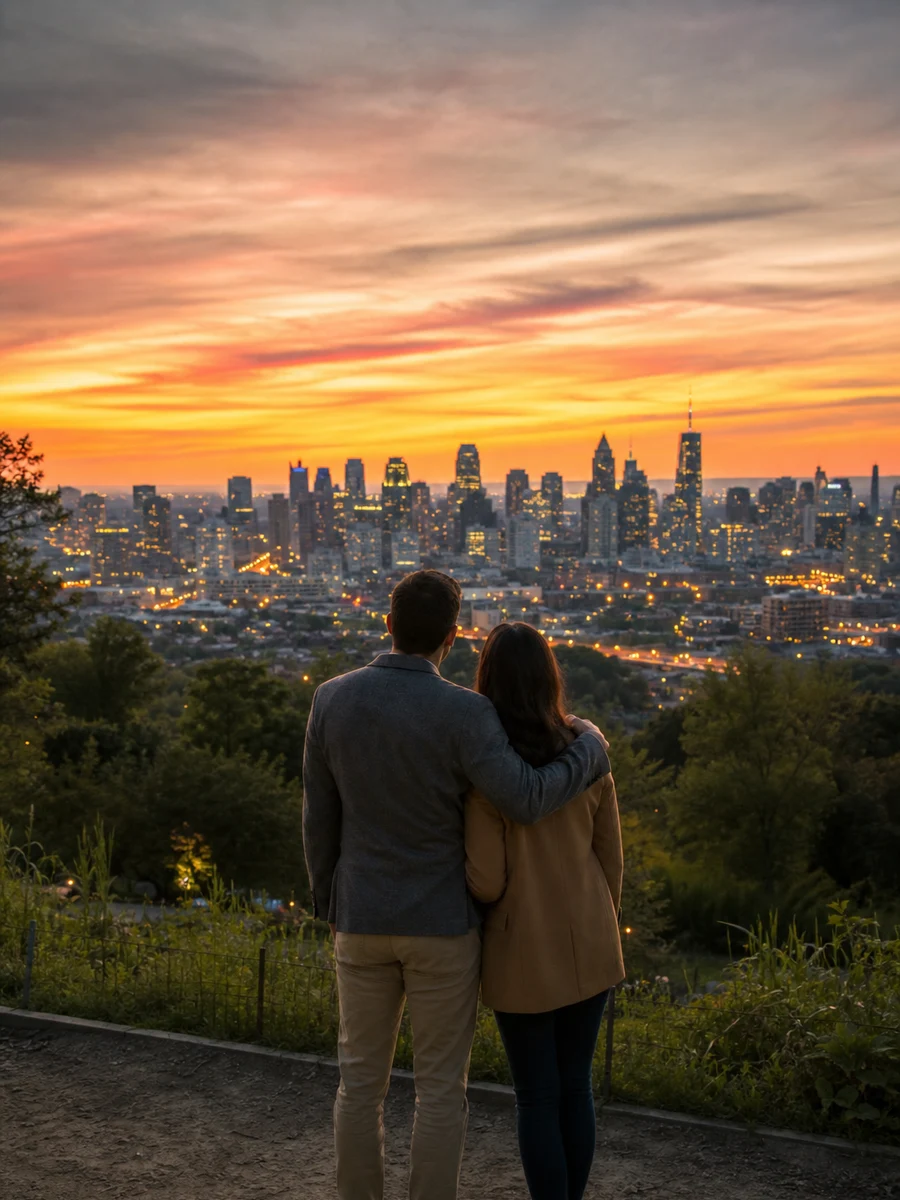
Sometimes the best shot is the one where youâre both just taking it all in â this is your view, your story.
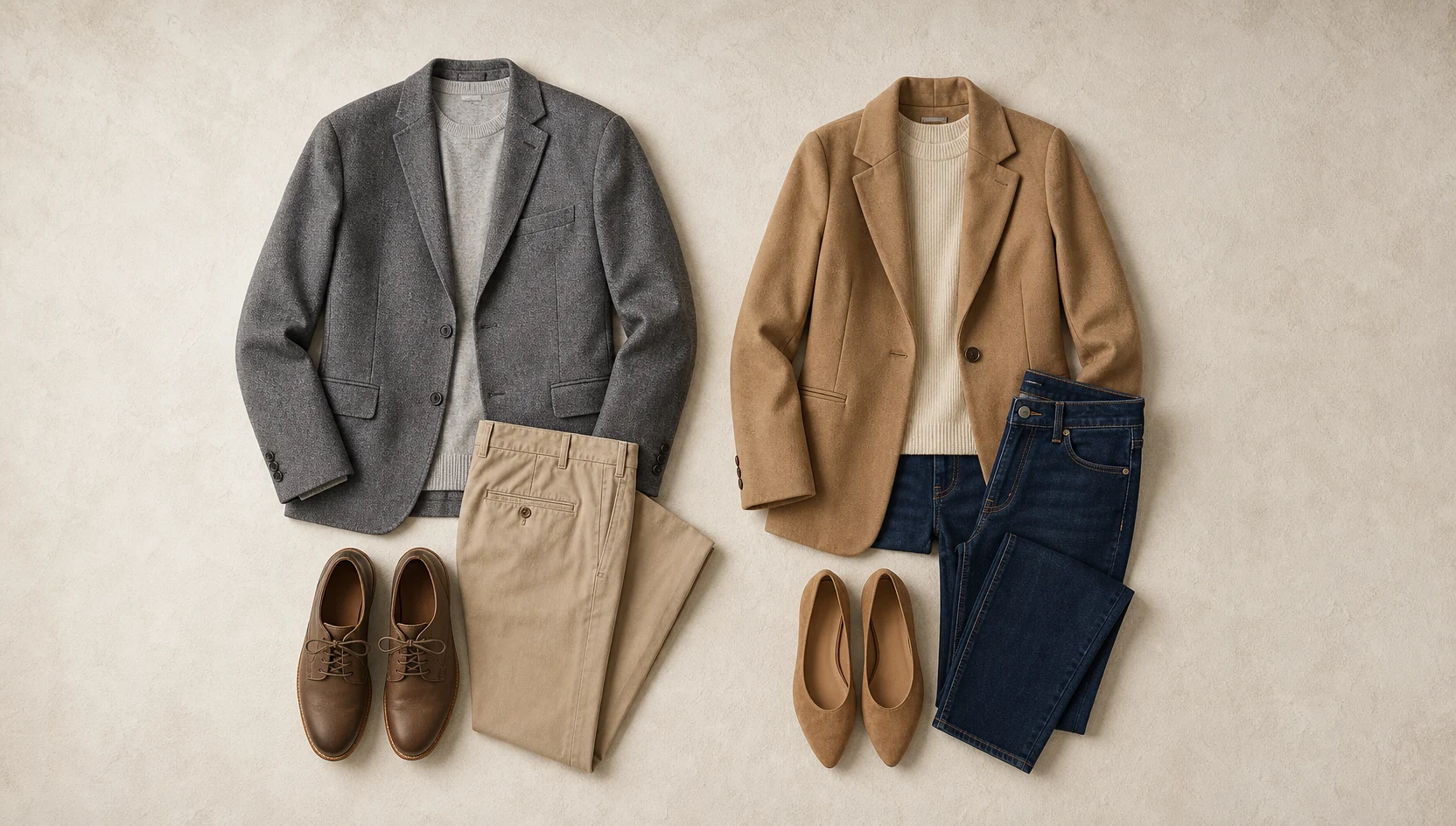
Outfit Ideas

He
blazer + chinos
grey / beige
She
casual jacket + jeans

Sometimes the best shot is the one where youâre both just taking it all in â this is your view, your story.

He
blazer + chinos
grey / beige
She
casual jacket + jeans
tan / dark blue
You and your partner stand on a quiet overlook, the last orange sliver of sun dipping below the skyline. The air cools instantly, a gentle breeze carrying the distant hum of traffic. You arrived thirty minutes before sunset, just as planned, to scout this spot and lock focus. Now, as the city lights flicker on one by one, you feel the anticipation building. Your photographer positions you both facing the horizon, his arm wrapping firmly around your waist, her head naturally resting on his shoulder. The pose feels effortless, intimate. She's wearing a soft camel blazerâthe earthy tone melts perfectly into the deepening twilight. You're in a gray blazer, casual yet sharp. As the sky turns from amber to an inky blue, the streetlights and office windows glow against it, creating a cinematic backdrop. The photographer calls out soft directions; you breathe slowly, savoring the moment. This is what blue-hour city engagement photos are all about: not just the epic view, but the quiet connection amid the urban hum. A few passersby nod and smile, but they don't intrude. You realize that arriving early paid offâyou claimed the perfect vantage point and settled into the rhythm before the light peaked. The 20-minute window goes fast, but each click captures the warmth of her against your side, the city twinkling beyond. When it's over, you walk back through the streets, laughter echoing off the buildings, already reliving the best city engagement photos you've ever taken.
đ Blue Hour â Shoot in the ~20 minutes after sunset when city lights glow against a deep blue sky.
Scout locations that are popular during the day but quiet at blue hour, like business district overlooks or park terraces. Arrive 30â45 minutes before sunset to claim your spot. Shoot on weekdays if possible, and avoid areas near bars or theaters. Your photographer can frame shots tightly to exclude spectators and may ask people to briefly step aside with a polite smile.
Choose chic-casual layers in earthy tones like camel, gray, or muted olive. These colors harmonize with sunset and blue-hour light without clashing with the cityscape. A blazer adds structure and cleans up easily if leaned against railings. Avoid busy patternsâthey distract from your faces. Wear comfortable shoes; you'll walk between spots, and heels can snag on pavement.
Typically 60 to 90 minutes total. You'll spend the first 15â20 minutes warming up at a secondary location, then transition to your main overlook for the prime 20-minute blue-hour window. This pacing ensures you're relaxed when the light is best. If you add multiple stops, budget two hours. Travel between locations is quick by foot or ride-share.
Light rain can add mood: reflections on wet pavement and glowing streetlights look cinematic. Bring a clear umbrella and a towel for wiping benches. Your photographer will shoot tighter to avoid showing gray skies. If heavy rain is forecast ahead, reschedule. Most photographers have flexible weather policiesâcheck before booking. Misty conditions often enhance blue-hour shots.
Blue hour offers a brief, dramatic balance between natural twilight and artificial city lights. The sky becomes a deep blue canvas, making skyscrapers and streetlamps pop with warmth. Unlike harsh midday sun, this soft, even light minimizes shadows on faces. The result is a romantic, almost cinematic quality that daytime simply can't replicateâyour engagement photos feel intimate and timeless.
Walk your city at sunset to spot vantage points with clean sightlines to the horizon. Search Instagram geotags and local photo blogs for rooftop bars, pedestrian bridges, or quiet waterfront parks. Avoid clichĂ© tourist spots unless you can access them during off-peak hours. Your photographer will likely have a curated listâshare your vision early so they can suggest hidden gems.
In most public spaces like sidewalks, parks, and plazas, you don't need a permit for casual, non-disruptive photos. However, if you plan to use professional equipment like light stands, or shoot inside private buildings, malls, or transit stations, a permit is often required. Always check local regulations online or ask your photographerâthey know which spots are hassle-free.