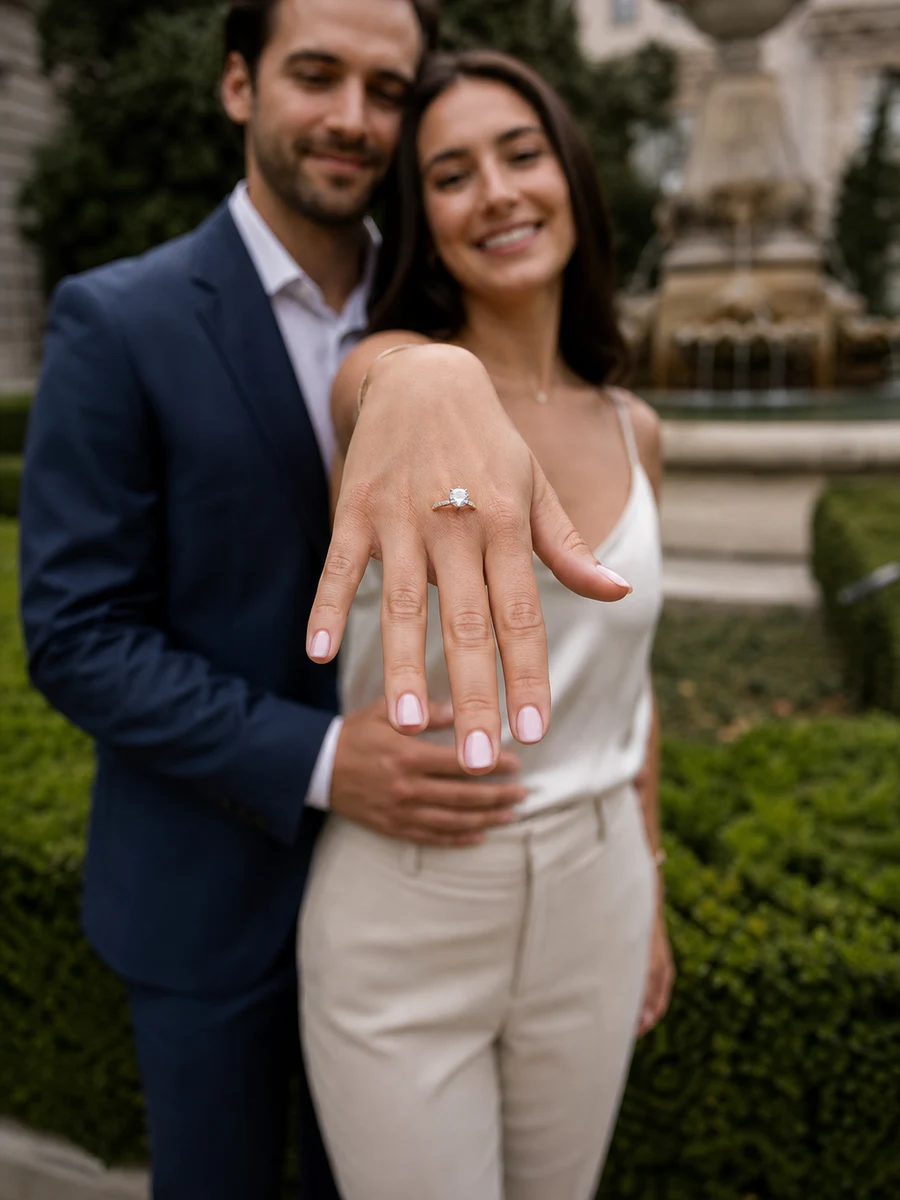
Editorial Ring Detail Against Boxwood Hedges Engagement Photos
An overcast day is a hidden gem for ring shots—the diffused light makes every facet gleam without harsh reflections.
📍 park💑 ring-reveal
Outfit Ideas
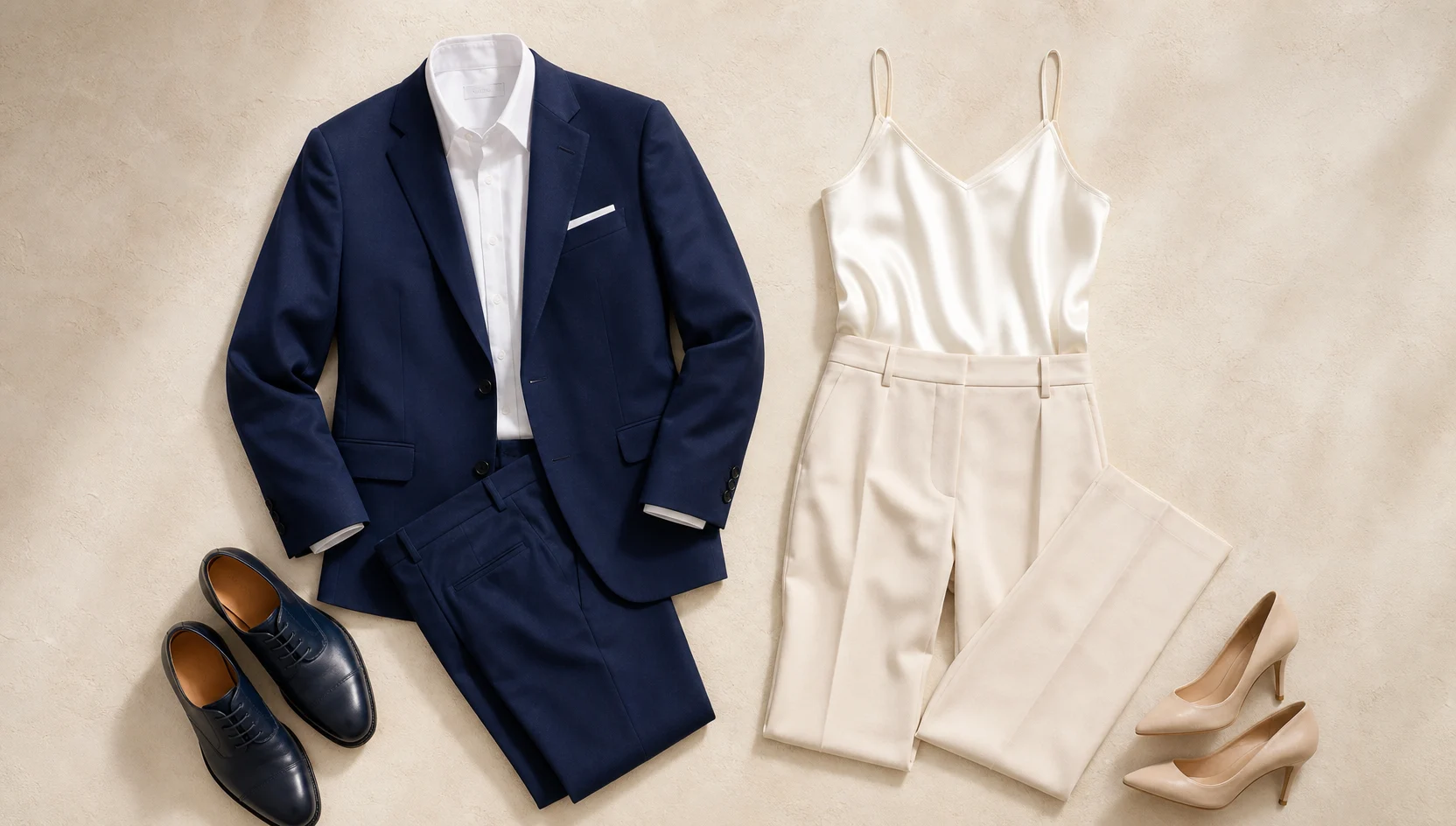
He
navy suit
navy blue
She
An overcast day is a hidden gem for ring shots—the diffused light makes every facet gleam without harsh reflections.
He
navy suit
navy blue
She
satin camisole + trousers
ivory + beige
The air carries the earthy fragrance of boxwood, sharp and clean, as the sun drops low over the park. You feel its warmth on your cheeks—soft, not harsh—and watch long shadows stretch across the manicured hedges. It's just past 6:30 p.m., and the light is turning honey-gold, exactly as your photographer promised. A breeze stirs the leaves, and somewhere beyond the hedge, a bird trills.
You're standing with your partner beside a dense wall of boxwood, its tiny leaves creating a textured, deep-green canvas. Your photographer has you angle your left hand forward, fingers relaxed, the diamond catching the sidelight. The ring sparkles without glare because you're tucked into a pocket of soft shade—a trick your photographer insisted on. Your partner's arm is wrapped around your waist, pulling you close, and you can feel the steady rhythm of their breathing. The pose feels natural, not forced, because you've practiced a little: hand extended, thumb gently resting on your middle finger, wrist straight. No awkward claw-hand here.
You chose a cream blouse and navy trousers, exactly the kind of neutral tones that read editorial against all this green. No busy prints to distract from the ring. Earlier, you buffed your nails to a soft shine and cleaned the ring with a provided cloth—small details that make a big difference in these close-up engagement photos. Your photographer moves in, capturing the contrast between the cool metal and the warm organic lines of the leaves. They're shooting at eye level, then from above, framing just your hands and the hedge. Click, click—the sound is reassuring.
As the session progresses, you shift to a few more poses: walking hand-in-hand along the hedge, stealing a kiss near a topiary arch. The park is quiet now, the last joggers disappearing toward the exit. Your photographer suggests a final shot: you both leaning into the hedge, faces close but the focus pulled to the ring. You hear the camera fire in rapid succession, and you know you'll look back on these park engagement photos and remember not just the look, but the feeling of this golden, slow hour. You leave as the sun dips below the tree line, the boxwood still holding the day's warmth.
🌅 Golden Hour — Shoot in the hour after sunrise or before sunset for warm, flattering light and long soft shadows.
Aim to book at least 4-6 weeks before your desired date. Spring and fall weekends fill up quickly, especially when the foliage is at its peak. If you have a specific park in mind that requires a permit, add another week or two for the application process. Booking early also gives you time to plan outfits and coordinate with your photographer on the best golden-hour time slot. For summer sessions, late evening slots are prime territory, so securing them early ensures you'll have that warm, low light.
You'll want to have a reschedule plan in place with your photographer. Most professionals allow one rain date without penalty if you have a flexible schedule. Light drizzle can actually add a romantic mood, but heavy rain will ruin the light and soak your clothes. Check the forecast the morning of and make a decision at least four hours before the session. If you have to postpone, ask your photographer about their availability later that week or the following weekend — the same golden-hour window might be open. Keep an emergency umbrella in the car just in case.
Absolutely, but plan ahead. Many parks require dogs to be on a leash, which can be edited out later if needed. Bring a friend or dog sitter who can take the pup after we get a few shots with you. Pack water, treats, and a favorite toy to grab their attention. Let your photographer know in advance so they can suggest dog-friendly poses and locations within the park. Not all parks welcome dogs, so verify the rules before you go. A well-behaved, calm dog makes the best model — and a tired one works even better.
Crowds are most common on weekends and during public events, so if you can, schedule your session for a weekday evening. When people do wander into your frame, your photographer can use angles that minimize them or wait for a gap. You can also scout the park together for quieter corners like less-traveled pathways or the back side of hedges. Communicating politely with passersby goes a long way — a simple 'We're just taking a few photos, thank you!' usually works. Remember, a little crowd energy can make the photos feel alive, not staged.
Stick with neutral, earthy, and muted tones. Cream, ivory, beige, tan, and soft white complement the fresh greens without competing. Navy, slate blue, and charcoal add a crisp, editorial contrast. Avoid bright red, neon pink, or busy floral prints—they pull attention away from your faces and the ring. Soft pastels like blush or lavender can work in spring, but make sure they're not too bright. For this ring-reveal shot, simple solid hues let the diamond stand out against the hedge. Wear clothing that moves well and feels like you.
Most park engagement sessions run about 60 to 90 minutes. This gives you time to walk to a few locations, change a minor item (like a jacket), and settle into natural poses without rushing. Golden hour light shifts quickly, so your photographer will pace the session to capture the best window—often the last 30 minutes before sunset. If you're adding a dog or multiple outfits, you might push closer to two hours. Arrive 15 minutes early to touch up, relax, and let the photographer scout the light upon your arrival.
Yes, it's a great idea. Walk the park together at the same time of day you'll be shooting. Notice where the light falls, which hedges are well-kept, and where the most private spots are. You'll feel more comfortable on the day knowing the layout, and you can point out specific backdrops to your photographer. Check for any park maintenance, blooming cycles, or unexpected closures. Bring your phone to snap reference photos. This simple scouting trip often removes a lot of on-the-day anxiety and helps you visualize the final images.