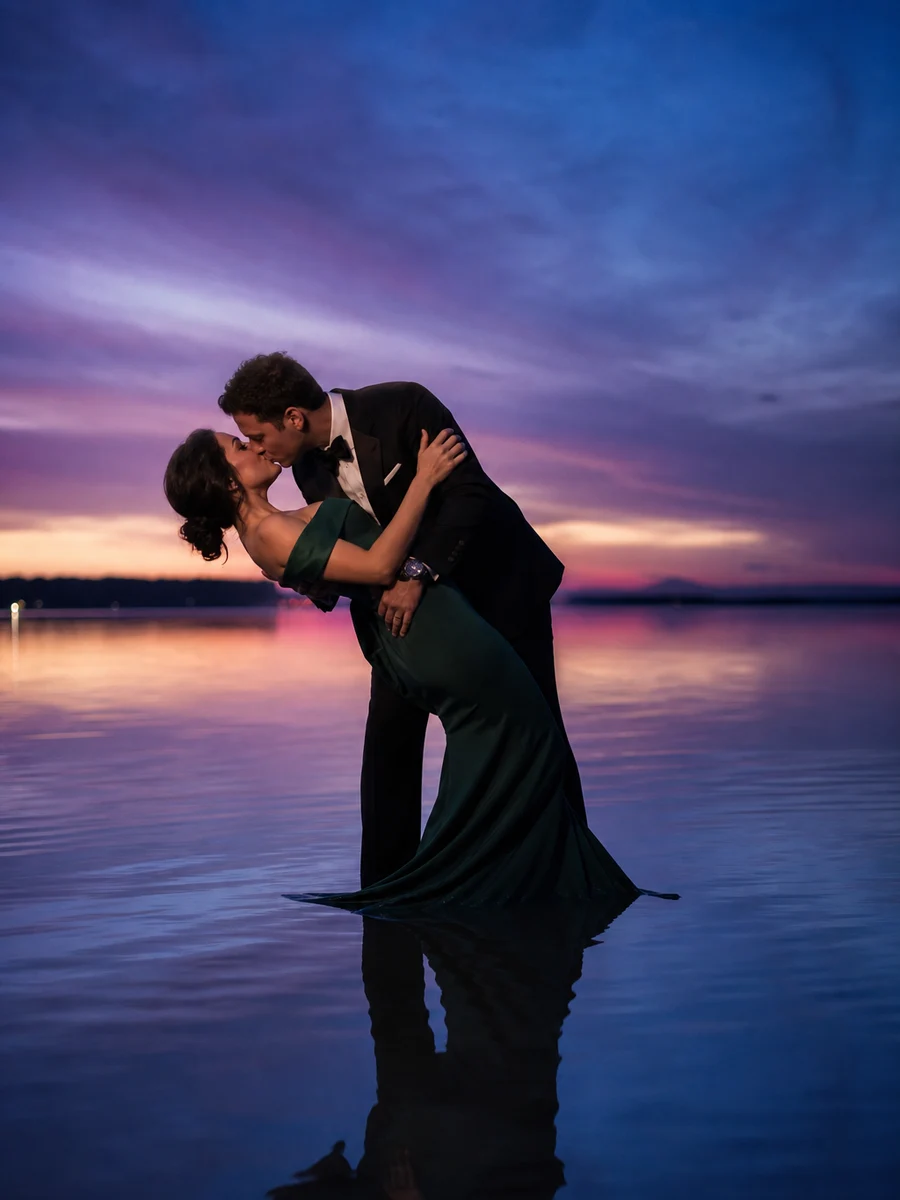
Editorial Dip Kiss in Twilight's Mirror Engagement Photos
Blue hour turns the ocean into a mirror—perfect for a dip kiss that feels polished and romantic without losing the raw moment.
📍 beach💑 gentle-dip-kiss
Outfit Ideas
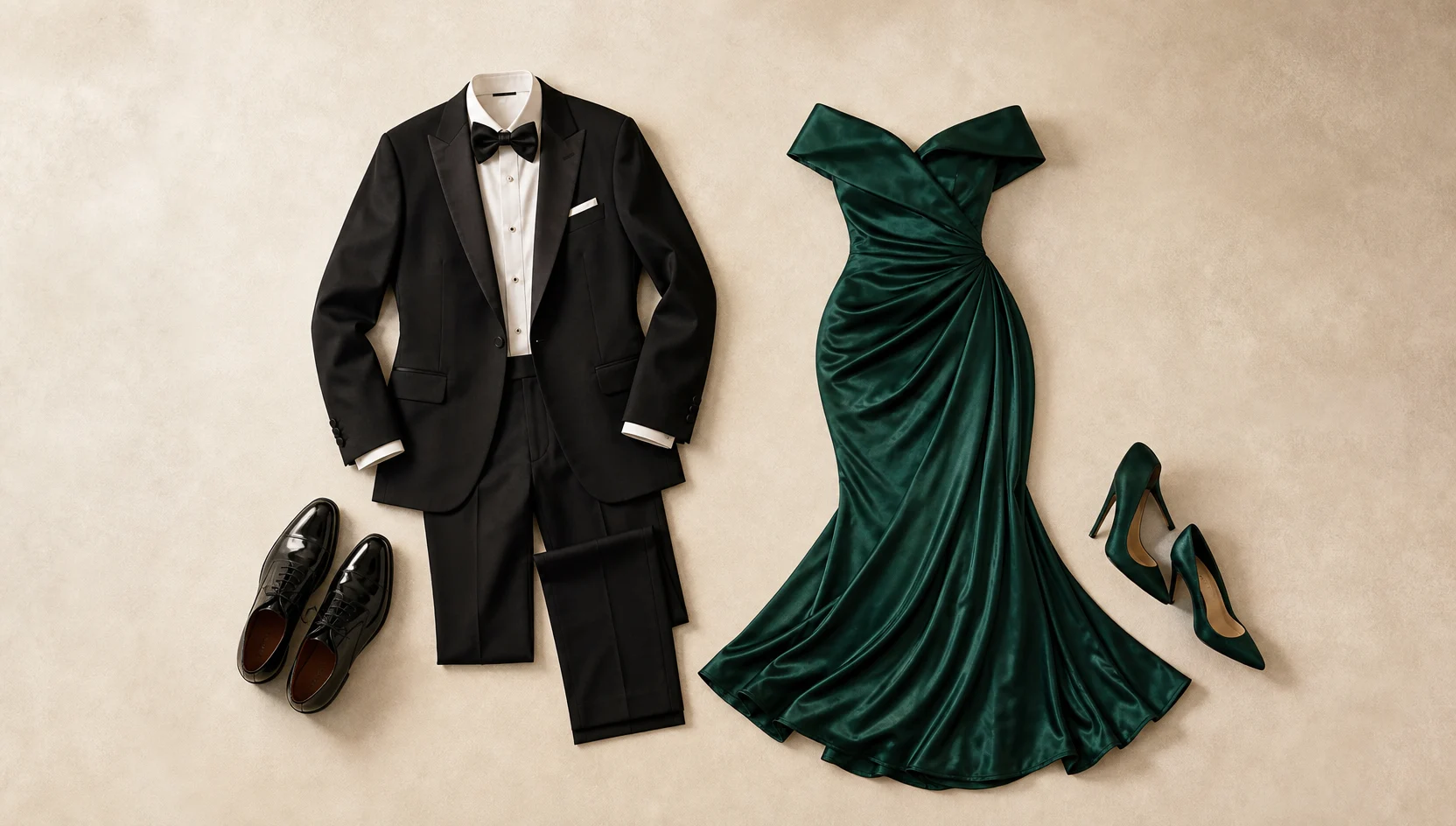
He
tuxedo
black
She
Blue hour turns the ocean into a mirror—perfect for a dip kiss that feels polished and romantic without losing the raw moment.
He
tuxedo
black
She
satin gown
dark green
You step onto the sand at 6:45 p.m., right as the sun slips below the horizon. The sky shifts from deep violet to a thin band of peach, and the wet sand mirrors every hue. Your bare feet sink into the cool, damp surface—low tide left a vast, glassy sheet where the sea barely ripples. The air tastes salty and fresh, and the only sounds are the hiss of retreating waves and a distant gull.
Your photographer guides you toward the best spot, just where the reflective water meets dry sand. You wear an emerald gown that catches the fading light, its fabric moving gently in the breeze. He stands with feet wide, arms ready to support your back. When you lean into the dip, you feel his hands secure under your shoulder blades. "Hold for three counts—eyes on each other," the photographer calls. The pause feels like floating, and you hear the shutter click as the sky deepens behind you. This is the exact moment your beach engagement photos will freeze: the editorial dip kiss against a twilight mirror.
Between setups, you huddle in a light jacket to keep warm as the temperature drops. The photographer adjusts the exposure for the bright sky, so you won’t be silhouetted. You’ll get a few shots with the full reflection, then some tighter frames that focus on the connection between you. By 7:30 p.m., the light is nearly gone, but you’ve captured the entire spectrum of evening color. To prepare, check the tide chart the night before—low tide timing is everything for those glass-like reflections.
🌅 Golden Hour — Shoot in the hour after sunrise or before sunset for warm, flattering light and long soft shadows.
Yes, winter beach sessions produce a unique, soft light and dramatic skies. The low sun angle creates long, gentle shadows all afternoon, not just at golden hour. Dress in layers you can remove between shots, and bring hand warmers you can hide in pockets or behind your back. Choose a gown with long sleeves or a heavier fabric like velvet. The cooler air often means fewer people, giving you an empty shoreline. Be ready for wind—opting for an updo or secured hairstyle keeps hair from whipping across your face.
Salt and humidity can flatten hair and melt makeup, so start with anti-humidity products. Use a lightweight setting spray on your face and a texturizing sea-salt spray in your hair to work with the climate, not against it. Bring blotting papers and a translucent powder for touch-ups. Avoid heavy foundations that can streak. For hair, consider a low bun or braids that hold shape even in damp air. Pack a small kit with a comb, hairpins, and a travel-size hairspray. Your photographer can pause for quick fixes if needed.
Most couples go barefoot during the actual shoot—it feels natural and looks effortless in the photos. Bring a pair of easy-to-slip-off formal shoes for the walk to the location and any shots on boardwalks or rocks. Avoid heels that sink into sand; if you want height, choose a wedge or block heel you can grip. Pack a towel to wipe off sand before putting shoes back on. If the sand is cold or rocky, consider neutral-toned water shoes hidden under your gown. Communicate with your photographer about the terrain ahead of time.
Absolutely not—fog adds a dreamy, romantic atmosphere you can’t replicate. It softens the light evenly, reducing harsh shadows and giving skin a luminous look. The mist can create depth and mystery, especially with wide shots where the shore disappears into white. To make the most of it, your photographer will adjust the exposure to prevent a flat, grey image. You might want to bring a faux-fur wrap or a textured blanket to add visual interest. Some couples even prefer fog over full sun because it’s more flattering and moody.
Aim to book 2–3 months ahead, especially if you want a specific golden-hour date on a weekend. Popular beaches fill up fast during mild seasons. If you’re traveling to a coastal location, secure your photographer even earlier—6 months is not unreasonable. Booking early also gives you time to plan outfits, scout the exact spot with your photographer, and monitor tide charts. Some photographers offer a backup date in case of severe weather, so having a buffer helps. Weekday sessions often have more availability and quieter beaches.
A typical beach session lasts 1 to 1.5 hours. This window captures the most dramatic light changes during golden hour and twilight. The first 15 minutes are often spent walking to the spot and getting comfortable with the camera. Then, the main shooting covers multiple poses and backdrops—wet sand, dunes, shoreline. If you want the twilight mirror reflection, plan to be on the beach right before sunset until about 30 minutes after, when the sky turns deep. Longer sessions can feel rushed as light fades, so stick to this timeframe for the best variety.
It depends on the location. Many public beaches do not require a permit for personal, non-commercial shoots like engagement photos. However, some state parks, private beaches, or protected coastlines may require a photography permit, even for small sessions. Check the beach’s website or call the local parks department. Your photographer often knows the regulations and can advise you. If a permit is needed, budget $25–$100 and apply weeks in advance. Trespassing fines are rare, but you don’t want the stress of being asked to leave mid-session.