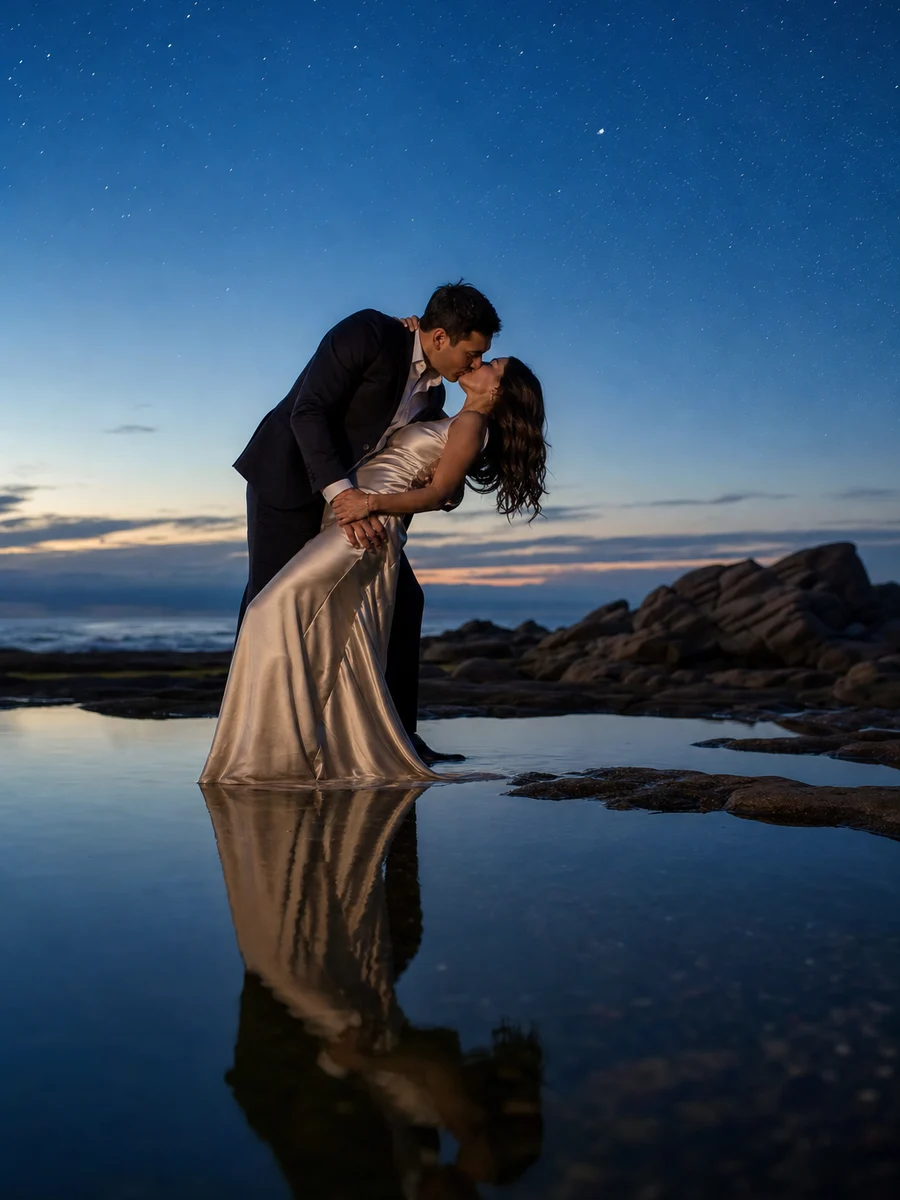
Twilight Dip Kiss by a Still Tidepool Engagement Photos
Balance on the pool's edge and let your dip create a clean line against the sky. The stillness of the water will mirror your intensity.
Outfit Ideas

He
suit
navy blue
She

Balance on the pool's edge and let your dip create a clean line against the sky. The stillness of the water will mirror your intensity.

He
suit
navy blue
She
satin gown
champagne
You step onto the cooling sand just as the sun starts its slow sink toward the horizon. The air carries salt and the faint, rhythmic hush of the retreating tide. Youâve planned your beach engagement photos around low tide, so the tidepools lie still and glassy ahead, reflecting the first blush of gold. Your satin gown shifts softly with each step, the fabric already catching the warm light.
Your photographer guides you to a wide, shallow pool, its surface mirror-smooth. The light is turning honey-gold now, about 45 minutes before sunset. He places a hand on your lower back, firm and steady. You lean into the dip, letting your head fall back gently, your hair cascading toward the water. The hem of your gown just kisses the surface, and the pool reflects the deepening skyâstreaks of amber and coral. You hear the click of the shutter, soft as a heartbeat.
As the sun drops below the horizon, the blue hour rolls in, wrapping the beach in cool indigo. The water in the tidepool turns to ink, still as glass, doubling the twilight above. Your photographer moves you closer to the water's edge, where the last light catches the silk of your dress. The dip feels effortless now, a moment of trust and near weightlessness.
After the final frame, you kick off your shoes and stand together, toes in the cool shallows, watching the stars begin to prickle the sky. The sand still holds a trace of warmth, and the quiet feels earned. For these engagement photos, checking the tide chart days before and arriving early to scout the pools makes the difference between rushed and magical. And packing a simple wrap can save you from the evening chill that creeps in after sunset.
đ Golden Hour â Shoot in the hour after sunrise or before sunset for warm, flattering light and long soft shadows.
Book 3 to 6 months ahead, especially if youâre eyeing a popular season like late spring or early fall. Shorelines can get busy with other shoots, and youâll want to lock in a date that aligns with low tide and prime sunset timesâkey for that still-water reflection in tidepools. Your photographerâs calendar fills up quickly for golden hour slots. For beach engagement photos, early planning also gives you time to scout the exact location, test tide cycles, and coordinate outfit details that work with the setting and light.
Typically an hour to an hour and a half. The usable light during sunrise or sunset only lasts about 60 minutes, so your photographer will work efficiently. This includes a short walk to the tidepool spotâmaybe ten minutes over sandâand a few minutes to settle in. Youâll move through several poses, like the dip kiss, while the light shifts. If you want multiple outfit changes, plan for a longer session. Remember, the blue hour after sunset moves fast, so staying focused on the key moments ensures your engagement photos capture that fleeting twilight glow.
In most cases, no. Public beaches typically allow casual photography without a permit. But some state parks, nature preserves, or private beaches do require one, often with a fee. Check the specific beachâs website or call their office. Even if itâs not required, itâs smart to let your photographer know the locationâthey may have experience with certain spots and can advise on any hidden rules, like drone restrictions or protected areas. Doing this homework early prevents last-minute surprises on the day of your shoot.
Barefoot is the natural choice for beach engagement photosâit grounds you in the setting and lets you feel the texture of sand and water. Most couples slip off their shoes just before stepping onto the beach. Walk carefully around tidepools, though; there might be sharp shells or slippery rocks. Bare feet also add to the dip kiss pose, letting you balance easily. If youâre not comfortable barefoot, consider low-profile sandals you can remove quickly. Your photographer wonât see your feet in most close-up poses anyway, but the connection to the earth feels right.
Wind can be your ally. It gives life to a satin gown, lifting the fabric and hair in a way that reads beautifully on camera. Your photographer will position you so the breeze hits from behind, blowing hair away from your face during the dip kiss for added drama. If itâs very strong, theyâll find a sheltered nook behind a dune or rock formation. Bring a few extra bobby pins to secure loose strands, and choose a dress that flows rather than clingsâitâll look intentional, not messy, in the final engagement photos.
Yes, but keep them simple and water-friendly. A vintage blanket can frame you on the sand without competing with the natural backdrop. A single, hardy bloom or a small bouquet adds a touch of color without wilting in salt air. Champagne and two glasses make for a celebratory popâjust bring a towel for the flutes afterward. Avoid bulky electronics or anything that might blow away. The tidepools themselves are a stunning element, so let them do the heavy lifting. Your photographer can help you work props into the flow without distraction.
High tide can swallow the tidepools and leave you with less mirrored surface to work with. Thatâs why scouting at low tide beforehand is critical. But if you arrive and the waterâs high, donât panic. A skilled photographer will pivotâusing wet sand patterns, shallow wave edges, or rocks that still hold small pools. The lighting and your connection matter more than the exact topography. Always double-check tide charts a couple of days before the shoot, and arrive early enough to adapt. The beach always offers something beautiful, even when the tide shifts the plan.