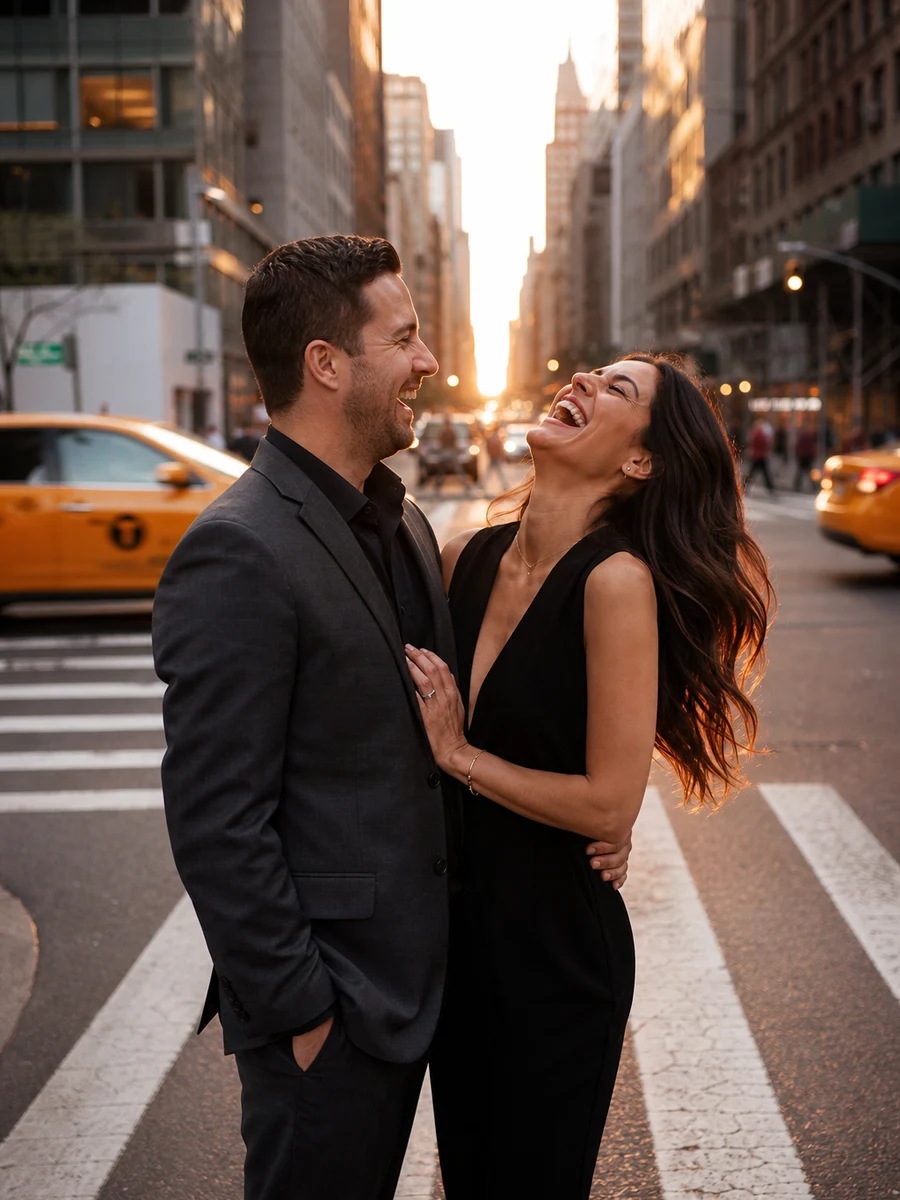
Candid Laughter in Sunset Crosswalk Engagement Photos
Don’t force a smile—tell a joke or whisper something irreverent. The real laughter will look a hundred times better than anything posed.
📍 city💑 candid-laughing
Outfit Ideas
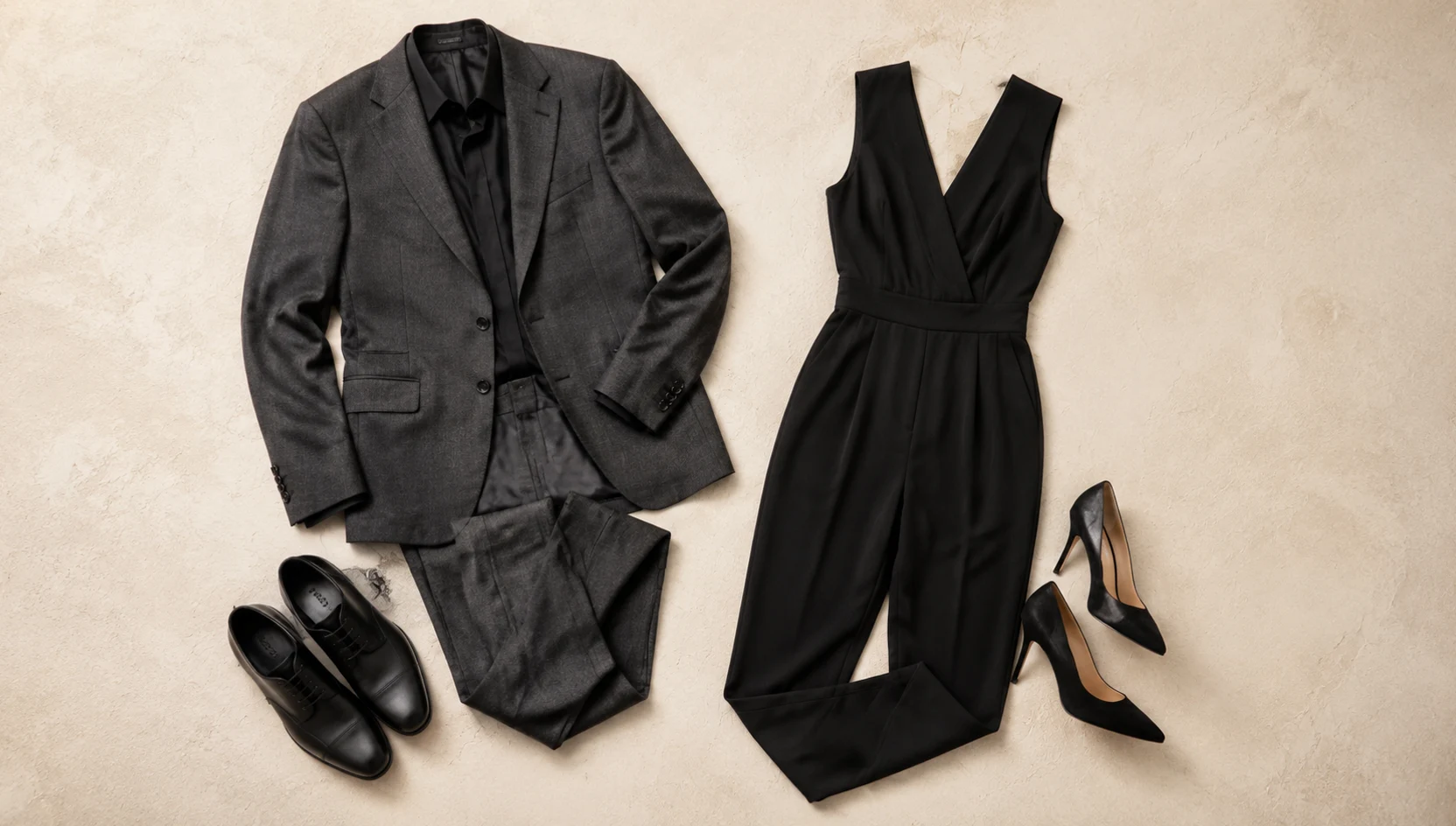
He
suit
charcoal
She
Don’t force a smile—tell a joke or whisper something irreverent. The real laughter will look a hundred times better than anything posed.
He
suit
charcoal
She
v-neck jumpsuit
black
You step onto the traffic island just as the sky shifts from violet to deep blue. The crosswalk signal blinks, and the city's glow flickers on around you—streetlights, headlights, neon signs. It's the blue hour, that fleeting ~20 minutes after sunset when everything looks cinematic. Your photographer guides you to the center, where the lines of the crosswalk stretch out like a stage. For city engagement photos like these, timing is everything. A spotter keeps an eye on the cars, so you can forget the traffic and focus on each other.
She's in a sleek black dress, you in a dark gray shirt—monochrome and editorial, no patterns to distract. You pull her close, one hand resting on her waist. Foreheads almost touching. You whisper something only she can hear, and her laugh breaks out, genuine and warm. The sound mingles with the city's hum. The photographer circles, catching the way her smile crinkles her eyes, the way the blue light outlines your profiles. This is what engagement photos feel like—unguarded, alive.
You arrived 15 minutes before sunset to warm up, but the real magic happens now. The deep blue sky makes the amber streetlights pop, and the crosswalk stripes lead the eye right to you. No golden-hour softness here; the contrast is sharper, more dramatic. Your photographer uses a fast lens to gather the last light, so you never feel rushed. You just keep moving—a slow spin, a playful dip—and suddenly the 20 minutes are up, but the shots are full of life.
When you look back at these city engagement photos, you'll remember the chill of the evening air, the rhythm of the changing signals, and that laugh that was just for the two of you.
🌆 Blue Hour — Shoot in the ~20 minutes after sunset when city lights glow against a deep blue sky.
Shoot during off-peak hours and choose less popular spots. Blue hour right after sunset often has fewer pedestrians than golden hour, and weekdays are better than weekends. Scout the location ahead or ask your photographer for a quiet crosswalk. A spotter can also help manage any passersby while you focus on each other. Avoid busy intersections or plan to wait for gaps in traffic. Sometimes a few people in the background add life, but if you want a clean shot, patience and timing are key.
Monochrome outfits in black, gray, or dark tones work best to avoid clashing with busy city backgrounds. Avoid busy prints or bright colors that distract. For this look, think editorial—sleek lines, minimal accessories. Wear comfortable shoes since you'll be walking, and bring a jacket if it's cool. The simplicity keeps the focus on your expressions. Dark clothing also photographs well against the deep blue sky and glowing lights, making you stand out.
Typically 60-90 minutes total, but the blue-hour window for crosswalk shots is only about 20 minutes. Arrive early to warm up and find the best angles. The session includes walking between spots, waiting for traffic signals, and adjusting poses, so plan for a relaxed pace. That 20-minute window flies by, but it's enough for dozens of varied shots. Your photographer will likely have a plan to maximize that short time, so trust them and stay loose.
Rain can add moody, reflective surfaces for unique engagement photos. Puddles on the crosswalk catch neon lights beautifully. Bring clear umbrellas—they look intentional and keep you dry. Check the forecast and pack a towel, but don't cancel unless it's a downpour. Your photographer can use the wet streets to create dramatic, cinematic shots no other couple will have. Embrace the unexpected; sometimes the best moments come from a sudden drizzle.
Blue hour gives a deep, saturated sky and glowing artificial lights, creating dramatic contrast absent during the day. Daytime shots are brighter and more colorful, but blue hour feels intimate and cinematic. The city becomes a backdrop of pinprick lights and long shadows, making you stand out. It's fleeting, so you need to work fast, but the results are worth it—moody, urban, and timeless. Your eyes will adjust to the dimness, but the camera captures all the ambient light.
Walk the area a few days before at the same time to see how light and crowds behave. Look for crosswalks with clear sight lines, interesting buildings, or neon signs. Traffic islands offer a stage-like feel. Your photographer likely has go-to spots, but personal scouting adds meaning. Even a simple intersection can become iconic when the light is right. Consider the background: leading lines, reflections, and symmetry all add visual interest to your shots.
Usually yes for public sidewalks and crosswalks, but it varies by city. If you're not blocking traffic or using professional equipment like large lights, permits are often unnecessary. Still, check local regulations or your photographer's knowledge. Private property always requires permission. Being respectful and quick reduces the chance of issues, and a spotter helps keep everything safe and legal. Some cities have specific rules about commercial photography, so a quick call to city hall can clarify.