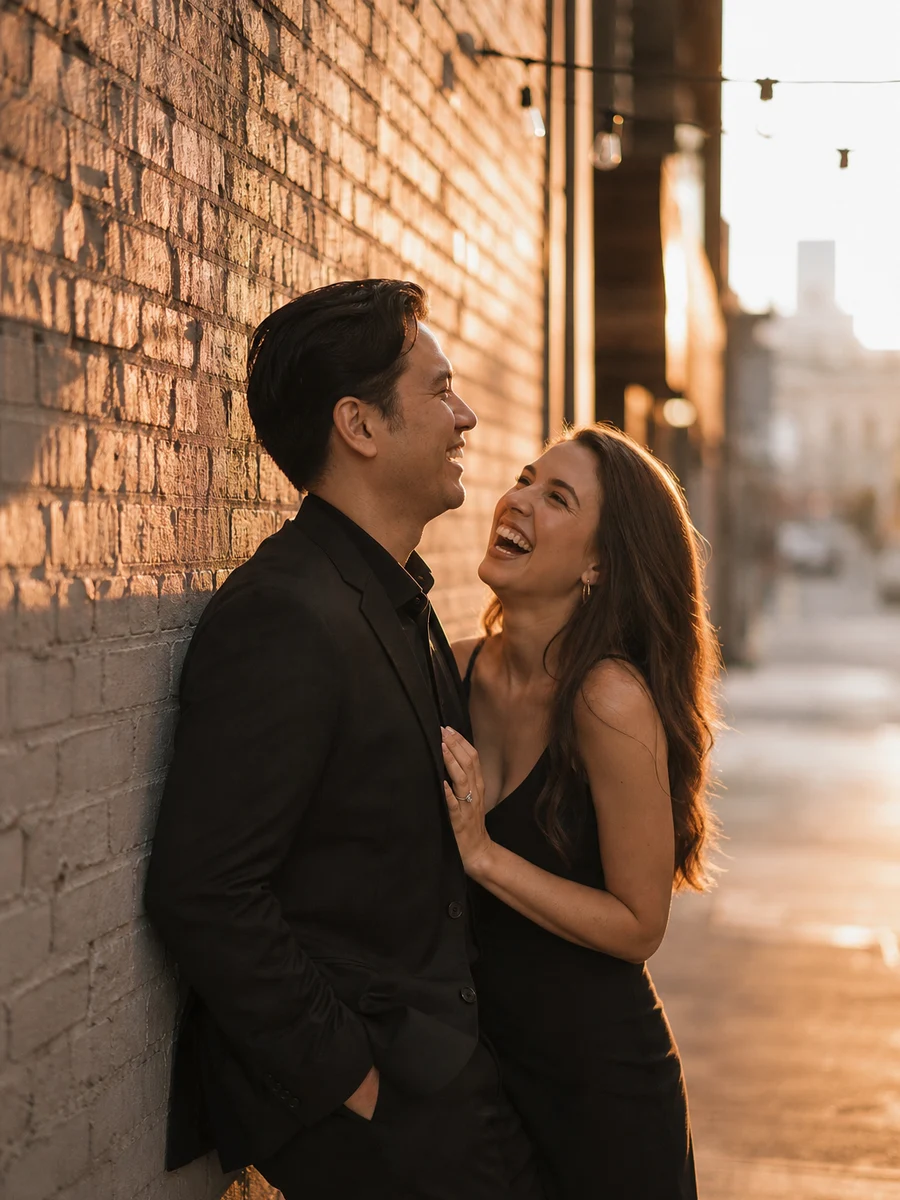
Candid Laughter in Sunset Alley Warmth Engagement Photos
When you forget about the camera and just laugh—that's where the real connection shows up.
📍 city💑 candid-laughing
Outfit Ideas
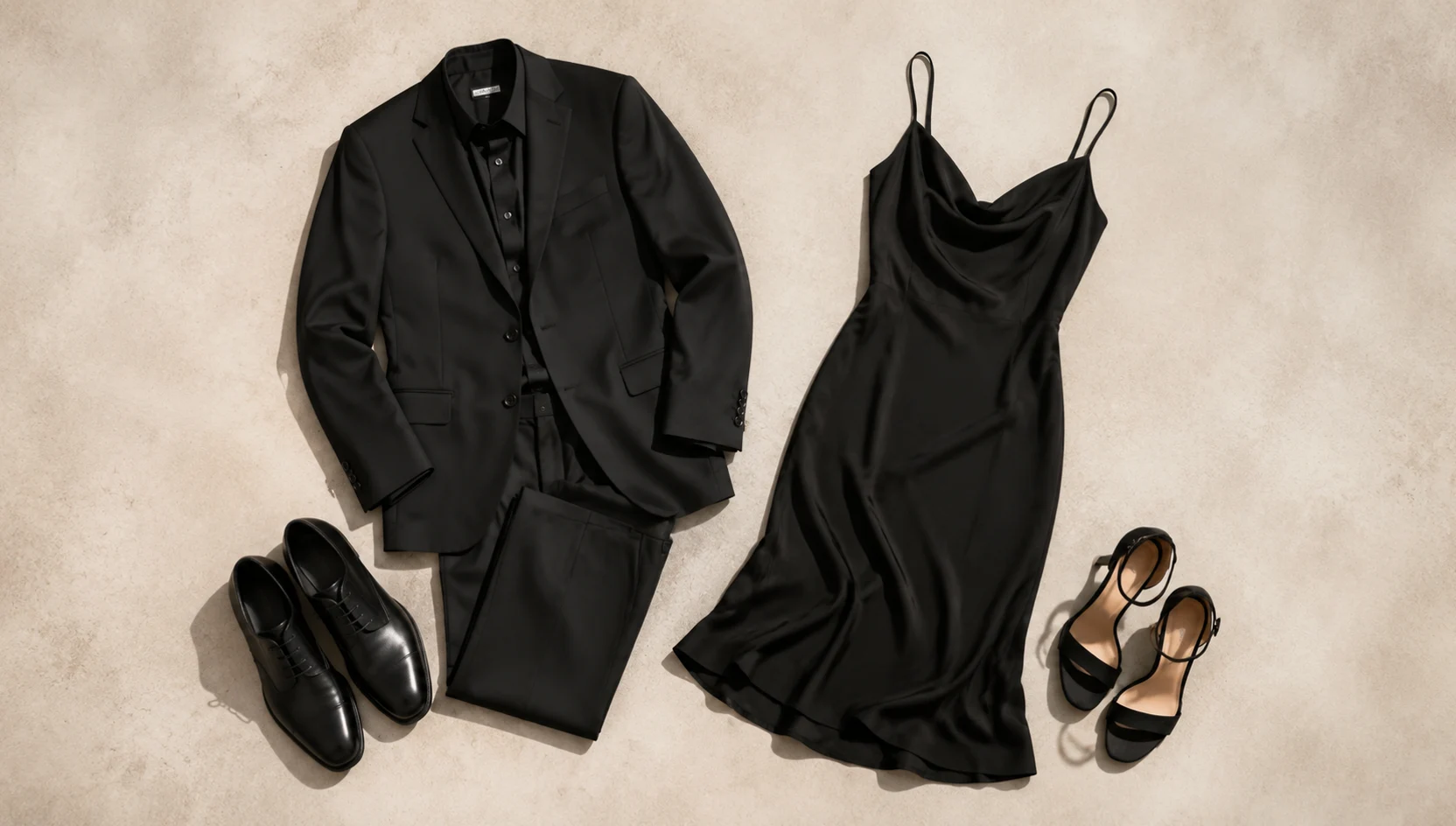
He
suit
black
She
slip dress
When you forget about the camera and just laugh—that's where the real connection shows up.
He
suit
black
She
slip dress
black
The air is cooling as you step into the narrow alley, the brick walls still radiating the day's heat. You're both in solid black—clean lines, no distractions. The photographer has you position facing the sunset end of the alley, where a ribbon of amber light spills between buildings. Her hand rests on your chest, your heartbeat a steady rhythm under her palm. The photographer says something ridiculous offscreen—maybe a joke about how serious you both look—and it's impossible not to crack. Laughter erupts, genuine and unplanned. The shutter clicks. This is the heart of candid-laughing city engagement photos: no posing, just reaction.
As the sun dips lower, the light turns honey-gold, then orange, then a fleeting pink. The alley transforms. You'll feel the temperature drop a few degrees, so a jacket to throw on between shots is smart. The photographer keeps you moving: a few steps back, a twirl, another laugh. When the sun finally vanishes, the sky shifts to a deep blue, and the sodium lights overhead flicker on, casting pools of warm light on the pavement. This is the blue hour, the magic window for engagement photos that feel cinematic. The contrast of the cool sky and warm streetlights wraps you both in a moody glow. You'll likely draw a few glances from passersby, but in the city, people are used to it. A quick nod, a smile, and they move on.
The key to making these engagement photos work is to trust the light. Your photographer will guide you to angle toward the last sliver of sunset, then pivot to catch the city lights flaring to life. Don't worry about perfect poses—the laughter will come naturally if you focus on each other, not the lens. By the time you wrap, the sky is nearly black, and the alley feels like your own secret set. That's when you know you've captured something real.
🌆 Blue Hour — Shoot in the ~20 minutes after sunset when city lights glow against a deep blue sky.
New York, San Francisco, Chicago, and Charleston top the list for their mix of iconic architecture, vibrant streets, and accessible urban landscapes. New York offers endless backdrops from Central Park to DUMBO’s cobblestones. San Francisco delivers painted ladies and golden light on steep hills. Chicago pairs the riverwalk with stunning skyline reflections, while Charleston’s historic alleys feel like a film set. Each city has a distinct vibe—choose one that matches your style. Consider also Austin for murals or New Orleans for jazz-filled streets.
Most rooftops require prior permission or booking via venues like hotels, bars, or event spaces. Many popular rooftops in New York or Los Angeles operate as venues with set times and fees. Your photographer can help scout or handle reservations. Some public rooftops, like The High Line Hotel’s bar area, allow photography if you're guests. Always check restrictions—tripods and flash may be limited. Arrive early to scope the best angles and avoid crowds. The payoff is unobstructed skyline views and dreamy sunset light, making logistics well worth it.
It can happen—construction, seasonal changes, or misleading photos are common. First, don't panic. A good photographer adapts quickly, shifting angles or finding unexpected frames nearby. Before the shoot, have your photographer do a walkthrough or Google Earth check. If it's unworkable, have a backup spot within walking distance. Embrace the difference; some of the best engagement photos come from improvisation. Trust your photographer’s eye—a graffiti wall or an unexpected stairwell might become your favorite shot.
Safety depends on the specific neighborhood and time. In busy, well-lit areas like downtown districts or tourist hubs, shooting after dark is generally fine, especially with a team. Avoid desolate industrial zones or unfamiliar alleys late at night. Always have a plan: know the area, keep belongings close, and bring a flashlight or use phone lights. For blue hour shoots, you’re typically wrapping by 20–30 minutes after sunset, so it’s not deep into the night. A photographer familiar with the city will steer you to safe, vibrant pockets.
Golden hour—the last hour before sunset—and blue hour—the 20 minutes after sunset—are ideal. Golden hour gives you warm, flattering light that skims across buildings and softens skin. Blue hour offers a cinematic contrast between cool sky and glowing city lights. For alleys, golden hour creates that backlit halo; blue hour adds mood. Skip midday when harsh shadows fall. Sunrise works too for quiet streets without crowds. Your photographer will plan the shoot around the sun’s position to maximize the light.
Often no, but it depends on the city and location. Casual photography in public spaces like sidewalks and parks usually doesn't require a permit. However, if you're in a high-traffic area with lots of equipment or blocking foot traffic, you might need one. Private property, such as shopping centers or iconic interiors, always requires permission. Even some public landmarks like the Brooklyn Bridge have restrictions on tripods or commercial shoots. Check with your photographer or the city’s film office. When in doubt, keep it low-key—a small camera and no big setups fly under the radar.
Timing is everything. Shoot early morning on weekdays, especially if aiming for popular spots like Times Square or the Bean. Sunrise offers empty streets and soft light. For sunset shoots, pick less touristy alleys or side streets. Your photographer should scout locations that look great but aren't famous. Use a longer lens to compress the background and blur people out. Patience helps—wait for a gap in foot traffic. A good trick: face a wall or use architectural elements to block the view of crowds behind you.