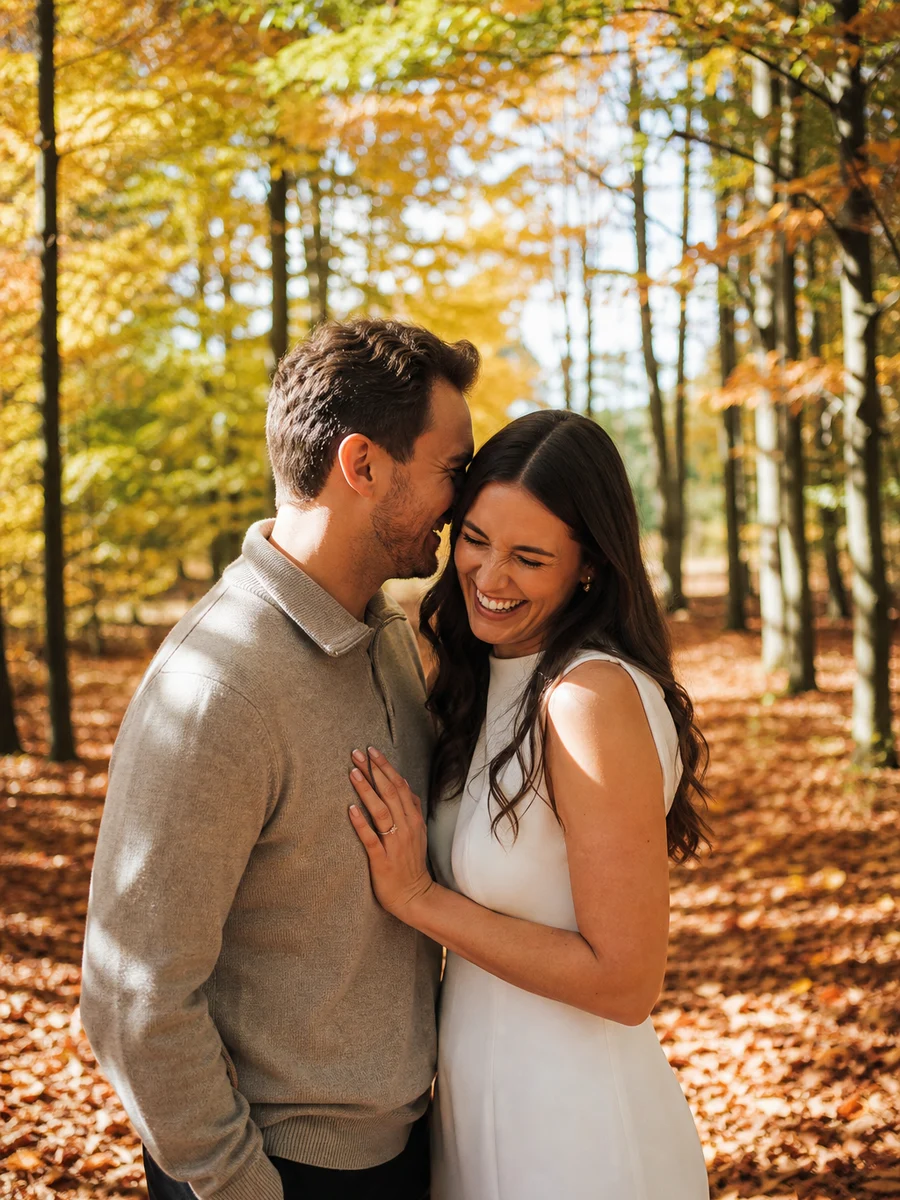
Candid laughter in dappled forest light Engagement Photos
Let them whisper something funny. Genuine laughter in dappled light looks like it’s straight out of an editorial.
📍 forest💑 candid-laughing
Outfit Ideas
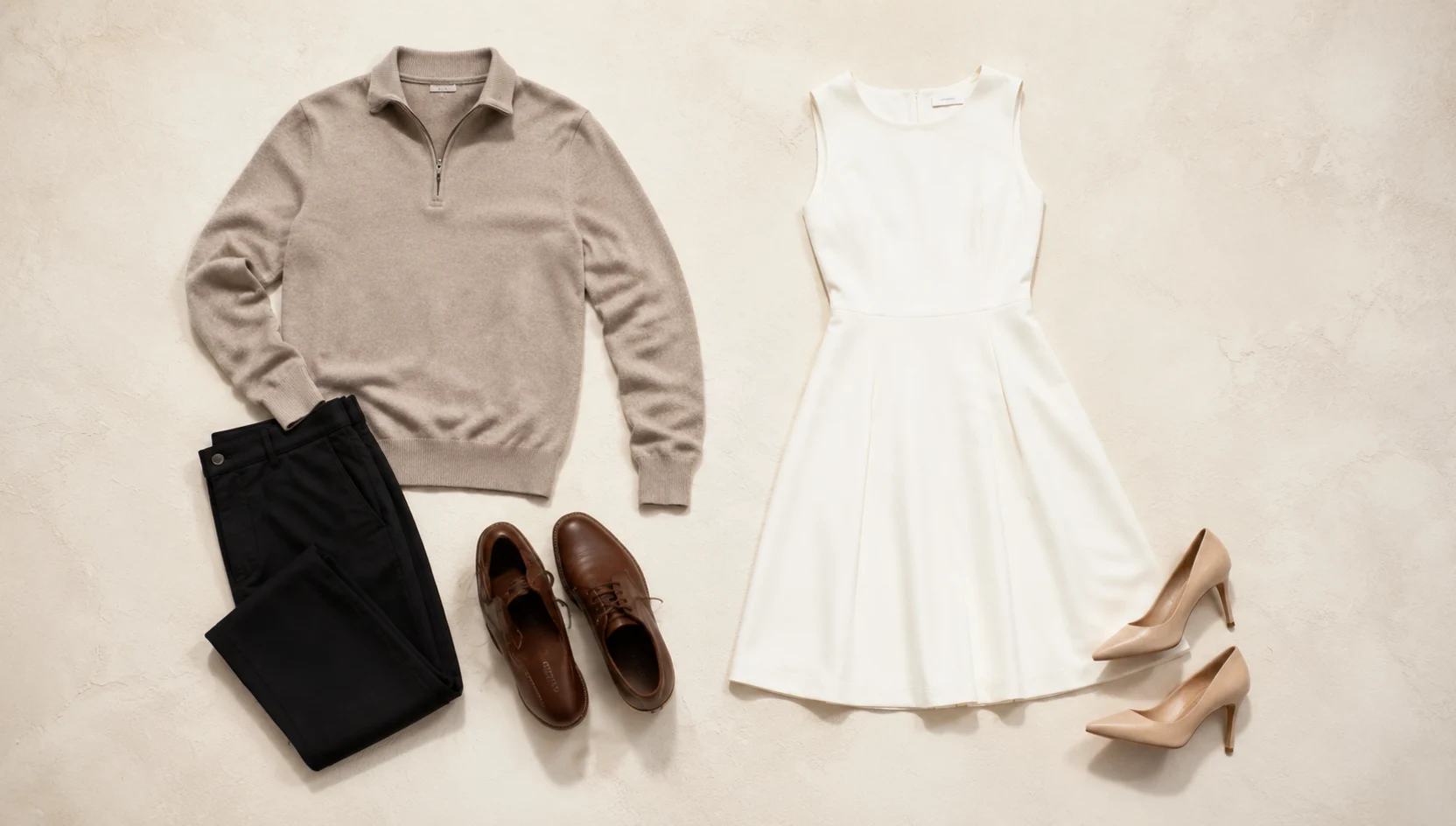
He
collared sweater
beige
She
Let them whisper something funny. Genuine laughter in dappled light looks like it’s straight out of an editorial.
He
collared sweater
beige
She
sleeveless midi dress
white
You step into the forest, and the world goes quiet except for the soft rustle of leaves underfoot. The overcast sky turns the entire canopy into a massive softbox, smoothing every shadow and making the autumn foliage glow around you. Your white sweater pops against the warm oranges and browns, just as your photographer promised. You find a patch of dappled light where the branches thin out—late afternoon sun filtering through in gentle speckles. Your partner pulls you close, foreheads touching, and you can feel their breath on your cheek. A giggle escapes you, and before you know it, you're both laughing, the sound muffled by the trees but bright in your chest. You forgot there was even a camera. These forest engagement photos capture that pure, unguarded joy—no stiff poses, just you two being utterly yourselves. The photographer moves around you, but you barely notice. You're too busy noticing the way the light catches your partner's eyes, how their smile lines deepen with each laugh. A gentle breeze stirs the fallen leaves around your feet, and the cool air keeps you fresh even as your cheeks warm from laughing. You'd been worried about timing, but arriving at 4 p.m. was perfect—the light was already softening, and you had an hour of that honeyed glow before sunset. Remember to wear layers that are easy to shed; the walk in might be cooler than you expect. And let your photographer guide you to open canopy gaps where the light breaks through beautifully. Your engagement photos end up feeling less like a shoot and more like a stolen, romantic walk in the woods, filled with laughter you didn't have to force.
☁️ Overcast — An overcast sky is a giant softbox — even, shadow-free light that flatters skin tones.
Autumn is ideal for its warm color palette and soft, overcast light, but spring and summer work too with lush greenery. In fall, the foliage adds rich contrast without overpowering. Spring brings fresh greens and wildflowers, while summer offers deeper shade for cool morning shoots. Avoid winter unless you want a stark, bare-tree look—snow can be magical but complicates lighting. Check leaf peeping schedules for peak color, and always have a backup date for rain.
Choose clothing that contrasts with the greenery—white, cream, or warm neutrals stand out against the woods. A white sweater, like the one described, pops beautifully. Avoid busy patterns and dark tones that blend into the shadows. Dresses with movement catch the breeze nicely. Bring layers for changing temperatures, and wear comfortable shoes for walking uneven terrain. Your photographer will help coordinate so your outfits complement each other without matching too perfectly. Minimal accessories keep the focus on your faces.
Yes, with a few smart precautions. Apply insect repellent before you arrive, avoiding scented lotions that attract bugs. If it's mosquito season, wear light-colored clothing and consider a natural spray. Ticks can be a concern in tall grass, so stick to clear trails and do a quick check after the shoot. Your photographer will likely know the local terrain and safest spots. Bring a small first-aid kit for scratches, but overall, forests are peaceful places if you stay aware of your surroundings.
Scout local nature preserves, state parks, or arboretums with open understory and canopy gaps for beautiful dappled light. Look for paths that aren't overly crowded, especially on weekends. Use apps like AllTrails to find spots with your desired scenery—some allow filtering by "lightly traveled." Talk to your photographer; they often have secret favorites. Visit potential locations at the same time of day you'll be shooting to check light quality and crowds. Public forests usually offer free access and endless backdrops.
It depends on the location. State and national parks often require a photography permit for professional shoots, so check their websites or call ahead. Many smaller nature preserves don't, but always verify. Public forests managed by the Forest Service generally allow personal photography without a permit, but commercial shoots might need one. If you're unsure, reach out to a ranger station. Permits are usually affordable and easy to obtain, and they guarantee you won't be interrupted or fined during your session.
Trust your photographer to use a wide aperture (like f/1.4 or f/2.8) and higher ISO to keep shutter speeds fast enough to freeze movement. They'll use a monopod or steady hands. As a subject, try to hold still for a beat when you hear the shutter, especially in deeper shade. Don't worry about minor blur—it's often part of the candid feel. To help, find patches of light hitting your faces; the contrast creates crisp edges. Communicate any concerns ahead so they can adjust settings early.
Late afternoon, roughly two hours before sunset, delivers soft, golden light filtering through the trees. Overcast days can extend this window, as the cloud cover diffuses light evenly all day. Morning also works but often brings harsher shadows as the sun rises. If it's sunny, aim for golden hour when the light is warmest. Avoid high noon when light beams straight down and creates unflattering contrast. Your photographer will time your session to catch the most flattering light for your specific location.