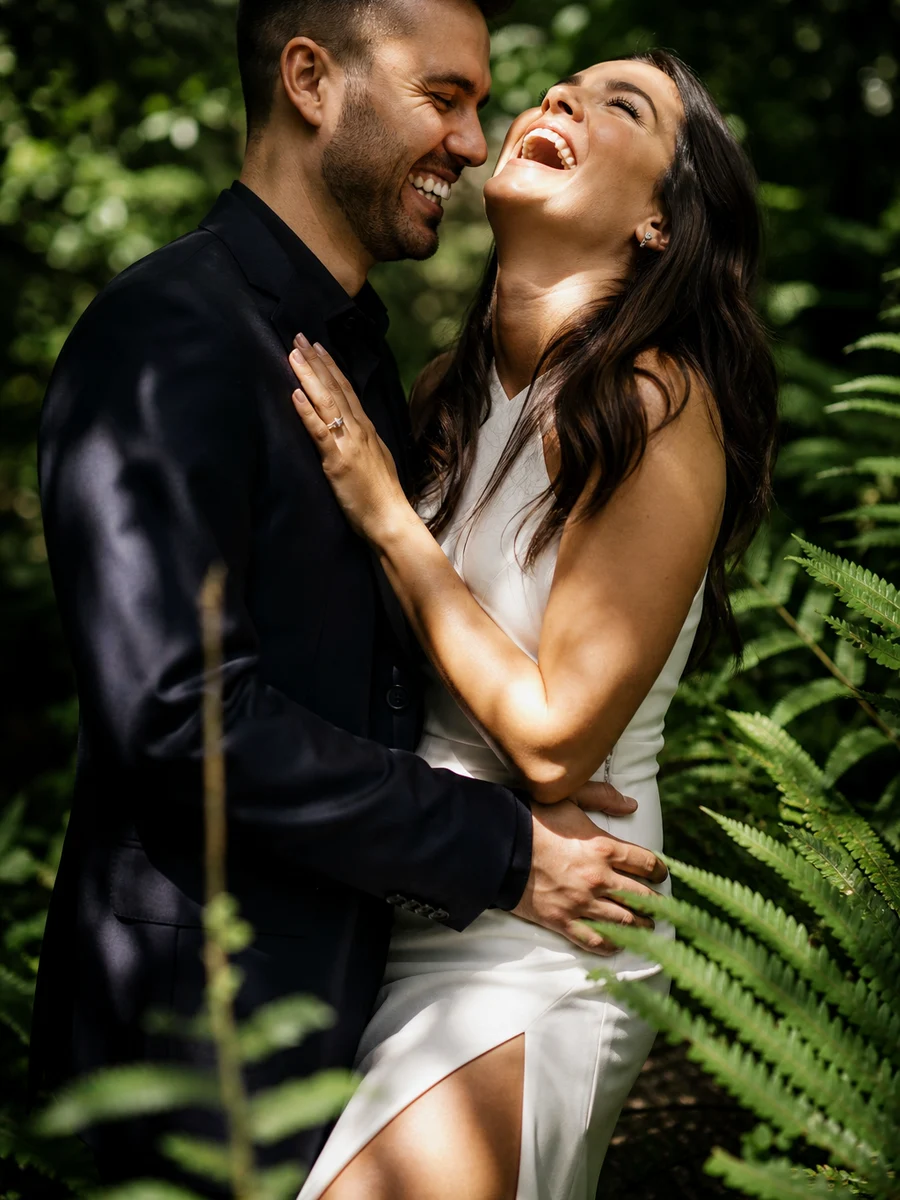
Candid Laughter in Dappled Fern Light Engagement Photos
For editorial-style candids, have your photographer snap between poses. The dappled light adds a graphic, high-fashion feel to your laughter.
Outfit Ideas

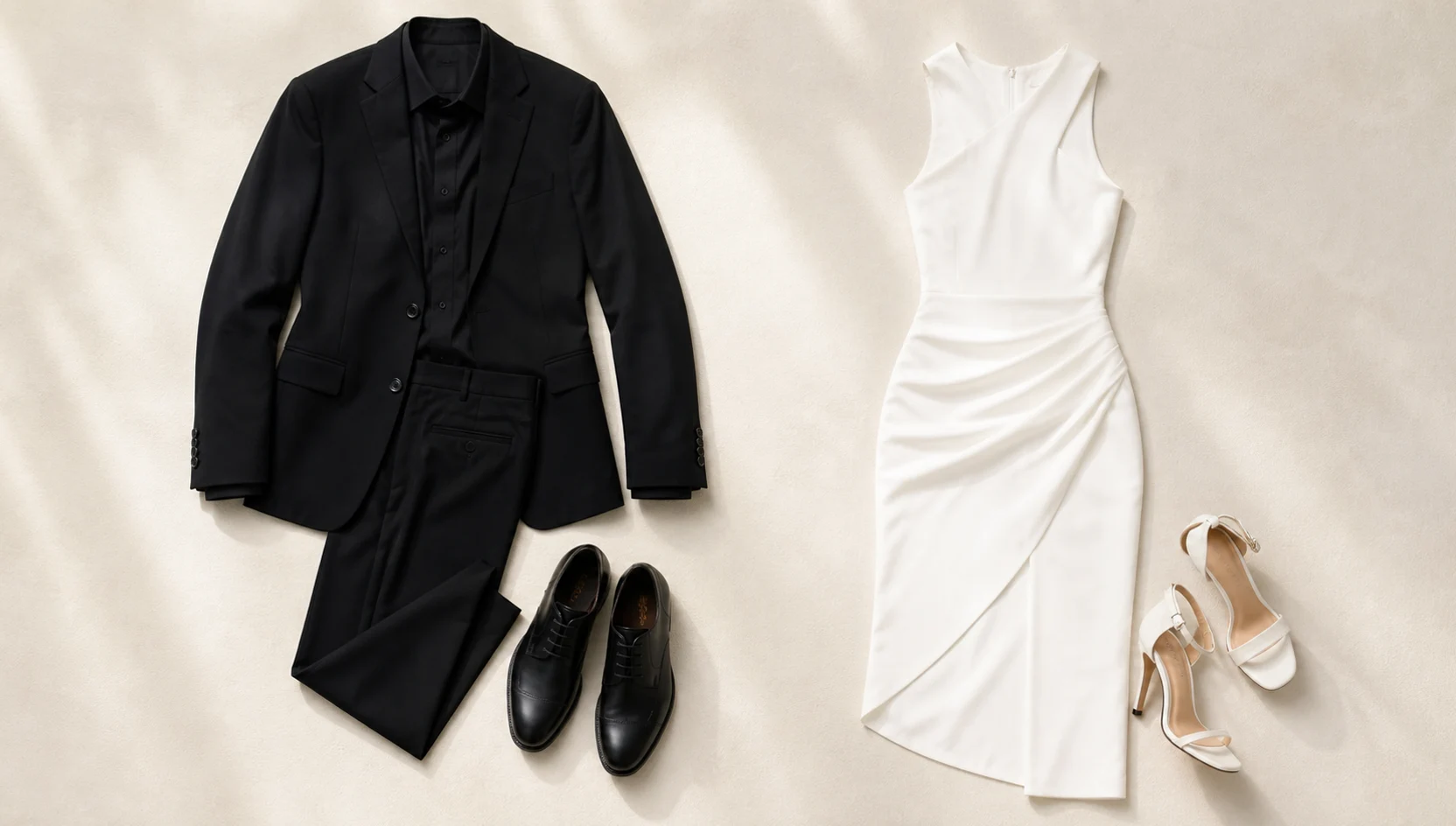
He
suit
dark navy blue
She

For editorial-style candids, have your photographer snap between poses. The dappled light adds a graphic, high-fashion feel to your laughter.

He
suit
dark navy blue
She
cocktail dress
white
You step into the forest just before noon, the air cool and damp from last night's rain. Ferns brush your ankles, releasing a green, earthy scent. Above, the overcast sky acts like a massive diffuserâlight falls soft and even, without a single hard shadow on your faces. It's exactly the kind of day you hoped for, the kind that makes forest engagement photos feel timeless.
She's wearing a crisp white dress that pops against the deep greens, and youâre in a dark suit that doesnât compete with the scenery. The photographer guides you to a spot where thin tree trunks filter the light into gentle, dappled patterns on the ground. No harsh hotspots, just soft patches that move as the breeze shifts the leaves.
'Tell him your joke,' the photographer says. She leans in and whispers something silly, her voice low and playful. Your face breaks into a real grinânot posed, just you. She throws her head back with a laugh, hair catching the filtered light, and the shutter clicks. The moment is yours, not performed. You almost forget the camera is there.
Between sets, you dab away a little moisture from the ferns on your dressâthe fabric stays surprisingly crisp. The soundtrack is birdsong and the distant sound of a woodpecker. These engagement photos will carry the stillness and the laughter of this exact place. An hour in, youâve learned that the best shots come when you stop worrying about the light and just listen to each other.
âď¸ Overcast â An overcast sky is a giant softbox â even, shadow-free light that flatters skin tones.
Late spring through early fall works bestâthink May to October. Youâll want full leaf coverage to create that lush, enclosed feeling. In spring, fiddlehead ferns uncurl and wildflowers add soft color. Summer brings thick canopy, but midday heat can be intense. Early autumn offers golden tones and cooler air. Avoid winter unless you love bare branches and possible mud. Check your locationâs leaf-out calendar: in the Northeast, early June is peak green; further south, April is already deep. Overcast skies make any season work by softening the light.
Choose solid, light colors to stand out against dark greens. A white or cream dress pops beautifully, while a dark suitânavy or charcoalâcreates contrast. Avoid busy patterns; they fight the natural textures of bark and ferns. Wear closed-toe shoesâforest floors can be uneven and damp. Bring a second outfit if you want variety, but keep it simple. Fabric matters: linen wrinkles quickly, while knits or cotton blends hold their shape. She should wear her hair down if possibleâmovement reads well in windy clearings. And always bring a compact mirror for quick touch-ups.
Yes, but a little prep goes a long way. Apply insect repellent with DEET or picaridin before you enter, focusing on ankles and exposed skin. Time your shoot to avoid peak mosquito hoursâdawn and dusk. Ticks are a concern in tall grass and leaf litter, so stay on clear trails and check each other after the session. Wear light-colored clothing to spot any hitchhikers. If youâre highly sensitive, consider a location with more open, rocky forest floor instead of dense underbrush. Most couples find the experience comfortable with just bug spray and a quick once-over.
Start with state parks and nature preserves in your areaâthey often have maintained trails and stunning fern-covered sections. Look for mixed hardwood forests with open understory, where light can filter through. Avoid dense pine stands that block all light. Use Instagram or photography blogs to scout recent shots from the location; check for dappled light and clearings. Visit beforehand at your planned shoot time to see where the sun falls. If youâre working with a photographer, ask for their go-to spotsâtheyâll know which corners catch the best soft light on overcast days.
It depends on the land. National and state parks often require a special-use permit for professional photography, even small sessions. Fees range from $25 to $200. Most county and city parks donât need one, but still check their rules. Private nature reserves may have their own policies. Apply weeks in advanceâsome offices are slow. If youâre on public land and just using a camera with no props or assistants, you might be fine, but itâs safer to confirm. Your photographer can often handle the permit process; ask them early.
The key is a fast, wide-aperture lens and a high ISO. Your photographer should use a prime like 35mm f/1.4 or 50mm f/1.2 to let in more light without flash. Shoot in aperture priority and keep shutter speed above 1/200s to freeze subtle movement. On an overcast day, ISO 400-800 often works under a canopy. Ask them to check for focus on the eyes and use back-button focusing. If light drops too low, a monopod can help, but most pros handhold with modern stabilization. Youâll get crisp shots even in the dappled gloom.
Midday, surprisingly. On overcast days, thereâs no harsh overhead sun, so you get bright, shadowless light filtering through leaves. Avoid early morning and late eveningâunder thick canopy, the light turns murky and colors go flat. If youâre shooting on a sunnier day, aim for 10 a.m. to 2 p.m., when the sun is high enough to pierce the canopy evenly. The best light is when clouds roll in and act as a giant softbox; check the forecast and be ready to go when itâs overcast. That soft, dappled pattern is pure gold.