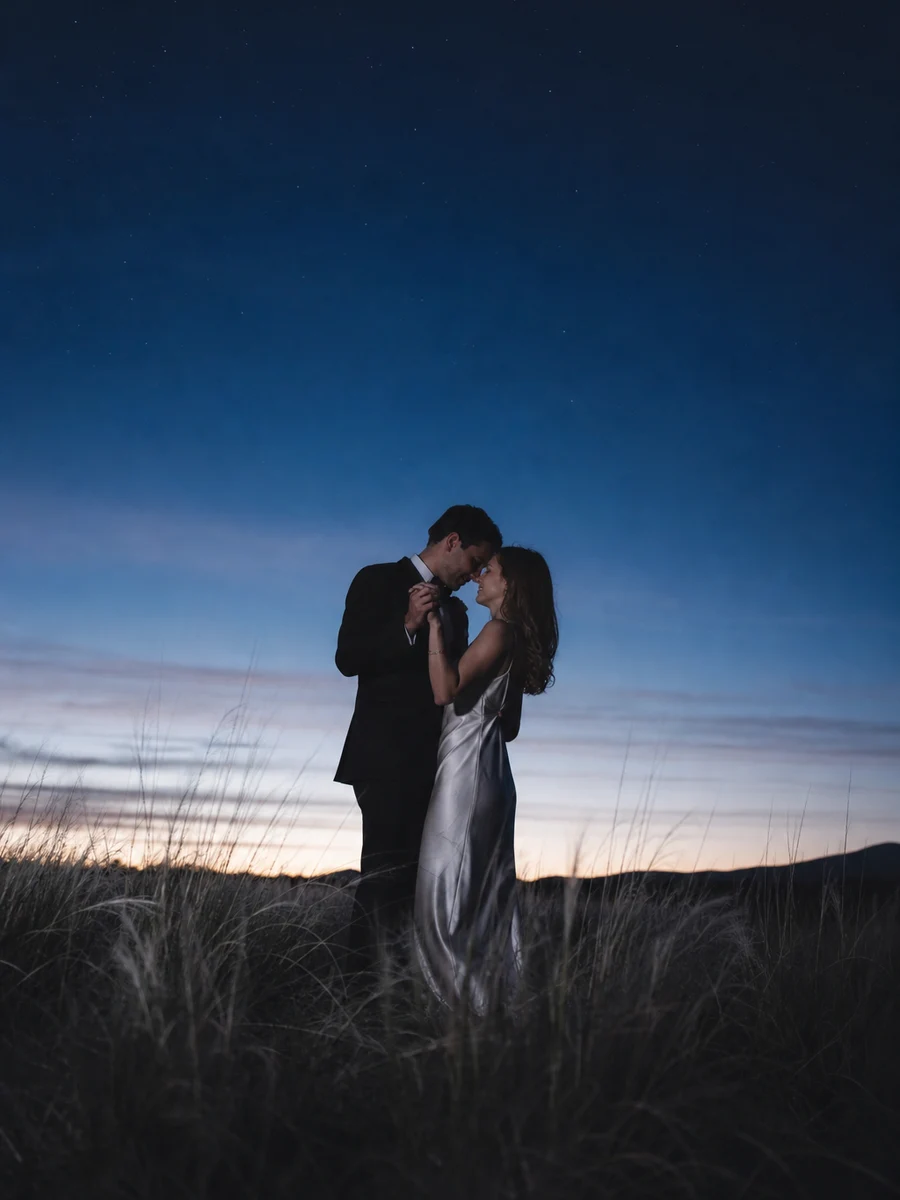
Blue Hour Slow Dance in the Prairie Engagement Photos
When the sky turns that deep blue, let your movement be slow. The contrast of formal attire against wild grass makes for striking images.
📍 outdoor💑 slow-dance
Outfit Ideas
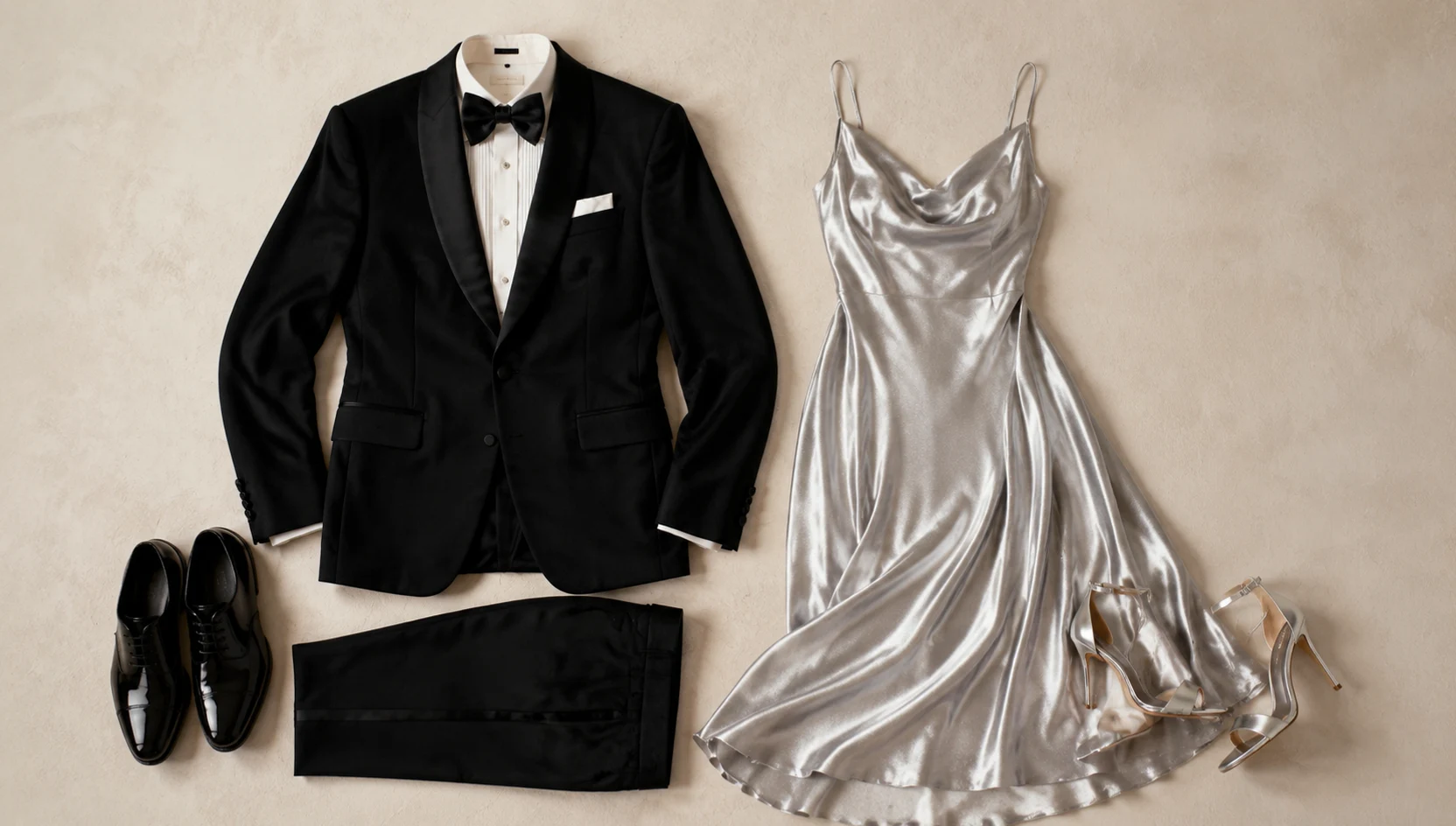
He
tuxedo
black
She
When the sky turns that deep blue, let your movement be slow. The contrast of formal attire against wild grass makes for striking images.
He
tuxedo
black
She
satin gown
silver
You step out of the car into knee-high prairie grass. The air smells of dry earth and distant rain. Overhead, the sky is a deepening gradient of violet and indigo—the last warmth of sunset bleeding away. A cool breeze lifts the hem of your silk dress, silver threads catching the faintest glow. Your partner’s champagne shirt rustles softly as they pull you close.
Your photographer points to the horizon. “We have about fifteen minutes of this light.” You both know the drill: clasp hands between your chests, press foreheads together. The world shrinks to the warmth of their skin and the rhythm of your shared sway. Grasshoppers hum, and somewhere a meadowlark calls one last time.
Earlier, you’d stashed a phone light in your pocket—not for romance, but because focusing in near-dark is a battle. Your photographer used it for a quick lock-on before you began. Now, as the blue hour deepens, the camera shutter clicks in rapid succession. You’re not thinking about the lens. You’re thinking about the way their breath skims your cheek.
These slow-dance engagement photos aren’t about stiff poses. The motion is real, gentle rocking that keeps the fabric alive and the mood unguarded. The fading light wraps around you like a filter, softening edges, making silk gleam like water. When the final frame is caught, the prairie is just silhouettes and whispers. You’ll walk back hand in hand, your outdoor engagement photos sealed in a fifteen-minute window you’ll never forget. That’s the trick: prepare fast, trust the moment, and let the light do the rest.
🌅 Golden Hour — Shoot in the hour after sunrise or before sunset for warm, flattering light and long soft shadows.
For engagement photos, a “first look”—where you see each other in your formal outfits for the first time at the shoot—can create a beautifully raw moment to capture. If you’re comfortable, have your photographer position you back-to-back, then turn and react naturally. It often eases nerves and gives you both a shared emotional start. If you’d rather keep it traditional and get ready separately, that’s fine too; you’ll still have plenty of time to relax into the session. Just let your photographer know your preference so they can plan the opening minutes accordingly.
Most photographers deliver between 50 and 100 edited images from a standard one-hour session. The exact number depends on how much variety you pack in—multiple outfits or locations can increase the total. For a focused, single-setup shoot like the blue hour slow dance, you might receive fewer but more consistent frames, all capturing a cohesive mood. Always discuss expectations with your photographer beforehand; they’ll typically cull duplicates and only keep the strongest shots. Quality over quantity is key, especially when you’re dealing with fleeting light.
A typical outdoor engagement session lasts one to two hours, allowing time for outfit changes, travel between spots, and relaxed posing. However, a blue hour session is more compressed because the ideal light is brief—about 15 to 25 minutes of deep twilight. You’ll arrive 30 minutes early to prep and test focus, so plan for around an hour total including setup and wrap-up. Your photographer will work quickly during that narrow window, so be ready to jump into poses without hesitation. It’s efficient, not rushed.
Aim to book your engagement photographer at least 3 to 6 months before your desired shoot date, especially if you want a specific season or a popular time like golden hour. For blue hour shoots, which depend on precise timing and weather, earlier is better to lock in a flexible backup date. Many photographers also shoot weddings, so their weekends fill fast. If you’re using the engagement session as part of a wedding package, you might coordinate it along with your wedding booking—often 9 to 12 months out. Early booking gives you peace of mind and time to plan details.
Pack light but smart. For a prairie blue hour session, bring a small flashlight or phone with a bright screen to help your photographer nail focus in dim light. Comfortable shoes for walking through tall grass are a must—swap into your formal footwear once you’re in position. A neutral blanket can protect your outfits between shots and provide a clean spot to set down gear. Include a compact touch-up kit with lip balm, powder, and hairspray to fight wind. Water and insect repellent are practical, and a warm layer for after the shoot will keep you comfortable.
Most engagement sessions allow for one or two outfit changes if you’re shooting for an hour or more. For a blue hour slow-dance session, though, one carefully chosen outfit works best because the light fades fast—there’s no time to change without missing the peak color. The focus here is on texture and movement, so one stunning silk dress and shirt in complementary tones will carry the whole shoot. If you really want variety, consider a second look for a later second session or schedule a longer daytime shoot.
Almost everyone starts off feeling stiff. A good photographer will direct you into poses that feel natural—like the forehead-touch slow dance—where you’re interacting with each other, not the lens. Focus on your partner: feel their hands, match their breathing, remember an inside joke. Movement dissolves awkwardness; swaying, walking, or a gentle spin keeps your bodies loose and expressions genuine. It helps to practice the pose at home a few times. By the time the blue hour peaks, you’ll forget the camera is there, and your engagement photos will reflect real connection.