Piggyback Through the Blue-Hour Pines Engagement Photos
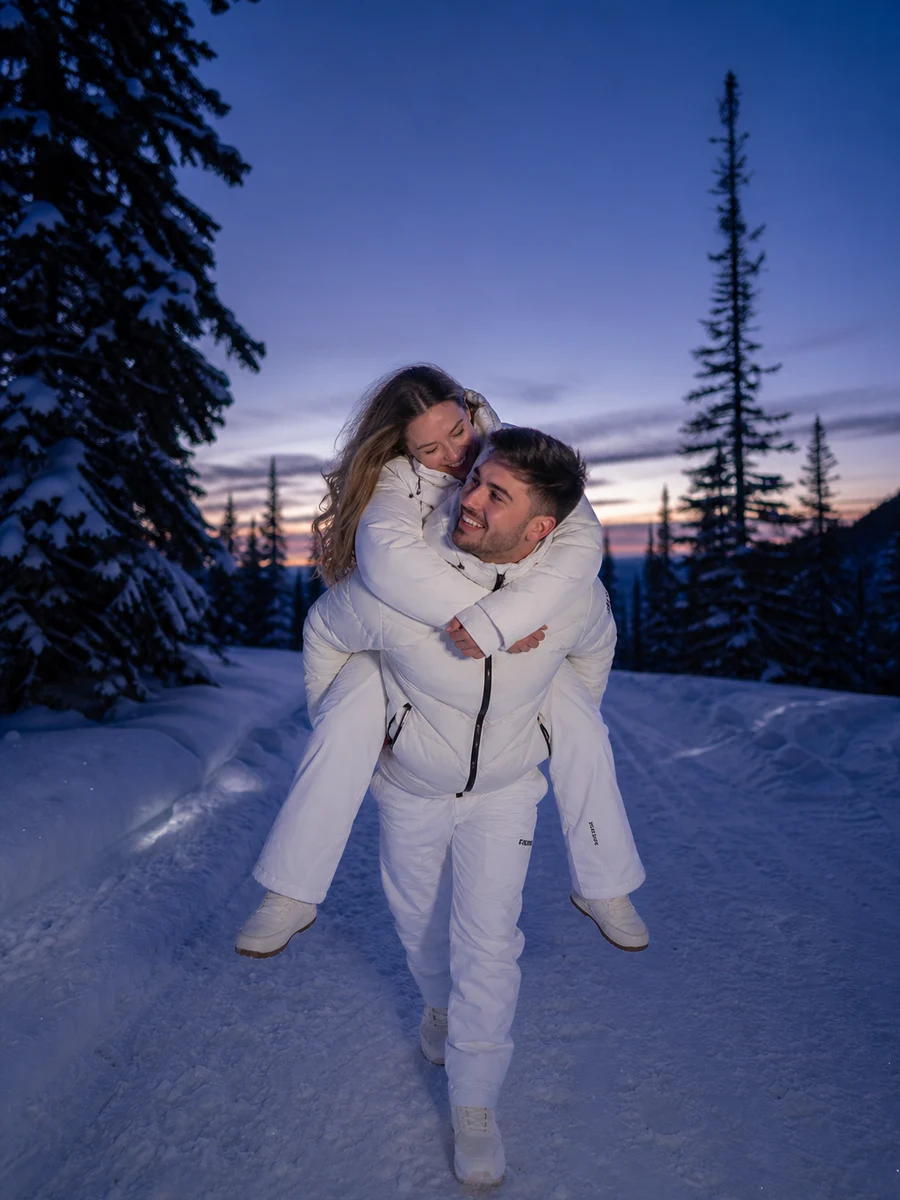
Throw her on your back and start walkingâthose candid, off-balance laughs in the deep blue light feel like a film still youâll want framed.
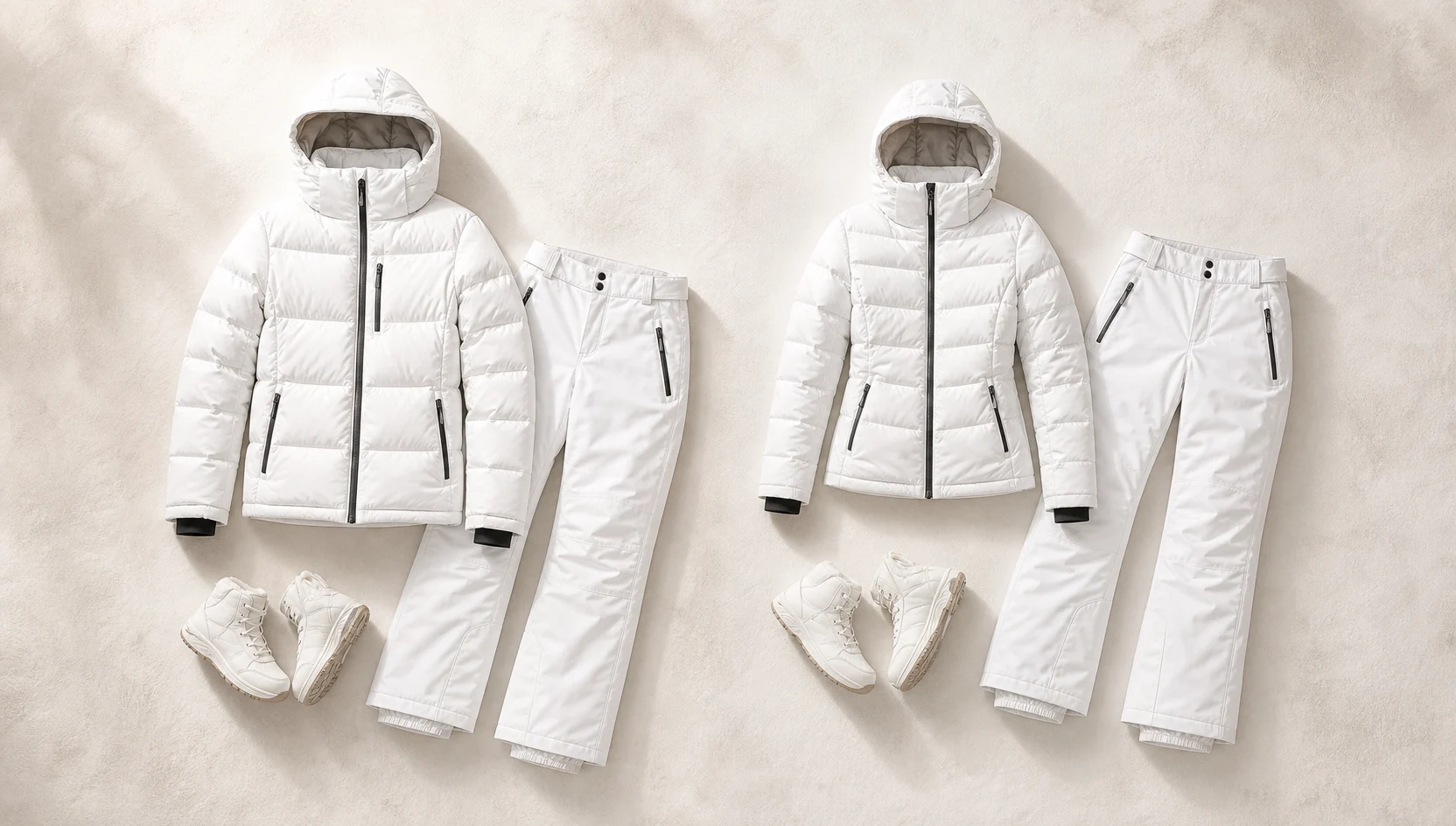
Outfit Ideas

He
puffer jacket + snow pants
white

Throw her on your back and start walkingâthose candid, off-balance laughs in the deep blue light feel like a film still youâll want framed.

He
puffer jacket + snow pants
white
She
puffer jacket + snow pants
white
You're standing at the edge of the pines, the air crisp enough to see your breath. The sky is a seamless gray dome, diffusing the last of the day's blue hour. It's that quiet time when the world goes monochrome, and every soundâthe crunch of snow underfoot, the huff of your laughterâechoes softly. You've traded your heavy parka for an all-white wool coat, and your partner's sweater is a creamy cable-knit. Against the snow, you both look like you've walked out of a winter dream.
You packed down a short loop of trail earlier, so now each step is steady. The snow gives a satisfying squeak as you walk. On your photographer's cue, your partner bends forward. You hop up, wrapping your legs around his waist, hands clasped at his chest. A single warm accentâyour rust-colored glovesâpops like an ember in the gray-white scene. Your cheek sinks against the wool of his temple, and you can't help but laugh at the absurd joy of it, the movement mid-step. The shutter clicks. This is the heart of forest engagement photos: stealing a laugh in the quiet cold.
Your photographer guides you deeper into the trees, where the overcast light wraps around you without a harsh shadow. The forest feels intimate, enclosing. You take a few turns, spinning slowly, your white coats blurring into the dark trunks. These aren't just forest engagement photos; they're an afternoon of playing in the snow and forgetting about the cold. You'll feel the warmth of movement and the glow of being together. As the last frame is shot, you realize these engagement photos in the forest have become less about posing and more about a shared experience. Just remember to pack hand warmers in your pockets. They're invisible lifesavers.
âď¸ Overcast â An overcast sky is a giant softbox â even, shadow-free light that flatters skin tones.
Layer carefully with moisture-wicking thermals, then your outfit. Opt for wool or fleece that retains heat without bulk. Use adhesive hand warmers inside gloves and bootsâthey're hidden but work. Bring a heavy coat to wear between shots; remove it just before clicking. Keep moving: wiggle fingers, stretch, laughâgenuine laughter warms your face and looks authentic. Avoid chattering by pressing your tongue to the roof of your mouth. Stay hydrated; cold air dries skin. The key is feeling warm enough that your comfort shows through naturally.
Use a fast lens (f/2.8 or wider) to let in more light. Increase ISO to 1600 or 3200 if needed. Modern cameras handle high ISO well. Shoot with a tripod if movement is minimal, but for piggyback shots, rely on image stabilization and a shutter speed of at least 1/200 to freeze motion. Let the overcast sky provide even exposure; underexpose slightly to avoid blown highlights, then lift shadows in editing. Have your photographer use back-button focus for continuous tracking. You'll be moving, so this ensures crispness even in dim blue light.
For overcast winter days, aim for mid-afternoon into blue hourâroughly 3 p.m. until 30 minutes after sunset. Overcast light is soft all day, but blue hour adds a cool, moody tone that makes snow glow. In a dense forest, direct sun rarely breaks through anyway. You want enough ambient light for sharp shots without harsh contrast. Check sunset times and plan to start an hour before. This gives you time to walk in and shoot as the light transitions. The snow reflects light, so even after sunset, you'll have usable illumination for 20-30 minutes.
Noâovercast is a gift. It acts like a giant softbox, diffusing light evenly and eliminating harsh shadows on faces. Skin tones appear smoother, and the white snow won't blow out. Colors stay true; a red scarf really pops. Without direct sun, you won't squint, and your eyes look relaxed. The catch? You might lose some drama. Compensate with composition: use tree trunks for framing, or bring artificial light like a video light to add a subtle rim. But for candid, soft winter portraits, overcast is ideal.
Insulated, waterproof snow boots with good tread. You'll be walking on packed snow, possibly uneven ground. Style-wise, boots will be hidden by long coats or in the snow, so prioritize function. If you want cute shoes for a few shots, bring them and change on-site, but only for flat, stable areas. Crampons or ice grips are smart if the trail is icy. Break in new boots beforehand to avoid blisters. Pack extra wool socks. Cold feet make you tense, and that shows in photos. Warm, dry feet = relaxed smiles.
Absolutely. Fall forest engagement photos offer a completely different palette. Replace white snow with fiery oranges and reds. Overcast light still works beautifully, saturating colors. For piggyback poses, crunchy leaves underfoot add texture and sound. As for timing, early morning light in a deciduous forest creates a golden canopy. But be mindful of leaf drop; late October might mean bare branches. Bring a blanket for shots sitting among leaves. The same warmth tips apply: layer with earth tones, and choose one accent color to stand out against the foliage.
Usually half a mile or less. We'll pick a trail that offers variety within a short loop. You'll pack the path flat beforehand, so walking is easy. The goal isn't distance but finding pockets of good light and natural frames: clusters of pines, an open glide, a fallen log. You'll pause frequently for shots. In winter, moving keeps you warm. Wear comfortable boots and you won't notice the short stroll. If mobility is a concern, talk to your photographer; many spots are accessible right from the parking area. Don't worryâit's a gentle wander, not a hike.