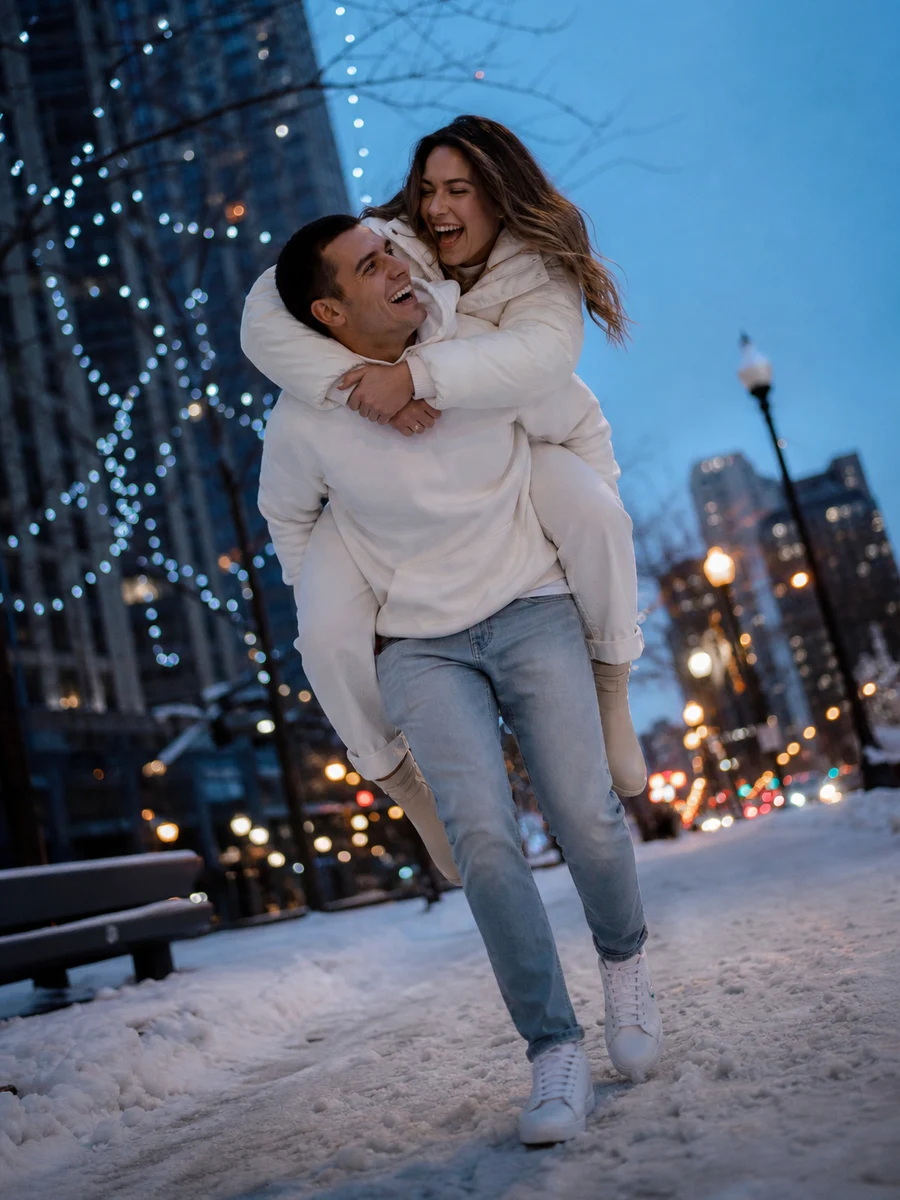
Blue Hour Piggyback Through City Lights Engagement Photos
For a playful energy, try a piggybackâit instantly brings out genuine smiles and a sense of adventure perfect for an editorial winter engagement.
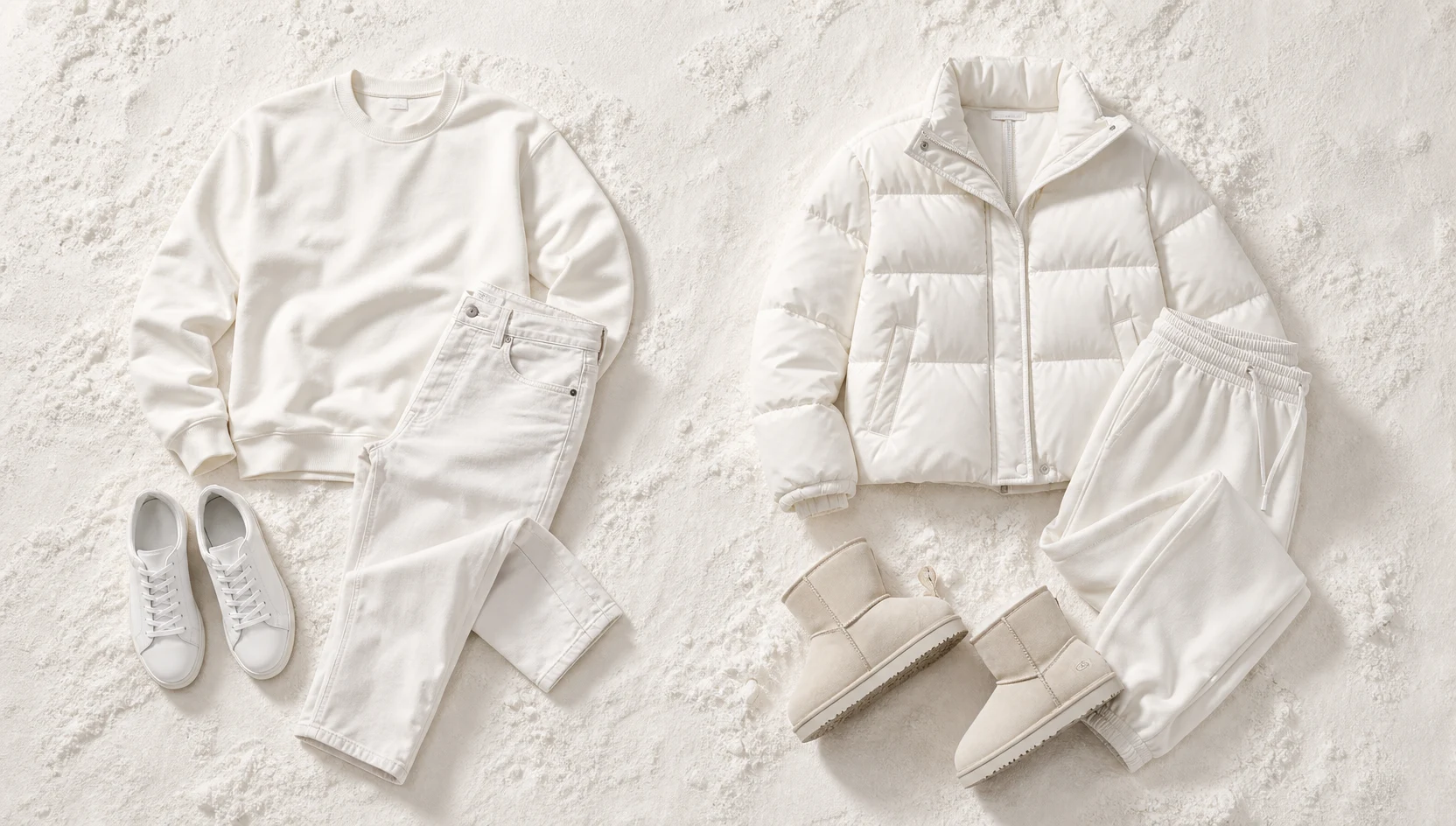
Outfit Ideas

He
sweatshirt + jeans
white

For a playful energy, try a piggybackâit instantly brings out genuine smiles and a sense of adventure perfect for an editorial winter engagement.

He
sweatshirt + jeans
white
She
puffer jacket + pants
white
You're standing on a snowy corner, the city around you buzzing with distant honks and the soft hiss of tires on wet pavement. The sky is a deep, inky blue, the last traces of sunset faded to a thin orange line on the horizon. One by one, the streetlights flicker on, and the string lights draped across the plaza begin their cool white glow. It's exactly 5:10 p.m., the blue hour window just opening. Your toes are warm in grip-soled boots, a thick knit scarf draped over your all-white coat. He grins, turns his back to you, and says, "Hop on."
You launch yourself onto his back, legs wrapping around his waist, your cream wool coat bunching up. The air nips at your cheeks, but his body radiates warmth through his jacket. He stumbles a step on an icy patch, but your boots bite inâgood thing you swapped to those non-slip soles. You bury your face into the curve of his neck, scarf tickling your nose. "Lean your cheek toward mine," the photographer calls out, voice muffled by her own scarf. You do, and you both start laughing because his gait is a little wobbly and you're both giddy from the cold. The camera clicks, freezing that spontaneous joy against a backdrop of glowing skyscrapers.
This is the heart of blue hour city engagement photos: the contrast of warm light and cool shadow, the intimacy of winter layers. You walk a block, hand in hand, to a quiet alley strung with fairy lights. Your white outfits pop against the dark brick. He pulls your scarf up over your ears, a goofy gesture that makes you snort. The photographer captures itâunposed, real. You brought chemical hand warmers, which you crack and tuck into your pockets between setups, a lifesaver for your freezing fingers. As the city darkens fully, the last few frames are silhouettes against the lights. The key to these engagement photos isn't just looking goodâit's moving to stay warm, laughing to forget the cold, and trusting your photographer to find the light even when the sun has set.
đ Blue Hour â Shoot in the ~20 minutes after sunset when city lights glow against a deep blue sky.
Wear layers that trap heat without bulk. Thin thermals under your outfit are invisible. Choose fabrics like wool and fleece, which insulate even when damp from snow. Bring hand warmers to tuck into pockets between shots. Move between posesâwalking, twirling, or piggyback rides generate body heat and create candid, joyful expressions. Keep your core covered; unzipping a coat for a minute wonât freeze you if your torso is warm. Hydration matters tooâcold air dehydrates, making you feel colder. Finally, embrace the chill: red cheeks and visible breath often add a cozy, romantic quality to the images.
Blue hour offers a narrow windowâabout 20 minutes after sunsetâwhen the sky turns a vivid cobalt, and city lights begin to dominate. The deep blue backdrop contrasts with warm artificial lights, creating a cinematic, moody atmosphere absent in daylight. Skin tones stay flattering; harsh shadows vanish. The low light demands a slower shutter, so your photographer will likely use a tripod or steady hand, meaning youâll hold poses for a beat longer. The result: images with glowing bokeh, soft highlights, and a romantic, intimate feel that midday sun rarely achieves.
Start by walking your favorite neighborhoods at the time you plan to shoot. Look for elements that create depth: archways, string-lit alleys, reflective storefronts, public art, or overpasses with glittering traffic trails. Use Google Street View to preview spots at dusk. Search Instagram location tags for your city + âengagementâ to see where other couples have shot. Donât overlook quiet side streetsâthe contrast between a cozy, intimate moment and a busy urban background can be powerful. Always scout for safe pedestrian areas and potential ice patches if itâs winter.
In most public spacesâsidewalks, parks, plazasâyou donât need a permit for simple handheld photography. However, if your shoot involves tripods, lighting stands, blocking pathways, or entering private property (like rooftops, hotel lobbies, or shopping centers), permits are often required. Many iconic locations, like the High Line in NYC or Chicagoâs Riverwalk, have clear photo policies online. Check city websites or call. Your photographer usually handles permits, but confirm. For spontaneous shots on public streets, be unobtrusive: no gear that obstructs traffic, and if questioned, politely explain itâs a personal engagement session.
New York offers iconic skylines, cobblestone streets, and countless bridges, especially magical at blue hour. Chicago boasts stunning architecture, the âLâ trains, and lakefront backdrops. San Francisco provides fog-shrouded hills, pastel Victorians, and the Golden Gate Bridge. Seattleâs Pike Place and waterfront glow under moody skies. Nashville has neon signs and rooftop bars with a lively vibe. Smaller gems like Savannah (Spanish moss squares) or Portland (industrial-chic bridges) also shine. The âbestâ city is one with personal meaning to youâwhere your love story feels alive among the streets.
First, confirm access: many rooftop bars and hotels allow photography with a reservation or small fee. Residential rooftops need landlord permission. Book for your preferred time slot, ideally aligning with sunset and blue hour. Ask about space constraintsâsome rooftops have tight layouts, limiting lens choices. Check weather, especially for winter; wind chill is fiercer at height, so extra layers are non-negotiable. Arrive early to scout angles and test light. If the venue requires a safety briefing, listen closely. Finally, have a backup indoor location in case of sudden high winds or lightning.
Pre-shoot scouting is your safest bet. Visit the spot a few days before, at the same time, to see current lighting, crowds, or construction that may have altered it. If you canât visit, contact the locationâhotels or parks often update conditions. Bring a flexible mindset: sometimes the unplanned backdrop (a freshly lit tree, a glowing bus stop) becomes the favorite. Trust your photographer to adapt; experienced pros mentally map multiple frames at every location. If the change is drastic, have a list of two nearby alternatives so you can quickly pivot. Social media often misleads with heavy editing, so expect less saturation and more grit in real life.