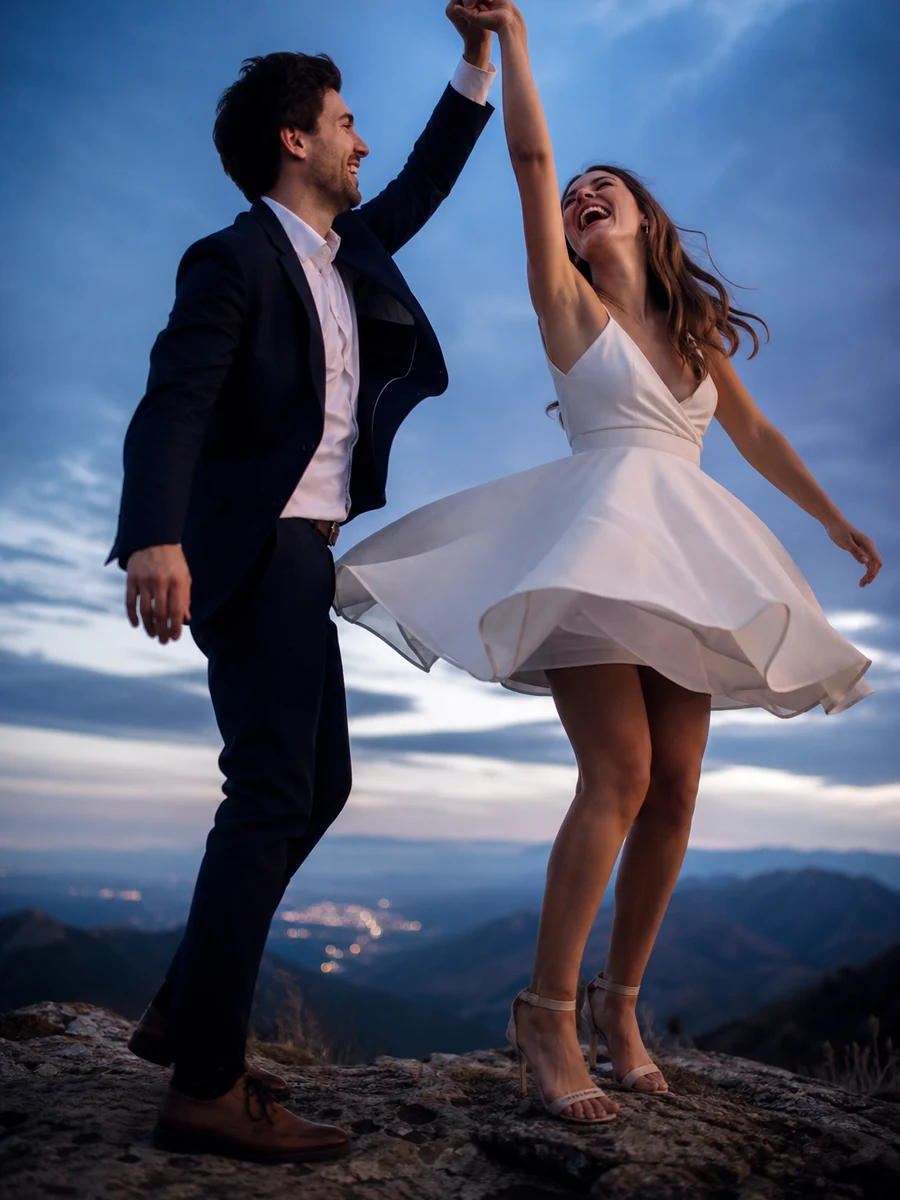
Blue Hour Laughter Twirl in Formal Chic Engagement Photos
Let loose in your finest and let the blue hour be your playgroundâthe best laughs happen when you forget the camera is there.
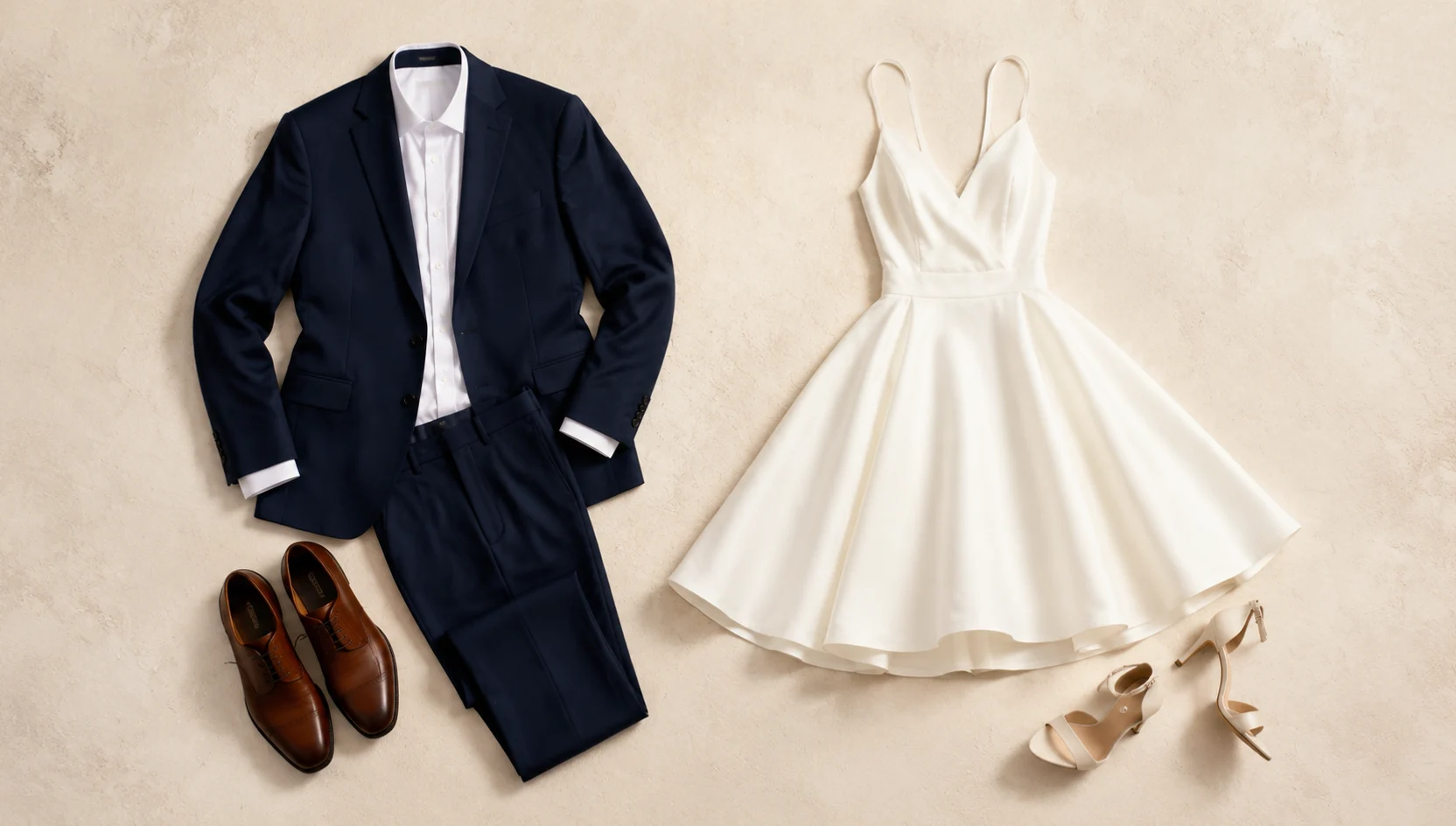
Outfit Ideas

He
navy suit
navy blue
She

Let loose in your finest and let the blue hour be your playgroundâthe best laughs happen when you forget the camera is there.

He
navy suit
navy blue
She
white short dress
white
Your carâs headlights sweep across the empty trailhead parking lot, the only sign of life a faint glow beginning to lift the eastern peaks. Air this thin at 6,000 feet carries a bite, even in summer, and you tighten the wool shawl around your shoulders while your partner laces up hiking boots. Youâre here for mountain engagement photos, and the early alpine silence feels sacred.
A ten-minute walk over packed dirt and pine needles leads to a granite outcrop. Below, valleys still hold the night; above, the sky shifts from indigo to a wash of pale lavender. You swap your boots for strappy heels â choose a pair with a solid block heel, something you can balance in on uneven stone. Your ivory dress, crisp against his dark suit, catches the first breeze and lifts at the hem, a promise of motion.
The photographer shows you a simple move: join hands, raise them overhead like a ballroom frame, and spin. No counting steps, just twirl. On the first try, the skirt doesnât flare; you tense up. But then your partner cracks a joke about altitude making you giggly, and the second twirl breaks open genuine laughter. The dress arcs, hair whips across your face, and the camera clicks just as the light turns honey-gold at 6:45 a.m.
These mountain engagement photos happen fast. The soft blue hour gives way to direct sun within twenty minutes, and the wind often picks up right after sunrise. Youâll feel the chill one moment, then radiant warmth the next. Keep a puffy coat just out of frame and tissues for wind-teared eyes. By 7:10, the rock is heating up, and youâre shivering less, already scrolling through previews on the back of the camera. The best twirl â the one with the closed-eye smile and the floating fabric â came from not trying so hard.
đ Sunrise â Arrive at first light for soft color, calm surroundings, and far fewer crowds.
Most mountain engagement photo sessions run 60 to 90 minutes of actual shooting, with total time depending on the hike in. Photographers typically book a two-hour window to allow for walking, shoe changes, and catching the right light. At high elevations, youâll move slower, so factor in extra time for breathing breaks. The sweet spot often starts 30 minutes before sunrise and wraps by mid-morning. If youâre hiking more than a mile to a location, expect the full experience to stretch to three hours. Communicate any tight timelines with your photographer so they can pace the shoot accordingly.
Youâll want sturdy, closed-toe hiking shoes or boots for the approach, even if the trail is short. Trails can be rocky, dusty, or slick with morning dew. Switch into your formal shoes at the shooting spot â bring a small bag to carry them. For dress shoes, wedges or block heels grip better than stilettos on uneven terrain. Some couples wear sleek hiking boots styled with their outfits; talk to your photographer about whether the boots will show in wide shots. Always break in new footwear before the session to avoid blisters.
Above 5,000 feet, thinner air can leave you winded faster, even if youâre fit. You might feel a slight headache, dizziness, or dry throat. Pace yourself on the hike, hydrate starting the day before, and avoid alcohol the night prior. During the session, take frequent short breaks; let your photographer know if you need to catch your breath. Laughing and twirling â movements that require extra oxygen â can feel more exhausting than usual. High-altitude sun also dehydrates you quickly, so keep water nearby. If either of you feels unusually lightheaded, speak up immediately.
The answer depends on the landscape you envision. The Rocky Mountains offer iconic alpine peaks and abundant accessible overlooks, especially in Colorado and Montana. The Sierra Nevada delivers granite domes and alpine lakes, often reachable with short hikes. For a desert-mountain contrast, Arizonaâs Superstition Mountains provide rugged backdrops. The Appalachian range gives softer, forested peaks with moody fog, ideal for intimate looks. Most couples choose a range within a few hoursâ drive to reduce travel stress. Check permit requirements for national parks: some popular overlooks require reservations or carry limits on commercial photography.
Yes, but preparation changes dramatically. Snow reflects light beautifully, but trails may be icy or inaccessible, requiring microspikes or snowshoes. Temperatures often drop well below freezing at elevation, so layer thermal undergarments beneath your outfit and keep hand warmers in pockets. Your partnerâs dark suit provides some wind resilience, but youâll need a coat between takes. Morning light still rules â alpenglow on snow is pure pink. Also, check avalanche warnings and road closures; many high-elevation roads shut down from November to May. A skilled winter photographer will work quickly to keep you comfortable.
Sunrise typically wins for mountain shoots. Mornings offer calm winds, few people, and a clean wash of blue-hour light that shifts quickly through soft pinks and golds. Alpine clouds often build by afternoon, spoiling sunset color. Youâll also avoid the heat and haze common in summer evenings. The trade-off: an early alarm, often 3â4 a.m. with a drive. Sunset can work if youâre on an east-facing slope that goes into shadow early, but crowds are heavier. For reliable conditions and that quiet, just-you-two feeling, sunrise is the safer bet.
Most mountain engagement photo locations require at least a short walk from a parking area. Even scenic pullouts often involve uneven ground or a scramble. True wilderness looks â like alpine meadows or ridge lines â usually demand a hike of 15 minutes to over an hour. Some popular spots are accessible by gondola or short paved paths, but verify with your photographer. If mobility is a concern, ask about vehicle-accessible overlooks. Always confirm the exact meeting point and trail conditions before you go, and build extra time for altitude, wrong turns, or stopping to catch your breath.