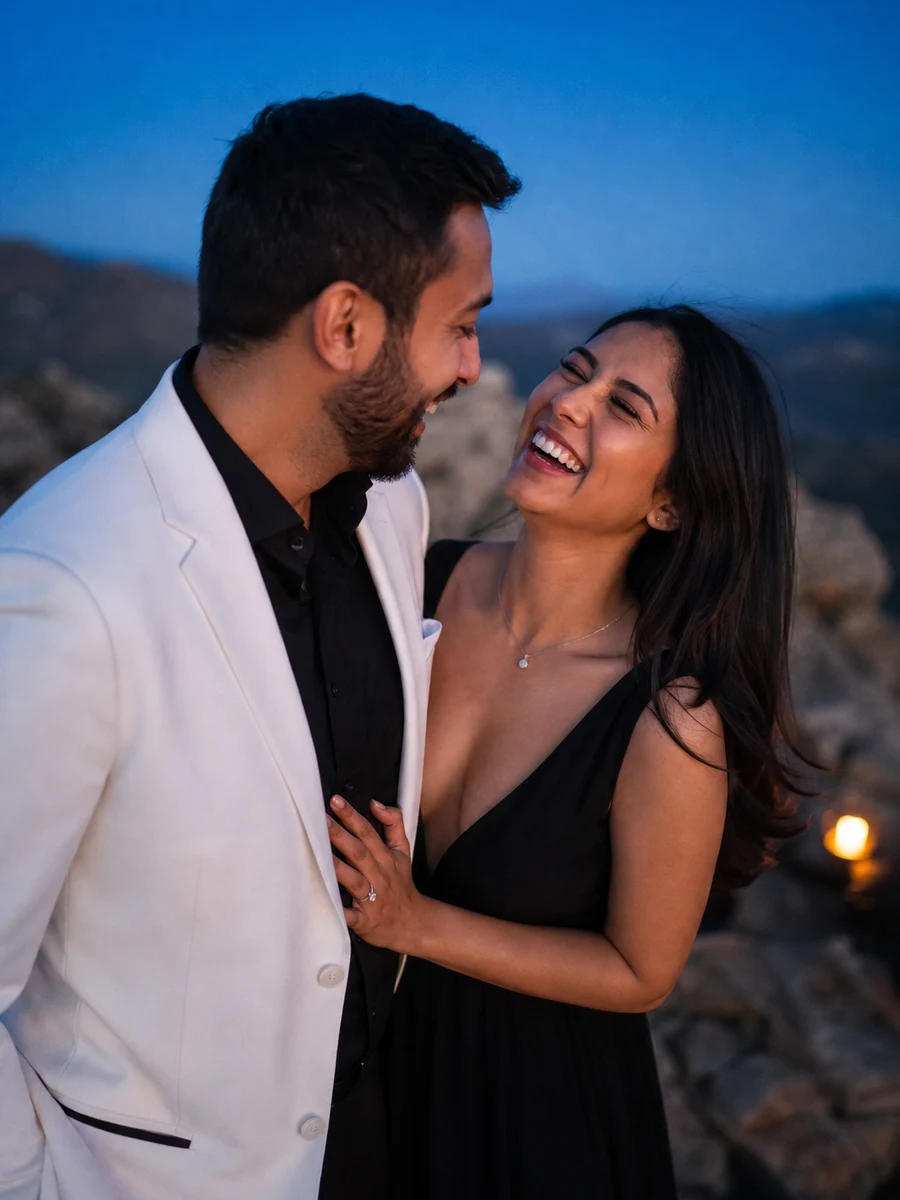
Blue Hour Summit Laughter in Elegant Contrast Engagement Photos
Even in the crisp blue twilight, your laughter warms the scene—forget the pose and let the genuine joy shine.
Outfit Ideas

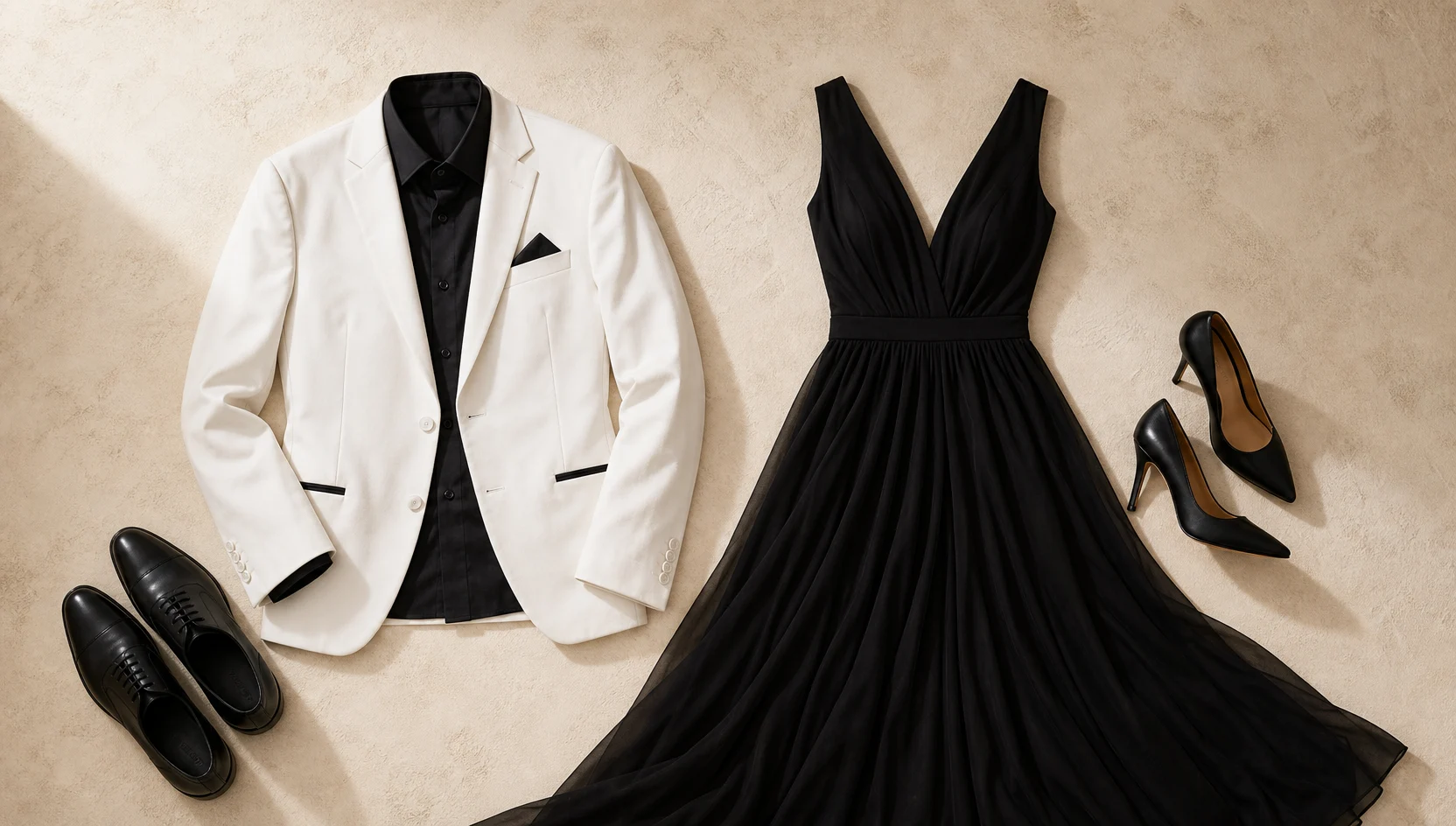
He
tuxedo jacket with dress shirt
white and black
She

Even in the crisp blue twilight, your laughter warms the scene—forget the pose and let the genuine joy shine.

He
tuxedo jacket with dress shirt
white and black
She
gown
black
The last warmth of the day vanishes as you crest the final ridge. Below, valleys fill with shadow; above, the sky is a watercolor wash of indigo and rose. You stand at the summit, heart still pounding from the climb, and drink in the silence—only the scuff of your boots on gravel and the whisper of wind through pine needles. Your photographer sets up a small lantern, its flame a flickering gold beacon in the gathering dusk. You adjust your gown, the silk cool against your skin, and meet your partner’s grin. “You look ridiculous,” you tease, but his white jacket against the dark rocks is a perfect contrast—exactly what you wanted for these mountain engagement photos. He pulls you close, and you bury your laugh in the solid warmth of his shoulder. The camera captures that: not a pose, but a real, unguarded moment. Shooting 25 minutes after sunset, the blue hour light turns everything soft and dreamy, no harsh shadows. You’d arrived at the trailhead an hour earlier, hiking the last mile in sturdy shoes (heels in a backpack), and now the lantern’s glow dances in your eyes. For engagement photos like these, the sacrifice of an early alarm or a chilly hike is worth it. Bring a thermos of tea, and don’t forget to pack your formal wear—change at the summit if needed. The contrast of fine fabric against raw rock makes every frame feel like art. Just as the first stars appear, you take one last shot: holding the lantern between you, its light reflecting the promise of a shared future, alone on the mountain under a deepening sky.
🌄 Sunrise — Arrive at first light for soft color, calm surroundings, and far fewer crowds.
Yes, sturdy hiking boots with good ankle support are essential, even if you plan to change into formal shoes at the summit. Mountain trails are often rocky, uneven, and can be slippery. You'll be carrying gear and possibly wearing a pack, so proper footwear prevents twisted ankles. Bring your dress shoes in a bag and swap them once you reach the flat, stable spot for photos. This keeps you safe and your formal shoes clean.
At higher elevations (above 8,000 feet), reduced oxygen can cause shortness of breath, dizziness, and faster fatigue, even for fit couples. Give yourself extra time for the hike, take frequent breaks, and hydrate more than usual — start the day before. Avoid alcohol the night before. Listen to your body; if you feel lightheaded, pause and breathe deeply. The thin air can also make you feel chilly more quickly, so layer up. Pacing yourself ensures you have energy for lively, laughing poses at the top.
The best range depends on your style, but the Rocky Mountains in Colorado, the Tetons in Wyoming, and the Sierra Nevada in California offer dramatic peaks and accessible summits. For alpine grandeur with relatively easy access, consider the San Juan Mountains or the Wasatch Range. The Tetons provide jaw-dropping backdrops with short hikes from parking lots. The Cascades in Washington are lush but often cloudy. Research trail difficulty and permits. Pick a range that matches your vision and fitness level — golden hour light on jagged peaks is universally stunning.
Absolutely, winter mountain engagement photos are magical, but require serious preparation for cold and safety. Plan for extreme cold: hand warmers, insulated boots, and thermal layers beneath your formal attire. Snow reflects light beautifully, so blue hour offers a pastel glow. Trails may be icy; bring microspikes. Shorten the shoot to avoid hypothermia. Choose a location with avalanche-safe terrain. The contrast of a white landscape with your elegant outfits creates a striking, otherworldly look. Just ensure you have a warm vehicle nearby for breaks.
Both offer soft light, but sunset gives you blue hour afterwards, while sunrise often means fewer crowds and calmer winds. For this blue hour summit shoot, sunset is ideal because you can arrive in daylight, hike up, and then shoot after the sun sets. Sunrise requires a pre-dawn start and possibly hiking in the dark, but you’ll have the place to yourself. Consider your tolerance for early alarms. Either way, the golden light before the sun slips away is fleeting, so be ready.
Reaching a mountain summit for engagement photos almost always involves hiking, ranging from a short walk to a strenuous multi-mile trek. Research trails with summit views that match your fitness. Some scenic overlooks are accessible by car or a short paved path (e.g., Trail Ridge Road in RMNP), but true summit privacy requires effort. Start training a few weeks in advance if needed. Carry your formal wear and change at the top. Always check trail conditions and allow extra time so you're not rushed.
Mountain weather is unpredictable; prepare for wind, sudden temperature drops, rain, or even snow by bringing layers and having a backup plan. Check the forecast, but be ready for anything. Carry waterproof jackets, extra warm layers, and a fully charged headlamp. If lightning threatens, descend immediately. A flexible photographer will adapt, using storm clouds for drama. Sometimes, a brief snow shower can add incredible atmosphere. Discuss contingency options like a lower elevation location or rescheduling. Embrace the elements — it’s part of the adventure.