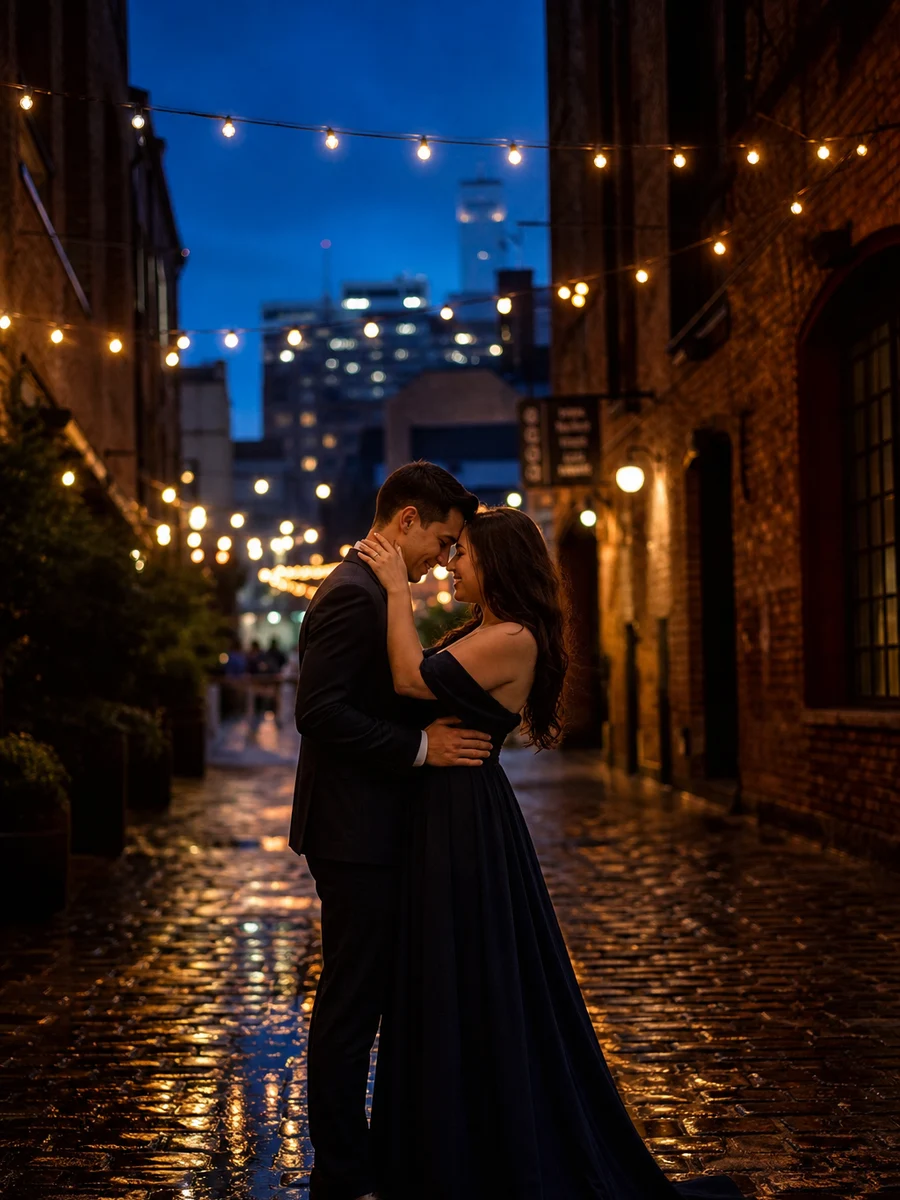
Blue Hour Forehead Touch in Brick Alley Engagement Photos
Those quiet moments before the celebration begin—just you two under the soft glow of alley lights.
📍 city💑 forehead-touch
Outfit Ideas
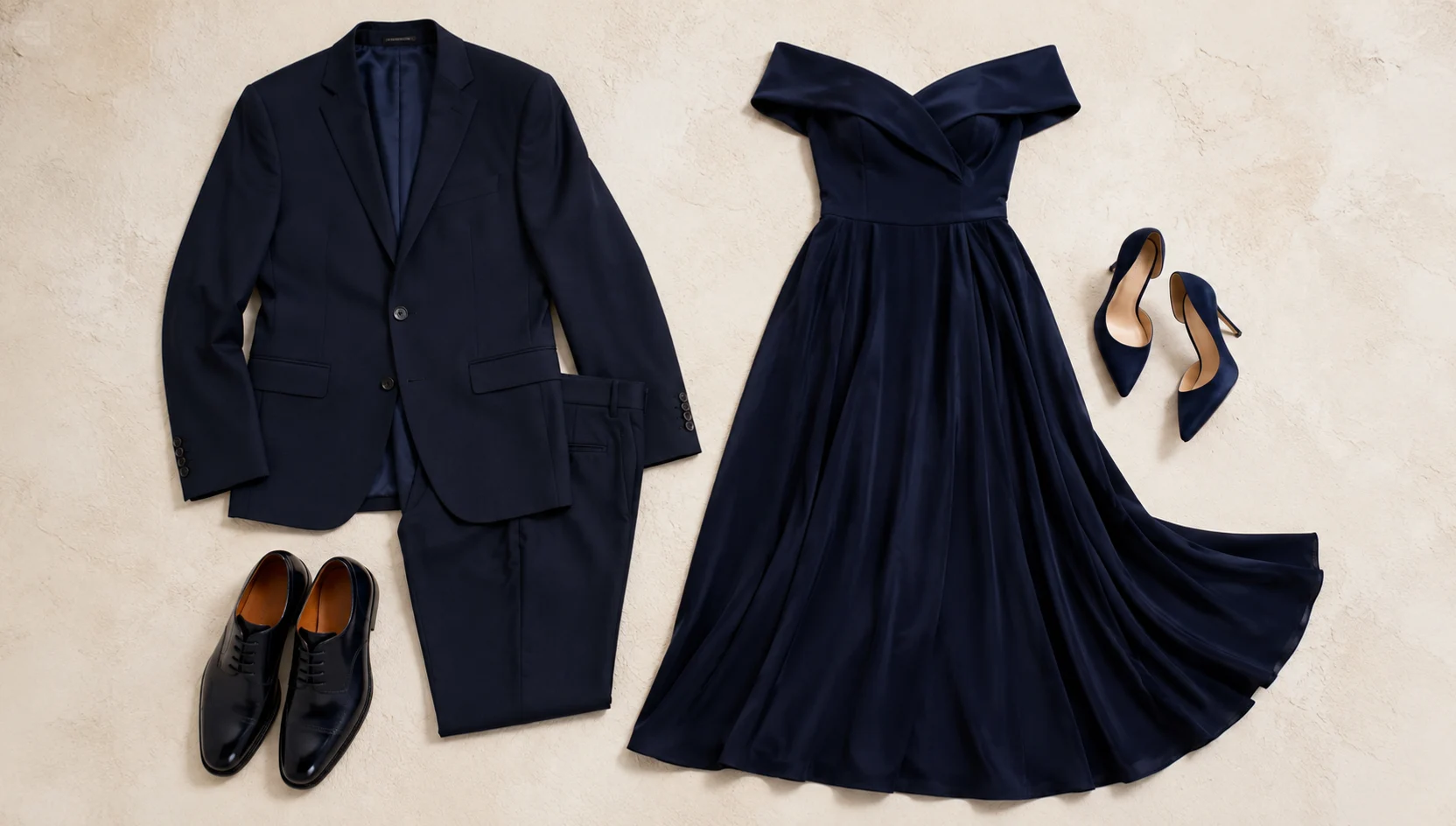
He
suit
navy blue
She
Those quiet moments before the celebration begin—just you two under the soft glow of alley lights.
He
suit
navy blue
She
off-the-shoulder gown
navy blue
The air has that just-washed crispness, and the cobblestones beneath your feet still gleam with rain. You step into the narrow brick alley just as the sky deepens from lavender to navy. It’s that fleeting stretch after sunset—blue hour—when the city lights flicker on, and the world feels suspended. In your deep emerald evening gown and his sharp black suit, you two stand out against the warm glow of fairy lights strung overhead. The photographer guides you closer: “Close your eyes. Touch foreheads. Rest your hand softly on his neck.” Your breath slows. The only sounds are distant sirens and the hum of a restaurant kitchen. You feel the coolness of his skin, the faint vibration of his heartbeat. This is the real pulse of city engagement photos—those quiet, hidden moments in the middle of everything. The wet bricks mirror the lights in puddles, your silhouettes reflected like a painting. A car passes, its headlights briefly sweeping gold across the scene. You don’t notice; you’re lost in the warmth of his proximity. City engagement photos thrive on contrast—the grit of the alley, the elegance of your attire, the sacred stillness between two people. You’ll find that the 20-minute window goes faster than you think, so trust your photographer to cue the subtle shifts: a hand sliding down an arm, a shared laugh when you stumble on a cobblestone. By the end, you’re not just posing for engagement photos; you’re living inside your own film still, lit by twilight and string lights.
🌆 Blue Hour — Shoot in the ~20 minutes after sunset when city lights glow against a deep blue sky.
Scout on foot in the neighborhoods you love. Walk around at the time of day you plan to shoot—look for textured walls, hidden alleys, fire escapes, or reflections. Check local photo-sharing platforms for inspiration but avoid dated spots that every other couple uses. A location that holds personal meaning, like your first date street, beats any trendy mural. Your photographer will also have a go-to list; combine their expertise with your story. Always have a backup for crowded areas.
Most public sidewalks and streets don’t require permits for casual photography, but some parks, plazas, or rooftops do. Always check the specific venue’s website or call ahead. If you’re on private property like a hotel lobby or a shop-front, ask permission—often a quick, polite request works. For popular spots, a permit might be necessary to avoid being asked to leave mid-shoot. Your photographer will know local rules, but you should clarify before finalizing locations.
The “best” city reflects your relationship. That said, certain cities offer iconic backdrops: New York for its energy and hidden alleyways, San Francisco for fog-kissed hills, Chicago for lakefront and architecture, New Orleans for European texture, and Charleston for cobblestone charm. Don’t overlook smaller cities like Savannah or Portland, which offer intimacy without enormous crowds. Think about what backdrop tells your story—skyline, waterfront, historic streets—and pick a place you genuinely enjoy spending time in.
Many rooftop bars, hotels, and event spaces allow photography with advance permission, often requiring a reservation or a small fee. Reach out to the venue directly and explain you’re taking personal engagement photos—not a commercial shoot. They may restrict hours (golden hour before crowds arrive) or require a liability waiver. If using a friend’s rooftop building, check management rules to avoid being kicked out. Be mindful of wind for hair and lighting that can be harsh at high noon; plan for sunset or blue hour.
Online images can be outdated or heavily edited. A graffiti wall might be painted over; a quiet alley might now have construction. Always do a recent street view check on maps and, if possible, scout it a day or two before your shoot. Share current photos with your photographer so they can adjust lighting and framing expectations. A good photographer will embrace the change and find a new angle—sometimes an unexpected element like scaffolding becomes a unique backdrop. Keep a flexible mindset and trust the process.
Blue hour falls just after sunset, not deep night, so you’ll likely be shooting around 30 minutes after sundown when there’s still ambient light and people around. Stick to well-lit, familiar areas and let someone know your route. Carry minimal valuables, and stay aware of your surroundings. Your photographer will likely have experience with urban shoots and can advise on timing and spots. If an alley feels too isolated, move to a more populated area—the deep blue sky works anywhere with city lights.
The 20 minutes after sunset—blue hour—creates a moody, cinematic sky and allows city lights to pop without harsh shadows. It’s brief, so arrive early and be ready. Golden hour (the hour before sunset) is also beautiful for warm, flattering light, but blue hour gives you that unique contrast between cool ambient light and warm artificial light. Avoid midday when sunlight is harsh and creates strong shadows. Overcast days can work too, acting as a giant softbox for even lighting.