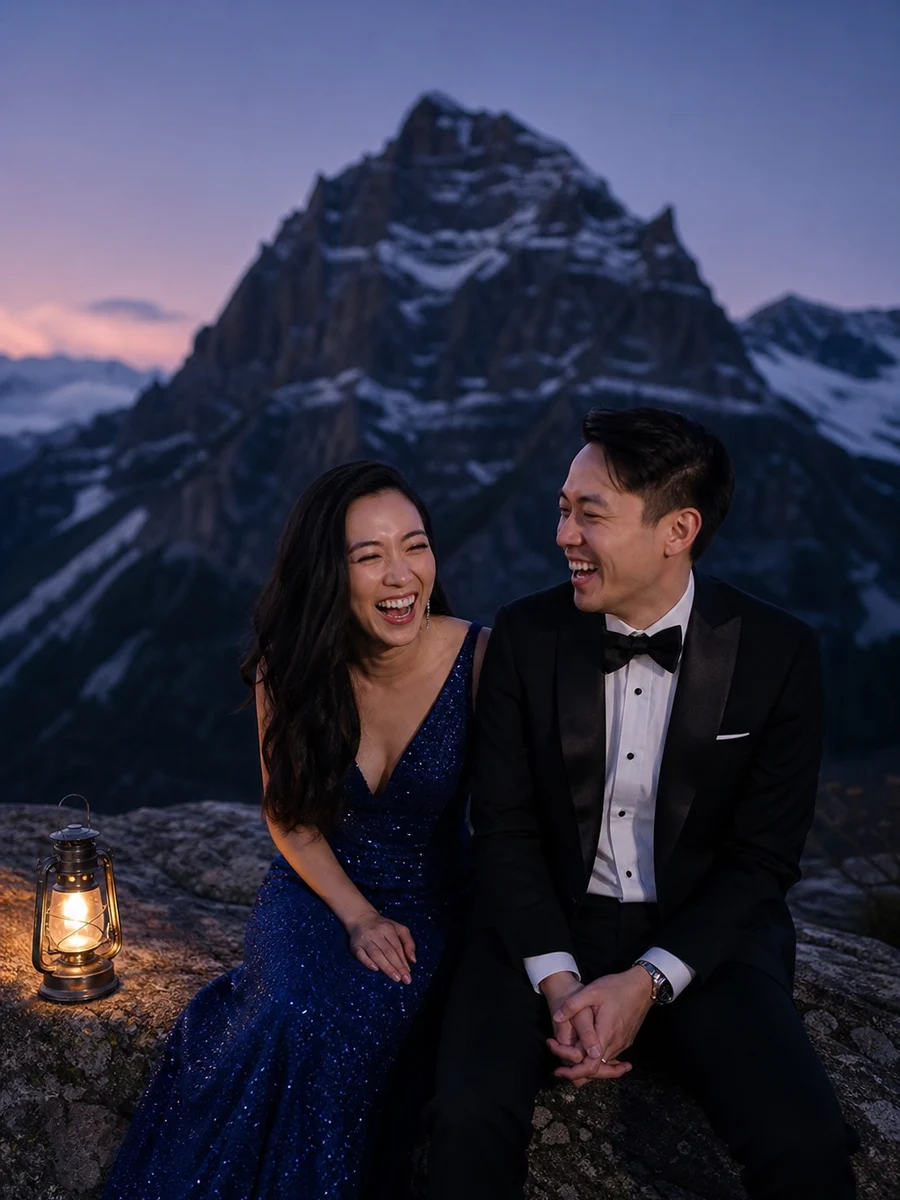
Blue Hour Candid Laugh on a Formal Rock Engagement Photos
Bring a lantern or a small light source to blue hour shootsâit adds a warm focal point and makes those candid laughs feel even cozier.
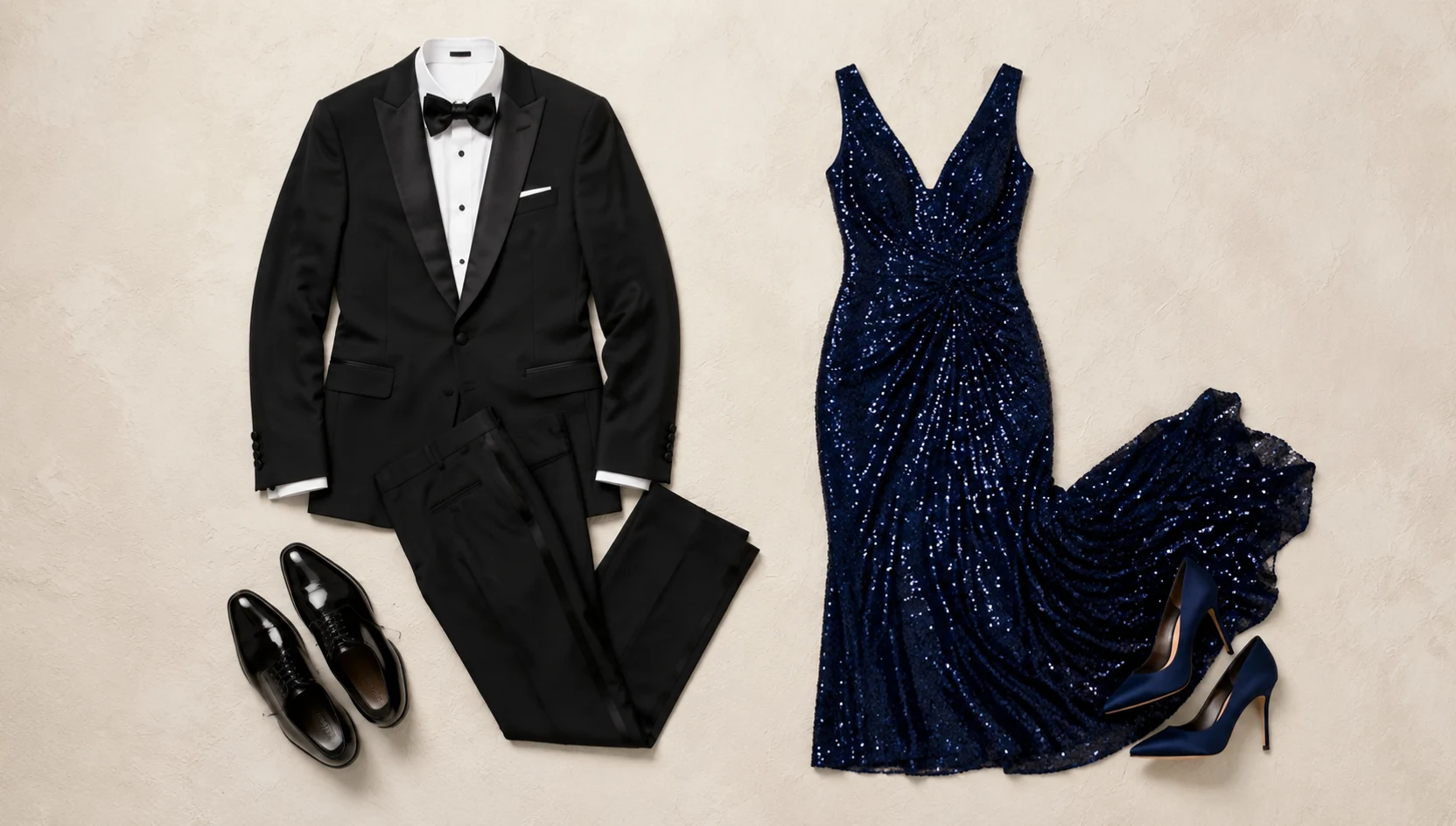
Outfit Ideas

He
tuxedo
black
She

Bring a lantern or a small light source to blue hour shootsâit adds a warm focal point and makes those candid laughs feel even cozier.

He
tuxedo
black
She
sequined gown
dark blue
Your headlamp beam cuts through the dark as you step onto the trailhead at 4:45 a.m. The air is thin and bite-cold, carrying the scent of pine and frost. You hear nothing but the crunch of your boots and the rustle of your gownâs train as your partner helps you navigate the path. By the time you reach the rock outcropping, the sky is shifting from indigo to a soft, milky periwinkle. You set down the lanternâits warm glow pools on the stone, casting flickering light across your sequined jewel-tone dress. Your partner, sharp in a black tuxedo, takes your hands. You feel the rough, cold rock beneath your dress shoes. As the first sliver of sun crests the jagged peaks, you share a genuine laugh, not at the camera but at the absurd, beautiful moment: two people all dressed up on a mountain before the world wakes. The lantern fills in the foreground while the blue hour sky frames you. Within minutes, the light turns honey-gold, but youâve already captured the quiet magic of morning. For mountain engagement photos that feel personal and candid, the key is embracing the chill and the silenceâand arriving before anyone else does.
đ Sunrise â Arrive at first light for soft color, calm surroundings, and far fewer crowds.
Absolutely. Winter offers a clean, white landscape and soft light. Youâll need to plan carefully: check road closures, trail conditions, and avalanche risks. Dress warmly underneath your outfitâthermal layers and hand warmers help between shots. Snow reflects light beautifully, so exposures are often bright even during blue hour. Footing can be icy, so choose a location with a solid, safe rock outcropping. The cold also means fewer people, giving you a more intimate experience.
Sunrise is often better for mountain engagement photos. Youâll have far fewer crowds and calmer winds, which keeps hair and gowns manageable. The light evolves from cool blue tones to warm gold, giving you variety in a short window. You also have a better chance of clear skies because afternoon storms havenât built yet. The main trade-off is the early alarmâplan to arrive at the trailhead about an hour before first light to set up and adjust to the dark.
It depends on the spot you choose. Many iconic viewpoints require a hike, but you can find accessible options via a short drive or a paved overlook. If youâre wearing formal attire, stick to a trail under a mile with a well-maintained path. Carry your outfits in a pack and change at the location if needed. For this type of rock-outcrop scene, you might walk 10-20 minutes on uneven terrain, so bring a headlamp and wear sturdy shoes for the approach.
Mountain weather shifts fast. Always check the forecast the night before and have a backup plan: an indoor location or a lower-elevation spot. Bring a clear umbrellaâit can add drama and protect your formal wear. Fog or low clouds can actually create a moody, ethereal look, so donât panic. Your photographer should know how to work with changing light. If lightning or high winds arrive, prioritize safety and head down immediately.
You donât need to be an athlete. Many stunning mountain engagement photo locations are just a short walk from a parking area. If youâre balancing on a rock in formal shoes, youâll want decent balance and a steady hand from your partner. The altitude can leave you breathless, so take it slow and hydrate. If youâre not active, choose a spot with minimal incline and avoid heavy packs. The goal is comfort so your joy looks natural, not strained.
The best time is sunrise during summer or early fall. You get soft, directional light and cooler temperatures without the extreme cold of winter. Wildflowers in July or golden aspen in late September add color. Weekdays also reduce crowd stress. For the blue hour effect, you need to be on location about 30-45 minutes before sunrise. This gives you that deep blue sky and the transition to warm light, all within an hour.
Expect temperatures 20-30°F colder than the nearest town. Even in summer, a sunrise shoot at 10,000 feet can dip into the 30s or 40s with wind chill. Youâll be standing still in formal wear, so hypothermia is a real risk if youâre not prepared. Wear heat packs under your clothes and bring a heavy coat to slip on between takes. Your hands and feet will feel it firstâinsulated boots and gloves you can quickly remove make a huge difference.