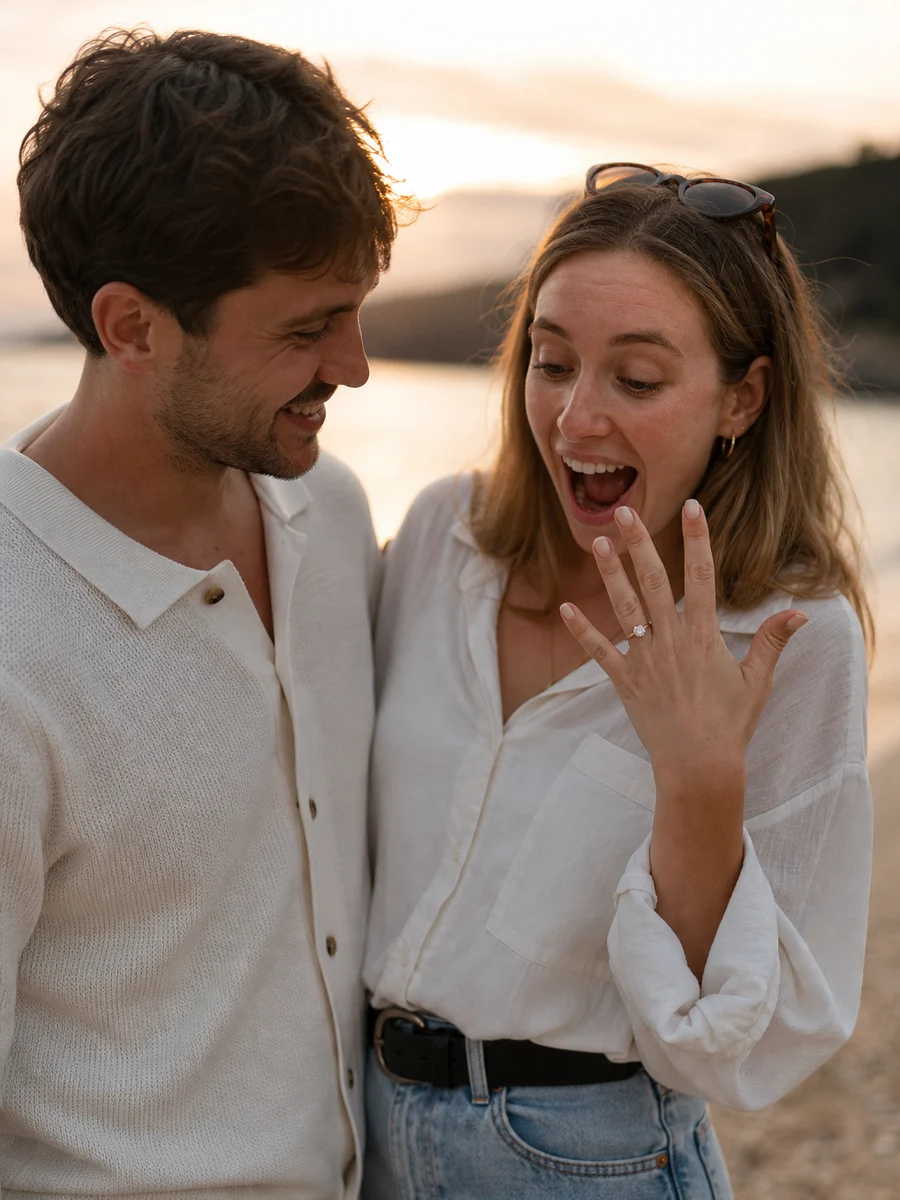
Ring Reveal at the Beach Engagement Photos
📍 beach💑 ring-shot
Outfit Ideas
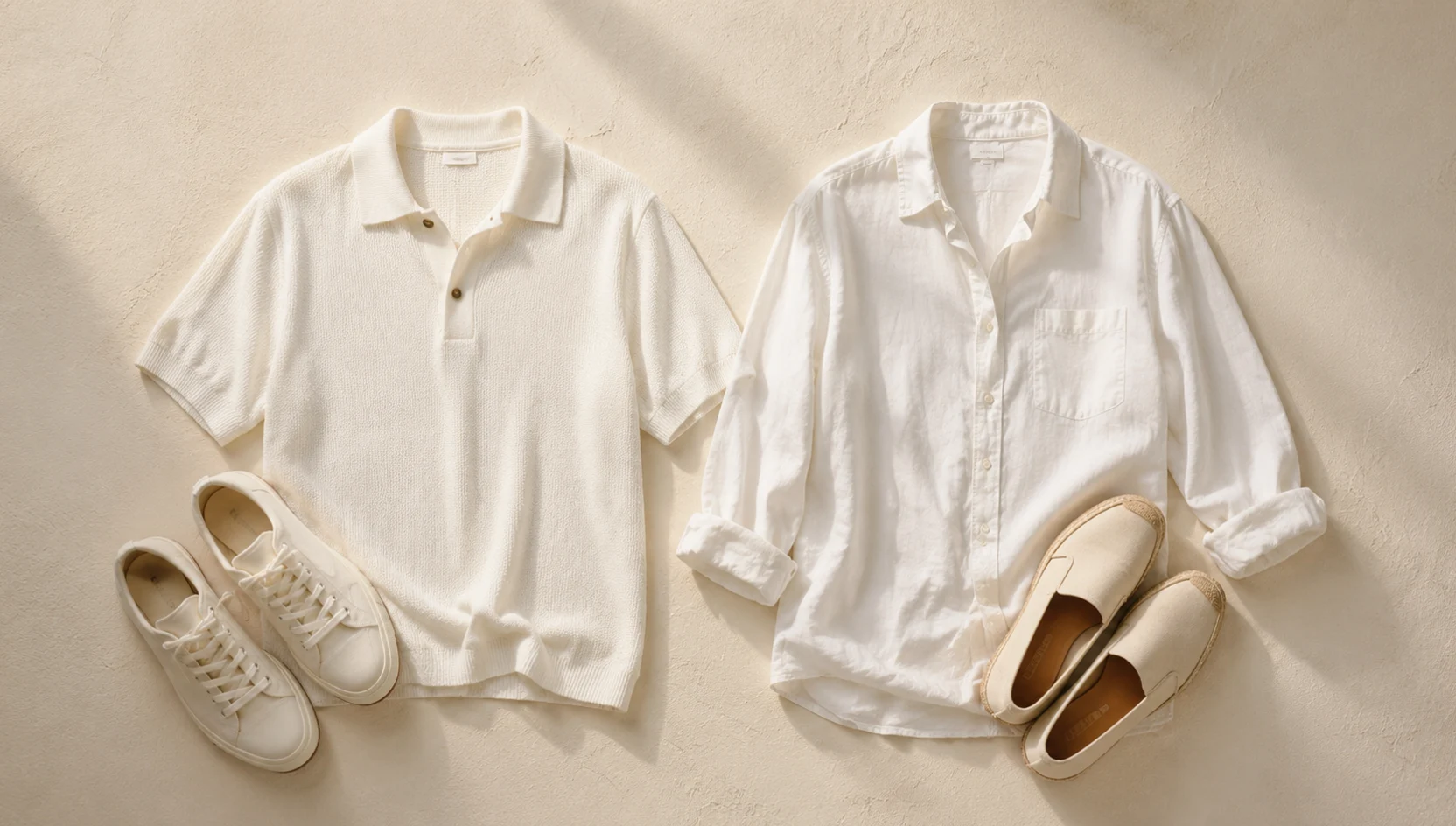
He
knitted polo shirt
white
She
button-up shirt
white
He
knitted polo shirt
white
She
button-up shirt
white
You're standing ankle-deep in the shorebreak, the water cooler than you expected for a June evening. The light at 6:45 p.m. turns everything honey-gold, slanting low across the Pacific and threading long shadows onto the wet sand. Your photographer had you arrive forty-five minutes early to walk the beach, find pockets of open shoreline, and test how the light fell against the cliffs. That prep pays off now.
She asks you to extend your left hand toward the horizon, ring glinting. You keep your wrist soft, fingers slightly relaxed—exactly as she demonstrated. No forced angles. Off to the side, your partner nudges your elbow, and you both laugh because the first attempt looked like a mannequin's hand. That's the shot she keeps: your ring catching the sun, water veiling the frame, genuine smiles from a real moment.
The breeze picks up, carrying the sharp tang of salt mixed with someone's distant bonfire. Your dusty rose dress lifts slightly, and the color matches the filaments of coral threading the sky. You feel sand spray against your calves, little pinpricks that make you flinch and then laugh. The photographer moves you farther up the dry sand for a few seated shots—your partner's linen shirt rumpled, a few grains of sand stuck to your arm. Those details, she says, are what make beach engagement photos feel lived-in rather than staged.
Between setups, you rinse sand from your feet in a tide pool, the water warmer than the ocean's edge. The ring you cleaned that morning sparkles even when the camera isn't on it. As the sun drops behind the headland and the light shifts from gold to a diffuse rose, you're no longer thinking about posing. You're just there, watching the sky and holding hands. By the time you pack up, you've stopped worrying about getting the perfect engagement photos, because you're too busy living them.
🌅 Golden Hour — Shoot in the hour after sunrise or before sunset for warm, flattering light and long soft shadows.
Keep your hand relaxed and your wrist soft. Stiff, forcibly extended fingers can make the ring look like a product shot. Let your photographer guide you to rest your hand on your partner’s chest, brush hair away, or gently hold their face—positions that place the ring front and center without forcing it. A soft wrist and slightly curved fingers look elegant and natural. Practice a few hand placements before the shoot so you’re aware of how the light hits the stone. The most compelling ring shots happen when you’re absorbed in a real moment, not posing for the camera.
Most couples go barefoot because it feels more connected to the sand and keeps the mood casual. However, bring sandals or easy slip-ons for walking on hot sand, boardwalks, or rocky patches—blistered feet will show in your expression. If the beach has sharp shells or pebbles, neutral-toned sandals can save your soles. Being barefoot in the wet sand near the waterline is usually comfortable and photographs beautifully. When you transition from sand to a paved area, simply slip your shoes back on. It’s a small detail that lets you focus on each other rather than your feet.
Wind can be a gift—it adds movement and drama, especially with flowing clothes. Use a light texturizing spray or hair product to keep flyaways controlled enough that they don’t whip into your face constantly. Position yourselves so the wind blows from the side or back, not straight into your eyes. If a gust hits, laugh through it—your photographer can capture those unguarded, joyful reactions. Wind often makes a dress flare or tousles hair in a way that looks cinematic. Lean into it rather than fighting it, and let the setting feel alive and dynamic.
Yes, but keep them simple and meaningful—one or two items that tell your story without cluttering the frame. A picnic blanket, a vintage thermos, or a surfboard if you both surf work well because they feel organic to the beach. Avoid large or complicated setups that distract from you. Tell your photographer ahead of time so they can plan how to weave the props into natural moments. For example, opening a bottle of champagne and clinking glasses at sunset creates a relaxed, celebratory feeling that photographs beautifully, while still keeping the focus on your connection.
Check tide charts in advance and aim for low or receding tide. High tide can shrink the available beach and bring waves dangerously close. If your shoot coincides with high tide, choose a beach with plenty of dry sand above the high-water line or a mix of dunes and shoreline. Your photographer can scout access points that remain safe. Sometimes high tide creates beautiful reflections in tide pools left on the sand, so it can offer unique shots. Plan a backup location or adjust your start time to work with the water, not against it.
Yes, expect it—sand will stick to skin, clothes, and gear. It’s part of the experience. Wear fabrics like linen, cotton, or rayon that shake out easily; avoid heavy knits that trap grains. Bring a towel to brush off your feet between shots. Don’t stress about sand in your hair—it often adds texture in close-ups. For the ring, a quick polish with a soft cloth before the ring shots removes any film so the stone sparkles. Embrace the mess: real moments look more authentic when a little sand is still clinging to your arm.
First, decide what backdrop fits your style: wide flat shoreline for minimalism, rocky coves for drama, grassy dunes for soft texture. Scout potential beaches at the same time of day as your shoot to see how the light falls. Quieter beaches mean fewer strangers in the background. Look for variety—a mix of sand, rocks, and maybe a pier—so you get a range of images. Check for permits or seasonal restrictions. Consider parking, walk distance, and how your outfit holds up. Most importantly, pick a beach that means something to you; that emotional connection will come through in your engagement photos.